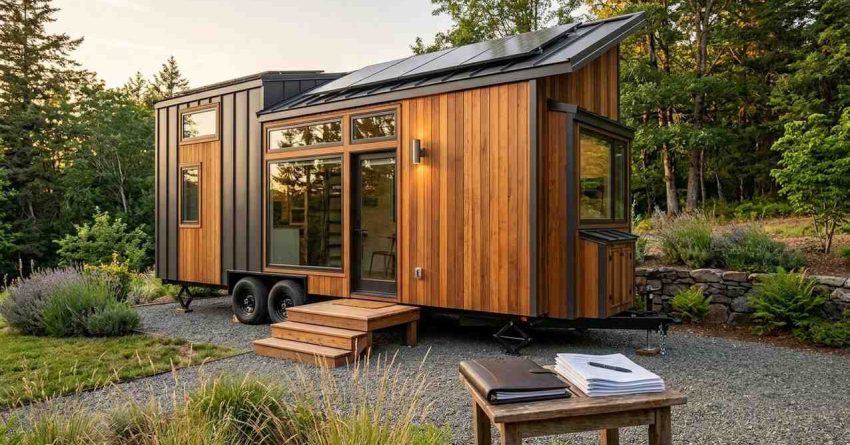
Tiny houses on wheels require a specific type of insurance that standard homeowners or RV policies rarely cover completely. THOW insurance fills that gap by protecting your structure, personal property, and liability in ways that match how you actually live and travel. Without the right coverage, a single incident can leave you financially exposed with no clear path to recovery.
Most THOW owners discover coverage gaps only after something goes wrong, making it critical to understand your options before you need them.
This guide explains what THOW insurance covers, what it costs, how policies differ, and how to choose the right protection for your situation.
What Is THOW Insurance and Why Do You Need It?
THOW insurance is a specialized coverage policy designed for tiny houses built on trailer frames that can be towed from one location to another. Unlike a traditional home, a THOW occupies a legal gray area between a recreational vehicle and a permanent dwelling, which means standard policies from either category often leave significant gaps in protection.
A homeowners policy typically excludes structures on wheels. A standard RV policy may cover the trailer but not the custom-built living space inside it. THOW insurance is built to address both, covering the structure, its contents, and your liability as an owner whether your tiny home is parked or in transit.
Understanding THOW insurance starts with a clear picture of what tiny home ownership involves — our tiny home ownership guide covers the full landscape of THOW living, from build options to legal considerations, giving you the context you need before selecting coverage.
How THOW Insurance Differs from Standard RV or Homeowners Coverage
RV insurance is designed for factory-built recreational vehicles with standardized components and predictable replacement costs. THOW structures are often custom-built with unique materials, layouts, and finishes that require individual appraisal rather than standard valuation formulas.
Homeowners insurance, on the other hand, is tied to a fixed address and a permanent foundation. A THOW that moves between locations or sits on a rented lot does not meet the basic eligibility criteria for most homeowners policies.
The distinction between THOW and RV policies matters more than most owners realize — a dedicated look at THOW vs RV coverage breaks down exactly where each policy type applies and which gaps are most commonly overlooked.
What Does THOW Insurance Typically Cover?
A well-structured THOW insurance policy covers three core areas: the physical structure of your tiny home, the personal property inside it, and your liability as an owner. The exact scope depends on the insurer and the policy type you select, but these three categories form the foundation of any adequate coverage plan.
Coverage requirements are closely tied to how your THOW is classified under local law — understanding tiny home compliance rules helps you confirm that your policy aligns with the legal status of your structure in your state.
Structural and Physical Damage Coverage
This portion of your policy covers damage to the THOW itself, including the trailer frame, walls, roof, windows, doors, and built-in systems such as plumbing and electrical. Covered events typically include fire, wind, hail, theft, vandalism, and collision damage during transport.
Some policies offer replacement cost coverage, which pays to rebuild or replace your THOW at current market value. Others offer actual cash value coverage, which factors in depreciation. For custom-built tiny homes, replacement cost coverage is almost always the better choice because depreciation calculations rarely reflect the true cost of rebuilding a handcrafted structure.
Liability Protection for THOW Owners
Liability coverage protects you if someone is injured on or near your THOW, or if your tiny home causes damage to another person’s property. This is especially important for THOW owners who park on shared land, in RV parks, or on private property belonging to others.
Many campgrounds and RV parks require proof of liability insurance before allowing a THOW on their grounds. Carrying adequate liability coverage is not just a financial safeguard — it is often a practical requirement for accessing the locations where THOW owners want to park.
Factors That Affect Your THOW Insurance Cost
THOW insurance premiums vary widely based on several factors that insurers use to assess risk. Understanding these variables helps you anticipate costs and make informed decisions when comparing policies.
The materials and construction methods used in your THOW directly influence what insurers charge — reviewing tiny home building costs gives you a clearer picture of how your build decisions affect both your property value and your annual premium.
How Your THOW’s Build, Size, and Location Impact Premiums
Larger tiny homes cost more to insure because they carry a higher replacement value. Custom finishes, premium materials, and complex systems such as solar panels or composting toilets also increase the insured value and, by extension, the premium.
Your location matters in two ways. Where your THOW is parked affects exposure to weather-related risks such as flooding, high winds, or wildfire. Where you travel, if you move your THOW regularly, affects transit risk. Insurers also consider whether your THOW is RVIA certified, as certification signals that the structure meets recognized safety standards and reduces the perceived risk of insuring it.
Full-time occupancy versus occasional use is another key variable. A THOW used as a primary residence carries different risk than one used seasonally, and insurers price those differences into the premium.
Types of THOW Insurance Policies Available in the USA
THOW owners in the USA can typically choose from three main policy structures: specialty THOW insurance, RV insurance with THOW endorsements, and personal property floaters combined with a separate liability policy. Each approach has trade-offs in terms of coverage breadth, cost, and flexibility.
Specialty THOW insurance is the most comprehensive option and is offered by a growing number of insurers who have developed products specifically for the tiny home market. These policies are designed to handle the unique valuation, mobility, and occupancy patterns of THOW living.
Policy type often depends on how you use your THOW day to day — our overview of THOW living options explains the range of setups owners choose, from full-time mobile living to semi-permanent placement, each of which carries different insurance implications.
Stationary vs. Mobile THOW Coverage Differences
A THOW that stays in one location for most of the year has a different risk profile than one that moves frequently. Stationary coverage focuses on weather events, theft, and liability at a fixed site. Mobile coverage adds transit risk, including collision damage while being towed and liability during transport.
If you plan to move your THOW more than a few times per year, confirm that your policy includes transit coverage and that it applies regardless of who is towing the structure. Some policies only cover transit when the owner is operating the tow vehicle, which can create gaps if you hire a transport service.
How to Choose the Right THOW Insurance Policy
Choosing the right THOW insurance policy requires comparing coverage scope, valuation method, exclusions, and premium cost across multiple providers. The cheapest policy is rarely the best choice when the replacement cost of a custom-built tiny home can reach $80,000 or more.
Start by documenting your THOW thoroughly — photographs, a detailed inventory of materials and finishes, receipts for major components, and any appraisals you have obtained. This documentation supports accurate valuation and speeds up the claims process if you ever need to file.
Choosing the right policy is easier with a structured approach — a practical insurance selection checklist walks you through every comparison point so you can evaluate providers side by side before committing.
Key Questions to Ask Your Insurance Provider
Before committing to a policy, ask your provider how they calculate replacement value for a custom-built THOW, whether transit coverage is included or requires a separate endorsement, and what documentation they require at the time of a claim. Ask specifically about exclusions for owner-built structures, as some insurers only cover THOW units built by licensed contractors or certified builders.
Confirm whether the policy covers full-time occupancy if you live in your THOW year-round, and ask about coverage continuity if you move your THOW across state lines. Some policies have geographic restrictions that limit coverage to specific regions.
Common THOW Insurance Exclusions to Watch For
Understanding what your policy does not cover is as important as understanding what it does. Several exclusions appear frequently in THOW policies and catch owners off guard at the time of a claim.
Flood damage is excluded from most standard THOW policies and requires a separate flood insurance policy, typically through the National Flood Insurance Program or a private flood insurer. Earthquake damage is similarly excluded in most cases.
Wear and tear, gradual deterioration, and maintenance-related damage are universally excluded. If your roof develops a slow leak over time and causes interior damage, most policies will deny the claim on the grounds that the damage resulted from deferred maintenance rather than a covered event.
Owner-built structures without RVIA certification face additional exclusions at some insurers. If your THOW was self-built, confirm explicitly whether your policy covers it and under what conditions. Some insurers require a third-party inspection before issuing coverage for non-certified structures.
How to File a THOW Insurance Claim
Filing a THOW insurance claim follows the same general process as any property insurance claim, but a few steps specific to tiny homes can make the process faster and more successful.
Document the damage immediately and thoroughly before making any temporary repairs. Photographs and video taken from multiple angles, combined with a written description of what happened and when, form the foundation of a strong claim. Notify your insurer as soon as possible — most policies require prompt notification and may deny claims where reporting was significantly delayed.
If your THOW has experienced moisture intrusion or flooding, our water damage repair team can assess the damage and provide documentation that supports your claim. A professional damage assessment from a qualified contractor strengthens your claim by providing an independent estimate of repair costs.
Keep records of all communication with your insurer, including dates, names, and summaries of conversations. If your claim is denied or underpaid, you have the right to request a formal review and, in many states, to file a complaint with your state’s department of insurance.
Conclusion
THOW insurance is a non-negotiable part of responsible tiny home ownership, protecting your investment, your liability, and your ability to recover from unexpected events. The right policy matches your specific THOW setup, occupancy pattern, and travel habits.
Comparing policies carefully, understanding exclusions, and documenting your tiny home thoroughly before you need to file a claim puts you in the strongest possible position as an owner.
Mr. Local Services connects THOW owners with trusted professionals who can assess, repair, and document property damage — contact us today to protect your tiny home investment with the support of experienced service providers.
Frequently Asked Questions
Is THOW insurance required by law in the USA?
There is no single federal law requiring THOW insurance, but individual states, campgrounds, and RV parks often require proof of liability coverage before allowing a THOW on their property. Requirements vary significantly by state and location.
Can I insure a THOW that I built myself?
Yes, but coverage options may be more limited for owner-built structures. Some insurers require a third-party inspection or RVIA certification before issuing a policy. Documenting your build thoroughly with receipts, photos, and material specifications improves your chances of obtaining adequate coverage.
Does THOW insurance cover me while traveling between locations?
Transit coverage is available but is not automatically included in every policy. Confirm with your insurer whether your policy covers the THOW while being towed, and whether that coverage applies regardless of who is operating the tow vehicle.
What happens if my THOW is parked on someone else’s land?
Liability coverage in your THOW policy typically protects you if someone is injured on or near your structure, regardless of whose land it sits on. However, the landowner’s property insurance does not extend to your THOW, so your own coverage remains essential.
How much does THOW insurance typically cost per year?
Annual premiums for THOW insurance in the USA generally range from $500 to $1,500 depending on the structure’s value, location, occupancy type, and coverage limits selected. Custom-built or high-value tiny homes may carry higher premiums.
Can I get THOW insurance if my tiny home is not RVIA certified?
Some insurers cover non-certified THOWs, but options are narrower and premiums may be higher. A third-party inspection or professional appraisal can help demonstrate the quality and safety of a non-certified structure to prospective insurers.
Does homeowners insurance ever cover a THOW?
Standard homeowners insurance does not cover a THOW because it is a mobile structure rather than a permanent dwelling. Some insurers offer endorsements that extend limited coverage to structures on wheels, but these rarely provide the comprehensive protection that a dedicated THOW policy delivers.