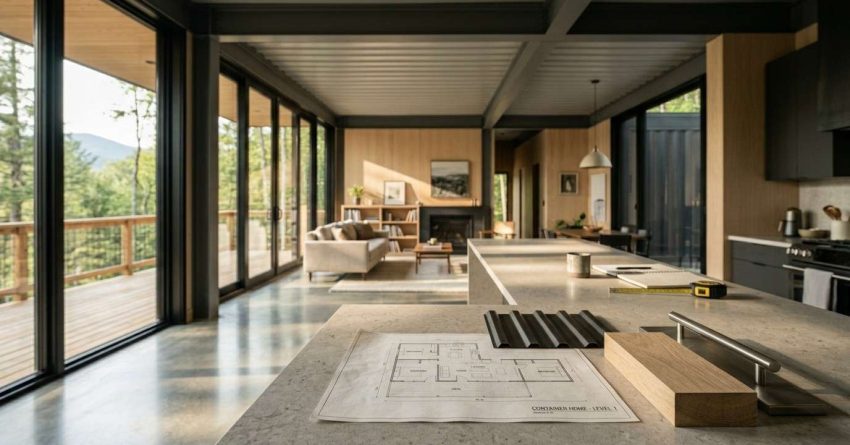
A shipping container home is a residential structure built using repurposed ISO steel intermodal containers as the primary structural component, offering an alternative to conventional wood-frame or masonry construction. These homes range from compact single-unit retreats to expansive multi-container residences, and they attract homeowners, investors, and property managers who want durable, cost-conscious, and design-flexible housing solutions. Container homes are built across the USA in urban infill lots, rural properties, and everything in between.
Understanding the full scope of container home construction matters now more than ever, as material costs, housing shortages, and demand for sustainable alternatives continue reshaping how Americans approach residential building.
This guide covers what container homes are, the types available, costs and budgeting, permits and zoning, foundation and site prep, insulation, plumbing and electrical systems, interior and exterior finishing, pros and cons, financing, maintenance, and how to hire the right professionals for your project.
What Is a Shipping Container Home?
A shipping container home is a dwelling constructed using one or more steel intermodal freight containers — the same standardized steel boxes used to transport goods across oceans and rail networks worldwide. These containers are manufactured to ISO specifications, which means they arrive on-site as structurally engineered steel boxes with predictable dimensions, load-bearing capacity, and material properties.
The two most common container sizes used in residential construction are the 20-foot container, which measures approximately 160 square feet of interior floor space, and the 40-foot container, which provides roughly 320 square feet. High-cube variants add an extra foot of ceiling height, making them the preferred choice for livable interiors.
How Container Homes Differ from Traditional Construction
Unlike wood-frame or concrete block construction, container homes begin with a pre-engineered steel shell that is inherently load-bearing. This eliminates the need for a traditional stud wall framing system and allows for open-span interiors without interior load-bearing walls in many configurations. However, the steel shell also conducts heat and cold aggressively, requires specialized insulation strategies, and demands rust prevention measures that wood-frame homes do not.
Who Builds and Lives in Container Homes?
Container homes attract a wide range of owners — from first-time homebuyers seeking affordable entry points into homeownership, to landlords building accessory dwelling units (ADUs) on existing properties, to real estate investors developing short-term rental properties. Their modular nature also makes them popular for off-grid retreats, vacation cabins, and workforce housing projects.
Shipping container homes span a wide range of configurations, structural approaches, and design philosophies — our dedicated guide to what a shipping container home is covers the full definition, structural classifications, and how these homes compare to traditional and modular construction in detail.
Types of Shipping Container Homes
Container homes are not a single product category. They exist on a wide spectrum of complexity, size, and design intent, and understanding the major types helps buyers and builders align their project scope with realistic budgets and site requirements.
Single-Container Homes
A single-container home uses one 20-foot or 40-foot container as the entire living structure. These are the most affordable and fastest to build, making them popular for ADUs, guest houses, vacation cabins, and minimalist primary residences. A single 40-foot high-cube container can accommodate a bedroom, bathroom, kitchen, and living area when designed efficiently.
Multi-Container and Modular Designs
Multi-container homes stack or arrange two or more containers to create larger floor plans. Containers can be placed side by side to widen the footprint, stacked vertically to create two-story structures, or arranged in L-shapes and U-shapes around a central courtyard. Each additional container adds structural complexity, requires engineered connection points, and increases foundation requirements.
Hybrid Container Homes
Hybrid designs combine steel containers with conventional framing, timber, or concrete construction. A common hybrid approach uses containers as the structural core while adding wood-framed wings, covered porches, or roof structures that extend the usable living area beyond the container footprint. Hybrid builds often achieve a more conventional residential appearance while retaining the structural advantages of the steel container core.
From compact single-unit builds to sprawling multi-container compounds, the range of configurations available is broader than most buyers expect — our guide to types of container home designs breaks down every layout category, their structural requirements, and which design approach fits different lot sizes, budgets, and lifestyle needs.
Shipping Container Home Costs and Budgeting
Cost is one of the most frequently misunderstood aspects of container home construction. While containers themselves are relatively inexpensive, the total project cost — including land, site preparation, foundation, systems, insulation, and finishing — can approach or exceed the cost of conventional construction depending on location, design complexity, and finish level.
Base Container Purchase Price
A used 20-foot container in good condition typically costs between $1,500 and $3,500, while a used 40-foot container ranges from $2,500 to $5,000. New or one-trip containers command a premium, with 40-foot units often priced between $5,000 and $8,000. Container condition grades — from “cargo worthy” to “wind and watertight” to “as-is” — significantly affect both price and the amount of remediation work required before construction begins.
Site Preparation and Foundation Costs
Site preparation costs vary enormously based on lot conditions. A flat, accessible lot with existing utility connections may require only minimal grading and a straightforward pier or slab foundation, with costs ranging from $5,000 to $15,000. Challenging sites with steep grades, poor soil bearing capacity, or remote locations can push site preparation costs to $30,000 or more before a single container is placed.
Finishing, Insulation, and Interior Costs
This is where container home budgets most frequently exceed initial estimates. Insulation, framing for interior walls, electrical rough-in, plumbing, HVAC, drywall, flooring, cabinetry, and fixtures add costs that are comparable to conventional construction on a per-square-foot basis. A fully finished container home in the USA typically costs between $150 and $350 per square foot of finished interior space, depending on region and finish quality. According to the National Association of Home Builders, the average cost to build a new single-family home in the USA exceeded $300,000 in recent years, a benchmark that container homes can undercut when designed efficiently and built in favorable site conditions.
Because costs vary dramatically based on container grade, site conditions, finish level, and labor market, understanding the full budget picture before you commit is essential — our shipping container home cost breakdown covers every line item from land acquisition and container purchase through foundation, systems, and interior finishing, with realistic ranges for each phase.
Planning, Permits, and Zoning for Container Homes
Before purchasing a container or hiring a builder, understanding the regulatory environment in your target location is essential. Container homes occupy a legal gray area in many jurisdictions — they are neither manufactured homes nor conventional site-built homes, which means local building departments may not have a clear permitting pathway established.
Building Permits and Code Compliance
Most jurisdictions in the USA require a building permit for any permanent residential structure, including container homes. The permitting process typically requires architectural drawings, structural engineering calculations, and compliance with the International Residential Code (IRC) or local equivalents. Some counties have adopted specific container home provisions; others evaluate them on a case-by-case basis under existing residential construction codes.
Zoning Laws and Where Container Homes Are Allowed
Zoning laws determine whether a container home is permitted on a given parcel at all. Residential zones that allow site-built homes generally permit container homes if they meet local building codes, but agricultural, commercial, and mixed-use zones have varying rules. Some municipalities have enacted explicit container home ordinances — both permissive and restrictive — making pre-purchase zoning research a non-negotiable first step.
Permit requirements and zoning restrictions vary significantly by county, municipality, and state — our guide to container home permits and zoning rules explains exactly what approvals you need, how to navigate local building departments, and which jurisdictions are most container-home-friendly across the USA.
Foundation and Site Preparation
The foundation system anchors the container home to the ground, manages drainage, and transfers structural loads safely into the soil. Because steel containers are designed to bear loads at their corner castings — not along their base rails — foundation design for container homes differs from conventional residential foundation engineering.
Foundation Types for Container Homes
The four most common foundation types used for container homes are pier foundations, concrete slab foundations, strip or perimeter foundations, and full basement foundations. Pier foundations are the most common choice for container homes because they support the container at its corner castings, allow airflow beneath the structure, and are cost-effective on stable soil. Slab foundations work well for single-story builds on flat lots but require careful planning for utility penetrations through the concrete.
Site Grading, Utilities, and Access
Site preparation includes clearing vegetation, grading for drainage, establishing utility connections (water, sewer or septic, electrical service), and creating a stable access route for container delivery. Container delivery requires a crane or specialized roll-off truck, and the delivery vehicle needs a clear, level approach path with adequate overhead clearance. Sites with restricted access may require additional equipment and cost.
Choosing the right foundation system affects structural integrity, drainage, long-term settling, and total project cost — our guide to container home foundation options covers pier, slab, strip, and basement foundation types, with guidance on which system suits different soil conditions, climates, and container configurations.
Insulation and Climate Control in Container Homes
Steel is one of the most thermally conductive building materials available, which means an uninsulated container home becomes dangerously hot in summer and bitterly cold in winter. Insulation is not optional in container construction — it is a structural necessity that directly affects habitability, energy efficiency, and long-term comfort.
Insulation Methods and Materials
The three primary insulation approaches for container homes are spray polyurethane foam (SPF), rigid foam board, and batt insulation. Spray foam is the most popular choice because it adheres directly to the steel interior walls, creates an air and vapor barrier simultaneously, and eliminates the thermal bridging that occurs when insulation is interrupted by framing members. Closed-cell spray foam achieves R-values of approximately R-6 to R-7 per inch, making it highly effective in limited wall depth situations. Rigid foam board is a cost-effective alternative when applied to the exterior of the container, preserving interior floor space while still providing meaningful thermal resistance.
HVAC and Ventilation Considerations
Because container homes are tightly sealed steel enclosures, mechanical ventilation is essential to prevent moisture buildup, condensation on interior steel surfaces, and poor indoor air quality. Mini-split heat pump systems are the most common HVAC solution for container homes because they require no ductwork, operate efficiently in both heating and cooling modes, and can be sized precisely for the small square footage of most container builds.
Steel conducts heat and cold far more aggressively than wood-frame construction, making insulation one of the most consequential decisions in any container build — our guide to container home insulation methods compares spray foam, rigid board, batt, and exterior cladding approaches, with R-value targets for different climate zones across the USA.
Plumbing, Electrical, and Mechanical Systems
Installing plumbing, electrical, and mechanical systems in a container home requires planning that accounts for the steel shell’s unique properties. Unlike wood framing, steel walls cannot be easily notched or drilled without affecting structural integrity, and all penetrations through the container skin must be properly sealed to prevent water infiltration and corrosion.
Plumbing Rough-In and Water Supply
Plumbing supply lines and drain lines are typically routed beneath the container floor or through interior partition walls built inside the container. The container floor — originally a hardwood or bamboo decking over steel cross-members — must be evaluated for chemical contamination from previous cargo before any plumbing penetrations are made. Water supply options include municipal connection, well water, or rainwater harvesting systems for off-grid builds.
Electrical Panel, Wiring, and Load Planning
Electrical systems in container homes are typically installed using surface-mounted conduit on interior walls or routed through interior partition framing. The electrical panel is sized based on the home’s total load, including HVAC, water heating, kitchen appliances, and lighting. Because container homes are often built in locations with limited grid access, solar panel integration and battery storage systems are increasingly common additions to the electrical design.
Routing plumbing and electrical through steel walls and floors requires different planning than conventional framing — our guide to container home plumbing and electrical systems walks through rough-in sequencing, panel sizing, water supply options, and the code considerations that apply specifically to container construction.
Interior Design and Finishing for Container Homes
The interior of a shipping container home presents both creative opportunities and practical constraints. Standard 20-foot and 40-foot containers are approximately 8 feet wide and 8.5 feet tall (or 9.5 feet for high-cube units), which means every design decision must account for the narrow footprint and relatively low ceiling height.
Flooring, Walls, and Ceiling Options
After insulation and interior framing are complete, container home interiors accept the same finish materials as conventional homes. Luxury vinyl plank, engineered hardwood, polished concrete, and tile are all popular flooring choices. Interior walls are typically finished with drywall, though exposed steel, wood paneling, and shiplap are common design choices that add character while reducing finishing costs. Ceilings can be drywalled, left as exposed steel with spray foam insulation visible, or finished with wood slats for a warmer aesthetic.
Space-Saving Design Strategies
Maximizing livability in a narrow container footprint requires intentional space planning. Built-in storage, lofted sleeping areas, fold-down furniture, and open-plan kitchen and living layouts are standard strategies in container home design. Sliding barn doors replace swing doors to preserve usable floor space, and large windows or glass doors on the long walls of the container create visual depth that makes the interior feel larger than its dimensions suggest.
The narrow footprint and low ceiling height of standard containers demand creative space planning — our guide to container home interior design ideas covers flooring materials, wall treatments, built-in storage strategies, and layout approaches that make container interiors feel open, functional, and livable.
Exterior Finishing, Roofing, and Weatherproofing
The exterior of a shipping container home must accomplish two things simultaneously: protect the steel structure from corrosion and weather damage, and present a finished residential appearance that meets local aesthetic standards and, in some cases, HOA requirements.
Exterior Cladding and Coating Options
Bare steel containers are factory-coated with a marine-grade paint system designed to withstand ocean transport, but this coating degrades over time and requires maintenance. Common exterior finishing approaches include elastomeric paint systems, metal cladding panels, fiber cement siding, wood cladding, stucco, and corrugated metal roofing panels applied over the container’s existing roof. Each cladding system has different maintenance requirements, thermal performance characteristics, and cost profiles.
Roofing Systems for Container Homes
The flat roof of a standard shipping container is structurally sound but prone to water pooling if not properly addressed. Common roofing solutions include applying a waterproof membrane directly to the container roof, building a pitched roof structure over the container to improve drainage and add attic space, or installing a green roof system for thermal mass and aesthetic appeal. Pitched roof additions also provide space for solar panel installation and improve the home’s visual integration with surrounding residential architecture.
Protecting the steel shell from corrosion, UV degradation, and water infiltration requires a deliberate exterior strategy — our guide to container home exterior finishing options covers cladding materials, roof system types, waterproof coatings, and the weatherproofing sequence that keeps container homes structurally sound for decades.
Pros and Cons of Shipping Container Homes
Container homes offer genuine advantages over conventional construction in specific contexts, but they also carry real limitations that buyers and investors must understand before committing to a project. An honest assessment of both sides is essential for making a sound decision.
Key Advantages of Container Construction
Steel containers are inherently strong — a single 20-foot container is engineered to support stacking loads of up to 67,000 pounds when loaded. This structural strength translates to excellent resistance to high winds, seismic activity, and impact damage compared to wood-frame construction. Containers are also modular and transportable, which means a container home can theoretically be relocated if the owner’s circumstances change. From a sustainability perspective, repurposing a used container diverts a large steel structure from the scrap heap, and the compact footprint of most container homes reduces land disturbance compared to larger conventional builds.
Container homes can also be faster to build than conventional homes when the container shell arrives on-site pre-modified by a fabricator, compressing the construction timeline significantly. According to the U.S. Department of Energy, buildings account for approximately 40% of total U.S. energy consumption, and the tight, well-insulated envelope of a properly built container home can achieve energy performance that significantly outperforms older conventional housing stock.
Challenges and Limitations to Consider
The limitations of container construction are equally real. Insulation requirements consume interior floor space, reducing the usable square footage below the container’s nominal dimensions. Cutting openings for windows and doors weakens the container’s structural integrity and requires engineered steel reinforcement — a cost that surprises many first-time container home buyers. Financing and insurance are more complex than for conventional homes, and resale value in traditional real estate markets remains uncertain in many regions.
Understanding both the genuine strengths and the real limitations of container construction before you commit prevents costly surprises mid-project — our guide to shipping container home advantages and drawbacks provides an honest, side-by-side analysis of cost savings, sustainability benefits, structural challenges, and resale considerations.
For homeowners who want expert support at every stage of a container home build or renovation, connecting with trusted home service professionals who understand non-traditional construction ensures that every system — from plumbing and electrical to roofing and finishing — is installed correctly and to code.
Financing a Shipping Container Home
Securing financing for a shipping container home is one of the most common challenges buyers face, because these structures do not fit neatly into the conventional mortgage categories that most lenders use. Understanding which loan products apply — and how lenders evaluate container home projects — is essential before beginning the financial planning process.
Loan Types Available for Container Homes
Construction loans are the most common financing vehicle for container home projects. These short-term loans fund the construction phase and are typically converted to a permanent mortgage upon project completion. Personal loans are an option for smaller, lower-cost builds but carry higher interest rates and shorter repayment terms. Some buyers use land equity or home equity lines of credit (HELOCs) from existing properties to fund container home construction. FHA and VA loan programs may apply to container homes that meet specific construction and appraisal standards, though lender acceptance varies significantly.
Insurance Considerations
Insuring a shipping container home requires working with insurers who have experience with non-traditional residential structures. Standard homeowner’s insurance policies may not cover container homes, and buyers often need to seek out specialty insurers or surplus lines carriers. Coverage considerations include the replacement cost of the steel structure, the contents, liability, and — for properties in flood zones or high-wind areas — additional hazard coverage.
Because container homes fall outside conventional mortgage categories, securing funding requires knowing which loan products apply and how lenders evaluate these properties — our guide to financing options for container homes covers construction loans, personal loans, FHA considerations, and what lenders look for when underwriting a container home project.
Maintenance and Long-Term Upkeep
A well-built shipping container home is a durable, long-lasting structure, but it requires a maintenance approach that differs from conventional residential upkeep. Steel is susceptible to rust when its protective coating is compromised, and the connections between containers, the roof membrane, and the exterior cladding system all require periodic inspection and maintenance.
Rust Prevention and Structural Inspections
The most important maintenance task for any container home is rust prevention. Annual inspection of all exterior painted and coated surfaces — with prompt touch-up of any chips, scratches, or areas of surface rust — prevents the oxidation from penetrating the steel wall thickness. Particular attention should be paid to the container’s corner castings, base rails, and any areas where cladding or roofing materials meet the steel shell, as these transition points are the most vulnerable to water infiltration.
Ongoing Systems Maintenance
Beyond rust prevention, container home maintenance follows a similar rhythm to conventional residential upkeep. HVAC filters require regular replacement, plumbing connections and seals should be inspected annually, and the roof membrane or roofing system needs inspection after major weather events. Interior humidity management is especially important in container homes because condensation on interior steel surfaces — if not controlled by proper insulation and ventilation — can cause hidden corrosion and mold growth.
Steel structures require a different maintenance rhythm than wood-frame homes, with rust prevention, sealant inspection, and structural monitoring forming the core of any long-term upkeep plan — our guide to container home maintenance schedule outlines annual, seasonal, and five-year inspection tasks that protect your investment over the full life of the structure.
Hiring Professionals for Your Container Home Project
A shipping container home project involves a broader range of specialized professionals than a conventional residential build. The unique structural, regulatory, and systems challenges of container construction mean that experience with this specific building type matters significantly more than general construction experience alone.
What Specialists Does a Container Home Project Require?
A complete container home project typically requires an architect or designer with container home experience, a structural engineer to certify the container modifications and foundation design, a general contractor or owner-builder who has managed container builds previously, and licensed subcontractors for plumbing, electrical, HVAC, and roofing work. For multi-container or complex hybrid designs, a geotechnical engineer may also be required to evaluate soil bearing capacity and foundation design.
Vetting professionals carefully — reviewing past container home projects, checking licensing and insurance, and obtaining multiple bids — is essential because mistakes in container modification, structural reinforcement, or systems installation are expensive to correct after the fact.
Finding professionals with direct container construction experience is one of the most important decisions in the entire project — our guide to container home contractors and builders explains which specialists you need at each phase, what credentials to verify, and how to evaluate bids from architects, structural engineers, and general contractors who specialize in container builds.
Conclusion
Shipping container homes bring together steel construction, modular design, and alternative housing principles into a building type that rewards careful planning across every phase — from site selection and permitting through foundation, systems, insulation, and finishing.
The cluster of resources connected to this guide covers every major dimension of container home construction in depth, giving homeowners, landlords, and property managers the detailed guidance they need to move from concept to completed structure with confidence.
At Mr. Local Services, our network of skilled professionals supports container home projects at every stage, connecting you with experienced contractors, systems specialists, and finishing trades who deliver quality workmanship and dependable results.
Frequently Asked Questions
How long does it take to build a shipping container home?
A simple single-container home can be completed in three to six months from permit approval to move-in. Multi-container and hybrid designs typically require six to twelve months depending on site complexity, permitting timelines, and contractor availability.
Are shipping container homes safe to live in?
Yes, when properly built and inspected, shipping container homes are structurally safe and durable. The key safety considerations are ensuring containers are free of hazardous cargo residues, that all structural modifications are engineered, and that insulation and ventilation systems prevent condensation and air quality issues.
Do shipping container homes hold their value?
Resale value for container homes varies by location, design quality, and local real estate market acceptance. Well-finished container homes in desirable areas have sold competitively with conventional homes, but resale can be more challenging in markets where buyers and lenders are unfamiliar with the building type.
Can a shipping container home be placed on any property?
Not automatically. Zoning laws, building codes, and deed restrictions all affect whether a container home is permitted on a specific parcel. Researching local zoning and obtaining pre-application guidance from the local building department before purchasing land or containers is strongly recommended.
What is the lifespan of a shipping container home?
A properly maintained shipping container home can last 25 to 50 years or more. The steel structure itself is engineered for decades of use, and with consistent rust prevention, sealant maintenance, and systems upkeep, container homes can match or exceed the lifespan of conventional residential construction.
Are shipping container homes energy efficient?
Container homes can be highly energy efficient when properly insulated and equipped with efficient HVAC systems. The compact footprint reduces the volume of conditioned space, and a well-sealed spray foam insulation system minimizes thermal bridging and air infiltration, resulting in lower heating and cooling costs compared to older conventional homes of similar size.
Do I need a special mortgage to buy or build a container home?
Standard conventional mortgages are not always available for container homes, particularly during the construction phase. Construction loans, personal loans, and specialty lenders who work with non-traditional residential structures are the most common financing paths. Working with a lender experienced in alternative housing construction early in the planning process is strongly recommended.