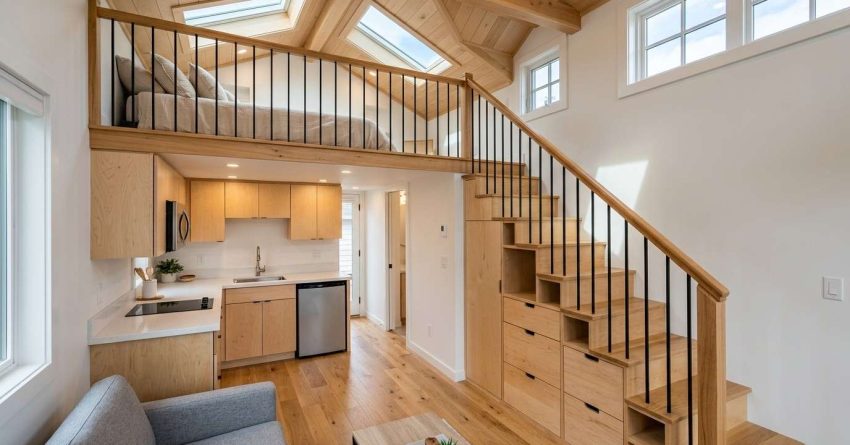
A park model loft design uses elevated sleeping or living space built above the main floor of a compact home, typically ranging from 320 to 400 square feet, to maximize every inch of available square footage without expanding the footprint.
Park model loft homes are growing in popularity across the USA as more homeowners and property managers look for efficient, affordable housing solutions that do not sacrifice comfort or livability.
This guide covers what defines a park model loft, the key features and layout options available, construction standards, interior design strategies, functional uses, and the maintenance tasks that keep loft homes in top condition.
What Is a Park Model Loft Design?
A park model loft design is a compact residential structure built to ANSI A119.5 standards, featuring an elevated loft area accessed by stairs or a ladder that serves as additional living or sleeping space above the main floor. These homes are classified as recreational vehicles in most states, which affects how they are permitted, placed, and taxed.
The loft is the defining architectural feature that separates a standard park model from a loft-style configuration. Without the loft, the usable square footage of a park model is limited to the ground floor only. With a well-designed loft, the same footprint can accommodate a full sleeping area, a home office, or dedicated storage without any increase in land use.
Park model loft homes are one of the most space-efficient tiny home options available today — our complete guide to tiny homes covers every style, size, and configuration to help you find the right fit for your property.
How Loft Space Is Defined in Park Model Homes
In a park model home, loft space refers to any elevated platform or mezzanine level built within the structure’s allowable height. ANSI A119.5 sets the maximum width at 8.5 feet and the maximum length at 40 feet, with height restrictions that directly affect how much usable headroom a loft can provide. Most park model lofts offer between 36 and 60 inches of ceiling clearance, which is sufficient for sleeping but requires careful planning for any standing-height use.
Key Features of a Park Model Loft Design
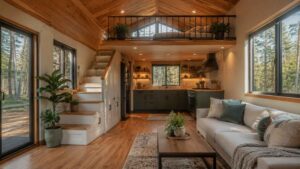
The features that define a park model loft design go beyond the loft platform itself. Every element — from the staircase to the railing system to the window placement — affects how functional and comfortable the loft space becomes in daily use.
Skylights and dormer-style windows are common in park model lofts, and proper loft window installation is critical for light, ventilation, and weatherproofing — our window services covers all installation and replacement options.
Sleeping Loft Configuration and Headroom
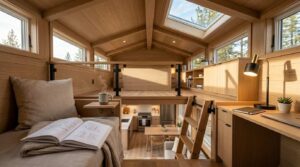
A sleeping loft in a park model home is typically positioned above the main living area or kitchen, using the full width of the structure to accommodate a full, queen, or twin mattress. Headroom is the most critical design variable. A loft with less than 36 inches of clearance is generally considered storage-only. A loft with 48 to 60 inches of clearance is functional for sleeping. Anything above 60 inches begins to approach a usable living space, though this is rare within standard park model height limits.
Builders often use raised rooflines, cathedral ceilings, or dormer additions to increase loft headroom without violating width or length restrictions.
Staircase and Ladder Access Options
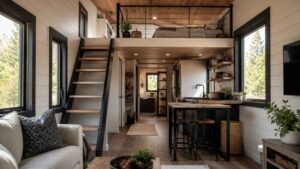
Access to the loft is one of the most practical decisions in the design process. The two primary options are a fixed staircase and a ship’s ladder. A fixed staircase takes up more floor space on the main level but provides safer, easier access for daily use and for people with mobility considerations. A ship’s ladder is more compact and frees up floor space below, but requires more physical effort and is less suitable for children or older adults.
Some builders offer staircase designs with built-in storage drawers in each step, which recovers the floor space used by the staircase and adds meaningful storage capacity to the main level.
Park Model Loft Design Layouts and Floor Plans
Layout is where park model loft design becomes highly personal. The placement of the loft relative to the kitchen, bathroom, and living area determines how the entire home flows and functions. Most manufacturers offer several standard floor plan configurations, with options for customization.
Single Loft vs. Double Loft Configurations
A single loft configuration places one elevated platform at one end of the home, typically above the bedroom or living area. This is the most common layout and works well for individuals or couples. A double loft configuration adds a second elevated platform at the opposite end of the home, creating two separate loft spaces that can serve different functions — one for sleeping and one for storage or a workspace.
Double loft designs require careful structural planning because the added weight and the reduced main-floor ceiling height in two areas of the home must both be accounted for in the build.
Open-Concept Designs That Maximize Loft Space
Open-concept park model loft designs remove interior walls on the main floor to create a continuous visual and physical connection between the kitchen, living area, and the loft above. This approach makes the home feel significantly larger than its square footage suggests. The loft becomes a visual focal point rather than a hidden room, and the open sightlines improve natural light distribution throughout the entire structure.
Open-concept layouts work best when the loft is positioned at one end of the home, allowing the main floor to remain unobstructed from the entrance to the back wall.
Building Materials and Construction Standards
Park model homes are built to ANSI A119.5 standards, which govern structural integrity, electrical systems, plumbing, and fire safety. These standards are set by the American National Standards Institute and are enforced through third-party inspection programs. Understanding the standards behind park model construction helps you make confident decisions about quality and safety — our tiny homes resource covers the full regulatory and building landscape in detail.
HUD and ANSI A119.5 Compliance for Park Models
ANSI A119.5 is the primary standard for park model recreational vehicles in the USA. It specifies maximum dimensions, structural load requirements, insulation values, and systems standards for electrical, plumbing, and HVAC. Park models are not subject to HUD manufactured housing standards, which apply to homes built on permanent chassis for year-round occupancy. This distinction matters for permitting, financing, and placement on private property.
Buyers should always verify that a park model carries a current ANSI A119.5 certification label before purchase. This label confirms that the unit was inspected and approved by a recognized third-party agency during the manufacturing process.
Interior Design Ideas for Park Model Lofts
The interior design of a park model loft home requires a different approach than a standard residential space. Every design decision must serve a functional purpose while also contributing to the overall sense of openness and comfort. Clutter is the primary enemy of a well-designed park model loft.
Built-in shelving, custom staircases, and fitted storage are all areas where custom loft carpentry makes a measurable difference — our carpentry services explains what skilled carpenters can build and install in compact loft spaces.
Storage Solutions Built Into Loft Spaces
Built-in storage is the most effective way to manage belongings in a park model loft home. Options include under-loft cabinets that use the space beneath the loft platform, staircase drawers that convert each step into a pull-out storage unit, and built-in shelving along the loft railing that keeps items accessible without taking up floor space.
Choosing the right materials for loft flooring options affects both the look and the structural load of your park model — our flooring covers lightweight, durable materials well-suited to elevated loft spaces.
Lighting and Ventilation in Loft Areas
Loft areas in park model homes can feel dark and stuffy without deliberate lighting and ventilation planning. Recessed LED lighting installed in the loft ceiling or along the railing provides even illumination without reducing headroom. Operable skylights or small dormer windows allow warm air to escape from the loft, which is critical because heat rises and loft spaces can become uncomfortable in warm months without adequate airflow.
Ceiling fans mounted below the loft on the main floor help circulate air throughout the entire home and reduce the temperature differential between the ground level and the loft.
Functional Uses for Your Park Model Loft
The loft in a park model home does not have to function exclusively as a sleeping area. Many owners use the loft space in ways that reflect their specific lifestyle and daily needs, particularly when the main floor already includes a dedicated sleeping area.
When a loft space no longer fits your needs, exploring loft remodeling ideas with a professional can unlock new configurations and uses — our remodeling services outlines what a full loft conversion or redesign involves.
Sleeping, Office, and Hobby Space Options
A sleeping loft is the most common use, but a home office loft is increasingly popular among remote workers who want a defined workspace separated from the main living area. The elevated position of the loft creates a natural sense of separation without requiring a physical door or wall. A hobby loft works well for activities like reading, crafting, or music, where a quiet, contained space is more important than standing headroom.
For owners who use the main floor as the primary sleeping area, the loft can serve as a dedicated guest sleeping space, keeping the main floor clear for daytime living.
Maintenance and Upkeep for Park Model Loft Homes
Park model loft homes require consistent maintenance to stay safe, comfortable, and structurally sound. The loft itself introduces specific maintenance considerations that do not apply to single-level park models, particularly around structural connections, electrical systems, and climate control.
Keeping a park model loft in top condition follows many of the same principles as broader tiny home maintenance — our tiny homes guide outlines the full scope of upkeep tasks every owner should plan for.
Structural, Electrical, and HVAC Considerations
The structural connections between the loft platform and the exterior walls should be inspected annually for signs of movement, settling, or moisture intrusion. Any creaking, flexing, or visible gaps in the loft framing should be addressed promptly by a qualified contractor.
Loft areas present unique heating and cooling challenges due to their elevated position and limited airflow — our on loft HVAC solutions explains the systems and service options best suited to park model homes.
Safe and code-compliant loft electrical work is essential in any park model home, particularly in sleeping and office loft configurations — our electrical services covers inspections, upgrades, and new installations for loft spaces.
Electrical systems in the loft should be inspected every two to three years, with particular attention to outlet placement, lighting circuits, and any wiring that runs through the loft floor or railing system. Park model homes are often connected to external power pedestals, and the connection point should be checked seasonally for corrosion or wear.
Conclusion
Park model loft design combines compact construction with smart vertical space use, creating homes that feel larger and more functional than their square footage suggests. The loft is the central feature that defines the layout, the interior design strategy, and the maintenance requirements of the entire home.
Choosing the right loft configuration, access method, and interior design approach makes a significant difference in how livable and practical a park model home becomes over time.
At Mr. Local Services, our team connects park model homeowners with skilled professionals for carpentry, electrical, HVAC, flooring, and remodeling work — so your loft home stays safe, comfortable, and well-maintained year-round.
Frequently Asked Questions
What is the maximum size of a park model loft home?
Park model homes built to ANSI A119.5 standards cannot exceed 400 square feet of living space, with a maximum width of 8.5 feet and a maximum length of 40 feet. The loft area is included in this total square footage calculation.
How much headroom is needed for a functional sleeping loft?
A sleeping loft in a park model home requires a minimum of 36 inches of ceiling clearance to be usable. Most builders recommend 48 to 60 inches for comfortable sleeping, and anything above 60 inches allows for a broader range of uses.
Are park model loft homes considered permanent residences?
In most states, park model homes are classified as recreational vehicles rather than permanent residences. This classification affects zoning, permitting, property taxes, and financing options. Local regulations vary significantly, so checking with your county or municipality is essential before placement.
What is the difference between a ship’s ladder and a staircase in a park model loft?
A ship’s ladder is a steep, compact access option that saves floor space on the main level but requires more physical effort to climb. A fixed staircase is safer and easier for daily use but occupies more square footage. Staircase designs with built-in storage drawers help offset the floor space they use.
Can a park model loft be used as a year-round home?
Yes, many park model loft homes are designed and insulated for year-round occupancy. The key factors are insulation rating, HVAC system capacity, and local climate. Buyers should confirm that the unit’s insulation values meet the requirements for the climate zone where the home will be placed.
How do I ventilate a park model loft in summer?
Operable skylights, small dormer windows, and ceiling fans on the main floor are the most effective ventilation strategies for park model lofts. Heat rises and concentrates in the loft, so any opening that allows warm air to escape will significantly improve comfort during warm months.
What maintenance does a park model loft require annually?
Annual maintenance for a park model loft should include a structural inspection of the loft platform and framing connections, a check of the electrical system and any wiring in the loft area, an HVAC service call to confirm the system is handling the loft’s airflow needs, and an inspection of any skylights or dormer windows for seal integrity and weatherproofing.