A park model loft design uses vertical space to create a functional sleeping or storage area within a compact, HUD-code recreational vehicle structure — typically ranging from 320 to 400 square feet. These designs are built for efficiency, making every square foot count through smart layout planning, built-in storage, and thoughtful use of ceiling height.
For homeowners, property managers, and real estate professionals exploring compact housing options, understanding how loft design works in a park model is essential to evaluating livability, safety, and long-term value.
This guide covers what defines a park model loft, key layout features, interior design strategies, structural requirements, and customization options to help you make a confident, informed decision.
What Is a Park Model Loft Design?
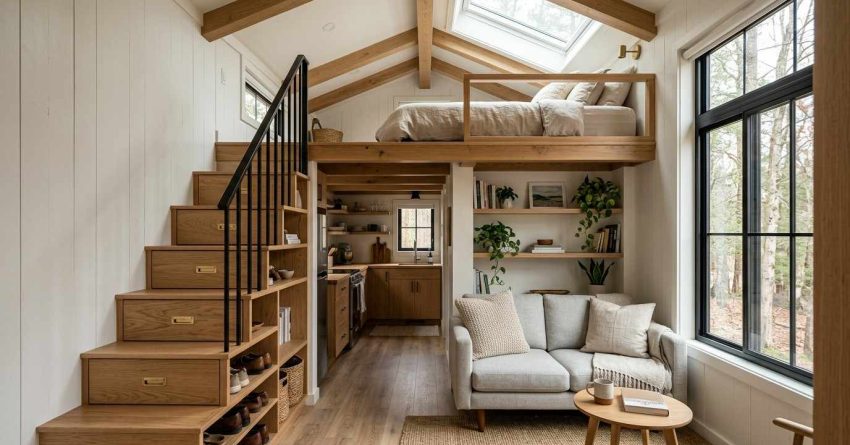
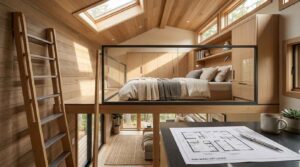
A park model loft design is a compact dwelling layout that incorporates an elevated sleeping or storage platform within a single-story park model home. Unlike traditional homes where upper floors are full-height rooms, a park model loft is a partial second level built within the existing roofline, accessed by a staircase or ladder.
Park models are classified under ANSI A119.5 standards as recreational park trailers. Their compact footprint — legally capped at 400 square feet of interior living space — makes vertical design not just a stylistic choice but a practical necessity. The loft becomes the primary solution for adding usable square footage without expanding the floor plan.
Understanding how park model homes compare to traditional builds starts with knowing your investment options — our custom home investment analysis breaks down the financial trade-offs between custom and spec builds so you can make a fully informed housing decision.
How Loft Space Is Defined in Park Models
In a park model, loft space refers to any elevated platform area that sits above the main living floor but below the peak of the roofline. It is not a full second story. The loft is integrated into the roof structure itself, which means ceiling height at the loft level is determined by the pitch of the roof rather than by a separate floor-to-ceiling measurement.
Most park model lofts are classified as sleeping lofts, meaning they are designed primarily for a mattress and basic sleeping use. Some manufacturers also offer storage-only loft configurations for buyers who prefer to keep all sleeping areas on the main floor.
Standard Loft Dimensions and Configurations
Standard park model lofts range from 60 to 120 square feet of usable platform space. Ceiling height at the center of the loft typically falls between 3.5 and 5 feet, which is sufficient for sleeping but not for standing. Width and depth vary by manufacturer and roof pitch, with steeper pitches generally allowing more usable headroom.
Common configurations include:
- Full-width lofts spanning the entire width of the unit
- Half-lofts positioned over the bedroom or living area only
- Split lofts with two smaller platforms on opposite ends of the unit
Key Features of a Park Model Loft Layout
The loft layout in a park model is shaped by three primary factors: the available roofline space, the access method chosen, and the intended use of the loft. Each of these decisions affects how livable and functional the loft will be in daily use.
Sleeping Loft vs. Storage Loft
A sleeping loft is designed to accommodate a mattress — typically a twin, full, or queen depending on platform width — along with minimal furniture such as a small shelf or reading light. It prioritizes comfort and accessibility, which means the access staircase or ladder must be safe and easy to use repeatedly.
A storage loft is designed for items that do not require frequent access: seasonal gear, luggage, or overflow household items. Storage lofts can have lower ceiling clearance and steeper access angles because the user is not expected to spend extended time in the space.
Choosing between the two depends on the number of occupants, the primary use of the park model, and whether the main floor already provides adequate sleeping space.
Staircase and Ladder Access Options
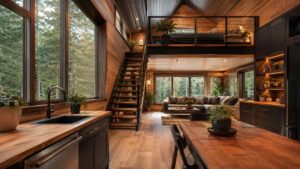
Access to the loft is one of the most consequential design decisions in a park model. The three main options are:
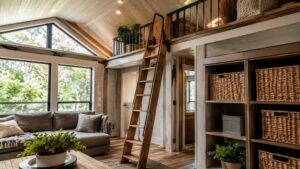
Ship’s ladder: A steep, space-efficient ladder with angled rungs. Takes up minimal floor space but requires upper body strength and is not suitable for young children or older adults.
Alternating tread staircase: A compact stair design where each step alternates left and right, reducing the footprint compared to a standard staircase while offering better footing than a ladder.
Standard staircase: The most comfortable and accessible option, but requires the most floor space — typically 20 to 30 square feet on the main level. Often includes built-in storage drawers beneath each step.
The right choice depends on who will use the loft, how often, and how much main-floor space can be dedicated to the access structure.
Interior Design Strategies for Park Model Lofts
Effective interior design in a park model loft focuses on making the space feel open, functional, and comfortable despite its limited dimensions. The goal is to use every surface and angle intentionally.
Maximizing Vertical Space
In a loft environment, vertical space is the primary design resource. Wall-mounted shelving, pegboards, and hanging organizers allow storage to move off the floor and onto surfaces that would otherwise go unused. Low-profile furniture — platform beds, foldable side tables, and slim reading lights — reduces visual bulk and preserves the sense of openness.
Color also plays a role. Light wall colors and natural wood finishes reflect available light and make the loft ceiling feel higher than it is. Dark finishes, while stylish, can make a low-ceiling loft feel compressed.
Lighting and Ventilation in Loft Areas
Lofts accumulate heat because warm air rises. Without adequate ventilation, a sleeping loft can become uncomfortably warm, particularly in summer months. Effective solutions include:
- Skylights or roof windows that allow hot air to escape
- Ceiling fans positioned at the loft level
- Cross-ventilation through operable windows on opposing walls
- Mini-split HVAC systems with dedicated loft zone control
Lighting in a loft should be low-profile and directional. Recessed LED fixtures mounted into the loft floor (which is the ceiling of the space below) provide ambient light without reducing headroom. Battery-powered or plug-in wall sconces work well for task lighting at the sleeping level.
Structural and Building Considerations
Park model loft structures must meet specific load-bearing, height, and safety requirements. These are not optional design preferences — they are code-driven minimums that protect occupant safety and ensure the unit retains its legal classification.
Park model loft structures follow the same foundational safety principles that apply across all compact housing — our tiny home construction guide covers the full range of structural standards, materials, and code requirements that apply to this category of dwelling.
Ceiling Height Requirements for Loft Use
The ANSI A119.5 standard does not specify a minimum ceiling height for loft sleeping areas in the same way that residential building codes specify minimums for habitable rooms. However, most manufacturers and park operators follow a practical minimum of 3 feet of clearance at the lowest usable point of the loft to ensure safe entry and exit.
Some states and local jurisdictions impose additional requirements, particularly if the park model is installed on a permanent foundation or connected to permanent utilities. In those cases, the loft may be subject to residential building code minimums, which typically require 7 feet of ceiling height for habitable rooms — a standard that most park model lofts cannot meet. This distinction affects how the loft can be legally classified and marketed.
Load-Bearing and Safety Standards
The loft platform must be engineered to support a minimum live load — typically 30 to 40 pounds per square foot for sleeping areas. This accounts for the weight of occupants, a mattress, and basic furnishings. The structural members supporting the loft — joists, beams, and connection hardware — must be sized and fastened to meet this load requirement without deflection or movement.
Guardrails are required on any open edge of the loft where a fall hazard exists. Standard guardrail height is 36 inches, though 42 inches is recommended for lofts used by adults. Openings in the guardrail must be small enough to prevent a 4-inch sphere from passing through — a standard designed to protect young children.
Customization Options for Park Model Lofts
Park model lofts offer meaningful customization opportunities, particularly when the unit is ordered directly from a manufacturer rather than purchased as a pre-built model. The level of customization available depends on the production method and the manufacturer’s design flexibility.
The level of customization available in a park model loft depends heavily on whether you choose a pre-designed unit or commission a custom build — our spec vs custom builds comparison explains how each path affects your design choices, timeline, and total cost.
Built-In Storage and Furniture Solutions
Built-in storage is one of the most effective ways to maximize a park model loft without sacrificing floor space. Common built-in solutions include:
- Under-stair drawers and cabinets integrated into the staircase structure
- Recessed shelving built into the loft knee walls
- Platform beds with integrated drawer storage beneath the mattress
- Fold-down desks mounted to the loft wall for dual-use sleeping and workspace configurations
These solutions are most cost-effective when specified at the time of manufacture. Retrofitting built-ins into an existing park model is possible but typically requires a skilled carpenter and careful structural assessment.
For buyers interested in dedicated built-in storage solutions for compact spaces, built-in storage ideas for small homes covers design approaches, material choices, and installation considerations across a range of compact home types.
Finishing Materials and Style Choices
Loft finishing materials affect both the aesthetic and the functional performance of the space. Key choices include:
Flooring: Lightweight options such as luxury vinyl plank or engineered hardwood are preferred over tile or solid hardwood, which add unnecessary weight to the elevated platform.
Wall finish: Shiplap, beadboard, and painted drywall are all common in park model lofts. Shiplap and beadboard add texture and a cabin aesthetic while remaining lightweight.
Ceiling treatment: The underside of the loft platform — which is the ceiling of the space below — can be finished with tongue-and-groove wood, painted drywall, or exposed beam treatments depending on the overall design style.
Park Model Loft Design vs. Traditional Tiny Home Lofts
Park model lofts and traditional tiny home lofts share the same core concept — using vertical space to add sleeping or storage area — but differ in several important ways.
Park models are built to ANSI A119.5 recreational vehicle standards, which govern their construction, electrical systems, and plumbing. Traditional tiny homes built on wheels (THOWs) are typically built to RVIA standards or state-specific codes, while tiny homes on foundations follow local residential building codes.
This difference in governing standards affects loft design in practical ways. Park model lofts are factory-built within a controlled manufacturing environment, which means structural consistency is high and customization happens at the order stage. THOW lofts are often custom-built by the homeowner or a small builder, which allows more design flexibility but introduces greater variability in structural quality.
For buyers comparing these two housing types, a dedicated park model vs tiny house comparison covers the full range of differences in standards, costs, mobility, and livability to help you choose the right compact housing path.
Maintenance and Upkeep for Park Model Loft Spaces
Loft areas in park models require specific maintenance attention that differs from the main living floor. Because lofts are elevated and often less ventilated, they are more susceptible to moisture accumulation, temperature extremes, and structural wear from repeated access.
Key maintenance priorities for park model lofts include:
Staircase and ladder hardware: Check all fasteners, handrails, and tread surfaces annually. Loose hardware on a loft access structure is a fall hazard that should be addressed immediately.
Guardrail integrity: Inspect guardrail posts and connections at the start of each season. Any movement or wobble in the guardrail system requires immediate repair before the loft is used.
Roof and skylight seals: Loft areas sit directly beneath the roofline, making them the first area affected by roof leaks or skylight seal failures. Inspect seals annually and after severe weather events.
Ventilation system function: Confirm that any fans, vents, or mini-split units serving the loft are operating correctly before warm weather arrives.
Keeping a park model loft in top condition requires the same disciplined upkeep approach used across all compact dwellings — our tiny home maintenance resource outlines the seasonal tasks, repair priorities, and service schedules that protect your investment year-round.
Is a Park Model Loft Design Right for You?
A park model loft design is a strong choice for buyers who need to maximize sleeping capacity or storage within a compact footprint and are comfortable with the physical requirements of loft access. It works particularly well for vacation properties, short-term rental units, and seasonal residences where the loft is used by younger, physically capable occupants.
It is a less practical choice for full-time residents who are older, have mobility limitations, or need to access the loft multiple times per night. In those cases, a single-level park model layout or a unit with a full alternating-tread staircase and generous loft headroom is a better fit.
The decision also depends on local zoning and park rules. Some RV parks and manufactured home communities restrict loft use or require specific safety features before a loft can be used as a sleeping area. Confirming these requirements before purchase prevents costly surprises after installation.
For buyers still weighing compact housing options more broadly, understanding the park model home cost guide is an essential next step — it covers purchase price ranges, installation costs, and ongoing expenses across different park model configurations.
Frequently Asked Questions
What is the maximum size of a park model loft?
A park model loft is limited by the unit’s overall footprint and roofline. Most lofts range from 60 to 120 square feet of platform space. The total interior living area of the park model, including the loft, cannot exceed 400 square feet under ANSI A119.5 standards.
How much headroom is needed in a park model loft?
Most manufacturers design lofts with a minimum of 3 to 3.5 feet of headroom at the center of the platform. This is sufficient for sleeping and sitting but not for standing. Steeper roof pitches allow more usable headroom toward the center of the loft.
Can a park model loft be used as a permanent sleeping area?
Yes, a park model loft can be used as a permanent sleeping area provided it meets the structural load requirements, has adequate guardrails, and complies with any local park or zoning rules governing loft use. Some jurisdictions impose additional requirements if the unit is on a permanent foundation.
What is the safest access option for a park model loft?
An alternating tread staircase offers the best balance of safety and space efficiency for most users. It provides better footing than a ship’s ladder while using significantly less floor space than a standard staircase. A standard staircase is the safest option overall but requires the most main-floor space.
How do I ventilate a park model loft in summer?
The most effective ventilation strategies for park model lofts include installing a roof skylight or operable roof vent, adding a ceiling fan at the loft level, and using a mini-split HVAC system with a dedicated loft zone. Cross-ventilation through opposing windows also helps move hot air out of the loft space.
Can I add a loft to an existing park model?
Adding a loft to an existing park model is structurally complex and may not be feasible depending on the unit’s roofline, existing structural members, and ceiling height. It requires a structural assessment by a qualified engineer and must comply with ANSI A119.5 standards. In most cases, purchasing a unit with a factory-built loft is more cost-effective and structurally reliable.
How much does a park model with a loft cost compared to one without?
A loft configuration typically adds between $3,000 and $8,000 to the base price of a park model, depending on the manufacturer, loft size, access type, and finishing level. Units with full alternating-tread staircases and built-in storage tend to be at the higher end of that range.
Conclusion
Park model loft design transforms limited square footage into a fully functional living space by using vertical area that would otherwise go unused. The key decisions — loft type, access method, structural compliance, and customization level — directly affect how livable and safe the space will be over time.
Choosing the right loft configuration requires matching the design to the occupants, the use case, and the local regulatory environment. A well-designed loft adds genuine value; a poorly planned one creates daily inconvenience and potential safety risk.
At Mr. Local Services, our team connects you with skilled professionals who handle everything from loft structural assessments to built-in carpentry, ventilation upgrades, and ongoing maintenance — so your park model loft stays safe, comfortable, and well-maintained year-round.