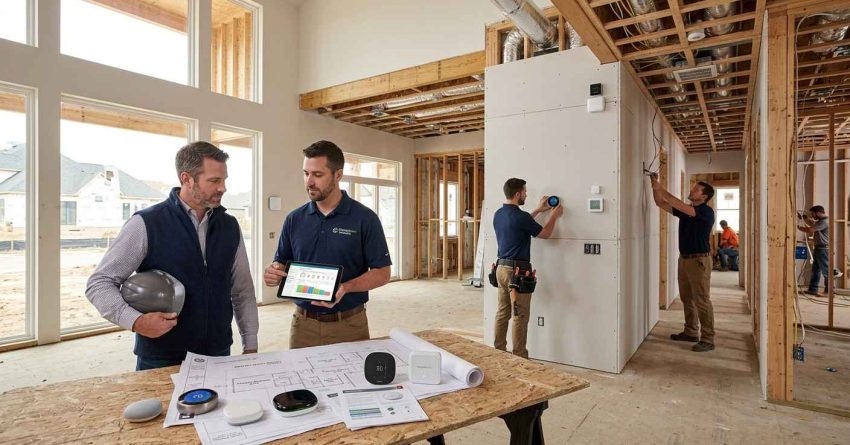
Multi-zone HVAC with smart control lets you set different temperatures in different rooms — independently, automatically, and from your phone. A properly designed zoned system eliminates hot and cold spots, reduces energy waste, and gives every occupant control over their own comfort. For homes with multiple floors, additions, or mixed-use spaces, it is one of the most practical climate upgrades available.
Managing a property means balancing comfort, cost, and efficiency across spaces that rarely have the same heating and cooling needs at the same time.
This guide explains how multi-zone HVAC systems work, what smart controls add, which system types are available, and what installation and maintenance involve for homeowners and property managers.
What Is a Multi-Zone HVAC System?
A multi-zone HVAC system is a heating and cooling setup that divides a property into separate temperature-controlled areas, called zones, each managed independently. Instead of one thermostat controlling the entire building, each zone has its own sensor and control point. The system delivers conditioned air only where it is needed, at the level each zone requires.
This design solves one of the most common complaints in residential and commercial properties: uneven temperatures. A south-facing bedroom that overheats in summer, a basement that stays cold in winter, or a home office that needs cooling during the day while the rest of the house does not — these are exactly the problems a zoned system addresses.
How Zones Are Defined in a Home or Building
Zones are defined by physical boundaries and usage patterns. A single floor can be one zone, or it can be divided into multiple zones based on sun exposure, occupancy, or room function. Bedrooms are often grouped separately from living areas. Additions, finished basements, and garages with living space are natural candidates for their own zones.
A licensed HVAC technician determines zone boundaries during the initial assessment, using a load calculation to understand how much heating and cooling each area requires. The number of zones a system can support depends on the equipment selected and the layout of the property.
Single-Zone vs. Multi-Zone: Key Differences
A single-zone system uses one thermostat to control the entire property. When one area reaches the set temperature, the system shuts off — even if other areas are still too hot or too cold. A multi-zone system runs each area to its own target independently, so comfort in one room does not come at the expense of another.
Multi-zone systems are more complex to install and carry a higher upfront cost, but they deliver measurable energy savings and significantly better comfort over time. Multi-zone systems are one of the most advanced options within the broader category of home climate control — our HVAC services overview covers every system type, service option, and maintenance solution available for residential and commercial properties.
How Smart Controls Work With Multi-Zone HVAC
Smart controls are the interface layer that makes a multi-zone system practical to manage. Without smart controls, a zoned system still requires manual adjustment at each thermostat. With smart controls, every zone is programmable, schedulable, and accessible remotely through a smartphone app or voice assistant.
The smart control layer connects each zone’s thermostat to a central hub or cloud platform. Sensors report real-time temperature data, and the system adjusts output automatically based on schedules, occupancy detection, or manual overrides. Some systems use learning algorithms that adapt to usage patterns over time, reducing the need for manual programming.
Smart Thermostats and Zone-Level Programming
Each zone in a smart-controlled system has its own programmable thermostat. These devices allow homeowners and property managers to set different temperature schedules for each zone — cooler at night in bedrooms, warmer in the morning in living areas, off entirely in unoccupied guest rooms. Programming can be done directly on the device or through a connected app.
Pairing a multi-zone system with the right thermostat requires careful setup and calibration — our smart thermostat installation guide explains the full process, compatible devices, and what a professional installation includes.
App-Based Control and Remote Access
Remote access is one of the most practical features of smart-controlled zoned systems. Property managers overseeing multiple units can monitor and adjust temperatures across locations from a single dashboard. Homeowners returning from travel can pre-condition the house before arrival. Vacation rental operators can reset temperatures between guest stays without being on-site.
Most major smart thermostat platforms — including those compatible with multi-zone systems — integrate with Amazon Alexa, Google Home, and Apple HomeKit, allowing voice control alongside app-based management.
Benefits of Multi-Zone HVAC With Smart Control
The combination of zoning and smart control delivers advantages that neither feature provides alone. Zoning creates the physical separation of climate areas. Smart control makes managing those areas efficient and effortless.
Energy Savings and Utility Cost Reduction
Heating and cooling unoccupied rooms is one of the largest sources of wasted energy in residential and commercial properties. A zoned system stops that waste by directing conditioned air only where it is needed. Smart scheduling amplifies the savings by automatically reducing output in zones that are unoccupied during predictable hours — overnight, during work hours, or during seasonal absences.
Homeowners who want to reduce utility costs beyond zoning should explore energy-efficient HVAC systems, which covers equipment ratings, rebate programs, and long-term savings comparisons across system types.
Comfort Customization for Every Room
Different people have different comfort preferences, and different rooms have different thermal characteristics. A multi-zone system with smart control accommodates both. Each occupant can set their own zone to their preferred temperature without affecting the rest of the property. Rooms with large windows, high ceilings, or poor insulation can be managed separately from well-insulated interior spaces.
For landlords and property managers, this level of customization reduces tenant complaints about temperature and gives each unit or space independent climate control — a meaningful feature in multi-unit residential and commercial properties.
Types of Multi-Zone HVAC Systems
Two primary system types support multi-zone operation: ductless mini-split systems and ducted zoned systems with dampers. Each has distinct advantages depending on the property’s existing infrastructure and the number of zones required.
Ductless Mini-Split Systems
Ductless mini-split systems are the most widely installed multi-zone solution for homes without existing ductwork, older properties, and additions. Each zone has its own indoor air handler mounted on the wall or ceiling, connected by refrigerant lines to an outdoor compressor unit. A single outdoor unit can support multiple indoor handlers, each operating independently.
Mini-splits are highly efficient, easy to zone precisely, and require no ductwork modification. They are also reversible — each unit provides both heating and cooling. Ductless systems are the most popular multi-zone solution for homes without existing ductwork — our mini-split installation guide walks through sizing, placement, and what the installation process involves from start to finish.
Ducted Zoned Systems With Dampers
Ducted zoned systems use the existing duct network but add motorized dampers inside the ducts to control airflow to each zone. A zone control panel coordinates the dampers based on signals from each zone’s thermostat. When a zone reaches its target temperature, its damper closes, redirecting airflow to zones still conditioning.
This approach works well in homes with existing forced-air systems where adding ductwork is impractical. The main limitation is that the existing duct layout must be compatible with zoning — not all duct configurations support effective zone separation without pressure imbalances.
Installation Requirements and What to Expect
Multi-zone HVAC installation is a professional project that requires licensed HVAC technicians. The scope varies significantly based on system type, number of zones, property size, and existing infrastructure.
Professional Assessment and Zone Planning
Every installation begins with a site assessment. The technician evaluates the property’s layout, insulation levels, window placement, sun exposure, and existing HVAC equipment. A Manual J load calculation determines the heating and cooling requirements for each proposed zone. This calculation drives equipment sizing — undersized or oversized equipment in any zone will underperform regardless of how well the controls are configured.
Zone planning also accounts for smart control integration. The technician identifies compatible thermostat models, confirms Wi-Fi coverage in each zone location, and maps the wiring or wireless communication paths between zone controllers and the central hub.
Typical Installation Timeline and Scope
A standard multi-zone mini-split installation for a three-to-four zone residential property typically takes one to three days. Ducted zoning retrofits can take longer depending on duct access and the number of dampers required. Smart thermostat wiring and commissioning add time but are typically completed within the same visit.
Every multi-zone installation begins with a load calculation and zone plan performed by a licensed technician — learn what to expect from professional HVAC installation and how our team manages the full scope from assessment to commissioning.
Maintenance for Multi-Zone HVAC Systems
Multi-zone systems require the same core maintenance as single-zone systems, with additional attention to zone-specific components. Each zone’s air handler, damper, thermostat, and sensor must be checked individually to ensure the system performs as designed.
Routine Service Tasks by Zone
For ductless mini-split systems, each indoor air handler has its own filter that requires cleaning every four to six weeks in active use. Coils should be inspected and cleaned annually. Refrigerant levels, electrical connections, and drain lines are checked during professional tune-ups.
For ducted zoned systems, damper motors and actuators require periodic inspection to confirm they open and close fully. Duct sealing around damper installations should be checked for leaks. Zone control panels and wiring connections are tested during annual service visits.
Keeping each zone performing at its best requires a consistent service routine — our HVAC maintenance schedule outlines every task, recommended frequency, and what a professional tune-up includes for zoned systems.
Is Multi-Zone HVAC Right for Your Property?
Multi-zone HVAC with smart control is the right choice for properties where temperature inconsistency is a recurring problem, where energy costs are a priority, or where different occupants or spaces have genuinely different climate needs. It is particularly well-suited to two-story homes, properties with additions or finished basements, vacation rentals, multi-unit residential buildings, and commercial spaces with mixed occupancy patterns.
It is not the most cost-effective solution for small, well-insulated single-story homes where a single thermostat already maintains consistent comfort. In those cases, a smart single-zone thermostat may deliver most of the control benefits at a fraction of the cost.
For property owners evaluating upgrades beyond HVAC, our home improvement services covers the full range of repairs, installations, and improvements available through a single trusted provider.
Conclusion
Multi-zone HVAC with smart control brings together precise climate separation and intelligent automation to solve the comfort and efficiency challenges that single-zone systems cannot address. The right system type, zone layout, and control platform depend on the property’s specific characteristics and usage patterns.
For homeowners and property managers, the long-term value comes from reduced energy waste, fewer comfort complaints, and a system that adapts to how the property is actually used rather than forcing occupants to adapt to it.
Mr. Local Services connects you with licensed HVAC professionals who assess, install, and maintain multi-zone systems from start to finish — contact us today to schedule your property evaluation and get a clear plan for your climate upgrade.
Frequently Asked Questions
How many zones can a multi-zone HVAC system support?
Most residential multi-zone systems support two to eight zones, depending on the equipment manufacturer and system type. Larger commercial systems can support significantly more. The number of zones is determined during the load calculation and zone planning phase.
Can I add smart control to an existing HVAC system?
Yes, in many cases. If your existing system uses a standard thermostat wiring configuration, a compatible smart thermostat can replace it without major modifications. Zoning capability, however, requires either a ductless system or the addition of dampers and a zone control panel to an existing ducted system.
What is the cost of a multi-zone HVAC system?
Costs vary widely based on system type, number of zones, and property size. A two-zone ductless mini-split installation for a residential property typically ranges from $3,000 to $8,000 installed. Ducted zoning retrofits vary based on duct access and damper count. A professional assessment provides the most accurate estimate for your specific property.
Do all zones need to run at the same time?
No. Each zone operates independently. You can condition only the zones that are occupied or need temperature adjustment, leaving others off entirely. This independent operation is the primary source of energy savings in a zoned system.
How often should a multi-zone HVAC system be serviced?
A multi-zone system should receive professional service at least once per year, ideally before the heating or cooling season begins. Ductless mini-split filters should be cleaned every four to six weeks during active use. Zone control components, dampers, and smart thermostat connections are checked during annual tune-ups.
What smart thermostat brands work with multi-zone HVAC?
Compatibility depends on the system type. Ecobee, Honeywell Home, and Nest offer models designed for multi-zone applications. Ductless mini-split systems often use proprietary smart controllers from the equipment manufacturer, with third-party integration available through platforms like SmartThings or Home Assistant.
Can multi-zone HVAC improve air quality in my home?
Zoning itself does not directly improve air quality, but it supports better air quality management. Each zone can be configured with its own filtration and ventilation settings. Ductless mini-split systems, in particular, include multi-stage filtration in each air handler, which can reduce dust, allergens, and particulates in individual rooms.