
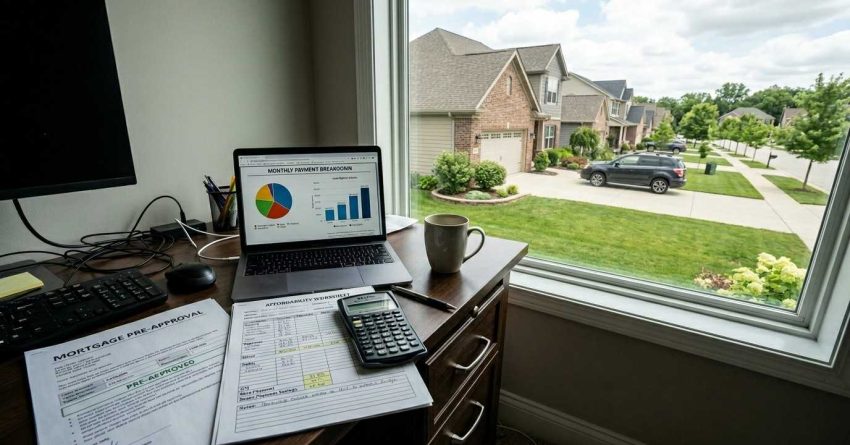
For a $400,000 mortgage, most lenders expect an annual income between $100,000 and $125,000, depending on down payment, interest rate, debt load, and loan term. This range reflects the standard 28/36 affordability rule used across the U.S. mortgage market. Your exact qualifying income shifts with credit score, property taxes, and insurance costs in your state. Knowing the number protects your budget and helps you plan for the full cost of homeownership beyond closing day.
Income Required for a $400,000 Mortgage
You typically need a gross annual income of $100,000 to $125,000 to qualify for a $400,000 mortgage. At a 7% interest rate over 30 years, the monthly payment runs about $2,660 before taxes and insurance, which fits comfortably within the 28% housing-to-income guideline most lenders use.
The 28/36 Rule Explained
The 28/36 rule sets two limits lenders apply. Monthly housing costs should stay under 28% of gross monthly income. Total monthly debts, including the mortgage, car loans, and credit cards, should stay below 36%. For a $400,000 loan with a $2,660 principal-and-interest payment, plus around $400 in taxes and insurance, you need at least $10,900 in gross monthly income. That equals roughly $131,000 per year if you carry no other debt.
Estimated Monthly Payment Breakdown
A $400,000 mortgage at a 7% rate produces a $2,661 principal-and-interest payment over 30 years. Add property taxes averaging $333 monthly, homeowners insurance near $125, and possible HOA dues. Your full monthly housing cost lands close to $3,200. Private mortgage insurance applies if your down payment is below 20%, adding $150 to $250. These figures determine your true qualifying income and shape long-term affordability well beyond the loan itself.
Factors That Change Your Required Income
Your baseline number moves up or down based on financial details lenders weigh closely. How much house you can truly afford depends on more than the loan amount alone.
Interest rate has the largest effect. A 1% rate change shifts your monthly payment by nearly $270, which can raise or lower required income by $10,000 yearly. Loan term matters too. A 15-year loan demands higher income but reduces total interest paid. Existing debt cuts qualifying power directly. A $500 monthly car payment may cost you $20,000 in approval income. Property taxes vary widely by state, with New Jersey and Illinois near the top. Insurance premiums climb in coastal and storm-prone regions, raising the income threshold further.
Down Payment, Credit Score, and Interest Rate
A 20% down payment of $80,000 removes private mortgage insurance and shrinks your loan to $320,000, lowering required income to roughly $90,000. Credit scores above 740 unlock the lowest interest rates, while scores below 680 push rates up by 0.5% to 1%. Lenders also review debt-to-income ratio, employment stability, and cash reserves. Two years of consistent income history strengthens your file. Self-employed buyers usually need extra documentation. Each factor compounds, which is why two buyers with the same salary can receive different approval amounts.
How to Strengthen Your Mortgage Application
After approval, your home becomes a long-term financial commitment that needs ongoing care. Planning routine home maintenance early helps protect that investment from day one.
Pay down high-interest debt before applying. Small reductions improve your debt-to-income ratio quickly. Avoid opening new credit lines six months before submitting your file. Save three to six months of mortgage payments as cash reserves, which lenders treat as risk protection. Get pre-approved through multiple lenders within a 14-day window to compare rates without harming credit. Document every income source clearly. A stable position with consistent earnings creates the strongest profile and often unlocks better loan terms.
Conclusion
Qualifying for a $400,000 mortgage usually requires $100,000 to $125,000 in annual income, shaped by interest rate, debt, and down payment.
Beyond approval, smart buyers plan for property taxes, insurance, and consistent maintenance that protects long-term value across every season of homeownership.
At Mr. Local Services, we connect new homeowners with trusted professionals for repairs, upkeep, and improvements. Schedule your first service today.
Frequently Asked Questions
Can I afford a $400,000 mortgage on $80,000 a year?
Generally no, unless you have a 30% down payment, zero additional debt, and qualify for the lowest available rates. Most lenders prefer income closer to $100,000.
What is the monthly payment on a $400,000 mortgage?
At 7% over 30 years, principal and interest run about $2,661 monthly. Total payment including property taxes and homeowners insurance lands near $3,200.
How much down payment do I need for a $400,000 home?
Conventional loans require 5% to 20% down. A 20% down payment of $80,000 eliminates private mortgage insurance and lowers your monthly housing cost significantly.
Does credit score affect qualifying income?
Yes. Scores above 740 secure the lowest rates. Scores below 680 raise interest rates and can increase required income by thousands of dollars annually.
Should I get pre-approved before house hunting?
Yes. Pre-approval confirms your budget, strengthens offers, and speeds closing. Compare multiple lenders within a 14-day window to protect your credit score.