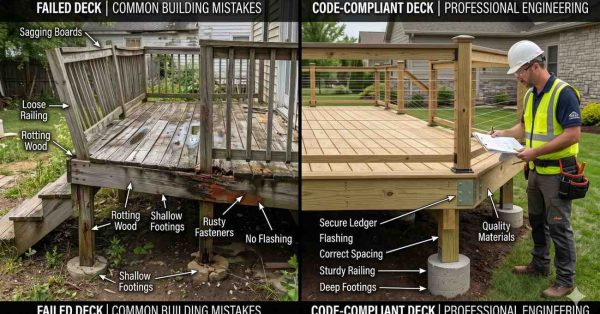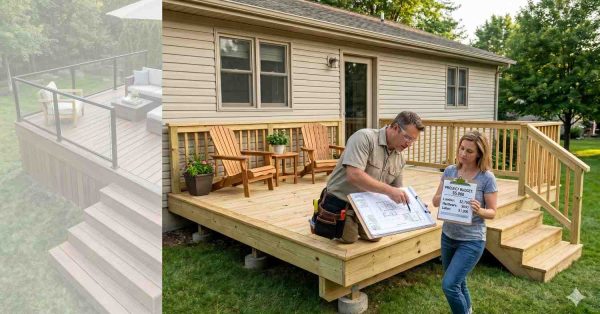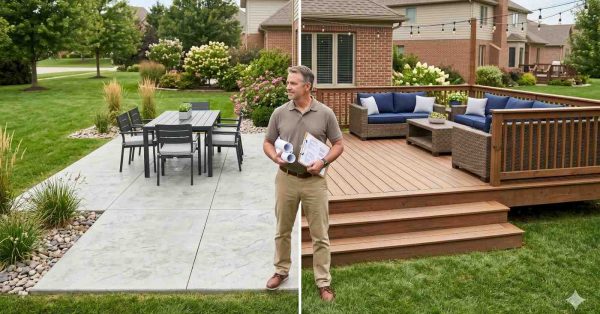
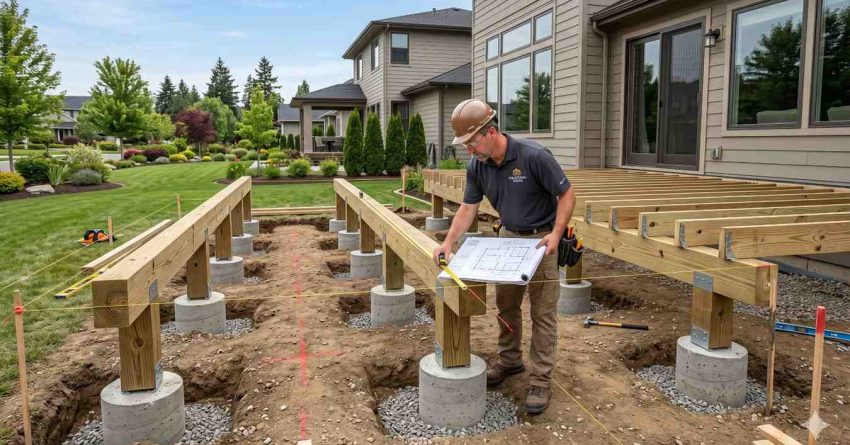
Deck footings should generally be spaced 6 to 8 feet apart, depending on beam size, joist span, deck load, and local building code. Closer spacing produces a stiffer, stronger frame, while wider spacing requires larger beams to carry the same load. The right distance balances structural safety, material cost, and long-term performance. Getting footing layout right is one of the most important steps in building a deck that stays level, solid, and code-approved for decades.
Standard Footing Spacing for a Deck
Most residential deck footings are placed 6 to 8 feet apart, measured center to center along the beam line. This range works for the majority of pressure-treated lumber decks built across the USA. Spacing wider than 8 feet usually requires an engineered beam, while spacing closer than 6 feet may be needed for heavy loads, hot tubs, or rooftop decks.
Typical Spacing Range (6 to 8 Feet)
A standard double 2×10 beam comfortably spans 6 to 8 feet between footings when supporting joists up to 12 feet long. If the beam is a triple 2×10 or larger, spacing can sometimes extend to 10 feet. Smaller beams demand tighter spacing. The goal is to match beam capacity to the load above without overbuilding or creating weak spots in the frame.
What Determines the Exact Distance
The exact footing distance depends on three things: the beam’s size and species, the joist span resting on that beam, and the total load the deck must carry. Local building codes, frost depth, and soil bearing capacity also play a role. Heavier decks, second-story decks, and decks with hot tubs always require closer footing spacing or larger footings to remain safe.
The structural answer covers the spacing rule. The deeper question is how beam and joist spans interact to shape the entire footing layout from the ground up.
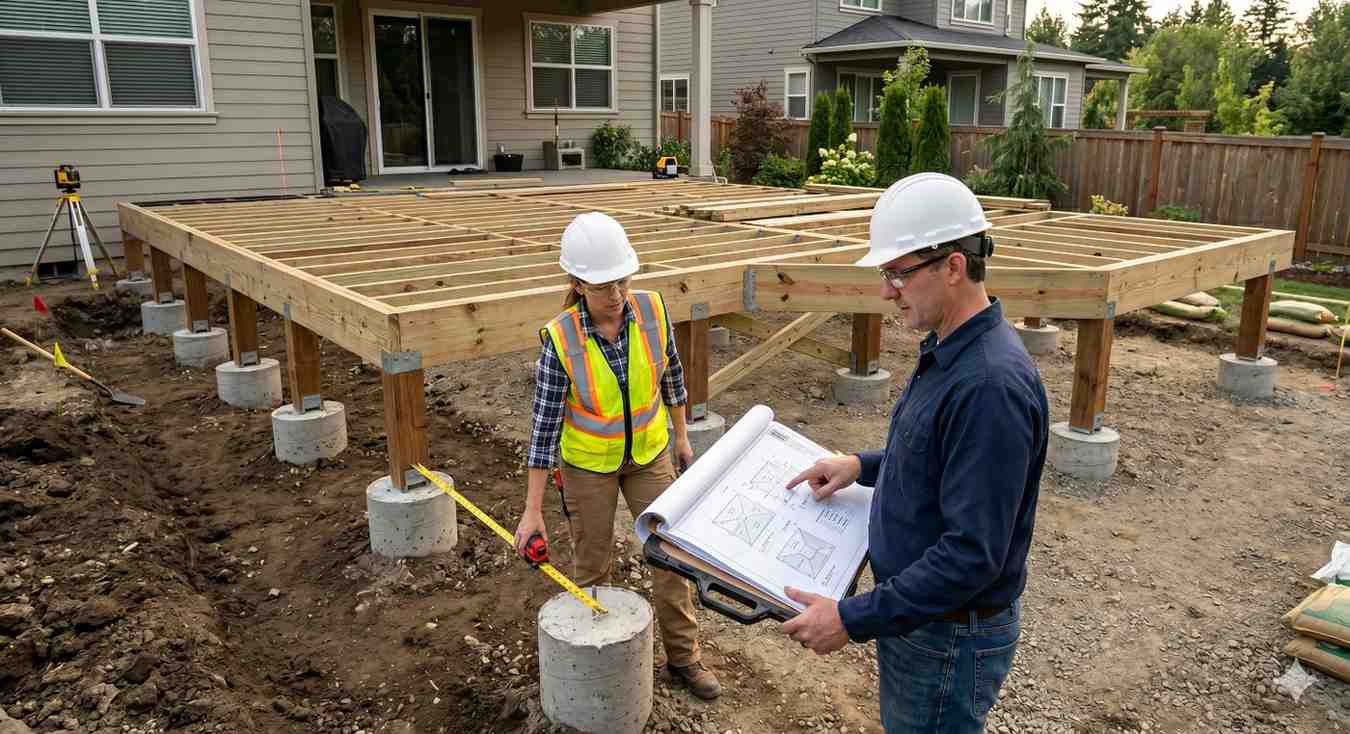
Factors That Change Footing Spacing
Footing spacing is never one-size-fits-all. The frame above the footings, the ground below them, and the way the deck will be used all shift the math. Understanding these variables helps homeowners and property managers ask the right questions before construction begins.
Beam Size and Joist Span
A larger beam carries more load and allows footings to sit farther apart. A double 2×8 beam typically spans 6 feet between footings, while a triple 2×12 can stretch closer to 10 feet. Joist span matters too. Longer joists put more weight on the beam, which forces footings closer together to keep deflection within safe limits.
Soil Type and Load Requirements
Soft, sandy, or clay-heavy soil reduces bearing capacity and may require wider footings or tighter spacing. Frost depth dictates how deep each footing must go, but it also influences placement when frost heave is a concern. For complex sites, working with experienced deck builders ensures the footing plan accounts for soil conditions, load paths, and local code from the start.
Common Spacing Mistakes to Avoid
The most frequent footing mistake is spacing them too far apart for the beam size, which causes sagging and bounce within a few seasons. Another common error is ignoring the cantilever rule, which limits how far joists can extend past the beam to one-quarter of the backspan. Skipping a soil check, undersizing footings, and placing them above frost depth are equally serious errors that lead to settling, cracking, or full deck failure. Each of these mistakes is preventable with a properly drawn footing plan.
Conclusion
Deck footings spaced 6 to 8 feet apart suit most residential decks, but beam size, joist span, soil, and load all shift the final number.
For older decks or uncertain layouts, a thorough deck inspection confirms whether existing footings still meet safety and code standards.
We at Mr. Local Services connect you with vetted deck professionals who design, build, and inspect footings the right way. Get started today.
Frequently Asked Questions
Can deck footings be 10 feet apart?
Yes, but only with an engineered beam sized for the load. Standard double 2×10 beams should not span 10 feet between footings without reinforcement.
How many footings does a 12×12 deck need?
A 12×12 deck typically needs 6 to 9 footings, depending on beam placement, ledger attachment, and whether the deck is freestanding or attached to the house.
Do deck footings need to be below frost line?
Yes. In most USA regions, footings must extend below the local frost line to prevent heaving. Frost depth varies from 12 to 48 inches by climate.
What size footing for a residential deck?
Most residential deck footings measure 12 to 16 inches in diameter, with depth based on frost line and soil bearing capacity. Heavier decks need wider footings.
Can footings be too close together?
Footings placed closer than 4 feet apart are usually unnecessary and add cost without structural benefit, unless supporting concentrated loads like hot tubs or stairs.