Yes, you almost always need gravel under a concrete slab. A compacted gravel base supports the slab evenly, drains water away, and prevents the cracking and settling that destroy unsupported concrete over time. Skipping this layer is one of the most common reasons residential slabs fail early. Whether you are pouring a patio, garage floor, shed pad, or driveway, the gravel beneath the surface is just as important as the concrete on top.
Yes, Gravel Is Almost Always Required Under a Concrete Slab
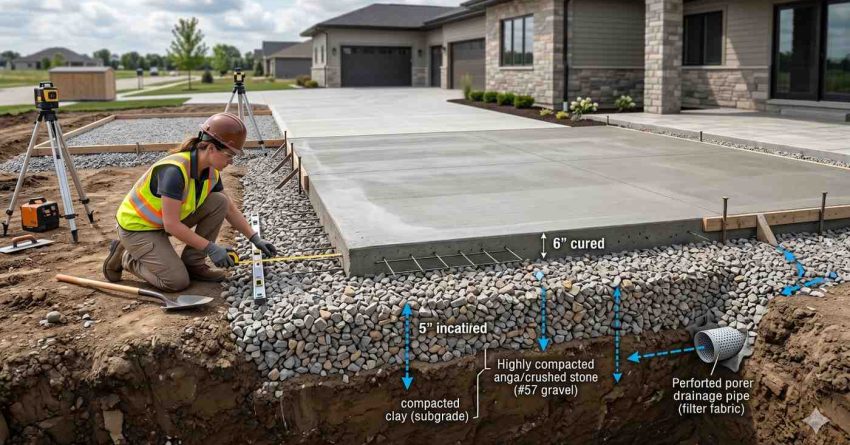
Gravel is required under a concrete slab in nearly every residential application. A 4 to 6 inch layer of compacted crushed stone provides a stable, level base, allows water to drain instead of pooling under the slab, and reduces the risk of cracking from soil movement or frost heave. Most building codes also require it.
What Gravel Does Beneath the Slab
Gravel performs three jobs that bare soil cannot. First, it spreads the slab’s weight evenly across the ground, which prevents low spots from forming as the soil compresses. Second, it acts as a capillary break, stopping groundwater from wicking up into the concrete. Third, it gives water somewhere to go during heavy rain, so hydrostatic pressure never builds beneath your slab. Without these functions, the slab carries every flaw of the soil beneath it.
How Much Gravel You Actually Need
For most home projects, plan on 4 to 6 inches of clean, crushed stone such as #57 or 3/4 inch minus. Patios and shed pads sit at the lower end of that range. Garage floors, driveways, and slabs in cold-climate regions need the full 6 inches, sometimes more. The gravel must be compacted in lifts of 2 to 3 inches using a plate compactor, not simply dumped and leveled. Loose gravel settles, and settled gravel cracks slabs.
Knowing the base requirement is one piece of the puzzle. The next step is preparing the site before pouring, which determines how well the gravel and concrete perform together.
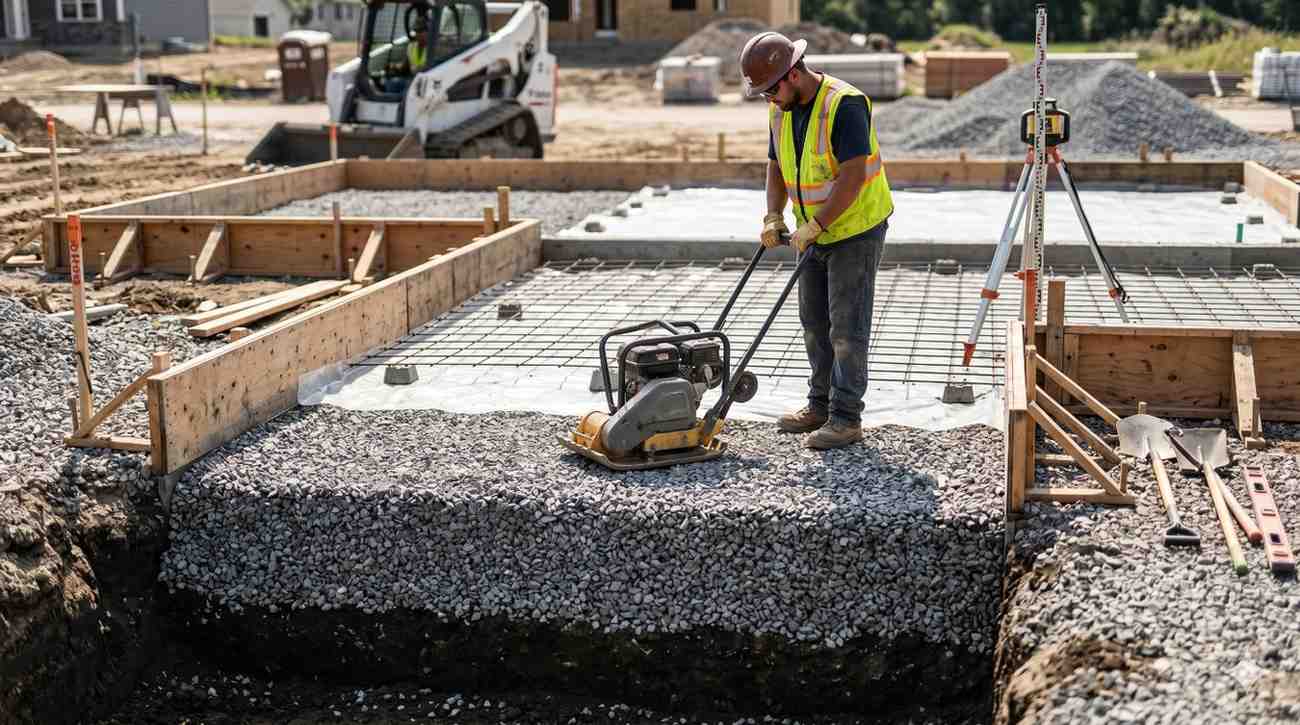
When Gravel Matters Most for Your Slab Project
Gravel becomes non-negotiable in certain conditions. Clay-heavy soils expand and contract with moisture, which means any slab poured directly on them will eventually crack. Properties in freeze-thaw climates face frost heave that lifts unsupported slabs by inches each winter. Sites with poor drainage, low elevation, or nearby downspouts saturate the subgrade and accelerate failure. In each case, a thicker gravel base, combined with proper grading and drainage, protects the slab for decades.
Soil Conditions That Demand a Thicker Base
Expansive clay, organic topsoil, and previously disturbed fill soils all require deeper gravel layers. A geotechnical assessment is rarely needed for a backyard patio, but if your yard holds water after rain or your area is known for shifting soils, increase the base to 8 inches and consider adding a layer of woven geotextile fabric between the soil and gravel. This barrier prevents fine soil from migrating up into the gravel and weakening the base over time.
When You Might Skip the Gravel Layer
There are limited situations where gravel may be unnecessary. Slabs poured over solid, well-draining, undisturbed sandy soil in mild climates can sometimes perform well without it. Decorative or temporary slabs, such as a small stepping pad, may also skip the base. However, even in these cases, most concrete contractors still recommend at least 2 inches of compacted stone for insurance against future movement. The cost of gravel is minor compared to the cost of replacing a cracked slab.
Conclusion
A gravel base is the foundation of a long-lasting concrete slab. It manages water, distributes load, and protects against the soil movement that causes most slab failures across residential properties.
Investing in the right base now saves thousands in future repairs. For homeowners and property managers planning any slab project, choosing a qualified concrete contractor is the next critical decision.
Need help with your slab project? We connect you with trusted professionals at Mr. Local Services for reliable, expert concrete work.
Frequently Asked Questions
Can I pour concrete directly on dirt?
You can, but you shouldn’t. Concrete poured on bare soil cracks, settles, and absorbs moisture, leading to failure within just a few years.
What kind of gravel goes under a concrete slab?
Use clean, angular crushed stone such as #57 stone or 3/4 inch minus. Avoid rounded pea gravel, which shifts and does not compact properly.
How thick should gravel be under a 4 inch slab?
Plan on 4 to 6 inches of compacted gravel beneath a standard 4 inch residential slab, increasing to 6 inches or more in freezing climates.
Do I need a vapor barrier with gravel under my slab?
Yes, for interior slabs and heated spaces. Install a 10 to 15 mil polyethylene vapor barrier directly on top of the compacted gravel before pouring.
Should gravel under a slab be compacted?
Always. Compact the gravel in 2 to 3 inch lifts using a plate compactor. Uncompacted gravel settles and causes the concrete slab to crack.