Most residential decks need 2×10 joists when spans exceed 10 feet, while 2×8 joists work well for shorter spans under 10 feet with 16-inch spacing. The right size depends on your deck’s span, joist spacing, wood species, and load requirements. Choosing correctly keeps your deck safe, level, and code-compliant for decades. Below, we break down when each size fits, what factors decide the call, and how local code shapes the final answer.
The Short Answer: 2×8 vs 2×10 Joists
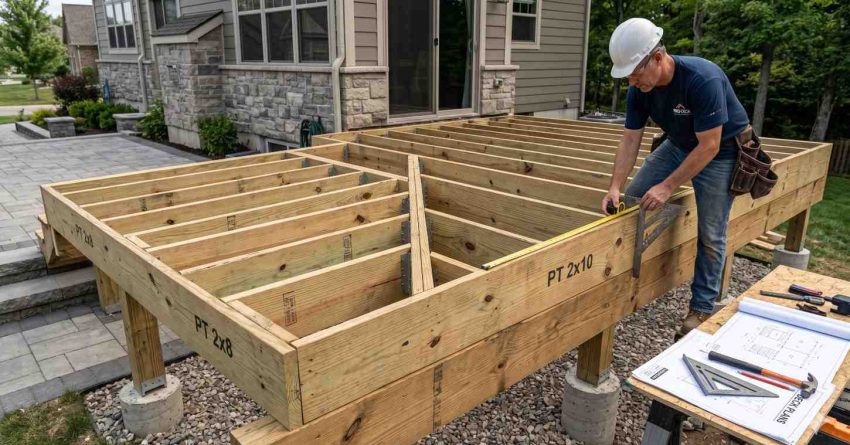
For most residential decks, 2×10 joists at 16-inch spacing safely span up to 13 feet, while 2×8 joists at 16-inch spacing typically span around 10 feet. If your deck is longer, sits higher, or carries heavy loads like hot tubs or outdoor kitchens, 2x10s are the safer choice. Shorter, ground-level decks usually do fine with 2x8s.
The decision is rarely about preference. It is about span length, spacing between joists, wood species, and how your deck will be used. A deck framed with undersized joists will sag, bounce, and fail inspection.
When 2×8 Joists Are Enough
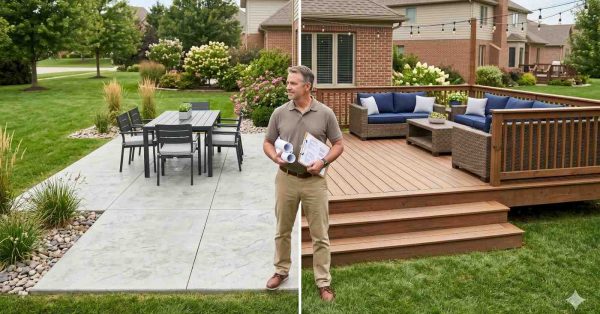
Choose 2×8 joists for compact decks with spans under 10 feet and standard residential foot traffic. They work well for ground-level platforms, small entry decks, and walkways where load demands stay light. Pressure-treated southern pine 2x8s spaced at 16 inches on center meet code for most short-span builds. They cost less, weigh less, and install faster, making them a practical pick when your design stays modest in size and load.
When 2×10 Joists Are the Better Choice
Pick 2×10 joists when spans run between 10 and 14 feet or your deck must carry concentrated loads. Elevated decks, those supporting hot tubs, built-in seating, or large gatherings need the extra depth for stiffness. 2x10s reduce bounce, resist sagging, and allow wider joist spacing of 24 inches on center in some cases. They add cost upfront but deliver a firmer, longer-lasting frame for ambitious or higher-traffic decks.
The size answers what to buy. The deeper question is how span and spacing affect joist size once your design crosses into custom territory.
Factors That Decide Joist Size for Your Deck
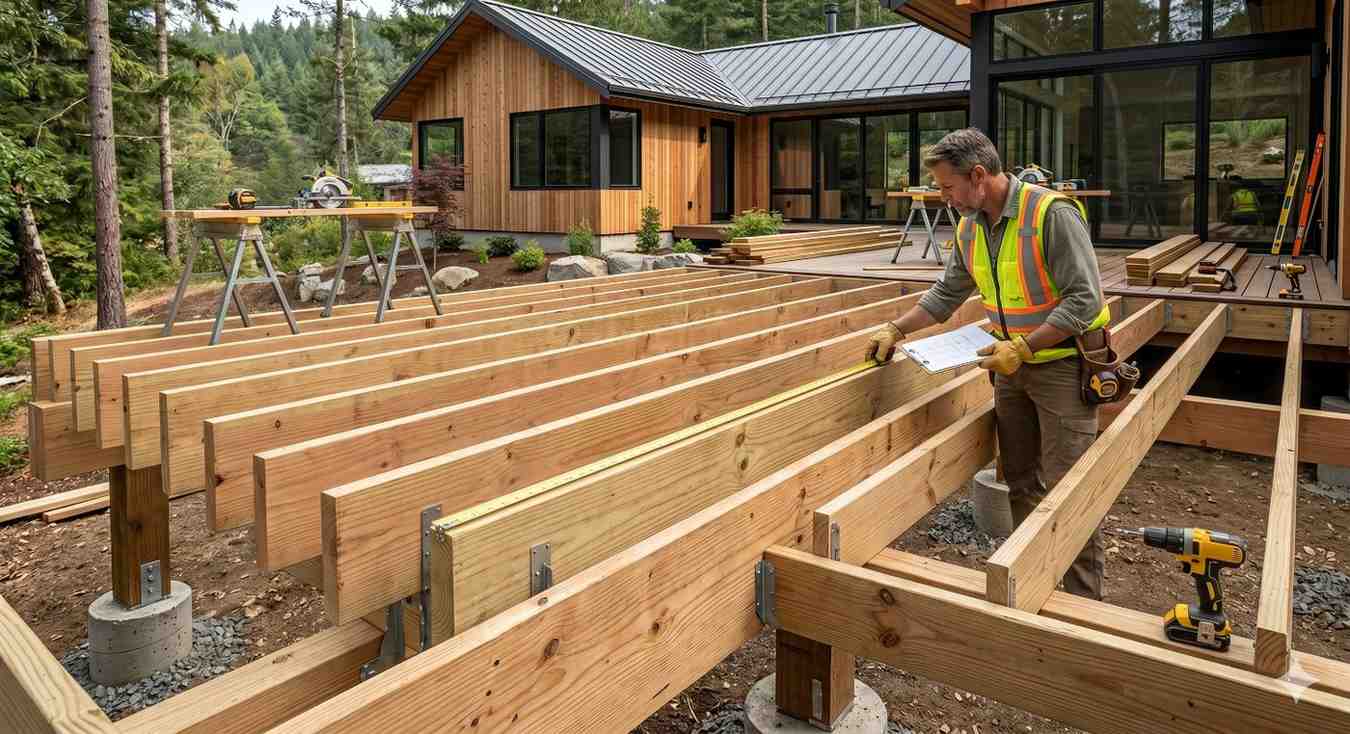
Joist size is set by a combination of variables, not a single rule. Span is the longest distance the joist covers between supports. Spacing is the gap between joists, usually 12, 16, or 24 inches. Wood species also matters since southern pine and Douglas fir handle longer spans than hem-fir or spruce-pine-fir.
Span, Spacing, and Load Requirements
Live load and dead load shape the math behind every deck frame. Residential decks are designed for a 40 pounds per square foot live load plus a 10 pounds per square foot dead load. Tighter spacing increases capacity, so a 2×8 at 12-inch spacing can sometimes match a 2×10 at 16-inch spacing. Hot tubs, planters, and roofs add point loads that demand deeper joists, closer spacing, or both. Always check a current span table for your specific wood species and grade before cutting lumber.
Code, Cost, and Long-Term Performance
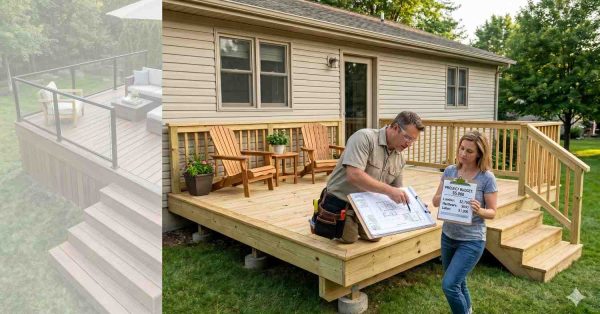
Local building codes set minimum joist sizes for your area, and inspectors will check. Most jurisdictions follow the International Residential Code (IRC) prescriptive deck tables, but coastal, snow-load, and seismic regions add stricter rules. Pulling a permit usually requires a framing plan showing joist size, span, and spacing.
Cost-wise, 2x10s run roughly 20 to 30 percent more per board than 2x8s, but the upgrade often pays back through reduced flex, fewer callbacks, and a longer service life. For complex builds, working with a qualified deck builder ensures the framing matches code, climate, and how you actually plan to use the space.
Conclusion
Use 2×8 joists for short, light-duty decks and 2×10 joists for longer spans or heavier loads. Span, spacing, species, and code drive the choice.
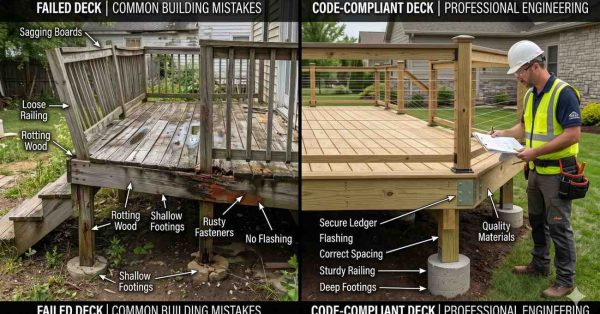
For older decks, watch for signs your deck framing needs replacement such as soft spots, sagging, or visible rot before they become safety risks.
Need expert framing guidance or a full deck build? Mr. Local Services connects you with vetted deck pros for safe, code-ready results.
Frequently Asked Questions
How far can a 2×10 deck joist span?
A pressure-treated 2×10 at 16-inch spacing typically spans up to 13 feet for residential live loads, depending on wood species and grade.
Can I use 2×8 joists for a second-story deck?
Yes, if spans stay under 10 feet and spacing is 16 inches or tighter. Longer or higher decks usually require 2x10s for safety.
What spacing is best for deck joists?
16 inches on center is the most common spacing. 12-inch spacing adds stiffness, while 24-inch spacing is allowed only with deeper joists.
Do bigger joists make a deck stronger?
Yes. Deeper joists resist bending and bounce more effectively, allowing longer spans and supporting heavier features like hot tubs or outdoor kitchens.
Do I need a permit to replace deck joists?
Most cities require a permit for structural deck work. Check local code, since inspectors verify joist size, spacing, and fastening before approval.