A tiny home on wheels comes with its own language, and that language trips up a lot of first-time buyers. I put together this glossary to cut through the jargon so you know exactly what you’re looking at when you tour a build or read a listing. Below I cover the 20+ terms that show up most often, explained in plain English.
Tiny Home on Wheels Glossary: Key Terms You Need to Know
Tiny Home on Wheels (THOW)
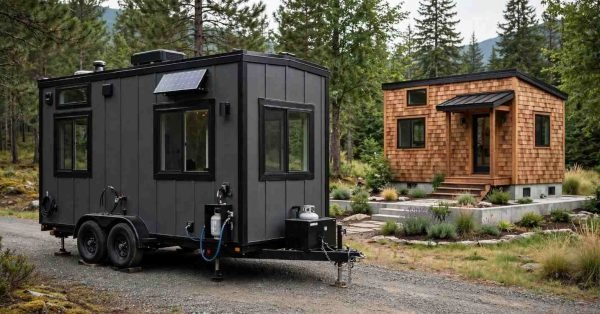
A tiny home on wheels is a dwelling built on a trailer chassis that is designed to be towed and relocated rather than permanently fixed to a foundation. I see this distinction matter a lot legally, since it changes how the structure gets classified by local zoning boards.
THOW
THOW is simply the industry abbreviation for “tiny home on wheels.” You’ll see it used constantly in builder contracts, RV park policies, and online forums, so it helps to recognize it on sight.
Gooseneck Trailer
A gooseneck trailer is a towable platform with an elevated front section that extends over the bed of the tow vehicle, creating extra interior loft space. I recommend this style for anyone who wants a true second-floor sleeping area without raising the overall roofline too high.
Bumper Pull Trailer
A bumper pull trailer connects to a standard hitch at the rear bumper of the tow vehicle instead of over the truck bed. It’s easier to tow with a smaller vehicle, but it gives up some of that extra loft height a gooseneck provides.
RVIA Certification
RVIA certification is a safety and construction standard issued by the RV Industry Association confirming the build meets electrical, plumbing, and structural codes. Builds without this certification can run into trouble getting insured or parked in certain RV-zoned communities.
NOAH Certification
NOAH certification comes from the National Organization of Alternative Housing and applies specifically to tiny homes rather than traditional RVs. I point clients toward NOAH-certified builders when they plan to live in the unit full-time, since it covers residential-style construction details RVIA standards don’t always address.
Park Model RV
A park model RV is a larger towable unit, typically capped around 400 square feet, that’s classified for extended or seasonal stays rather than frequent travel. It sits in a gray area between a traditional tiny home and a standard travel trailer.
Loft
A loft is an elevated sleeping or storage area built above the main living space, usually accessed by a ladder or narrow stairs. Most tiny homes rely on a loft to make up for the limited square footage on the main floor.
Dormer
A dormer is a small roof extension that adds headroom and often a window to an otherwise cramped loft space. I’ve seen this single feature turn a loft from “just barely livable” into a space people actually enjoy sleeping in.
Composting Toilet
A composting toilet is a self-contained unit that breaks down waste using aerobic decomposition instead of a traditional sewage hookup. It cuts way down on water use, which matters a lot for anyone planning off-grid stays.
Incinerating Toilet
An incinerating toilet burns waste into a small amount of sterile ash using an electric or propane-powered heating element. It skips water entirely, trading that for higher power draw during each use cycle.
Greywater System
A greywater system collects and sometimes filters wastewater from sinks and showers, separate from toilet waste. Setting this up correctly keeps a tiny home compliant with most off-grid parking regulations.
Blackwater Tank
A blackwater tank holds toilet waste until it can be pumped out at a dump station. Every full-hookup tiny home needs a plan for this tank, and ignoring it is one of the fastest ways to end up with a mess on your hands.
Off-Grid Living
Off-grid living describes a setup that generates its own power and manages its own water and waste without connecting to municipal utilities. Solar panels, composting toilets, and greywater systems all work together to make this possible in a tiny home.
Mini-Split System
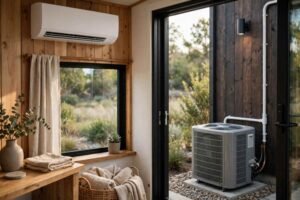
A mini-split system is a ductless heating and cooling unit with an outdoor compressor and an indoor wall-mounted air handler. It’s become the go-to climate control option for tiny homes because it’s compact and efficient in a small footprint.
Tongue Weight
Tongue weight is the downward force the trailer’s hitch applies to the tow vehicle, and it directly affects towing stability. Getting this number wrong is one of the most common and most dangerous mistakes new tiny home owners make on the road.
GVWR (Gross Vehicle Weight Rating)
GVWR is the maximum safe operating weight for the trailer, including the structure, contents, water tanks, and passengers. Exceeding this rating isn’t just a legal risk, it’s a real safety hazard on the highway.
Skirting
Skirting is the material installed around the base of the trailer to enclose the underbelly, block wind, and protect plumbing lines from freezing. I always tell clients in colder climates that skirting isn’t optional if they’re staying through winter.
Axle
An axle is the structural component connecting the trailer’s wheels and supporting its weight during transport. Most tiny homes run on one or two axles, and that number directly affects how much weight the trailer can legally carry.
Shore Power/Shore Hookup
Shore power, or a shore hookup, refers to connecting the tiny home directly to an external electrical source instead of relying on batteries or a generator. Most RV parks and tiny home communities offer this as a standard amenity.
Tiny House Community
A tiny house community is a designated development or parking area zoned specifically to allow multiple tiny homes on wheels to reside together legally. These communities solve a huge headache for owners, since standard residential zoning often doesn’t recognize THOWs as legal dwellings.
Zoning Variance
A zoning variance is a formal exception granted by a local government allowing a property use that doesn’t fit standard zoning rules, such as parking a tiny home on residential land. Getting one usually means attending a hearing and proving the setup won’t negatively affect neighboring properties.
Conclusion
Knowing these terms makes every conversation with a builder, inspector, or park manager easier. It also helps you spot red flags before they turn into costly mistakes. Reach out to Mr. Local Services when you’re ready to move from planning to building Tiny Home on Wheels.
Frequently Asked Questions
What is the difference between a THOW and an RV?
A THOW is built as a permanent residence with home-style construction, while an RV is designed primarily for recreational travel. THOWs often need NOAH or RVIA certification to be legally parked long-term.
Do I need a special license to tow a tiny home?
Most tiny homes under 10,000 pounds GVWR can be towed with a standard driver’s license and a properly rated truck. Heavier builds may require a specialized towing setup, so I always recommend checking your trailer’s GVWR first.
Can I legally live in a tiny home on wheels full-time?
Legal full-time living depends entirely on local zoning laws and whether the home holds RVIA or NOAH certification. Many owners solve this by parking in a dedicated tiny house community or securing a zoning variance.