

Tiny homes on wheels are legal in most of the United States, but their legal status depends entirely on how a local jurisdiction classifies them. I’ve watched this trip up more buyers than any other part of the tiny home process. A home built to RVIA standards and registered as a recreational vehicle gets treated completely differently than one built to IRC Appendix Q standards and parked on a residential foundation.
Zoning boards, tax assessors, and insurance companies all ask the same question in different ways: is this a vehicle or a dwelling? Get that answer wrong before you buy or build, and you end up with a home you can’t legally park, insure, or live in full-time.
I’m covering legal classification and the key definitions that drive everything else, zoning rules and where you can actually park, full-time living requirements and building codes, how taxes and insurance treat your tiny home, and the mistakes that get owners fined or evicted from their own property.
What Makes a Tiny Home on Wheels Legal or Illegal
A tiny home on wheels is a dwelling unit built on a trailer chassis that meets specific construction, safety, and classification standards recognized by at least one governing body. That single sentence hides a lot of complexity, because “recognized” varies wildly by state and even by county.
I tell every client the same thing: legality isn’t a yes-or-no question. It’s a match between how your home is built and how your local jurisdiction defines a legal dwelling or vehicle.
RVIA Certification and Classification Standards
The Recreational Vehicle Industry Association (RVIA) certifies tiny homes on wheels as recreational vehicles when they meet NFPA 1192 safety standards. This certification lets a tiny home get parked in RV parks and registered through a state DMV, same as a travel trailer.
Builders who skip RVIA certification often build to residential codes instead, which creates a different legal path entirely. I’ve seen buyers assume RVIA certification matters everywhere it doesn’t. Some states don’t recognize it at all for zoning purposes.
The Difference Between “Legal to Build” and “Legal to Live In”
Building a tiny home legally and living in it legally are two separate permissions, and conflating them causes most of the headaches I see. A builder can construct a fully code-compliant unit, and the owner can still get a cease-and-desist letter for parking it on residential land.
Construction codes govern how the home is built. Zoning ordinances govern where it can sit and whether someone can sleep in it overnight. Both have to align, not just one.
Tiny Homes on Wheels vs RVs vs Park Model Homes (Legal Classification)
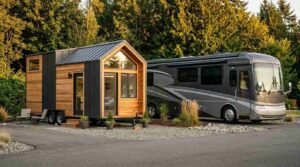
These three categories look similar from the outside, and that’s exactly the problem. Each one carries a distinct legal classification, and the classification determines your parking rights, tax treatment, and insurance options.
An RV is built for recreational, temporary use and typically can’t be your permanent legal residence under most zoning codes. A park model home sits in a gray zone: larger, more house-like, but still often classified as a vehicle. A tiny home on wheels built to residential standards occupies yet another category.
How Building Codes Treat Each Category Differently
RVs fall under National Fire Protection Association standards and state DMV vehicle codes. Tiny homes on wheels built for permanent occupancy increasingly fall under IRC Appendix Q, a section added to the International Residential Code specifically for dwellings under 400 square feet.
Appendix Q has been adopted by dozens of jurisdictions since 2018, giving tiny homes a legitimate residential code pathway for the first time. That adoption isn’t universal, though, so I always check county-level code before assuming it applies.
Why Classification Determines Where You Can Park
Vehicle-classified homes can park in RV parks, campgrounds, and some mobile home communities without a fight. Residentially-classified tiny homes on wheels generally need to sit on a foundation-equipped lot zoned for a dwelling, even though they technically still have wheels.
This is where I see the most disputes. An owner buys a tiny home expecting RV-style flexibility, then discovers their local zoning board classifies it as a structure requiring a building permit and a fixed address.
Zoning Laws for Tiny Homes on Wheels Explained
Zoning is where tiny home dreams actually live or die. Building codes tell you how to construct the home; zoning tells you whether you’re allowed to put it anywhere near where you want to live.
Most municipal zoning codes were written decades before tiny homes existed, which means tiny homes often don’t fit cleanly into any existing category. That ambiguity cuts both ways: sometimes it works in your favor, sometimes it gets you shut down.
Residential Zoning Restrictions
Most residential zones require a minimum square footage for a primary dwelling, and that minimum frequently exceeds what a tiny home on wheels offers. Many municipalities also require a permanent foundation for anything classified as a primary residence, which a home on wheels doesn’t have by definition.
Some cities have started amending these minimums specifically to accommodate tiny homes. Others haven’t touched the code in thirty years and simply don’t have a legal pathway yet.
Accessory Dwelling Unit (ADU) Zoning Pathways
Many homeowners place a tiny home on wheels as a secondary unit on an existing residential lot, using ADU zoning provisions instead of fighting for primary-residence status. ADU rules typically allow a smaller secondary structure on a lot that already has a main house.
This path sidesteps a lot of the square-footage fights because the tiny home isn’t claiming to be the primary dwelling. I recommend this route to almost every client who already owns residential land.
States With the Most Tiny-Home-Friendly Zoning Laws
A handful of states have updated their codes specifically to accommodate tiny homes on wheels, and the difference in friction is significant. California, Texas, Oregon, and Colorado have all adopted some version of Appendix Q or passed specific tiny home legislation at the state or major-city level.
California’s statewide ADU reforms have made tiny homes on wheels far easier to place as secondary units than in states without comparable legislation. That kind of state-level clarity removes a lot of the county-by-county guesswork.
States With the Strictest Restrictions
States with strong agricultural and suburban zoning traditions, parts of the Midwest and certain Southern states tend to enforce minimum square footage and foundation requirements most aggressively. I’ve had clients in these regions spend months in zoning appeals just to get a variance.
Before buying land specifically for a tiny home, I always tell people to call the local zoning office directly. A friendly state law means nothing if the county next door enforces something stricter.
Can You Live in a Tiny Home on Wheels Full-Time Legally

Full-time occupancy is the single biggest legal gray area in the entire tiny home conversation. Plenty of people live in tiny homes on wheels every day without incident, and plenty of others get cited for it within months.
The legality comes down to land use, not the home itself. The same tiny home is perfectly legal on one parcel and a code violation on the parcel next door.
Rules for Living on Private Land
Living full-time on private land usually requires either a zoning variance, ADU approval, or classification as a primary residence under a code that recognizes tiny homes. Some rural counties have minimal zoning enforcement and allow it by default rather than requiring explicit permission.
I never recommend relying on lax enforcement as a long-term plan. Codes get enforced the moment a neighbor complains, and retroactive compliance is far more expensive than doing it right the first time.
Rules for Living in RV Parks and Communities
RV parks and some manufactured home communities allow full-time tiny home residency without the zoning fight, provided the home carries RVIA certification. Many parks have occupancy limits and length-of-stay restrictions worth checking before signing a lease.
This route trades zoning hassle for park rules and monthly fees. For people who want certainty over ownership flexibility, it’s often the faster path to legal full-time living.
Building Codes and Permit Requirements for Tiny Homes on Wheels
Permitting a tiny home on wheels looks different depending on whether you’re treating it as a vehicle or a dwelling. Vehicle registration through the DMV is straightforward. Dwelling permits involve inspections, code compliance, and a lot more paperwork.
I walk clients through this early, because permit requirements affect construction decisions. A home built without an eye toward IRC compliance can’t retroactively qualify for a residential permit without rework.
IRC Appendix Q Explained
Appendix Q sets specific requirements for tiny homes, including loft egress, ceiling height, stair design, and emergency escape provisions tailored to small footprints. Jurisdictions that adopt it treat qualifying tiny homes as legitimate single-family dwellings rather than unclassified structures.
Adoption varies by state and county, so I check this before any build begins. A home built to Appendix Q in a non-adopting county still needs a path through standard IRC provisions, which can be a tougher fit for a small structure.
Inspection and Permitting Process Steps
The permitting process generally starts with a zoning compliance check, followed by a building permit application, plan review, construction inspections, and a final occupancy inspection. Each step generates documentation that matters later for insurance and resale.
Skipping steps to save time almost always costs more later. I’ve seen owners forced to open up finished walls for a retroactive inspection because a step got skipped at the start.
How Tiny Homes on Wheels Are Taxed
Tax treatment follows classification just like zoning does, and the two don’t always match. A home can be zoned as a dwelling in one county while still being taxed as a vehicle, which creates confusion at filing time every year.
Getting this wrong doesn’t usually cause legal trouble the way zoning violations do, but it does cost real money in missed deductions or unexpected tax bills.
Property Tax vs Vehicle Registration Tax
Tiny homes classified and taxed as real property get assessed property tax based on the land and structure value, similar to a conventional house. Tiny homes registered as vehicles instead pay annual vehicle registration fees through the state DMV, typically far lower than property tax.
This distinction affects more than the tax bill. Property tax status often supports mortgage eligibility, while vehicle tax status usually means financing through a personal or RV loan instead.
Sales Tax and Titling Requirements by State
Most states charge sales tax on a tiny home purchase when it’s titled as a vehicle, calculated the same way as an RV or travel trailer sale. The Tax Foundation reports state sales tax rates ranged from 0% to 7.25% in 2025, a spread that makes a real difference on a $60,000 to $120,000 build depending on where you title it.
Titling as a vehicle also means the home needs a VIN and follows DMV transfer rules at resale. A home titled as real property transfers through a deed instead, following standard real estate closing procedures.
Insurance and Financing Implications of Legal Status
Insurers and lenders both lean heavily on legal classification before they’ll touch a tiny home on wheels. I’ve seen deals fall apart at the financing stage because the home’s paperwork didn’t clearly establish which category it belonged to.
Getting classification sorted before shopping for insurance or a loan saves weeks of back-and-forth with underwriters who don’t have a standard tiny home product yet.
Why Insurers Require Proof of Legal Classification
Insurance companies typically require either an RV policy for vehicle-classified homes or a specialty dwelling policy for residentially-classified ones, and they won’t write the wrong type for the wrong classification. Proof usually means the RVIA certification sticker, a building permit, or a certificate of occupancy.
Without that proof, I’ve seen insurers simply decline coverage altogether. That gap leaves an owner personally exposed for fire, theft, or liability claims until the paperwork gets resolved.
Common Legal Mistakes Tiny Home Owners Make

Most legal problems I encounter with tiny home owners trace back to a handful of repeated mistakes. None of them are complicated to avoid once you know to look for them.
The pattern is almost always the same: someone falls in love with a tiny home listing or build plan and skips the local verification step that would have caught the problem early.
Parking Without Permits and Code Violations
Parking a tiny home on a residential lot without confirming zoning compliance is the single most common violation I see, often resulting in a cease-and-desist notice or forced relocation. Fines vary by jurisdiction but can accumulate daily until the violation is resolved.
Some owners get lucky for years before a complaint triggers enforcement. That’s not a legal strategy; it’s a bet, and the house always has better information than the gambler.
How to Confirm Legal Status Before Buying or Building
Verifying legal status before you commit money protects you from every problem covered above. This step takes a few phone calls and saves months of potential disputes.
I tell every prospective buyer the same thing: do this work before signing a purchase agreement or breaking ground, not after.
Documents and Inspections to Request
Request the RVIA certification documentation or the builder’s IRC Appendix Q compliance records, along with a written zoning determination letter from the local planning department confirming where the home can legally sit. A pre-purchase inspection confirming construction quality rounds out the due diligence.
These three documents together answer the classification, placement, and condition questions in one pass. Skipping any one of them leaves a gap that tends to surface at the worst possible time during resale, insurance claims, or a neighbor complaint.
Conclusion
Tiny home legality comes down to matching construction classification with local zoning and tax rules, not a single national standard. Getting that alignment right before you buy or build protects your ability to park, insure, and finance the home long-term.
We’ve seen how quickly a beautiful build turns into a legal headache without proper verification. Reach out to Mr. Local Services, and we’ll connect you with trusted professionals who understand the inspections and documentation your tiny home project needs.
Frequently Asked Questions
Does RVIA certification make a tiny home legal everywhere?
No, RVIA certification only confirms RV safety standards and vehicle classification. It doesn’t guarantee zoning approval, since that depends entirely on local land use codes.
Can I live in a tiny home on wheels on my own property?
It depends on local zoning, not just property ownership. Many areas require an ADU permit or ordinance allowing secondary dwellings before full-time occupancy is legal.
Do tiny homes on wheels need a permanent foundation?
Not if they’re classified as vehicles under RVIA standards. Homes seeking residential classification under codes like Appendix Q typically need some foundation connection instead.
Are tiny homes on wheels taxed like regular houses?
Only if they’re classified as real property rather than vehicles. Vehicle-classified homes pay DMV registration fees instead of standard property tax assessments.
Can HOAs ban tiny homes on wheels?
Yes, most HOAs can restrict or ban tiny homes through their own covenants, regardless of what city zoning allows. I always recommend checking HOA rules separately from municipal code.
What happens if I park my tiny home illegally?
Local code enforcement can issue a cease-and-desist order, fines, or require relocation within a set deadline. Repeated violations sometimes escalate to legal action from the municipality.
Does moving states affect my tiny home’s legal status?
Yes, each state and county applies its own zoning and classification rules. A fully compliant home in one state can become non-compliant the moment it crosses into a stricter jurisdiction.


