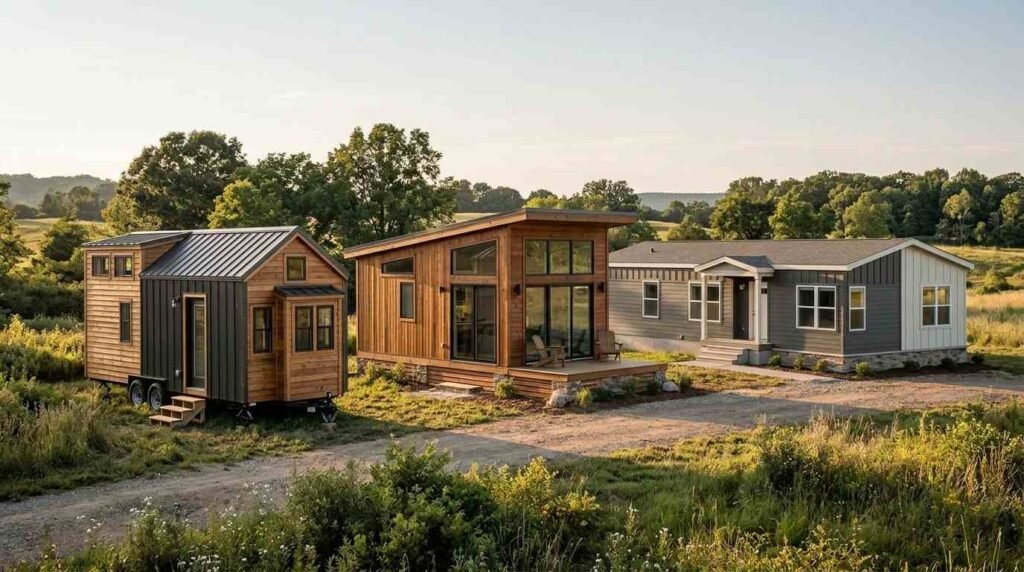
A park model home is a recreational dwelling under 400 square feet built on a single chassis for semi-permanent placement, while a tiny house is typically under 500 square feet and built on a trailer or foundation, and a manufactured home is a factory-built house of 600 to 2,800+ square feet constructed to federal HUD code. I’ve fielded this exact question from dozens of homeowners trying to downsize or add a second dwelling on their property.
The confusion costs people real money. Pick the wrong category, and you can end up fighting your county over permits, paying more for insurance than you expected, or discovering your “tiny house” doesn’t qualify for the loan you wanted.
I’m walking through how these three home types differ in classification, cost, placement rules, and long-term upkeep. By the end, you’ll know which one actually fits your land, your budget, and your plans.
What Sets Park Models, Tiny Houses, and Manufactured Homes Apart
The core difference comes down to legal classification. A manufactured home is a factory-built structure that meets the federal HUD Code that took effect in 1976, giving it a permanent foundation and standardized safety requirements. Park models and tiny houses fall outside that code entirely.
I always tell people to check classification first, before they fall in love with a floor plan. It changes everything else downstream: financing, insurance, and where you’re legally allowed to put it.
Legal Classification and Building Codes
Manufactured homes follow the HUD Code, a federal standard that governs construction, energy efficiency, and structural integrity nationwide. Park models fall under ANSI A119.5, a recreational vehicle standard, even though many people live in them full-time. Tiny houses on wheels typically follow RVIA or NOAH certification, while tiny houses on permanent foundations follow local residential building codes like any standard house.
This distinction matters more than most buyers realize. A home built to RV standards doesn’t carry the same structural guarantees as one built to residential code, and that gap shows up later in financing conversations.
Typical Size and Footprint
Park models max out around 400 square feet under ANSI guidelines, keeping them classified as recreational units rather than permanent residences. Tiny houses range from 100 to 500 square feet, with most falling between 200 and 400. Manufactured homes start around 600 square feet for single-wides and stretch past 2,800 square feet for larger multi-section models.
Size drives almost everything else. A bigger footprint means more foundation work, more utility capacity needed, and often a completely different zoning conversation with your local planning office.
Construction, Materials, and Build Quality Compared
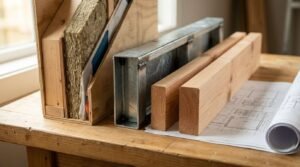
Build quality varies enormously across these three categories, and it’s not always in the direction people assume. Manufactured homes built after 1976 actually meet stricter wind, fire, and structural standards in many respects than site-built additions.
I’ve walked through units in all three categories, and the material differences are obvious the moment you open a cabinet or tap a wall. Panel thickness, insulation type, and framing method all shift depending on which category you’re in.
How Each Home Type Is Built
Manufactured homes are built entirely indoors on an assembly line, then transported to the site in one or more sections and set on a permanent foundation. Park models use similar factory methods but on a smaller scale, built on a single steel chassis designed for semi-permanent placement. Tiny houses vary the most, ranging from DIY builds using standard framing lumber to professionally constructed units using SIPs or steel framing.
That variation in tiny house construction is exactly why insurance underwriters ask so many questions before quoting a policy. A home built by a licensed contractor to NOAH certification looks nothing like a weekend DIY project on paper, even if they’re both 300 square feet.
Foundation and Chassis Differences
Manufactured homes sit on a permanent chassis and are typically anchored to a concrete pad, pier-and-beam system, or full foundation depending on local code. Park models remain on their steel chassis permanently, resting on piers or blocks rather than a poured foundation, which keeps them classified as movable units. Tiny houses on wheels use a trailer axle system for road travel, while foundation-built tiny houses use standard footings just like a conventional home.
Cost Comparison: Purchase Price, Financing, and Ongoing Expenses
Money drives most of this decision, so I want to be direct about the actual numbers. A new single-wide manufactured home runs $50,000 to $100,000, a double-wide runs $100,000 to $180,000, a park model runs $30,000 to $80,000, and a professionally built tiny house runs $60,000 to $150,000 depending on finish level.
Those ranges surprise people every time. A “tiny” house frequently costs more than a much larger manufactured home, purely because of custom labor and specialty materials.
Upfront Cost Ranges
Land, site prep, and utility hookups add another $10,000 to $40,000 on top of the base price for any of these three options. Manufactured homes often come with financing packages that bundle land and home together, which can simplify the upfront cost picture considerably. Park models and tiny houses more commonly require separate financing for the land and the structure itself.
Financing and Insurance Differences
Manufactured homes qualify for FHA, VA, and conventional mortgage products because they meet HUD Code and sit on a permanent foundation. Park models and RV-certified tiny houses generally only qualify for personal property loans or RV loans, which carry higher interest rates and shorter terms. The Consumer Financial Protection Bureau reports that manufactured home loans average higher interest rates than site-built mortgages, even with HUD Code protection, which tells you financing gets tougher, not easier, the further down the classification ladder you go.
Insurance follows the same pattern. Manufactured homes get standard homeowner’s insurance policies, park models often need RV or specialty recreational policies, and tiny houses need coverage that matches their specific certification status.
Placement, Zoning, and Where You Can Legally Live in Each
Zoning stops more projects than budget does, in my experience. I’ve seen people buy a beautiful tiny house only to discover their county doesn’t allow permanent residency in a structure under a certain square footage.
Every jurisdiction treats these three categories differently, and there’s no shortcut around checking your specific county and municipal code before you commit to a purchase.
Zoning and Land Use Rules
Manufactured homes generally qualify for residential zoning in areas that permit them, since HUD Code compliance satisfies most building department requirements. Park models frequently get restricted to RV parks, campgrounds, or designated recreational zones rather than standard residential lots. Tiny houses face the most inconsistent treatment nationwide, with some cities embracing accessory dwelling unit ordinances and others banning permanent occupancy below a minimum square footage.
Utility Hookups and Site Prep
Manufactured homes need full utility connections, including sewer, water, and electrical service rated for a permanent residence. Park models typically connect to RV-style hookups, which handle water and electric but sometimes rely on smaller waste tanks. Tiny houses on foundations need standard residential utility connections, while tiny houses on wheels often use the same RV-style hookups as park models.
Mobility, Lifespan, and Maintenance Needs
Once the home is placed, day-to-day upkeep becomes the real story. Each category ages differently, and knowing that upfront saves you from an unpleasant surprise five years in.
How Often Each Home Type Gets Moved
Manufactured homes are technically movable but rarely relocated after initial placement, since moving costs run $5,000 to $15,000 and risk structural damage. Park models move more easily within a park setting but aren’t designed for frequent long-distance transport. Tiny houses on wheels offer genuine mobility, built specifically for regular relocation, while foundation tiny houses lose that advantage entirely once anchored.
Long-Term Durability and Upkeep
A well-maintained manufactured home lasts 30 to 55 years according to data cited by the U.S. Department of Housing and Urban Development, roughly comparable to site-built homes when properly anchored and skirted. Park models typically last 15 to 20 years due to lighter-weight materials suited for seasonal use rather than year-round exposure. Tiny house lifespan varies the most, from 10 years for lower-quality DIY builds to 30+ years for professionally constructed units on solid foundations.
Roof maintenance, skirting inspection, and moisture control matter across all three categories. I recommend scheduling a professional roof inspection annually regardless of which structure you own, since small leaks turn into major structural problems fast in lightweight construction.
Which Option Fits Your Lifestyle and Budget
None of these three options is objectively “better.” Each one solves a different problem, and matching your actual lifestyle to the right category saves you money and headaches down the road.
Best Fit by Use Case
A manufactured home fits buyers who want a full-size, code-compliant residence at a lower cost than site-built construction, with access to standard mortgage financing. A park model fits people who want a seasonal getaway or a permanent unit inside an established RV resort community. A tiny house fits buyers prioritizing mobility, minimalism, or a low-cost accessory dwelling unit on family land, assuming local zoning allows it.
Questions to Ask Before You Decide
Start with your county planning department, not the home listing. Ask directly whether your target property allows permanent residential occupancy for the category you’re considering, what utility connections are required, and whether a foundation or permit is mandatory.
We help homeowners sort through exactly this kind of decision every week. Getting your site prep, utility hookups, and foundation work handled by professionals from the start prevents the kind of zoning violations that force a costly relocation later.
Conclusion
Park models, tiny houses, and manufactured homes each solve different problems around cost, mobility, and legal occupancy. Understanding HUD Code, ANSI standards, and local zoning rules upfront prevents expensive mistakes down the road.
Your land, budget, and lifestyle goals should drive this decision more than square footage alone. The right classification unlocks the right financing, insurance, and long-term durability for your situation.
We’re ready to help you handle the site prep, utility hookups, and foundation work your new home needs. Reach out to Mr. Local Services and let’s get your property ready the right way.
Frequently Asked Questions
Is a park model considered a tiny house?
No, a park model is a distinct category built to ANSI A119.5 recreational standards, while tiny houses follow RVIA, NOAH, or residential building codes. Park models max out around 400 square feet and are typically restricted to RV parks or recreational zones.
Can you get a mortgage for a manufactured home?
Yes, manufactured homes qualify for FHA, VA, and conventional mortgages when they meet HUD Code and sit on a permanent foundation. Park models and most tiny houses only qualify for personal property or RV loans instead.
Which lasts longer, a manufactured home or a park model?
Manufactured homes typically last 30 to 55 years with proper maintenance, while park models last 15 to 20 years due to lighter materials built for seasonal use. Foundation-built tiny houses can match manufactured home lifespans when professionally constructed.
Do tiny houses need a foundation?
Tiny houses on wheels don’t need a foundation and instead use a trailer axle system for mobility. Tiny houses built for permanent placement use standard residential footings just like any conventional home.
Is it cheaper to buy a park model or a tiny house?
Park models generally cost $30,000 to $80,000, while professionally built tiny houses run $60,000 to $150,000 depending on finish level. Custom labor and specialty materials often make tiny houses the more expensive option despite the smaller size.
Can I put a manufactured home on any piece of land?
Not automatically. Your local zoning department has to permit manufactured housing on that specific parcel, and you’ll typically need a permanent foundation and full utility hookups before placement is approved.
What’s the difference between a single-wide and double-wide manufactured home?
A single-wide is transported in one section and typically runs 600 to 1,300 square feet. A double-wide arrives in two sections joined on site and offers 1,000 to 2,800+ square feet of living space.