
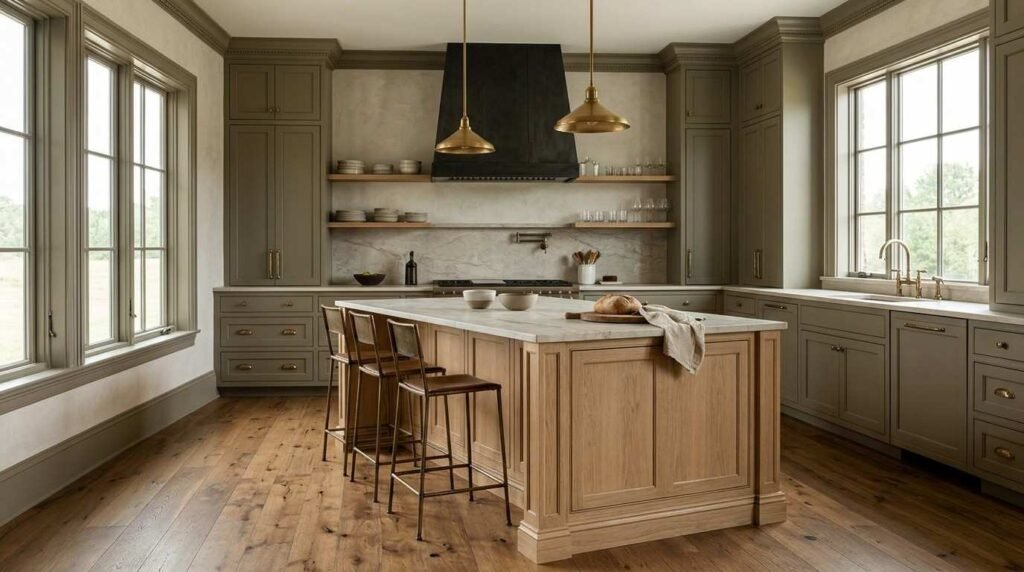
I’ve walked through enough custom builds to know that material decisions make or break a home’s long-term value. The five categories that matter most are flooring, wall finishes, millwork, structural metals, and hardware, and each one carries its own cost, durability, and style implications.
Homeowners often underestimate how much these choices affect daily life. A poor flooring pick shows wear within two years, and mismatched hardware finishes make a custom home look unfinished before it’s even done.
I walk through the core material categories here, then get into what actually drives your decisions: cost and timeline impact, sustainability and durability tradeoffs, matching materials to your design style and climate, and the mistakes I see homeowners make most often when they’re choosing.
What “Interior Materials” Means in Custom Home Building
Interior materials are the physical components that make up the visible and functional surfaces inside a home, including floors, walls, trim, metal accents, and hardware. Interior material is a category of building product that determines a home’s appearance, durability, and maintenance needs.
I think about it in layers. There’s the structural layer people never see, then the finish layer that defines how a room feels and performs day to day.
Custom homes give buyers more control over this finish layer than production homes do. That control comes with more decisions, more material options, and more room to get it wrong without the right guidance.
Flooring Materials: Types, Performance, and Best Uses
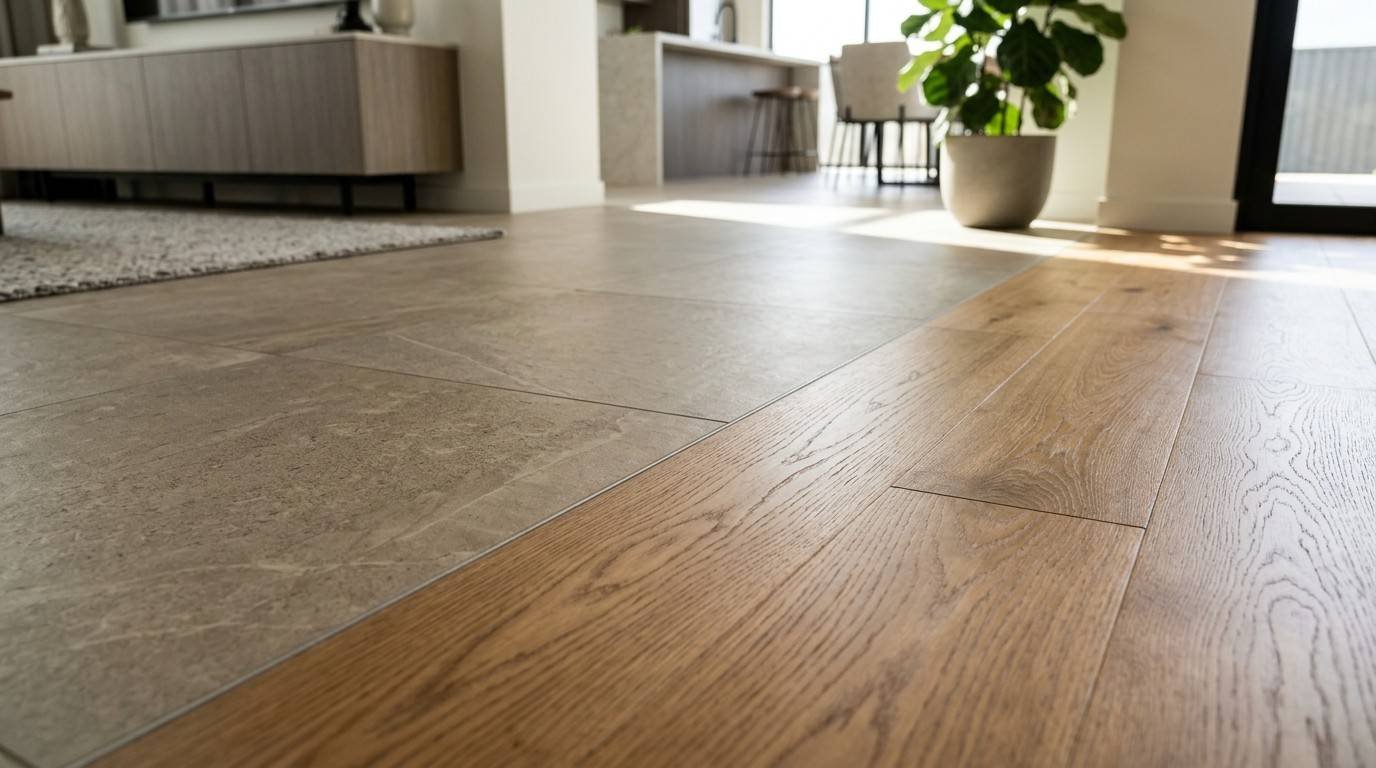
Flooring takes more daily abuse than almost any other interior material, so I always tell clients to think about traffic patterns before aesthetics. The right flooring choice balances how a room gets used with how much upkeep the homeowner actually wants to do.
Kitchens and entryways need durable, water-resistant surfaces. Bedrooms and formal living spaces can support softer, higher-maintenance materials since foot traffic stays lower.
Hardwood, Engineered Wood, and Laminate Compared
Solid hardwood flooring is a wood flooring product milled from a single piece of timber that can be sanded and refinished multiple times over its life. I like it for main living areas where homeowners plan to stay long-term and want that refinishing flexibility.
Engineered wood swaps solid planks for a plywood core topped with a real wood veneer. It handles humidity swings better than solid hardwood, which makes it a stronger choice for basements or homes in variable climates.
Laminate skips real wood entirely in favor of a photographic layer under a protective coating. It costs less upfront, but it can’t be refinished, so I steer budget-conscious clients toward it only when they’re not planning to stay in the home for decades.
Tile, Stone, and Luxury Vinyl Options
Porcelain tile resists water and scratching better than almost any other flooring material, which is why I recommend it constantly for bathrooms and mudrooms. Natural stone tile brings unmatched texture and color variation, though it needs periodic sealing to resist staining.
Luxury vinyl plank has closed the performance gap with tile in the last few years. It’s fully waterproof, softer underfoot, and a fraction of the installed cost of natural stone.
Wall Materials and Interior Finishes
Walls do more than divide space. They set the acoustic quality of a room, they carry a huge portion of the visual design language, and they’re the surface a homeowner touches and repaints more than anything else in the house.
I always ask clients how much texture and pattern they want before recommending a wall material. That answer usually points toward drywall, plaster, or paneling pretty quickly.
Drywall, Plaster, and Wood Paneling
Drywall is a gypsum-based panel product that forms the standard interior wall surface in most modern custom homes. It’s fast to install, affordable, and takes paint and texture treatments well, which is why it remains the default choice for the majority of interior square footage.
Plaster walls take longer to install and cost more, but they deliver a depth and durability that drywall can’t match. I see plaster specified most in higher-end custom builds where the client wants a tactile, old-world finish.
Wood paneling brings warmth and acoustic dampening that flat drywall can’t offer. It works especially well in home offices, libraries, and media rooms where sound control matters as much as looks.
Decorative Wall Treatments and Textures
Wainscoting, board and batten, and shiplap have become the go-to decorative treatments in custom homes over the last several years. Each one adds dimension to an otherwise flat wall without the cost of full millwork paneling.
Textured paint finishes and limewash coatings offer a lower-cost path to visual interest. I recommend them in accent spaces like powder rooms or dining areas where a bold statement doesn’t need to extend across the whole house.
Millwork Essentials: Trim, Molding, and Custom Woodwork
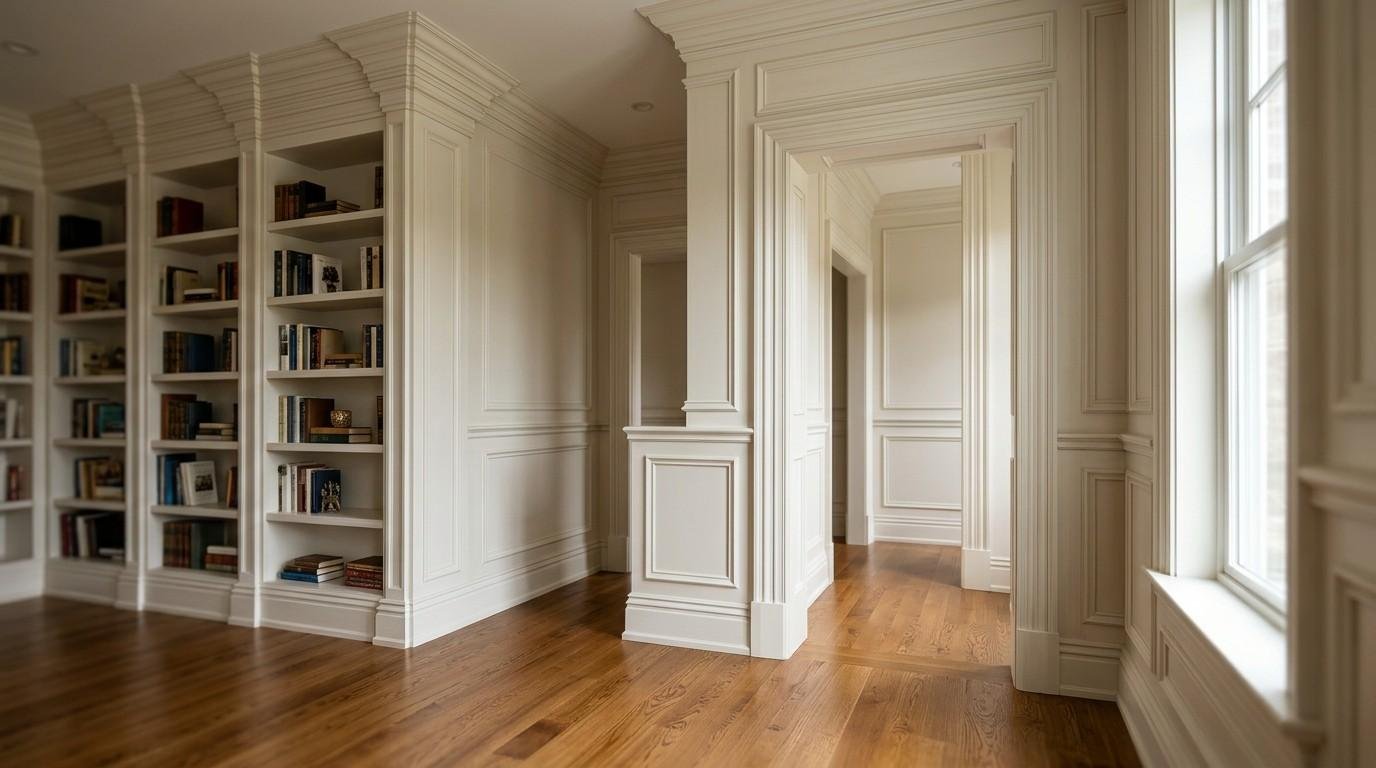
Millwork is the finish carpentry category that includes trim, molding, and built-in woodwork, and it’s often what separates a custom home from a production build at a glance. Good millwork frames every doorway, window, and ceiling line in a way that reads as intentional rather than incidental.
I’ve seen homeowners spend heavily on flooring and cabinetry, then skip on trim details and wonder why the home still feels unfinished. Millwork is the connective tissue that ties every other material choice together.
Baseboards, Crown Molding, and Casings
Baseboards protect the bottom of a wall from furniture and foot traffic while finishing the transition to the floor. Taller baseboards, generally four to six inches, read as more custom and proportional in rooms with higher ceilings.
Crown molding adds architectural weight to a ceiling line and works best in rooms with at least eight-foot ceilings. Window and door casings frame every opening in the home, and matching their profile to the baseboard style keeps the whole interior looking cohesive.
Custom Cabinetry and Built-Ins
Custom cabinetry is built to the exact dimensions of a space rather than pulled from stock sizing, which lets it maximize awkward corners and unusual room shapes. I recommend it in kitchens and primary bathrooms where storage efficiency matters most.
Built-in bookshelves, window seats, and mudroom lockers add function without eating into usable floor space. They also tend to hold resale value better than furniture-based storage since they’re treated as part of the home rather than movable contents.
Metal Accents and Structural Interior Metals
Metal has moved from a purely structural material into a design feature inside custom homes. Steel and iron stair railings, exposed structural beams, and metal window mullions all show up regularly in current custom builds.
Blackened steel is a metal finish achieved through a chemical patina process that creates a matte, dark surface without paint. I see it specified constantly on stair railings and fireplace surrounds because it resists fingerprints and wear better than polished metal finishes.
Brass and bronze accents have made a strong comeback for hardware and lighting after a decade dominated by brushed nickel and chrome. I tell clients that warm metals pair better with the wood tones common in most custom interiors right now.
Interior Hardware: Function Meets Design
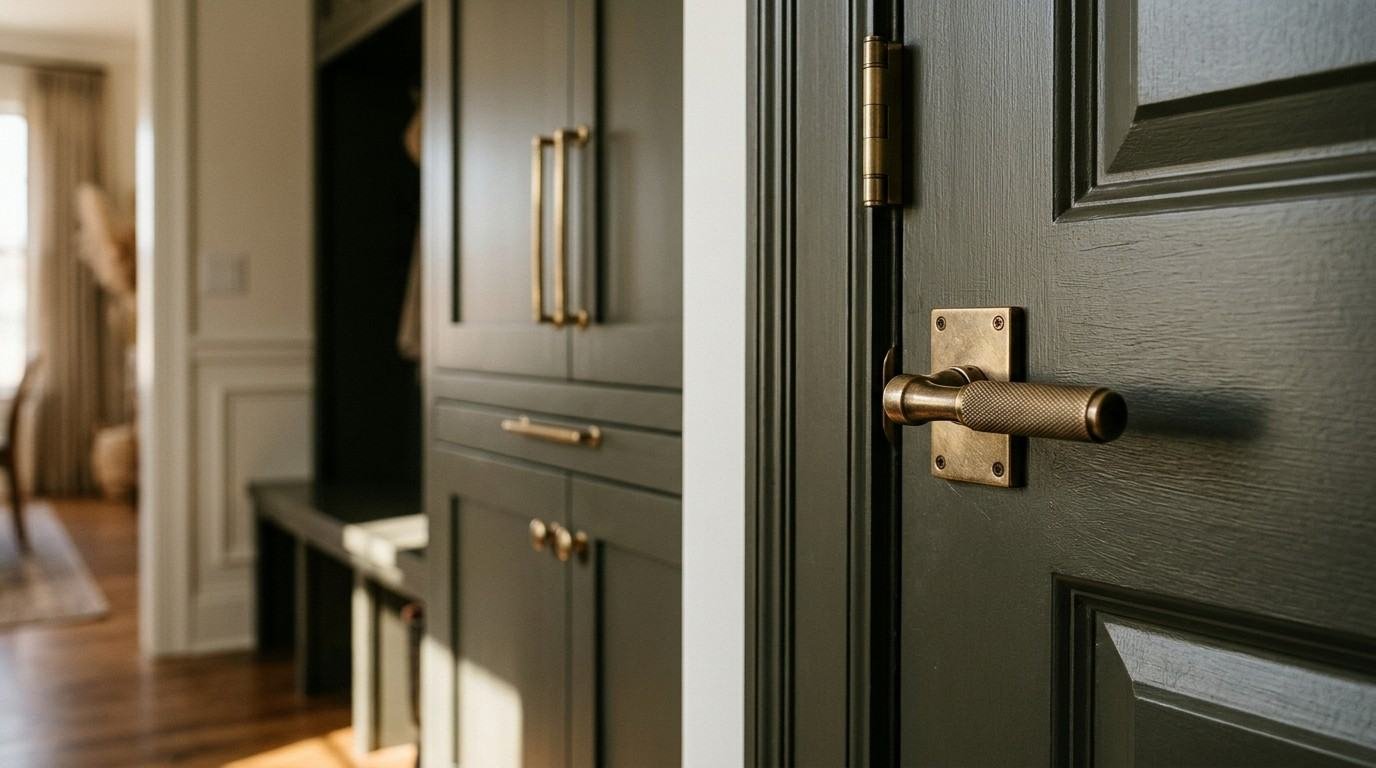
Hardware is the smallest material category by cost, but it gets touched more than almost anything else in the home. A mismatched hardware finish stands out immediately, even when every other material choice in the room is right.
I always recommend finalizing hardware finish decisions early, since they influence which metal tones show up elsewhere in lighting and plumbing fixtures.
Door and Cabinet Hardware
Door hardware includes hinges, handles, and locksets, and its finish should match or intentionally contrast with cabinet hardware in adjacent spaces. Cabinet hardware, meaning pulls and knobs, gets replaced more often than any other hardware category since it’s inexpensive and quick to update.
I recommend choosing door and cabinet hardware finishes at the same time, even when they come from different suppliers, to avoid a mismatched look down the line.
Fasteners and Structural Hardware
Structural hardware, including brackets, anchors, and heavy-duty fasteners, stays hidden but determines how well millwork and built-ins hold up over decades. Corrosion-resistant fasteners matter most in humid climates or homes near the coast, where standard steel hardware rusts and stains surrounding material.
How Material Choice Affects Cost, Timeline, and Value
Material selection is one of the biggest levers a homeowner has over both budget and schedule in a custom build. Stock materials ship faster and cost less, while custom millwork, natural stone, and specialty metals can add weeks to a project timeline.
I always walk clients through a tiered budget: which materials matter most to them, and where they’re comfortable choosing a more standard option to protect the schedule.
Resale value tends to follow material durability more than trend-driven finishes. Solid surfaces like hardwood, tile, and quality millwork hold their value longer than materials chosen purely for a current design trend.
Sustainability and Durability Considerations
Sustainable interior materials reduce environmental impact through responsible sourcing, recycled content, or lower emissions during manufacturing and use. According to the U.S. Green Building Council, homes built with sustainably sourced materials and improved building practices can reduce overall energy and resource consumption significantly compared to conventional construction.
FSC-certified wood millwork comes from forests managed under third-party sustainability standards, which matters to homeowners prioritizing environmental impact. Reclaimed wood flooring and paneling reduce demand for new timber while adding character that new material can’t replicate.
Durability and sustainability often overlap more than people expect. A material that lasts thirty years without replacement usually has a smaller lifetime environmental footprint than a cheaper option replaced every five.
Matching Materials to Design Style and Climate
Climate should narrow material choices before style ever enters the conversation. Humid regions punish solid hardwood and untreated metal hardware, while dry climates put more stress on plaster and certain adhesives used in tile installation.
Coastal homes need corrosion-resistant hardware and metals almost universally, regardless of design preference. I’ve seen beautiful polished brass hardware pit and discolor within two years on an oceanfront property simply because it wasn’t rated for salt air exposure.
Once climate rules out unsuitable options, style becomes the deciding factor. Modern farmhouse designs lean toward wide-plank engineered wood and matte black hardware, while transitional styles mix warm wood tones with brushed brass accents.
Common Mistakes When Selecting Interior Materials
The most common mistake I see is choosing every material in isolation instead of as a connected system. A homeowner picks flooring, then walls, then hardware separately, and the finishes clash because nobody looked at the whole palette together.
Skipping climate research ranks second. Homeowners fall in love with a material in a showroom or online, then install it in a climate that breaks it down within a few years.
Underbudgeting for millwork causes problems late in a build. Trim and molding get treated as an afterthought, and the home ends up with generic finish carpentry that undercuts every other material investment made in the project.
Conclusion
Interior materials shape a custom home’s cost, comfort, and long-term durability far more than most homeowners expect going in. Flooring, walls, millwork, metals, and hardware work as one connected system, not isolated decisions made room by room.
Getting the climate fit, budget tier, and design cohesion right from the start protects the investment for decades ahead. We help homeowners and property managers at Mr. Local Services navigate these material decisions with skilled, dependable professionals who deliver quality workmanship you can count on.
Frequently Asked Questions
What is the most durable flooring material for a custom home?
Porcelain tile and engineered hardwood rank among the most durable flooring options available today. Both resist scratching and moisture damage better than solid hardwood or laminate in high-traffic areas.
How much should millwork cost in a custom home budget?
Millwork typically runs between three and eight percent of total construction cost depending on complexity. Custom built-ins and detailed crown molding push that percentage toward the higher end of the range.
Does hardware finish need to match throughout the whole house?
Hardware finishes don’t need to match exactly room to room, but they should stay within a coordinated palette. Mixing two complementary metal tones works better than switching finishes randomly between spaces.
What wall material works best in humid climates?
Moisture-resistant drywall paired with proper ventilation performs best in humid climates. Plaster and untreated wood paneling absorb humidity more readily and are more prone to warping or mold.
Is engineered wood flooring as good as solid hardwood?
Engineered wood handles humidity and temperature changes better than solid hardwood, though it can only be refinished a limited number of times. Solid hardwood offers more longevity through repeated refinishing over its lifespan.
How do I choose between stone and tile for flooring?
Tile offers more consistent performance and lower maintenance than natural stone, which needs periodic sealing. Stone provides unmatched natural texture and variation for homeowners willing to maintain it.
What metal finishes are trending in custom home interiors right now?
Blackened steel and warm brass finishes are the dominant trends in current custom home interiors. Both pair well with the wood-toned millwork and flooring common in today’s builds.
Why does material choice affect construction timeline?
Custom millwork, natural stone, and specialty metals often require longer lead times than stock materials. Choosing readily available materials for less visible areas helps protect the overall project schedule.


