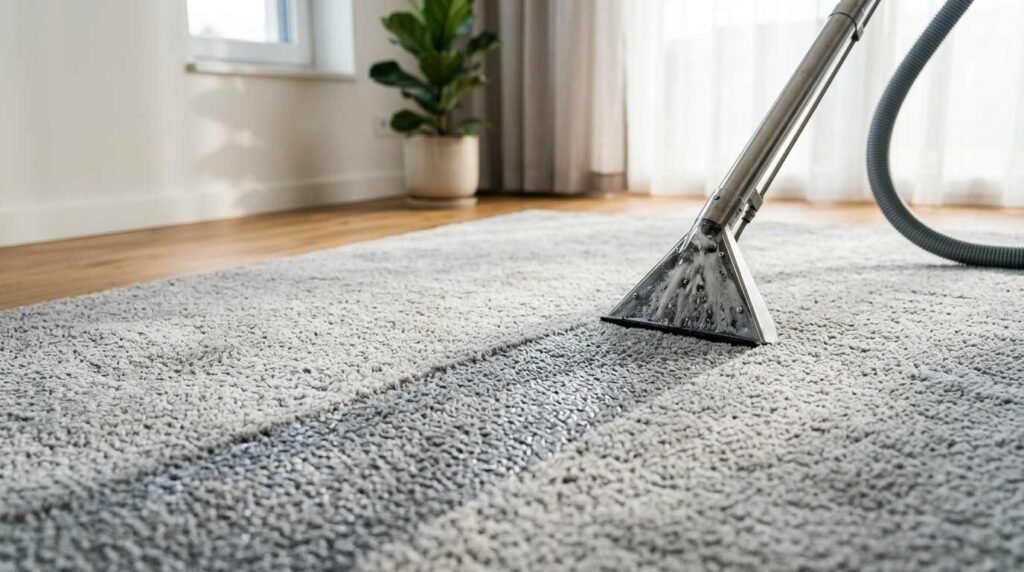
Cleaning carpets means removing dirt, allergens, stains, and trapped debris from carpet fibers using vacuuming, targeted treatments, and deep-cleaning methods that restore appearance and extend the carpet’s life. I’ve cleaned carpets in my own home and managed them across rental properties, and the same core principles hold every time.
Dirty carpets trap allergens, wear out faster, and drag down the look of an entire room. Keeping them clean protects your health, your investment, and your property’s value.
This guide covers what carpet cleaning really involves and why it matters, how often to do it, the main methods and the tools and products behind them, step-by-step deep cleaning and stain removal, drying and fiber care, the DIY-versus-professional decision, realistic costs, and how it all fits into ongoing property upkeep.
What Carpet Cleaning Actually Means
Carpet cleaning is a maintenance process that removes embedded dirt, dust, allergens, and stains from carpet fibers to restore appearance and improve indoor air quality. It covers everything from routine surface cleaning to intensive deep cleaning.
There are two broad levels here. Surface cleaning handles what you see and vacuum day-to-day, while deep cleaning reaches the dirt packed down at the base of the fibers where a vacuum alone cannot go.
I think of it as two jobs sharing one goal. One keeps carpets looking presentable between big cleans, and the other resets them completely. Understanding this split makes every later decision easier.
Why Regular Carpet Cleaning Matters
Regular carpet cleaning matters because carpets act as a filter, trapping allergens, dust, and bacteria that affect air quality, appearance, and how long the carpet lasts. Neglect shortens carpet life and worsens the air you breathe.
Carpet fibers hold a surprising amount of debris. The EPA notes that indoor air can be more polluted than outdoor air, and settled carpet dust is part of that picture in many homes.
Health and indoor air quality impact
For anyone with allergies or asthma, trapped allergens are the real cost of a neglected carpet. Regular cleaning pulls out the dust mites, pet dander, and pollen that a vacuum leaves behind, which is why I treat it as a health task, not just a cosmetic one.
How Often You Should Clean Your Carpets
Most carpets should be vacuumed at least once a week and deep cleaned every 12 to 18 months, though high-traffic homes, rentals, and properties with pets or children need deep cleaning every 6 to 12 months. Frequency scales with use.
The right carpet cleaning frequency depends on who lives in the home. A quiet household with no pets sits at the longer end, while a busy family home or a turned-over rental unit needs attention far more often.
Property managers I’ve worked with build carpet cleaning into every tenant turnover. It protects the flooring investment and keeps units rent-ready without surprises.
The Main Carpet Cleaning Methods Explained
The five main carpet cleaning methods are hot water extraction, dry cleaning, shampooing, encapsulation, and bonnet cleaning, each differing in moisture, dry time, and depth of clean. Choosing the right one depends on your carpet and how fast it needs to dry.
Here is how the main carpet cleaning methods compare at a glance.
| Method | How It Works | Dry Time | Best For |
| Hot Water Extraction | Hot water + solution injected, then extracted | 6–12 hrs | Deep cleaning, most carpets |
| Dry Cleaning | Absorbent compound worked in, then vacuumed | 1–2 hrs | Quick turnaround, low moisture |
| Shampooing | Foaming detergent scrubbed in, then vacuumed | 4–8 hrs | Heavily soiled carpets |
| Encapsulation | Polymer crystallizes dirt, then vacuumed | 1–2 hrs | Commercial, light maintenance |
| Bonnet | Absorbent pad on rotary machine | 2–4 hrs | Surface refresh, hotels |
Hot water extraction (steam cleaning)
Hot water extraction, often called steam cleaning, injects hot water and solution deep into the fibers and immediately vacuums it back out. It’s the method most manufacturers recommend and the one I reach for on any serious deep clean.
Dry carpet cleaning
Dry carpet cleaning uses an absorbent compound instead of water, so carpets are usable almost immediately. It works well where downtime has to stay short.
Shampooing
Shampooing works a foaming detergent into the carpet, then extracts it once it lifts the soil. It handles heavy soiling but leaves more residue than extraction.
Encapsulation
Encapsulation uses a polymer that crystallizes around dirt so it can be vacuumed away later. Commercial settings favor it for its speed and low moisture.
Bonnet cleaning
Bonnet cleaning spins an absorbent pad across the carpet surface to lift visible soil. It refreshes appearance quickly but doesn’t reach deep dirt.
Tools and Equipment for Cleaning Carpets
The core carpet cleaning equipment includes a quality vacuum, a carpet cleaning machine or extractor, scrub brushes, and microfiber cloths for spot work. The right tools determine how deep your clean actually goes.
A good vacuum is the foundation, but deep cleaning needs a machine. You can rent a carpet cleaning machine from most hardware stores or buy one if you clean often enough to justify it.
For landlords managing several units, I usually recommend owning a mid-range extractor. It pays for itself fast against repeated rental fees.
Carpet Cleaning Products and Solutions
Carpet cleaning products range from general-purpose detergents and enzyme-based cleaners to natural options like vinegar and baking soda, each suited to different stains and fibers. Matching the product to the carpet prevents damage.
Enzyme cleaners break down organic messes, which makes them the go-to for pet stains and food spills. General detergents handle everyday soil, while gentler natural solutions suit light jobs and sensitive households.
The one rule I never skip is checking product pH against the carpet fiber. The wrong solution can bleach or weaken fibers permanently, so I always spot-test in a hidden corner first.
How to Vacuum Carpets the Right Way
Vacuuming carpets correctly means going slowly, overlapping passes, and working in multiple directions to lift dirt packed between fibers. Proper vacuuming is the foundation of every deeper clean.
Most people vacuum too fast. Slow, overlapping passes give the machine time to pull debris up, and crossing directions loosens dirt that a single pass drives deeper.
High-traffic lanes need daily attention, while low-use rooms are fine weekly. Getting this step right means your deep cleans work far better.
How to Deep Clean Carpets Step by Step
Deep cleaning carpets follows a clear sequence: vacuum thoroughly, pre-treat stains, apply cleaning solution, work it in, extract the moisture, and allow full drying. Each step builds on the last.
Here is the deep cleaning process in order:
- Vacuum the entire carpet thoroughly to remove loose debris.
- Pre-treat visible stains and high-traffic areas.
- Fill the machine with the correct solution and warm water.
- Work the machine slowly across the carpet in overlapping passes.
- Make a second pass with clean water to rinse residue.
- Extract as much moisture as possible on the final pass.
- Set up airflow and let the carpet dry completely before walking on it.
Rushing any step shows in the result. The pre-treatment and the final extraction pass matter most for a clean that actually lasts.
How to Remove Common Carpet Stains
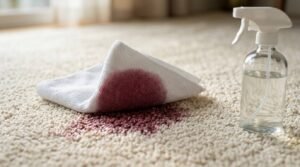
Removing carpet stains starts with blotting, not rubbing, then applying the right solution for the stain type before it sets. Fast, correct action prevents most permanent stains. Carpet stain removal depends entirely on identifying what caused the mark.
Here is how to match common stains to the right response.
| Stain Type | First Step | Solution |
| Coffee/Tea | Blot immediately | Detergent + vinegar mix |
| Wine | Blot, apply cold water | Enzyme cleaner or salt |
| Pet accidents | Blot, remove solids | Enzyme cleaner |
| Grease/Oil | Blot, apply baking soda | Dish soap solution |
| Ink | Blot with alcohol | Isopropyl alcohol |
Food and drink stains
Food and drink stains respond best when you blot up the spill immediately and treat it before it dries. A detergent-and-vinegar mix handles most coffee, tea, and juice marks.
Pet stains and odors
Pet stains need an enzyme cleaner because it breaks down the odor-causing compounds, not just the visible mark. Blot the area, remove any solids, then saturate with enzyme cleaner and let it sit.
Ink, grease, and tough stains
Ink lifts with isopropyl alcohol applied to a cloth and blotted in, while grease responds to baking soda followed by a dish soap solution. These stains take patience and repeat treatments.
Drying Carpets and Preventing Mold
Carpets should dry fully within 6 to 12 hours, and speeding this up with airflow and dehumidifiers prevents mold and mildew from forming underneath. Trapped moisture is the biggest risk of any deep clean.
Open windows, run fans, and use a dehumidifier to move air across the carpet. Damp carpet left too long invites mold in the padding below, which turns a cleaning job into a much bigger problem.
If a carpet stays wet from flooding or a leak rather than cleaning, that crosses into serious moisture damage that needs professional water damage attention. Standard drying methods won’t fix a saturated subfloor.
Cleaning Different Carpet Types and Fibers
Different carpet fibers require different care: nylon and polyester tolerate most methods, wool needs gentle low-moisture cleaning, and olefin resists water but attracts oil-based soil. Knowing your fiber prevents costly mistakes.
Wool is the fiber that catches people out. It’s durable but sensitive to heat and harsh chemicals, so it needs pH-neutral products and minimal moisture.
Synthetic fibers like nylon are far more forgiving and handle hot water extraction well. When in doubt, I check the manufacturer’s care label before choosing any method.
DIY vs. Professional Carpet Cleaning
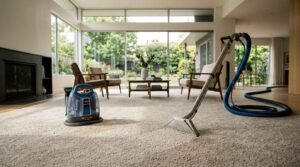
DIY carpet cleaning saves money and suits routine maintenance, while professional carpet cleaning delivers deeper results, faster drying, and expertise for tough stains or delicate fibers. The right choice depends on the carpet’s condition and your goals.
Here is how the two approaches compare.
| Factor | DIY | Professional |
| Cost | $30–70 (rental + supplies) | $100–300+ per job |
| Equipment | Consumer-grade | Truck-mounted, powerful |
| Dry Time | Longer | Shorter |
| Tough Stains | Limited | Expert treatment |
| Best For | Routine upkeep | Deep restoration, delicate carpets |
I handle routine cleaning myself and call a professional for annual deep cleans or anything valuable. Truck-mounted equipment extracts far more moisture than a rental unit ever will.
Carpet Cleaning Costs and What to Expect
Professional carpet cleaning typically costs $25 to $75 per room or $0.20 to $0.40 per square foot, with whole-home cleaning ranging from $120 to $300 depending on size and condition. Costs rise with heavy soiling and specialty fibers.
Most companies price by room or square footage, and stairs, pet treatments, or stain protection add to the base rate. Getting a clear, itemized quote up front avoids surprises.
Understanding typical carpet cleaning costs helps you judge whether a quote is fair. Prices vary by region, so I always compare a couple of providers before booking.
Maintaining Clean Carpets Long-Term
Keeping carpets clean long-term comes down to prevention: entry mats, a no-shoes rule, prompt spot cleaning, and regular vacuuming between deep cleans. Consistent small habits prevent big cleaning jobs.
Placing mats at every entrance stops most dirt at the door. A no-shoes rule cuts tracked-in soil dramatically, and treating spills the moment they happen keeps stains from setting.
These small routines stretch the time between deep cleans and extend the carpet’s life by years. Prevention always costs less than restoration.
How Carpet Cleaning Fits Into Home Maintenance
Carpet cleaning is one part of a broader home maintenance routine that keeps a property safe, healthy, and holding its value. Flooring care sits alongside tasks like HVAC servicing, air quality management, and general upkeep.
Clean carpets support the same goals as the rest of your maintenance schedule. They improve air quality, protect a major flooring investment, and keep a property presentable for family, tenants, or buyers.
For landlords and property managers especially, carpet care is part of routine property upkeep that protects value between tenants. Folding it into a regular maintenance plan keeps it from becoming an emergency.
Conclusion
Clean carpets come down to matching the right method, tools, and products to your fibers, stains, and traffic, then drying properly to protect the result.
Carpet care is one piece of keeping a property healthy and valuable, working alongside your broader maintenance routine and deeper resources for tougher jobs.
When you need trusted professionals for a deep clean or restoration, we connect you with skilled, vetted providers through Mr. Local Services. Book with confidence today.
Frequently Asked Questions
Can I clean my carpets myself or should I hire a professional?
You can clean carpets yourself for routine maintenance using a rented or owned machine. Hire a professional for annual deep cleans, tough stains, or delicate fibers like wool where expertise protects the carpet.
How long does it take carpets to dry after cleaning?
Carpets typically dry within 6 to 12 hours after cleaning. Airflow, fans, and dehumidifiers speed this up and prevent mold, while heavy moisture methods take longer than low-moisture ones.
What is the best method for cleaning carpets?
Hot water extraction, or steam cleaning, is the best method for most carpets and the one manufacturers recommend. It cleans deepest, though low-moisture methods suit situations needing faster drying.
How often should carpets be professionally cleaned?
Carpets should be professionally cleaned every 12 to 18 months for average homes. Households with pets, children, or high traffic, plus rentals, benefit from cleaning every 6 to 12 months.
Does carpet cleaning remove pet odors completely?
Enzyme-based cleaning removes most pet odors by breaking down the compounds that cause them. Deep or old stains that reach the padding may need professional treatment for complete odor removal.
Will cleaning damage my carpet?
Proper cleaning will not damage carpet when you match the method and products to the fiber. Wool and delicate fibers need gentle, low-moisture care, so always check the manufacturer’s label first.
How much does professional carpet cleaning cost?
Professional carpet cleaning costs about $25 to $75 per room or $0.20 to $0.40 per square foot. Whole-home cleaning generally ranges from $120 to $300 depending on size and condition.