Deep cleaning is a thorough, top-to-bottom cleaning process that targets built-up dirt, grime, and bacteria in areas routine cleaning usually misses, like grout, appliances, baseboards, and behind furniture. I treat it as the reset button for a home, the clean that reaches everything a quick weekly wipe-down skips. It matters for anyone who owns or manages property.
A neglected home loses value, harbors allergens, and develops small problems that grow into expensive repairs over time. Deep cleaning protects both health and property.
This guide walks through what deep cleaning actually is and how it differs from regular and spring cleaning, how often to do it, and the tools you need. I cover a full room-by-room method for the kitchen, bathroom, bedrooms, floors, and overlooked spots, then move into the decision side: doing it yourself versus hiring out, what professional cleaning costs, move-in and rental scenarios, and building a seasonal routine.
What Is Deep Cleaning?
Deep cleaning is a detailed cleaning method that removes deep-seated dirt, mold, grease, and bacteria from surfaces and hidden areas that daily or weekly cleaning does not reach. Think inside the oven, behind the toilet, under the refrigerator, along the baseboards, and into the grout lines. Regular cleaning keeps a home looking tidy on the surface. Deep cleaning restores it underneath.
I like to explain it with a simple contrast. Wiping a counter is regular cleaning. Pulling out the stove, scrubbing the wall behind it, degreasing the vent hood, and sanitizing the drip pans is deep cleaning.
The goal is sanitation and restoration, not just appearance. According to the American Lung Association, indoor air can hold pollutants at levels several times higher than outdoor air, and much of that comes from dust, dander, and mold that settle in exactly the spots deep cleaning targets. That is why this level of cleaning belongs in every home’s routine, not just before a party or a move.

Deep Cleaning vs. Regular Cleaning vs. Spring Cleaning
Deep cleaning, regular cleaning, and spring cleaning are three distinct levels of home care that differ in frequency, depth, and purpose. Understanding the difference helps you know exactly what your home needs and when. Here is how they compare across the attributes that matter most.
| Attribute | Regular Cleaning | Deep Cleaning | Spring Cleaning |
| Frequency | Weekly | Quarterly to twice a year | Once a year |
| Depth | Surface level | Hidden and built-up grime | Seasonal reset + decluttering |
| Focus | Maintenance | Sanitation and restoration | Refresh and organize |
| Time needed | 1–2 hours | Half to full day | Full day or weekend |
What regular cleaning covers
Regular cleaning is the routine upkeep that keeps a home functional and presentable week to week. It covers wiping counters, vacuuming, mopping, taking out trash, and cleaning visible surfaces. It is fast, repeatable, and surface-focused. It does not touch the buildup hiding in grout, vents, or appliances.
What deep cleaning covers
Deep cleaning covers the neglected, high-buildup zones that regular cleaning skips. That means scrubbing grout, descaling faucets, cleaning inside appliances, washing baseboards and trim, sanitizing high-touch surfaces, and reaching behind and under furniture. It is the level that actually removes bacteria and allergens rather than just relocating dust.
How spring cleaning fits in
Spring cleaning is a seasonal, once-a-year effort that combines deep cleaning with decluttering and organizing. It often includes tasks like washing windows, rotating seasonal items, and clearing out closets. I think of spring cleaning as deep cleaning plus a fresh start, timed to a change of season.
How Often Should You Deep Clean Your House?
Most homes need a full deep clean every three to six months, with high-use areas like kitchens and bathrooms benefiting from deep cleaning as often as once a month. The right frequency depends on your household. Pets, kids, allergies, and foot traffic all push the schedule toward the more frequent end.
I use a simple rule of thumb by room. Kitchens and bathrooms collect grease, moisture, and bacteria fastest, so they earn a deep clean every four to six weeks. Bedrooms and living areas hold up longer and do well on a quarterly rhythm.
Households with pets or anyone managing allergies should deep clean more often, since dander and dust mites accumulate quickly in soft surfaces. Landlords and property managers usually schedule a full deep clean between every tenant, regardless of the calendar.
What You Need Before You Start: Tools and Supplies
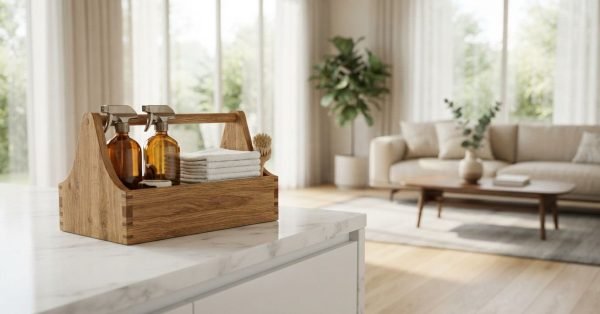
A proper deep clean needs a core kit of cleaning agents, tools, and protective gear so you can tackle every surface without stopping mid-task. Gathering everything first saves time and keeps you from spreading grime around with the wrong tool. Here is the essential supply checklist I work from.
- All-purpose cleaner, glass cleaner, and a disinfectant
- A degreaser for the kitchen and a descaler or vinegar for hard water
- Baking soda and a mild abrasive for scrubbing
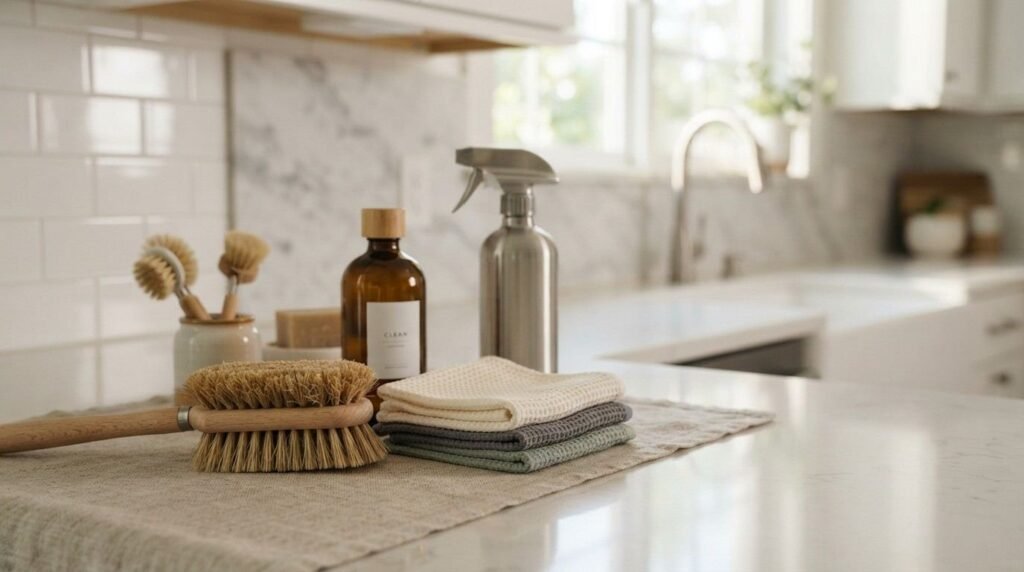
- Microfiber cloths, sponges, and a grout brush or old toothbrush
- A vacuum with attachments, a mop, and a bucket
- Rubber gloves and a mask for dusty or mold-prone areas
- Trash bags and a caddy to carry supplies room to room
Microfiber is worth calling out on its own. It traps dust and bacteria instead of pushing them around, which makes it the single most useful tool for genuine sanitation. For mold-prone bathrooms and vents, add a dedicated mold and mildew remover and never mix bleach with ammonia-based products.

How to Deep Clean Your House Step by Step
The most effective way to deep clean a house is to work top to bottom and room to room, so dust and debris fall onto surfaces you have not cleaned yet rather than ones you already finished. Cleaning the ceiling fan after the floor just means mopping twice. Follow the sequence, and you clean each surface once.
- Declutter every room first so surfaces are clear to work on
- Dust from the top down: ceilings, fans, light fixtures, then shelves
- Clean walls, baseboards, and trim
- Deep clean the kitchen, including appliances
- Deep clean bathrooms, including grout and fixtures
- Move through bedrooms and living areas
- Treat floors, carpets, and upholstery last
- Finish with windows, mirrors, and high-touch surfaces
I always start by decluttering the whole home before any scrubbing begins. Deep cleaning a surface buried under clutter just wastes effort. Once every room is clear, the top-to-bottom order does the heavy lifting for you.
How to Deep Clean the Kitchen
Deep cleaning the kitchen means degreasing and sanitizing every surface, appliance, and hidden zone where food residue and bacteria collect. The kitchen is usually the dirtiest room in the house because heat, grease, and moisture combine daily. It rewards a methodical approach.
- Empty and clean inside the refrigerator and freezer, tossing expired food
- Degrease the oven, stovetop, and range hood, including filters
- Run an empty dishwasher cycle with a cleaner to descale it
- Wipe cabinet fronts and clean out the interiors
- Scrub the sink, descale the faucet, and disinfect the drain
- Sanitize countertops and high-touch handles, then mop the floor
The spots people miss most are the range hood filter, the rubber gasket around the fridge door, and under the appliances. Grease and crumbs build up there for months. A dedicated degreaser and a grout brush handle almost all of it.
How to Deep Clean the Bathroom
Deep cleaning the bathroom focuses on removing soap scum, hard water stains, mold, and bacteria from grout, fixtures, and tile. Bathrooms trap moisture, which makes them the fastest room to grow mold and mildew. Ventilation and thorough scrubbing keep both under control.
- Spray tile and grout with a mold and mildew remover and let it sit
- Scrub grout lines with a stiff brush to lift trapped buildup
- Descale the showerhead, faucets, and glass to clear hard water stains
- Disinfect the toilet inside, outside, and around the base
- Clean the exhaust fan cover and mirror
- Sanitize high-touch surfaces and mop the floor last
Grout cleaning is the task that transforms a bathroom, and it is also the one most people skip because it takes patience. Discolored grout holds mold and makes an otherwise clean bathroom look dingy. Letting the cleaner dwell before scrubbing does most of the work.
How to Deep Clean Bedrooms and Living Areas
Deep cleaning bedrooms and living areas centers on removing dust, allergens, and buildup from soft surfaces like mattresses, upholstery, and curtains. These rooms feel clean but quietly collect dust mites and dander in fabrics. That directly affects the air you breathe while you sleep and relax.
- Wash all bedding and vacuum both sides of the mattress
- Dust and wipe headboards, nightstands, and shelves
- Vacuum upholstered furniture, including under cushions
- Launder or steam curtains and wipe blinds
- Dust ceiling fans, light fixtures, and vents
- Vacuum and treat carpets or clean hard floors
Mattress cleaning is the step people forget most, and it matters more than any other in these rooms. Dust mites concentrate in mattresses and bedding, which is a common trigger for nighttime allergies. Vacuuming and airing the mattress a few times a year makes a real difference.
Deep Cleaning Floors, Carpets, and Upholstery
Deep cleaning floors and soft furnishings means treating each surface by its material, since carpet, hardwood, tile, and upholstery all require different methods and products. Using the wrong product can strip a finish or set a stain. Matching the method to the material protects the surface and gets it genuinely clean.
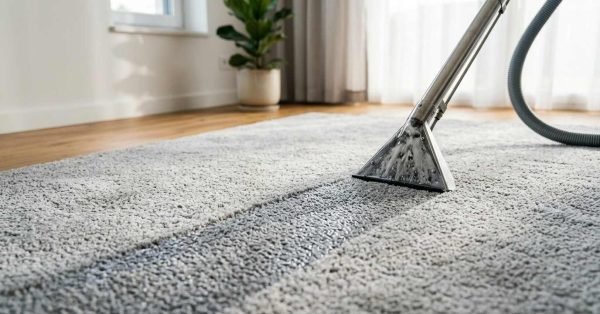
- Carpet: vacuum thoroughly, then steam or shampoo to lift embedded dirt
- Hardwood: sweep, then clean with a pH-neutral hardwood cleaner
- Tile and grout: mop, then scrub grout lines separately
- Upholstery: vacuum, spot-treat stains, then steam if fabric allows
Carpet cleaning is where a deep clean shows the most dramatic result, because embedded dirt and allergens sink far below what a vacuum reaches. Deep, set-in stains and large carpeted areas are usually the point where I recommend calling a professional, since rented machines rarely match commercial extraction. For everyday upkeep between deep cleans, regular vacuuming and prompt spot-treatment keep both carpet and upholstery in good shape.
Deep Cleaning Windows, Walls, and Overlooked Areas
Deep cleaning the overlooked areas means reaching the spots that never make it into a weekly routine: window tracks, walls, baseboards, vents, and light fixtures. These zones collect dust and grime slowly, so the buildup is invisible until you finally clean it. They make the biggest visible difference in a finished deep clean.
- Wash windows inside and out, and vacuum the tracks
- Wipe walls and spot-clean marks and fingerprints
- Scrub baseboards and door frames
- Dust and vacuum air vents and return grilles
- Clean light fixtures, switch plates, and door handles
- Wipe down ceiling fan blades
Air vents deserve special attention, since dusty vents circulate allergens through the whole home every time the system runs. Cleaning the return grilles and visible vent covers is a straightforward deep-cleaning task. When airflow feels weak, or dust returns fast, that points to buildup deeper in the ductwork than surface cleaning can reach.

DIY Deep Cleaning vs. Hiring a Professional
The choice between DIY and professional deep cleaning comes down to time, cost, results, and the size and condition of the job. Doing it yourself saves money and gives you control. Hiring out saves hours and delivers a more thorough result on heavy buildup. Here is how the two compare.
| Factor | DIY Deep Cleaning | Professional Deep Cleaning |
| Cost | Cost of supplies only | Higher upfront cost |
| Time | A full day or more | A few hours, hands-off |
| Results | Good on light buildup | Thorough on heavy buildup |
| Best for | Routine maintenance | Move-outs, deep grime, large homes |
I lean DIY for regular quarterly upkeep in a home that is already maintained. Professional cleaning earns its cost when the buildup is heavy, the home is large, or the clock matters, like a move-out deadline. A trustworthy professional cleaning service also brings commercial equipment that achieves results rented machines cannot, which is the real difference on grout, carpets, and upholstery.
How Much Does Professional Deep Cleaning Cost?
Professional deep cleaning in the US typically costs between $200 and $400 for an average home, with prices ranging higher for larger properties or heavy buildup. According to HomeAdvisor, most homeowners pay in that range, and cost scales with square footage, condition, and the specific services requested. Understanding what drives the price helps you request an accurate quote.
Several factors move the number. Home size is the biggest one, since pricing usually runs per square foot or per hour. Condition matters too: a home that has not been deep cleaned in years takes more labor.
Add-on tasks like interior appliance cleaning, carpet extraction, or window washing raise the total. Move-out cleaning often costs more because it demands a landlord-ready standard. Getting a clear, itemized quote up front is the best way to avoid surprises.
Deep Cleaning for Move-In, Move-Out, and Rentals
Move-in and move-out deep cleaning is a specialized, top-to-bottom clean performed when a property changes hands, held to a higher standard than routine cleaning. Empty rooms make it possible to reach every surface, and the result often determines a security deposit or a first impression. It matters most to landlords, property managers, and tenants.
- Move-out cleaning aims to return a rental to rent-ready condition
- Move-in cleaning sanitizes a home before you unpack
- Rental turnover cleaning happens between every tenant
For landlords and property managers, move-out cleaning protects property value and speeds up turnover between tenants. Empty-home cleaning is far more thorough than an occupied clean, because every cabinet, closet, and appliance is accessible. This is one of the most common reasons property managers bring in a professional rather than handling it in-house.
Seasonal and Preventive Deep Cleaning Maintenance
A seasonal deep cleaning schedule breaks the whole-home clean into a recurring rhythm so buildup never accumulates faster than you remove it. Preventive maintenance keeps a home healthier and protects its long-term value. It also makes each individual clean faster and easier.
- Spring: full deep clean plus decluttering and window washing
- Summer: focus on floors, vents, and outdoor-tracked dirt
- Fall: deep clean before closing up windows for winter
- Winter: target high-touch surfaces and indoor air quality
I treat preventive deep cleaning the same way I treat any property maintenance: small, consistent effort beats a massive emergency cleanup. A home on a seasonal schedule rarely needs the heavy, all-day rescue clean. For property managers juggling multiple units, a set cleaning rotation keeps every property in reliable, rent-ready condition year-round.
Conclusion
Deep cleaning restores what routine cleaning misses, from grout and appliances to mattresses, carpets, and overlooked vents, protecting both your health and your property’s value.
Master the room-by-room method and the right schedule, and every future clean gets easier while your home stays healthier and more valuable over time.
We built Mr. Local Services to connect you with trusted, vetted cleaning professionals who deliver thorough, dependable results. Book your deep clean today.
Frequently Asked Questions
What is included in a deep cleaning?
A deep cleaning includes scrubbing grout, cleaning inside appliances, washing baseboards and trim, sanitizing high-touch surfaces, and reaching behind and under furniture. It covers the built-up grime that regular cleaning skips.
How long does it take to deep clean a house?
Deep cleaning an average house takes a half day to a full day for one person. Larger homes or heavy buildup can take longer, while a professional team usually finishes in a few hours.
Is deep cleaning worth it?
Yes, deep cleaning is worth it because it removes allergens, bacteria, and buildup that harm air quality and damage surfaces over time. It protects both your health and your property’s value.
How often should you deep clean your house?
Most homes need a full deep clean every three to six months. Kitchens and bathrooms benefit from deep cleaning every four to six weeks, and homes with pets or allergies need it more often.
What is the difference between cleaning and deep cleaning?
Regular cleaning maintains surfaces week to week, like wiping counters and vacuuming. Deep cleaning reaches hidden, built-up grime in grout, appliances, and behind furniture that routine cleaning never touches.
Should I deep clean before moving out?
Yes, deep cleaning before moving out is standard for returning a rental to rent-ready condition. It often determines whether you recover your full security deposit and speeds up the property turnover.
Can I deep clean my house myself?
Yes, you can deep clean your house yourself with the right supplies and a top-to-bottom method. Professional help makes sense for heavy buildup, large homes, or tight move-out deadlines.