The best materials for building an ADU are the ones that match your budget, your local building code, and your climate at the same time. I have watched too many accessory dwelling unit projects stall because someone picked a finish before checking a fire rating.
Material choices drive nearly every number on your bid sheet. They set your permit path, your monthly utility cost, your maintenance calendar, and the rent or resale value you capture later.
Here I walk through foundations, framing, siding, roofing, insulation, windows, interiors, systems, prefab packages, sustainable options, real costs, common mistakes, and contractor sourcing.
What Makes a Material “Best” for an ADU Build
I judge every ADU material against four filters. Cost, code, climate, and lifespan. A material that wins on one filter and fails another belongs somewhere else.
An ADU is a small building with a big-building rulebook. It carries the same structural, fire, energy, and egress requirements as a primary residence in most jurisdictions, which means budget materials from a shed catalog get rejected fast.
Cost per Square Foot and Total Build Budget
Small footprints punish cheap decisions. A 600-square-foot unit still needs a full kitchen, a full bath, and a complete envelope, so the fixed costs land harder per square foot than they do on a 2,400-square-foot house.
The U.S. Census Bureau reports the median sales price of new homes sold as a useful benchmark for regional cost pressure. I use that as a sanity check, then adjust for the ADU’s compressed scale.
Local Building Codes, Permits, and Fire Ratings
Code decides more than taste does. Setback distance from the property line drives your fire-rated wall assembly, and that single rule reshapes your siding, sheathing, and window schedule.
California, which leads the country in ADU permitting, saw ADUs account for roughly one in five new homes permitted statewide in recent years. Local amendments there change material requirements block by block.
Climate, Moisture, and Regional Performance
I match the envelope to the weather, not to a trend photo. Gulf Coast humidity, Midwest freeze-thaw, and Southwest heat each punish a different weak point.
Moisture is the quiet killer. Vapor drive, flashing details, and drainage planes matter more than the brand name on the siding.
Longevity, Maintenance Load, and Resale Value
A rental ADU earns money only when it stays occupied. I steer landlords toward surfaces that survive tenants and cleaning crews without annual refinishing.
Every material carries a maintenance bill. I price that bill across twenty years before I call anything a bargain.
Foundation Materials for an ADU
The foundation sets your floor height, your utility routing, and your soil-related risk. It is the one system nobody upgrades later.
Concrete Slab on Grade
Slab on grade is the default for detached ADUs on flat, stable lots. It gives you a durable floor, simple plumbing rough-in, and a fast path to framing.
Concrete is also the largest single carbon load in a small build. Mixes with supplementary cementitious materials cut that impact meaningfully.
Pier and Beam / Helical Piers
Sloped lots, expansive clay soils, and flood zones push me toward piers. Helical piers install fast, disturb less soil, and reach stable bearing without a full excavation.
The crawl space they create makes future plumbing and electrical service work far simpler.
Crawl Space and Basement Options
Basements under ADUs stay rare because of cost and egress rules. Crawl spaces work well where frost depth already forces a deep footing.
I insulate and seal crawl spaces as conditioned space. Vented crawl spaces invite moisture problems in humid regions.
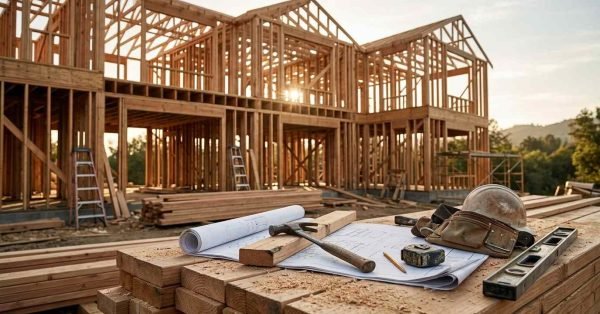
Framing Materials: Wood, Steel, and Alternatives
Framing is where your budget and your build schedule collide. It also sets the cavity depth available for insulation, which shapes your energy performance for the life of the building.
Traditional Stick Framing (Douglas Fir, SPF)
Dimensional lumber remains the most available, most familiar, and usually the cheapest structural option. Every framing crew in the country knows it, and that labor familiarity keeps bids competitive.
Lumber pricing swings hard. The Producer Price Index for softwood lumber tracked by the Bureau of Labor Statistics shows how much a six-month delay changes a budget.
Light-Gauge Steel Framing
Steel studs resist termites, rot, and fire, and they arrive dead straight. That dimensional accuracy pays off in small units where a bowed stud ruins a tight bathroom layout.
Steel conducts heat, so it needs continuous exterior insulation to hit modern energy code. That added layer raises material cost and wall thickness.
SIPs (Structural Insulated Panels)
SIPs combine structure and insulation in one panel. Crews dry in a small ADU in days rather than weeks, which cuts weather exposure and labor hours.
Panel cost runs higher upfront. I recommend SIPs most often for cold climates where the airtightness pays back quickly.
ICF (Insulated Concrete Forms) and Mass Timber
ICF walls deliver mass, sound isolation, and storm resistance. They shine in hurricane and wildfire regions where insurance carriers reward hardened construction.
Mass timber stays niche at ADU scale but is gaining ground for exposed-structure designs. Both options need a contractor who has actually built with them before.
Exterior Wall and Siding Materials
Siding is the visible half of your envelope and the part your neighbors and appraiser judge first. Behind it, the weather-resistive barrier and drainage plane do the real work.
Fiber Cement Siding
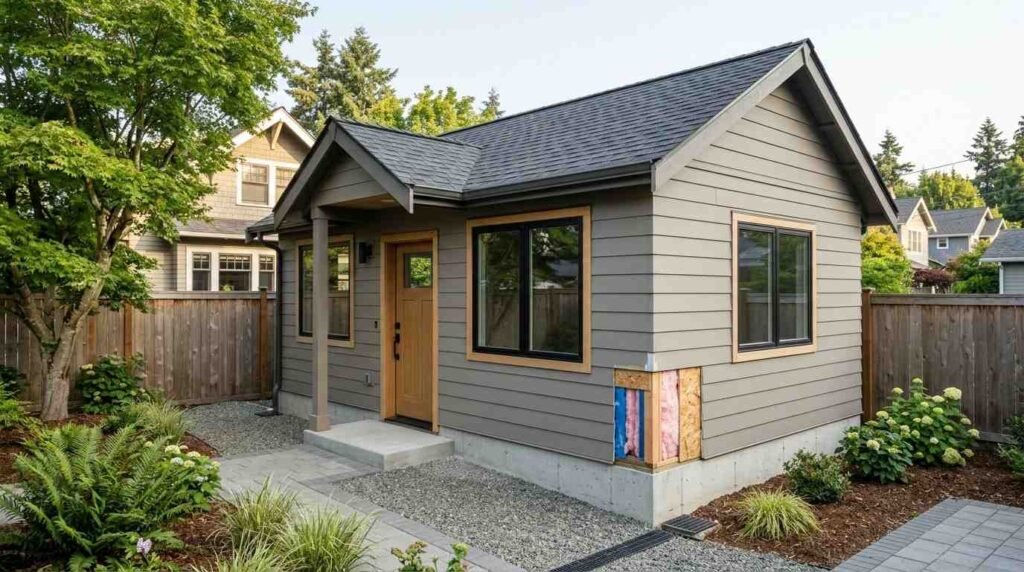
Fiber cement is my most-recommended ADU cladding. It holds paint well, resists rot and pests, carries strong fire ratings, and matches most primary-home aesthetics.
It is heavy and dusty to cut. Crews need proper silica control on site.
Engineered Wood and Natural Wood Siding
Engineered wood lap siding installs lighter and faster than fiber cement at a similar look. Natural cedar and redwood still win on warmth for design-forward units.
Wood needs a maintenance commitment. I set that expectation with landlords before anyone falls in love with a stain sample.
Vinyl, Metal, and Stucco Systems
Vinyl remains the budget leader and performs fine in moderate climates. Metal panels suit modern designs and shed water beautifully.
Stucco dominates in the Southwest. It demands correct lath, flashing, and control joints, otherwise cracking follows within a few seasons.
Fire-Resistant Cladding for WUI Zones
Wildland-Urban Interface rules now govern a large share of Western ADU permits. The CAL FIRE building materials listing program publishes approved assemblies for exterior walls, decking, and vents.
In those zones, noncombustible cladding and ember-resistant vents are not upgrades. They are the permit.
Roofing Materials for Detached and Attached ADUs
Roof material choice depends on slope, budget, fire zone, and how visible the roof is from the street. Small roofs also mean small material quantities, so premium options cost less to try here than on a full house.
Asphalt Shingles
Architectural asphalt shingles cover most ADUs. They are inexpensive, widely stocked, and easy for any roofing crew to install and repair.
Expect twenty to thirty years in moderate climates. Heat and hail shorten that.
Standing Seam Metal Roofing
Standing seam costs more upfront and lasts far longer. It sheds snow, resists embers, and pairs cleanly with solar mounting without roof penetrations.
On a compact ADU roof, the price gap over shingles shrinks to a manageable number. I push clients toward metal whenever the budget allows.
TPO, EPDM, and Low-Slope Membranes
Flat and low-slope ADUs need single-ply membranes. TPO reflects heat well, and EPDM handles cold climates reliably.
Detailing at parapets and drains matters more than the membrane brand. Bad flashing sinks any low-slope roof.
Insulation and Air Sealing Materials
Insulation decides your utility bills and your comfort. In a small unit with a high surface-area-to-volume ratio, the envelope works harder than it does in a large house.
Fiberglass Batts and Mineral Wool
Batts remain the cost leader and perform well when installed without gaps or compression. Mineral wool adds fire resistance and sound control for a modest premium.
I specify mineral wool in shared-wall and garage-conversion ADUs. The acoustic difference is immediately noticeable.
Spray Foam (Open vs Closed Cell)
Closed-cell foam delivers high R-value per inch plus air and vapor control in one step. That matters in thin walls and vaulted ceilings where cavity depth is limited.
Open-cell foam costs less and handles interior sound. Both need a careful installer and proper cure ventilation.
Rigid Foam, Rainscreens, and Vapor Control
Continuous exterior rigid foam breaks thermal bridging through studs. It is the single most effective upgrade for a steel-framed or 2×4 wall.
Rainscreen gaps let walls dry outward. The U.S. Department of Energy’s Building America program documents assemblies that work by climate zone.
Window and Door Materials
Windows and doors are the weakest thermal points in any envelope. In an ADU, they also drive natural light and egress compliance in a very small floor plan.
Vinyl, Fiberglass, Wood-Clad, and Aluminum Frames
Vinyl frames give the best value and solid thermal performance. Fiberglass costs more, moves less with temperature, and holds large openings better.
Wood-clad suits design-matched additions. Thermally broken aluminum works for modern looks but rarely wins on energy numbers.
Glazing Packages and Energy Codes
Low-E coatings and gas fills are standard now, not upgrades. I match the coating to orientation, blocking solar heat on the west and letting it in on the south in cold climates.
The ENERGY STAR program publishes climate-zone glazing requirements that most inspectors reference directly.
Entry, Patio, and Egress Door Materials
Fiberglass entry doors resist warping and dents better than wood or steel. They also accept insulated cores that outperform both.
Bedroom egress rules apply fully to ADUs. I confirm clear opening dimensions before ordering any window or door package.
Interior Finish Materials
Interior materials shape how the unit feels and how it holds up. In a rental, durability outranks trend every single time.
Drywall, Ceilings, and Moisture-Resistant Board
Standard half-inch drywall covers most surfaces. Type X fire-rated board goes on garage-adjacent and separation walls where code demands it.
Cement board and moisture-resistant panels belong in wet areas. Paperless board resists mold better in humid climates.
Flooring: LVP, Engineered Wood, Tile, Polished Concrete
Luxury vinyl plank dominates ADU interiors for good reason. It is waterproof, tenant-proof, warm underfoot, and installs over slab or subfloor with minimal prep.
Engineered wood raises the perceived value of an owner-occupied unit. Tile and polished concrete win in hot climates where thermal mass helps.
Cabinetry, Countertops, and Small-Space Millwork
Frameless cabinets gain interior volume in tight kitchens. Full-extension hardware makes narrow galley layouts genuinely usable.
Quartz countertops resist stains and skip resealing. In small runs, the material cost difference against laminate is smaller than most owners expect.
Plumbing, Electrical, and HVAC Material Choices
Systems materials rarely get discussed until the rough-in inspection. They determine your utility connection cost, which is often the largest surprise in an ADU budget.
PEX vs Copper Supply Lines
PEX has become the ADU standard. It installs faster, tolerates freezing better, needs fewer fittings, and costs less than copper.
Copper still appears where local code or an existing service demands it. I confirm jurisdiction rules before ordering.
Wiring, Panels, and Subpanel Feeds
Most ADUs run on a dedicated subpanel fed from the main house or a separate service. That feeder cable size and trench depth drive real cost.
Copper THHN and aluminum SER each have a place. An experienced electrician sizes the feeder against distance and load, not habit.
Mini-Split Systems and Ducting Materials
Ductless mini-splits fit ADUs almost perfectly. One outdoor unit and one or two heads condition a small footprint efficiently without duct losses.
Ducted mini-split cassettes work when owners want hidden equipment. Insulated flex duct in conditioned space keeps losses low.
Prefab, Modular, and Kit ADU Material Packages
Prefabrication moves material assembly into a factory. That shift changes cost predictability, schedule, and which materials are even on the menu.
Panelized Kits
Panelized packages ship pre-cut walls, floors, and roof components. Local crews assemble them, which keeps labor familiar while cutting waste and framing time.
Material quality in these kits is usually strong. The savings come from precision, not from cheaper stock.
Volumetric Modular Units
Modular units arrive nearly complete, including finishes and fixtures. Factory conditions produce tight envelopes and consistent quality.
Crane access and transport width limit design options. Site prep and utility work still happen conventionally.
Container and Tiny Home Conversions
Shipping container ADUs attract attention for their steel shell and speed. Insulating and code-compliant conversions cost more than most people assume.
Tiny home construction methods share material logic with ADUs at an even smaller scale. Both reward disciplined material selection.
Sustainable and Energy-Efficient Material Options
Sustainable materials now overlap heavily with code-required performance. Choosing them early costs less than retrofitting later.
Recycled, Reclaimed, and Low-Carbon Materials
Recycled-content steel, fly-ash concrete mixes, and reclaimed timber all reduce embodied carbon. Cellulose insulation made from recycled paper performs well and stores carbon.
Availability drives feasibility. I check regional supply before specifying anything unusual.
Cool Roofs, Solar-Ready Decking, and Heat Pumps
Reflective roofing cuts cooling load in hot climates measurably. Solar-ready roof decking and conduit runs cost little during construction and save thousands later.
Heat pump water heaters and mini-splits electrify the unit cleanly. Many utilities offer rebates through ENERGY STAR rebate finders.
Healthy Interiors: Low-VOC and Formaldehyde-Free
Small units concentrate indoor air pollutants faster than large homes. Low-VOC paints, adhesives, and formaldehyde-free cabinet boxes make a real difference.
The EPA notes that indoor air can carry pollutant levels several times higher than outdoor air. In a 500-square-foot unit, material off-gassing matters.
How do I choose the right material mix for my ADU budget and climate?
Material Cost Comparison for a Typical ADU
Here is how material categories typically stack up on a detached 600-square-foot ADU. These are orientation ranges, not bids, and regional labor and supply shift them significantly.
| Category | Typical Material Share | Budget Option | Premium Option |
| Foundation | 8–12% | Slab on grade | Helical piers / deep footings |
| Framing and sheathing | 12–18% | Stick framing, SPF | SIPs, light-gauge steel |
| Roofing | 4–7% | Asphalt shingles | Standing seam metal |
| Siding and WRB | 6–10% | Vinyl | Fiber cement, metal panel |
| Windows and doors | 7–11% | Vinyl, double-pane | Fiberglass, triple-pane |
| Insulation and air sealing | 4–7% | Fiberglass batts | Closed-cell foam plus rigid |
| Interior finishes | 15–22% | LVP, laminate tops | Engineered wood, quartz |
| Plumbing, electrical, HVAC | 18–25% | PEX, mini-split | Heat pump water heater, ducted |
Where Money Is Best Spent vs Saved
I spend on the envelope and the systems. Insulation, windows, roofing, and HVAC are expensive and disruptive to change after occupancy.
I save on finishes. Cabinets, countertops, fixtures, and flooring all swap out later with minimal demolition.
Common Material Mistakes ADU Owners Make
The most frequent mistake I see is choosing finishes before confirming setbacks and fire ratings. That sequence gets reversed at the plan check counter, and the redesign costs real money.
The second is under-insulating a small building. Owners assume a small unit is cheap to heat, then discover the surface-to-volume math works against them.
Third is mixing incompatible layers. A vapor-impermeable interior layer paired with an impermeable exterior layer traps moisture inside the wall with nowhere to dry.
Fourth is ignoring lead times. A single specialty window order stretches a schedule by months and idles a crew.
Working With Contractors and Suppliers
Material decisions live or die at the bid stage. A clear specification protects both you and your builder from mid-project substitutions.
Reading a Material Allowance in a Bid
Allowances are placeholders, not prices. When a bid lists a flooring allowance without a product, the final number moves.
I ask for named products and model numbers on every major material line. That converts a rough estimate into a real comparison.
Sourcing, Lead Times, and Substitutions
Supply availability shapes what actually gets installed. I confirm lead times on windows, cabinets, and HVAC equipment before signing anything.
Approved substitution language belongs in the contract. It sets a quality floor when a product goes out of stock, and a trusted handyman or general contractor can flag issues before they reach the site.
Conclusion
I have covered foundations, framing, siding, roofing, insulation, windows, interiors, systems, prefab packages, sustainability, costs, mistakes, and sourcing across one complete material map.
Each of these categories deserves its own deeper resource, and the right combination always depends on your lot, your climate zone, and your local code.
We match homeowners with vetted builders and trades through Mr. Local Services, so your ADU gets the right materials installed correctly the first time.
Frequently Asked Questions
What is the cheapest material to build an ADU with?
Stick framing with vinyl siding, asphalt shingles, and LVP flooring gives the lowest material cost. Labor familiarity keeps installation bids competitive too.
Is a prefab ADU cheaper than a stick-built one?
Prefab often costs similar per square foot but delivers faster with fewer surprises. Site work, foundations, and utility connections stay the same either way.
What roofing material lasts longest on an ADU?
Standing seam metal lasts forty to seventy years with minimal maintenance. On a small ADU roof, the premium over asphalt shingles stays manageable.
Do ADUs need the same insulation as a main house?
Yes. ADUs follow the same energy code as primary residences in most jurisdictions, and small footprints lose heat faster per square foot.
What flooring holds up best in a rental ADU?
Luxury vinyl plank wins for rentals. It resists water, scratches, and heavy cleaning while installing directly over slab or subfloor.
Are steel-framed ADUs worth the extra cost?
Steel pays off in termite-heavy, fire-prone, or high-humidity regions. It needs continuous exterior insulation to meet energy code targets.
How long do ADU building materials typically last?
Foundations and framing last the building’s life. Roofing runs twenty to seventy years, siding thirty to fifty, and interior finishes ten to twenty.