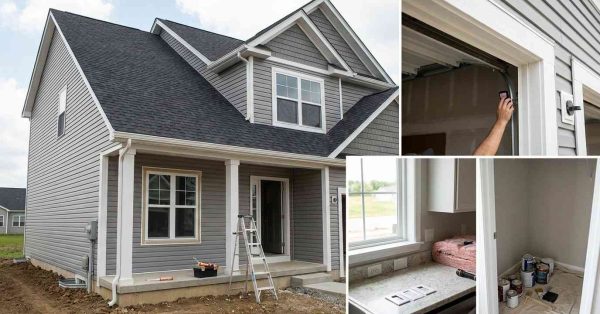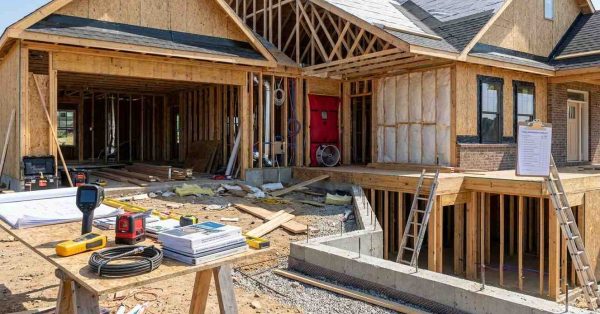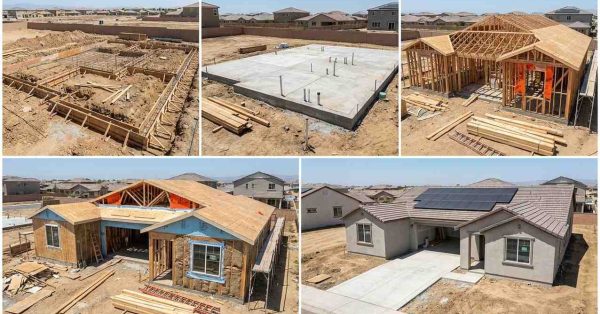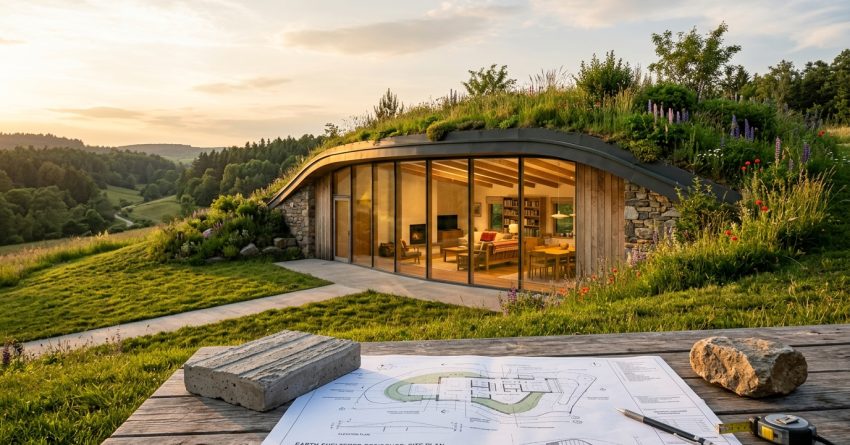
Earth-sheltered home design uses the surrounding soil as a natural building envelope, creating homes that stay cooler in summer, warmer in winter, and quieter year-round — all while reducing energy costs significantly compared to conventional construction.
Earth-sheltered homes are gaining renewed interest across the USA as homeowners look for durable, energy-efficient alternatives to standard residential builds.
This guide explains how earth-sheltered design works, what it costs, what to expect during construction, and how to maintain your home once it is built.
What Is Earth-Sheltered Home Design?
Earth-sheltered home design is a construction method where soil is placed against, over, or around a home’s exterior walls and roof to regulate interior temperature, reduce energy use, and protect the structure from extreme weather. The earth acts as a natural insulator, absorbing heat during warm months and releasing it slowly during cold months.
This approach has roots in ancient building traditions but has evolved significantly with modern waterproofing materials, structural engineering, and passive solar design principles. Today, earth-sheltered homes are built to meet the same comfort and safety standards as any conventional home — with the added advantage of dramatically lower heating and cooling demands.
Earth-sheltered homes belong to a broader category of alternative residential builds — our tiny home construction guide covers the full spectrum of compact and non-traditional housing options available to homeowners today.
How Earth Sheltering Works
The core principle behind earth sheltering is thermal mass. Soil has a high capacity to absorb and store heat energy. When packed against a home’s walls or layered over its roof, the soil buffers the interior from outdoor temperature swings. The deeper the soil coverage, the more stable the interior temperature becomes.
Most earth-sheltered homes are designed so that at least one side — typically the south-facing wall — remains fully exposed to allow natural light and passive solar gain. The remaining walls and roof are covered with compacted soil, gravel drainage layers, waterproof membranes, and in many cases, a planted living roof.
Types of Earth-Sheltered Homes
There are three primary configurations used in earth-sheltered construction in the USA:
Bermed homes have soil pushed up against one or more exterior walls, while the roof remains conventional. This is the most accessible entry point for homeowners new to earth-sheltered design.
Underground or fully recessed homes are built into a hillside or excavated site, with soil covering the roof and most walls. These offer the greatest thermal stability but require the most careful site planning.
Atrium or courtyard homes are built below grade around a central open courtyard, which provides natural light and ventilation to all interior rooms. This design solves the natural light challenge common in fully underground builds.
Key Benefits of Earth-Sheltered Home Design
Earth-sheltered homes offer a distinct set of advantages that make them a compelling choice for homeowners prioritizing long-term efficiency, durability, and comfort.
Energy Efficiency and Thermal Mass
The most significant benefit of earth-sheltered design is energy performance. The soil covering reduces heat transfer through walls and roofs, which are typically the largest sources of energy loss in a conventional home. Homeowners in earth-sheltered structures often report heating and cooling costs that are 50 to 80 percent lower than comparable above-ground homes, depending on climate, design, and insulation quality.
The thermal mass effect means the home’s interior temperature remains relatively stable throughout the day and across seasons. This reduces the workload on HVAC systems and extends equipment lifespan.
Durability, Noise Reduction, and Weather Protection
Earth-sheltered homes are exceptionally resistant to extreme weather events. The surrounding soil provides natural protection against high winds, hail, and temperature extremes. In tornado-prone regions of the USA, below-grade construction offers a structural advantage that above-ground homes cannot match.
The soil mass also acts as a sound barrier. Homes built into hillsides or with significant earth coverage experience dramatically reduced exterior noise — a benefit particularly valued in areas near highways, airports, or high-traffic zones.
Structural longevity is another advantage. When properly waterproofed and drained, earth-sheltered homes face significantly less exposure to UV degradation, wind-driven rain, and freeze-thaw cycles that wear down conventional exterior materials over time.
Design Considerations for Earth-Sheltered Homes
Successful earth-sheltered home design requires careful planning before a single shovel of soil is moved. Several site-specific and structural factors must be evaluated early in the design process.
Site Selection and Soil Conditions
Not every site is suitable for earth-sheltered construction. The ideal site has a natural slope that allows for a south-facing exposed wall, good drainage characteristics, and stable soil composition. Clay-heavy soils retain water and can create hydrostatic pressure against walls, while sandy or loamy soils drain more freely and are generally preferred.
A geotechnical soil test is a standard requirement before design begins. This test evaluates bearing capacity, drainage behavior, and soil composition — all of which directly influence foundation design, waterproofing strategy, and structural load calculations.
Waterproofing and Drainage Systems
Waterproofing is the most critical technical element of any earth-sheltered build. The membranes, drainage boards, and gravel layers installed between the soil and the structure must perform reliably for decades without failure. A single breach in the waterproofing system can allow moisture to penetrate walls or the roof assembly, leading to structural damage and interior moisture problems.
Proper drainage design is one of the most critical steps in protecting an earth-sheltered structure long-term — understanding water damage prevention strategies helps homeowners plan systems that keep moisture from compromising walls, floors, and foundations.
Drainage systems typically include a perforated pipe at the base of the wall or roof assembly, a gravel drainage layer, and a filter fabric to prevent soil migration into the drainage path. These systems must be designed by a qualified engineer and installed precisely to specification.
Natural Light and Ventilation Planning
One of the most common concerns about earth-sheltered homes is the availability of natural light. Thoughtful design addresses this directly. South-facing glazing, skylights, light tubes, and atrium configurations all bring daylight into below-grade spaces effectively.
Ventilation planning is equally important. Earth-sheltered homes are tightly sealed by nature, which improves energy efficiency but requires a deliberate mechanical ventilation strategy. Heat recovery ventilators (HRVs) are commonly used to exchange stale interior air with fresh outdoor air while recovering most of the thermal energy from the outgoing air stream.
Construction and Building Materials
Earth-sheltered construction uses a combination of conventional and specialized materials selected for their ability to handle the unique demands of below-grade and soil-contact environments.
Structural Systems Used in Earth-Sheltered Builds
The most common structural systems for earth-sheltered homes in the USA include poured concrete, concrete masonry units (CMU), and insulated concrete forms (ICF). All three provide the compressive strength needed to support soil loads on walls and roofs.
Poured concrete is the most widely used option for roof slabs and retaining walls because it can be formed into complex shapes and achieves high compressive strength. ICF systems add integrated insulation to the concrete structure, improving thermal performance while maintaining structural integrity.
Steel-reinforced concrete is standard for any roof assembly that will carry significant soil depth. Structural engineers calculate the required slab thickness, reinforcement spacing, and beam sizing based on the planned soil depth and live load requirements.
Insulation and Moisture Control
Insulation placement in earth-sheltered homes differs from conventional construction. Rather than insulating between studs, earth-sheltered designs typically use rigid foam insulation boards placed on the exterior face of concrete walls, between the structure and the waterproofing membrane. This keeps the thermal mass of the concrete on the interior side, where it can absorb and release heat to regulate indoor temperature.
Moisture control inside the living space is managed through vapor barriers, dehumidification systems, and the selection of moisture-resistant interior finishes. When retrofitting or upgrading an earth-sheltered structure, working with professionals who understand specialty builds is essential — exploring home remodeling options helps homeowners identify the right scope of work for their project.
Costs and Planning for Earth-Sheltered Home Projects
Earth-sheltered homes typically cost more to build than conventional homes of the same size, but the long-term savings in energy costs and maintenance often offset the higher upfront investment over time.
Typical Cost Ranges and Budget Factors
Construction costs for earth-sheltered homes in the USA vary widely based on design complexity, site conditions, soil depth, and regional labor rates. Simple bermed designs on favorable sites can be built for costs comparable to high-quality conventional construction. Fully underground or atrium-style designs with complex waterproofing systems and structural engineering requirements typically cost 15 to 30 percent more per square foot than a standard above-grade home.
Key cost drivers include excavation volume, waterproofing system quality, structural engineering fees, and the cost of specialized contractors with earth-sheltered construction experience. Homeowners should budget for geotechnical testing, architectural design fees, and a contingency reserve of at least 10 to 15 percent for site-specific surprises.
Permits, Zoning, and Professional Help
Earth-sheltered homes require the same building permits as any residential construction project, but the review process may take longer because inspectors and plan reviewers are less familiar with below-grade residential structures. Some jurisdictions have specific requirements for below-grade habitable spaces related to egress, ventilation, and moisture control.
Zoning regulations in some areas restrict below-grade construction or impose setback requirements that affect site selection. Consulting with a local land use attorney or experienced architect before purchasing a site is strongly recommended.
Smaller finishing tasks and ongoing adjustments during an earth-sheltered build often benefit from a reliable generalist — connecting with skilled handyman help ensures minor work is handled efficiently alongside larger construction phases.
Maintenance and Upkeep of Earth-Sheltered Homes
Once built, earth-sheltered homes require a maintenance routine that differs from conventional homes in several important ways. The areas of greatest attention are the roof assembly, drainage systems, and surrounding landscape.
The living roof and surrounding terrain of an earth-sheltered home require consistent care — professional landscape maintenance services help homeowners manage vegetation, drainage slopes, and soil stability throughout the year.
Routine Checks and Common Repair Needs
Annual inspections of the waterproofing membrane, drainage outlets, and roof assembly are essential. Drainage outlets should be checked seasonally to ensure they are clear of debris and functioning correctly. Any signs of interior moisture — efflorescence on concrete walls, condensation on windows, or musty odors — should be investigated promptly.
The soil-covered roof of an earth-sheltered home still requires periodic professional evaluation — scheduling roofing inspection services helps identify membrane failures, drainage blockages, or structural stress before they become costly repairs.
Living roofs with planted vegetation require regular weeding, irrigation management during dry periods, and periodic soil amendment to maintain plant health. Bare soil roofs should be inspected for erosion, especially after heavy rainfall events.
Is Earth-Sheltered Home Design Right for You?
Earth-sheltered home design is an excellent fit for homeowners who prioritize long-term energy efficiency, structural durability, and a reduced environmental footprint. It works best on sites with natural topography, good drainage, and favorable soil conditions. It requires a higher upfront investment, a longer planning timeline, and a team of professionals with specific experience in below-grade residential construction.
For homeowners willing to invest in the planning and construction process, the result is a home that stays comfortable year-round with minimal mechanical heating and cooling, resists extreme weather, and requires less exterior maintenance than a conventional structure over its lifetime.
Interior finishing in earth-sheltered homes often involves specialized moisture-resistant materials — professional drywall and ceiling work ensures interior surfaces are properly sealed and finished to handle the unique humidity conditions of below-grade living spaces.
If you are exploring earth-sheltered design as part of a broader alternative housing project, Mr. Local Services connects homeowners with skilled professionals across construction, remodeling, landscaping, and maintenance — providing the end-to-end support that specialty builds require.
Conclusion
Earth-sheltered home design combines thermal mass principles, modern waterproofing systems, and thoughtful site planning to create homes that perform exceptionally well over the long term.
For homeowners in the USA, the combination of energy savings, weather resilience, and structural durability makes earth-sheltered construction a serious alternative worth evaluating carefully.
Mr. Local Services connects you with experienced professionals across every phase of your earth-sheltered project — from initial site assessment and construction to ongoing maintenance and interior finishing — so your home is built and maintained to the highest standard.
Frequently Asked Questions
What makes an earth-sheltered home different from a basement?
An earth-sheltered home is designed from the ground up as a primary living space with soil integrated into the building envelope for thermal and structural purposes. A basement is a below-grade addition to an above-ground structure, not a standalone design system.
Are earth-sheltered homes safe in earthquakes?
Earth-sheltered homes built with reinforced concrete structures generally perform well in seismic events because the soil mass dampens ground motion and the structure has high mass and rigidity. Site-specific seismic engineering is still required in earthquake-prone regions.
How long does an earth-sheltered home last?
When properly designed, waterproofed, and maintained, earth-sheltered homes can last well over 100 years. The concrete structure and soil covering are highly durable, and the reduced exposure to UV radiation and weather extends the lifespan of exterior materials significantly.
Do earth-sheltered homes feel dark inside?
Not when designed correctly. South-facing glazing, skylights, light tubes, and atrium configurations bring substantial natural light into below-grade spaces. Modern earth-sheltered designs prioritize daylighting as a core element of the floor plan.
What climate zones are best suited for earth-sheltered homes?
Earth-sheltered homes perform well across a wide range of USA climate zones, including hot-dry, mixed-humid, and cold climates. The thermal mass benefit is most pronounced in climates with significant temperature swings between day and night or between seasons.
How much does it cost to waterproof an earth-sheltered home?
Waterproofing costs vary based on the total surface area, system complexity, and material quality. For a mid-sized earth-sheltered home, professional waterproofing systems — including membranes, drainage boards, and installation — typically represent 8 to 15 percent of total construction costs.
Can I add an earth-sheltered addition to an existing home?
In some cases, yes. Bermed additions that push soil against a new exterior wall are the most practical retrofit option. Fully underground additions require significant excavation and structural engineering and are less common as retrofits. A structural engineer and architect with earth-sheltered experience should evaluate any existing home before planning an addition.