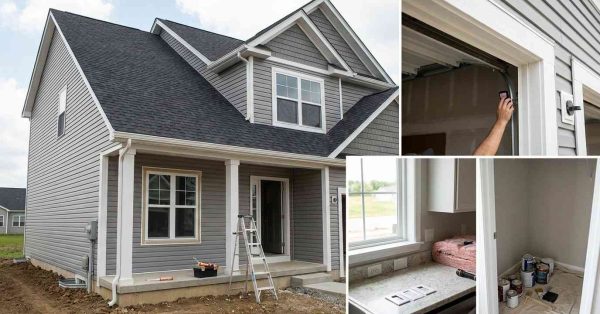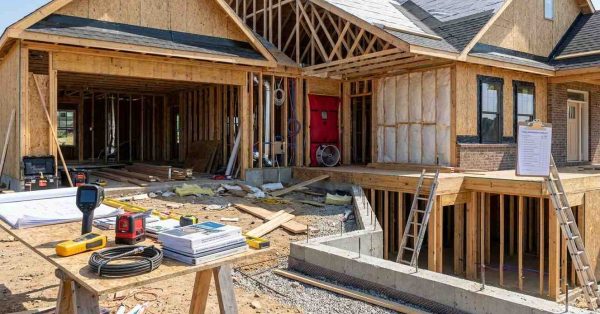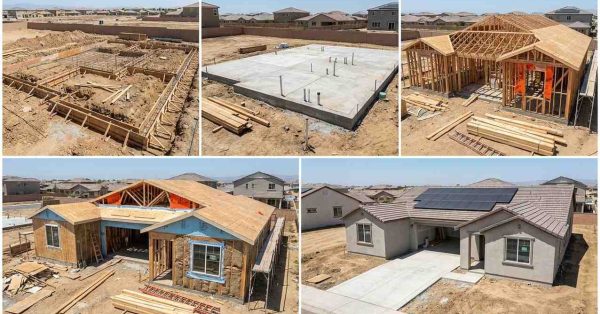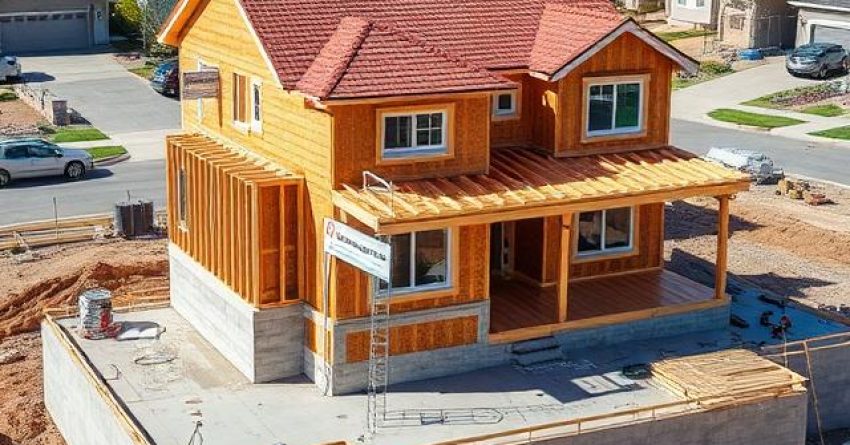
New construction inspections are independent, professional evaluations conducted at critical stages of a home’s build — before the foundation is poured, before drywall closes the walls, and before the final closing walk-through. Unlike a builder’s own quality checks, these inspections are performed by a third-party inspector who works exclusively for the buyer, not the contractor. They are one of the most effective tools available for identifying construction defects, code violations, and workmanship issues before they become expensive, hidden problems.
Even brand-new homes contain defects. Understanding what inspections cover — and when to schedule them — protects your investment and your family’s safety.
This guide covers every phase of the new construction inspection process, what inspectors check, how to hire the right professional, what inspections cost, and what to do with the results.
What Is a New Construction Inspection?
A new construction inspection is a professional evaluation of a home that is currently under construction or has just been completed. A licensed, independent home inspector examines the property’s structural systems, mechanical installations, and workmanship quality at defined stages of the build process. The inspector documents findings in a written report that the buyer can use to request corrections from the builder before closing.
The key distinction is independence. The inspector is hired by and reports to the buyer — not the builder, the real estate agent, or the lender. This objectivity is what makes the inspection valuable. A builder’s internal quality control process serves the builder’s schedule and budget. An independent inspection serves the buyer’s interests.
New construction inspections are not a single event. They are a phased process tied to specific construction milestones. Missing a phase — particularly the pre-drywall inspection — means losing the opportunity to evaluate systems that will be permanently concealed once walls are closed.
Understanding what a new construction inspection covers is the first step — our home inspection services page outlines the full range of professional inspection options available for residential and commercial properties across the USA.
How It Differs from a Standard Home Inspection
A standard home inspection evaluates a completed, existing home. The inspector can see finished surfaces, test installed systems, and assess the overall condition of a property that has been lived in. A new construction inspection evaluates a home that is still being built, which means the inspector must work within the construction timeline and evaluate systems before they are concealed or completed.
The scope also differs. In a new construction inspection, the inspector focuses heavily on rough-in systems — framing, electrical wiring, plumbing pipes, and HVAC ductwork — before drywall covers them. In a standard inspection, those systems are already hidden and can only be evaluated indirectly through visible components and functional testing.
A standard home inspection follows a different scope and timeline than a new construction review — our standard home inspection guide explains exactly what each type covers and when each one applies.
Who Performs New Construction Inspections
New construction inspections are performed by licensed home inspectors who have specific experience evaluating homes under construction. Licensing requirements vary by state, but most states require inspectors to hold a certification from a recognized professional organization such as the American Society of Home Inspectors (ASHI), the International Association of Certified Home Inspectors (InterNACHI), or the National Association of Home Inspectors (NAHI).
Experience with new construction is important. An inspector who primarily evaluates existing homes may not be familiar with the specific systems, code requirements, and construction sequences involved in a new build. When hiring, ask specifically about the inspector’s experience with new construction projects and their familiarity with local building codes.
Why New Construction Homes Still Need an Inspection
Many buyers assume that a brand-new home is defect-free. This assumption is one of the most costly mistakes a new construction buyer can make. New homes are built by multiple subcontractors working under time pressure, and construction defects are far more common than most buyers realize.
Builder inspections and municipal code inspections do exist, but they serve different purposes. Municipal inspectors check for code compliance at specific milestones, but they do not evaluate workmanship quality, material installation, or the full range of systems a buyer’s inspector would review. Code compliance is a minimum standard — not a quality guarantee.
Even newly built homes carry hidden risks that buyers rarely anticipate — our resource on new home defects covers the most common builder errors and how warranty protections apply when problems are discovered.
Common Defects Found in Brand-New Homes
Independent inspectors consistently find defects in new construction across every price range and builder tier. The most frequently documented issues include:
- Improper grading and drainage that directs water toward the foundation
- Framing errors including missing blocking, improper joist hangers, and inadequate bracing
- Electrical rough-in mistakes such as missing ground fault circuit interrupter (GFCI) protection, improper wire gauge, and unsecured connections
- Plumbing installation errors including improper slope on drain lines, missing cleanouts, and inadequate water pressure
- HVAC ductwork that is improperly sealed, undersized, or disconnected at joints
- Roofing defects including improper flashing, inadequate ventilation, and missing underlayment
- Insulation gaps that create thermal bridging and energy loss
- Concrete cracks in foundations and slabs that exceed acceptable tolerances
These are not rare edge cases. They are documented findings that appear regularly in new construction inspection reports across the USA.
The Risk of Skipping an Independent Inspection
Buyers who skip an independent inspection rely entirely on the builder’s internal quality control and municipal code inspections to catch problems. Both have significant limitations. Municipal inspectors typically spend 15 to 30 minutes on a code inspection and are not evaluating workmanship or material quality. Builder quality control is managed by the same organization responsible for the construction schedule and profit margin.
Once a home closes, the buyer assumes responsibility for all defects not documented before closing. Builder warranties cover certain defects for defined periods, but warranty claims require documentation, and disputes are common. An independent inspection report created before closing gives the buyer documented evidence of any defects and a clear basis for requesting corrections at the builder’s expense.
The Three Phases of New Construction Inspections
New construction inspections are most effective when conducted at three specific stages of the build. Each phase provides access to systems and components that will be concealed or inaccessible at later stages. Scheduling all three phases gives buyers the most complete picture of their home’s construction quality.
The framing phase is one of the most critical windows for catching structural and mechanical issues before walls close — our pre-drywall inspection guide walks through every system checked at this stage and what inspectors look for.
Phase 1: Pre-Foundation (Pre-Pour) Inspection
The pre-foundation inspection takes place before concrete is poured for the slab or foundation walls. At this stage, the inspector evaluates the prepared site, the placement and configuration of reinforcing steel (rebar), the form work, and the placement of any embedded plumbing or conduit that will be encased in concrete.
This is the only opportunity to verify that the foundation is being built correctly before concrete permanently conceals the work. Issues found at this stage — such as incorrect rebar spacing, missing vapor barriers, or improperly placed plumbing — can be corrected before the pour at minimal cost. The same corrections after the pour can require breaking and replacing concrete, which is significantly more expensive and disruptive.
Not all builders or construction timelines allow for a pre-pour inspection. Buyers should communicate with their builder early in the process to establish inspection access rights and notification requirements for each phase.
Phase 2: Pre-Drywall (Framing) Inspection
The pre-drywall inspection is widely considered the most important phase of the new construction inspection process. It takes place after framing is complete and all rough-in systems — electrical wiring, plumbing pipes, HVAC ductwork, and insulation — have been installed, but before drywall is hung.
At this stage, the inspector has direct visual access to every structural and mechanical system in the home. Framing members, connections, and bracing are visible. Electrical wiring runs, panel locations, and outlet rough-ins can be evaluated. Plumbing drain lines, supply lines, and vent stacks are exposed. HVAC ductwork, air handler locations, and equipment rough-ins are accessible.
Once drywall is installed, all of these systems are permanently concealed. Problems found after drywall installation require destructive investigation to access and repair. The pre-drywall inspection is the last opportunity to evaluate these systems without opening walls.
Phase 3: Final Walk-Through Inspection
The final inspection takes place when construction is complete and the home is ready for the buyer’s walk-through before closing. At this stage, the inspector evaluates all finished surfaces, installed fixtures, appliances, and systems in their completed state.
The final inspection verifies that items identified in earlier phases have been corrected, evaluates the quality of finish work, tests all installed systems and appliances, and identifies any new issues that appeared during the completion of construction. The inspector also checks exterior grading, drainage, driveway installation, landscaping, and all exterior components.
The final inspection report becomes the basis for the buyer’s punch list — the formal list of items the builder must correct before or shortly after closing.
What a New Construction Inspector Checks
A qualified new construction inspector evaluates every major system and component of the home at each phase. The scope of the inspection is comprehensive, covering structural systems, mechanical installations, exterior components, and interior finishes depending on the phase.
Structural and Foundation Systems
Structural evaluation begins at the foundation and extends through the entire framing system. At the pre-pour phase, the inspector evaluates rebar placement, spacing, and coverage; form work alignment; vapor barrier installation; and embedded plumbing or conduit placement.
At the framing phase, structural evaluation includes the foundation walls or slab for cracks, honeycombing, and proper curing; floor framing including joists, beams, and connections; wall framing including stud spacing, headers over openings, and shear wall installation; roof framing including rafters or trusses, ridge board connections, and bracing; and all structural connectors including joist hangers, hurricane ties, and hold-downs.
Structural defects are the most serious category of new construction findings because they affect the long-term integrity of the home and are the most expensive to correct after walls are closed.
Electrical, Plumbing, and HVAC Rough-Ins
Electrical rough-in evaluation covers the service entrance location, panel box installation, wire gauge and type for each circuit, outlet and switch box placement, GFCI and arc fault circuit interrupter (AFCI) protection requirements, and grounding and bonding. Electrical rough-in mistakes such as missing ground fault circuit interrupter (GFCI) protection, improper wire gauge, and unsecured connections are among the most frequently documented findings in new construction inspections.
Our electrical inspection checklist details every component a qualified inspector evaluates before drywall installation.
Plumbing rough-in evaluation covers drain line slope and configuration, vent stack installation, supply line material and routing, water heater location and connections, and pressure testing results. Our plumbing inspection guide explains what inspectors verify at each stage of the installation process.
HVAC rough-in evaluation covers ductwork sizing, routing, and sealing; air handler and equipment locations; refrigerant line installation; and ventilation requirements. HVAC systems are a frequent source of new construction defects because ductwork installation is often rushed and difficult to inspect once concealed.
Exterior, Roofing, and Drainage
Exterior evaluation at the final inspection phase covers siding installation and flashing, window and door installation and sealing, roof covering material and installation, flashing at all penetrations and transitions, gutters and downspouts, grading and drainage away from the foundation, driveway and walkway installation, and all exterior fixtures and components.
Roof installation quality directly affects long-term weatherproofing and structural integrity — our roofing inspection services page covers what a thorough roof evaluation includes for newly constructed homes.
Drainage is a particularly important exterior finding. Improper grading that directs water toward the foundation is one of the most common new construction defects and one of the most consequential for long-term structural health.
How to Hire a New Construction Home Inspector
Hiring the right inspector is as important as scheduling the inspection itself. Not all home inspectors have experience with new construction, and the skills required to evaluate a home under construction differ meaningfully from those needed for a standard resale inspection.
Credentials and Certifications to Look For
The most widely recognized professional certifications for home inspectors in the USA are issued by ASHI, InterNACHI, and NAHI. Each organization requires members to complete education requirements, pass competency examinations, and adhere to a code of ethics and standards of practice.
Beyond general certification, look for inspectors who have completed specific training in new construction inspection. InterNACHI offers a Certified New Construction Inspector designation. Some inspectors also hold additional certifications in specific systems such as electrical, plumbing, or structural evaluation.
Licensing requirements vary by state. Some states require home inspectors to hold a state-issued license in addition to professional certification. Verify that any inspector you consider holds the appropriate license for your state.
Choosing a qualified inspector requires understanding which certifications actually matter — our inspector credentials guide breaks down the key designations, licensing requirements, and what to verify before hiring.
Questions to Ask Before Hiring
Before hiring a new construction inspector, ask the following questions to evaluate their qualifications and approach:
- How many new construction inspections have you completed in the past year?
- Are you familiar with the local building codes that apply to this project?
- Do you conduct all three phases of inspection, or only the final walk-through?
- What does your inspection report include, and how quickly will I receive it?
- Do you carry errors and omissions (E&O) insurance and general liability coverage?
- Will you be available to answer questions after I receive the report?
- Can you provide references from buyers who hired you for new construction inspections?
An inspector who is reluctant to answer these questions or who cannot provide references from new construction clients should be considered carefully before hiring.
New Construction Inspection Costs in the USA
New construction inspection costs vary based on the size of the home, the number of phases inspected, the geographic location, and the inspector’s experience and credentials. Understanding the cost structure helps buyers budget appropriately and avoid choosing an inspector based on price alone.
Inspection fees vary significantly based on property size, location, and scope — our inspection cost guide provides a detailed breakdown of average prices across the USA and the factors that drive them up or down.
What Affects the Price of an Inspection
The primary factors that influence new construction inspection costs include:
Home size: Larger homes require more time to inspect. Most inspectors price by square footage, with fees increasing for homes above 2,000 or 3,000 square feet.
Number of phases: A single final inspection costs less than a full three-phase inspection package. Buyers who schedule all three phases typically pay more in total but gain significantly more protection.
Geographic location: Inspection costs are higher in metropolitan areas and markets with higher costs of living. Rural markets typically have lower fees.
Inspector credentials and experience: Highly credentialed inspectors with extensive new construction experience typically charge more than general home inspectors. The premium is generally worth paying for the additional expertise.
Additional services: Some buyers add specialized inspections for radon, mold, thermal imaging, or sewer lines. Each adds to the total cost but may be warranted depending on the property and location.
As a general reference point, single-phase new construction inspections for a standard-sized home typically range from $300 to $500, while full three-phase inspection packages range from $600 to $1,200 or more depending on the factors above. These are general ranges — actual costs in your market may differ.
What Happens After the Inspection Report
The inspection report is not the end of the process — it is the beginning of the correction process. A well-documented inspection report gives buyers the information and leverage they need to ensure their new home meets the quality standards they paid for.
How to Use the Punch List with Your Builder
After receiving the inspection report, the buyer creates a formal punch list — a written list of all items the builder must address before or shortly after closing. The punch list should reference the inspection report directly, citing specific findings, locations, and the inspector’s recommended corrections.
Present the punch list to the builder in writing and request written confirmation of which items will be corrected and by what date. Keep copies of all correspondence. If the builder disputes any findings, consider having the inspector present to walk through the items in question.
Translating inspection findings into actionable builder corrections requires a clear process — our guide to the builder punch list process explains how to document issues, communicate with your contractor, and track resolution before closing.
Most builders will address legitimate inspection findings, particularly those involving code compliance or safety. Items involving workmanship quality or cosmetic standards may require more negotiation. Document everything in writing throughout this process.
When to Bring in Specialized Contractors
Some inspection findings require evaluation or correction by a licensed specialist rather than the builder’s general subcontractors. Structural concerns may warrant review by a licensed structural engineer. Electrical deficiencies may require a licensed electrician to evaluate and correct. HVAC issues may need a certified HVAC technician to assess and repair.
When inspection findings go beyond cosmetic issues, specialized contractors are often needed to correct structural, mechanical, or safety deficiencies — our home repair services page connects homeowners with qualified professionals across every trade category.
Bringing in a specialist is particularly important when the builder disputes a finding. An independent specialist’s assessment carries significant weight in any dispute and provides additional documentation if the issue escalates.
New Construction Inspections vs. Builder Walkthroughs
Builder walkthroughs are a standard part of the new construction closing process. The builder’s representative walks the buyer through the completed home, demonstrates systems and appliances, and notes any cosmetic items the buyer identifies. Builder walkthroughs serve the builder’s interests — they are designed to satisfy the buyer and complete the closing process, not to provide an independent evaluation of construction quality.
Many buyers assume the builder’s own walkthrough provides the same protection as an independent review — our builder walkthrough comparison page explains the key differences in scope, objectivity, and legal standing.
The differences between a builder walkthrough and an independent inspection are significant:
Objectivity: The builder’s representative works for the builder. An independent inspector works for the buyer. Their incentives are fundamentally different.
Scope: A builder walkthrough typically covers visible, finished surfaces and system demonstrations. An independent inspection evaluates structural systems, mechanical rough-ins, code compliance, and workmanship quality across all accessible components.
Documentation: A builder walkthrough produces a punch list of cosmetic items noted by the buyer. An independent inspection produces a comprehensive written report with photographs documenting every finding.
Legal standing: An independent inspection report created before closing provides documented evidence of the home’s condition at the time of purchase. This documentation is valuable if warranty disputes arise after closing.
Timing: Builder walkthroughs happen once, at the end of construction. Independent inspections happen at multiple phases, catching problems before they are concealed.
The builder walkthrough is a useful step in the closing process, but it is not a substitute for independent inspection. Buyers who rely solely on the builder walkthrough have no independent documentation of their home’s construction quality.
New Construction Inspection Checklist: What to Expect
A comprehensive new construction inspection covers hundreds of individual items across all three phases. The following checklist summarizes the primary categories evaluated at each phase.
A structured checklist ensures no system or component is overlooked during any phase of the inspection process — our printable inspection checklist covers every item from foundation to final walk-through in a format inspectors and buyers can use together.
Pre-Foundation Phase:
- Site preparation and soil compaction
- Rebar placement, spacing, and coverage
- Form work alignment and stability
- Vapor barrier installation
- Embedded plumbing and conduit placement
- Drainage provisions around the foundation perimeter
Pre-Drywall Phase:
- Foundation walls or slab condition
- Floor, wall, and roof framing
- Structural connectors and fasteners
- Electrical rough-in wiring and panel
- Plumbing drain, supply, and vent lines
- HVAC ductwork, equipment, and refrigerant lines
- Insulation installation and coverage
- Window and door rough openings
- Sheathing and weather-resistant barrier
Final Walk-Through Phase:
- All finished interior surfaces and trim
- Installed fixtures, appliances, and hardware
- Electrical panel, outlets, switches, and GFCI/AFCI protection
- Plumbing fixtures, water heater, and pressure
- HVAC system operation and airflow
- Roof covering, flashing, and gutters
- Exterior siding, windows, and doors
- Grading, drainage, and landscaping
- Garage, driveway, and walkways
- All items from previous phases verified as corrected
Conclusion
New construction inspections are a structured, phased process that gives buyers independent documentation of their home’s construction quality at every critical stage. Scheduling all three phases — pre-foundation, pre-drywall, and final walk-through — provides the most complete protection available before closing.
The inspection report is a tool for accountability. It gives buyers documented evidence of defects, a clear basis for requesting corrections, and protection against warranty disputes after closing. Skipping any phase means losing access to systems that cannot be evaluated once concealed.
Mr. Local Services connects homeowners and property managers with skilled inspection and maintenance professionals across the USA — explore our full range of trusted home services to find the right expert for every stage of your new construction project.
Frequently Asked Questions
Do I need a new construction inspection if the city already inspected the home?
Municipal code inspections verify minimum code compliance at specific milestones. They do not evaluate workmanship quality, material installation, or the full range of systems a buyer’s inspector reviews. An independent inspection provides a level of evaluation that municipal inspections are not designed to deliver.
Can my builder refuse to allow an independent inspection?
Most builders allow independent inspections, and many purchase contracts include inspection access rights. Review your contract carefully and establish inspection access and notification requirements in writing before construction begins. If a builder refuses independent inspection access, that refusal itself is a significant warning sign.
When should I schedule the pre-drywall inspection?
Schedule the pre-drywall inspection as soon as framing and all rough-in systems are complete but before drywall installation begins. Coordinate directly with your builder’s project manager to receive advance notice of this milestone. Missing this window means losing access to concealed systems.
What happens if the inspector finds serious defects?
Document all findings in writing and present them to the builder as a formal punch list. Request written confirmation of which items will be corrected and by what date. For serious structural or safety deficiencies, consider bringing in a licensed specialist for an independent assessment. Do not close until documented defects are corrected or formally addressed in writing.
Is a new construction inspection worth the cost?
Yes. The cost of a full three-phase inspection is a small fraction of the purchase price of a new home. Defects found and corrected before closing cost the builder to fix. The same defects discovered after closing cost the buyer to repair, often at significantly higher expense and with the added burden of warranty disputes.
How long does a new construction inspection take?
Each phase typically takes two to four hours depending on the size and complexity of the home. The pre-drywall inspection often takes the longest because of the volume of systems accessible at that stage. The final inspection may take three to five hours for a larger home with multiple systems to test.
Should I attend the inspection?
Yes. Attending the inspection allows you to see findings firsthand, ask questions directly, and develop a clearer understanding of your home’s construction quality. Most inspectors welcome buyer attendance and use the walk-through as an opportunity to explain findings in context.
Can I use the inspection report to negotiate with the builder?
Yes. The inspection report provides documented evidence of defects that the builder is responsible for correcting. Present findings formally in writing and request written responses. The report strengthens your position in any negotiation and provides documentation if disputes arise after closing.