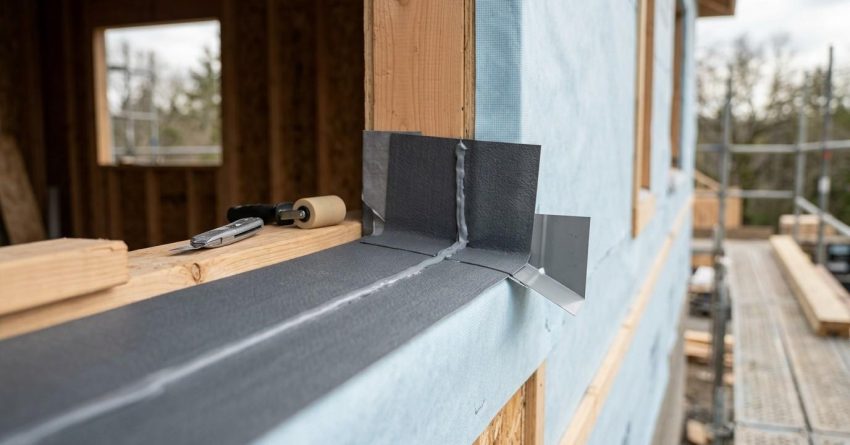
Window flashing is one of the most important — and most overlooked — parts of a properly installed window. Done correctly, it creates a watertight seal that directs water away from your home’s framing and interior walls. Done poorly, it leads to rot, mold, and expensive structural repairs that could have been avoided entirely.
Moisture damage around windows is a leading cause of hidden structural deterioration in American homes, and improper flashing is one of the primary culprits behind it.
This guide covers everything you need to know — from choosing the right flashing materials to step-by-step installation, common mistakes, and when to bring in a professional.
What Is Window Flashing and Why Does It Matter?
Window flashing is a water-management system installed around the perimeter of a window opening. It consists of layered materials — tapes, membranes, or metal — that seal the gap between the window frame and the surrounding wall assembly. Its job is simple: keep water out and direct any moisture that does penetrate safely away from the structure.
Without proper flashing, rainwater and condensation work their way into the rough opening. Over time, this saturates the framing, insulation, and interior wall materials. The result is wood rot, mold growth, compromised insulation performance, and in severe cases, structural failure that requires major repair work.
Understanding how flashing works is the foundation of any successful window project — our window installation services cover every step from rough opening preparation to final weatherproofing, ensuring your windows are sealed and protected from day one.
How Flashing Protects Your Home’s Structure
Flashing works by creating a drainage plane — a continuous, overlapping system of water-resistant layers that shed moisture downward and outward, away from the building envelope. Each layer overlaps the one below it, like shingles on a roof, so water cannot travel upward or sideways into the wall cavity.
This layered approach protects the rough opening framing, the window frame itself, the interior drywall and finishes, and the insulation within the wall cavity. When every layer is installed in the correct sequence and direction, the system functions reliably for the life of the window.
Types of Window Flashing Materials
Choosing the right flashing material depends on your climate, wall assembly type, and the specific location of the window in the building. Three primary categories cover most residential applications.
Self-Adhering Flashing Tape
Self-adhering flashing tape is the most widely used material in modern residential construction. It consists of a rubberized asphalt or butyl rubber adhesive layer bonded to a flexible backing — typically polyethylene or foil. It conforms easily to irregular surfaces, bonds directly to the rough opening framing, and creates an immediate waterproof seal without fasteners.
Self-adhering tape is ideal for sill pan flashing, corner transitions, and sealing around the window frame after installation. It is compatible with most weather-resistive barriers and integrates cleanly into the drainage plane when lapped correctly.
Metal Flashing (Aluminum and Galvanized Steel)
Metal flashing — most commonly aluminum or galvanized steel — is used at the head of the window and in applications where a rigid, durable barrier is needed. Aluminum is lightweight, corrosion-resistant, and easy to cut and bend on site. Galvanized steel is heavier and more rigid, making it better suited for larger openings or high-exposure locations.
Metal head flashing is installed above the window to direct water that runs down the wall face away from the window frame and onto the exterior cladding below. It is particularly important in climates with heavy rainfall or wind-driven rain. Metal flashing is used across both window and roof assemblies, and our roofing and flashing materials guide explains how the same principles of water management apply whether you are sealing a window or a roof penetration.
Flexible Flashing Membranes
Flexible flashing membranes are sheet-applied products — typically modified bitumen or synthetic rubber — that provide a continuous waterproof layer across larger surface areas. They are commonly used in high-performance wall assemblies, around large window openings, and in climates with extreme moisture exposure.
Flexible membranes are more forgiving at corners and transitions than rigid metal, and they bond well to a variety of substrates including OSB, plywood, and concrete masonry. They are often used in combination with self-adhering tape at detail areas.
Step-by-Step Window Flashing Installation Best Practices
Correct installation sequence is everything in window flashing. Each layer must be installed in the right order and lapped in the right direction. Reversing the sequence — even partially — creates pathways for water to enter rather than exit.
Preparing the Rough Opening
Before any flashing material is applied, the rough opening must be clean, dry, and free of debris. Inspect the framing for any existing moisture damage, rot, or fastener corrosion. Replace any compromised framing members before proceeding — installing flashing over damaged wood defeats the purpose entirely.
Apply a bead of sealant or flashing tape to any gaps, cracks, or fastener holes in the rough opening framing. The goal is a continuous, smooth substrate that flashing materials can bond to without bridging over voids.
Installing the Sill Pan Flashing
Sill pan flashing is the most critical component of the entire system. It sits at the bottom of the rough opening and catches any water that gets past the window frame, directing it outward and away from the wall assembly.
Install sill pan flashing first, before the window unit goes in. Fold the material up the sides of the rough opening at least 6 inches and extend it outward past the face of the sheathing. At the corners, cut and fold the material carefully to create a continuous, watertight pan with no gaps. Pre-formed sill pan corners are available and eliminate the risk of improper field-fabricated corners.
Applying Side and Head Flashing
After the sill pan is in place and the window unit is set and fastened, apply flashing tape to the sides of the rough opening — called the jamb flashing. Run the tape from the sill pan up and over the top of the window frame, overlapping the sill pan flashing at the bottom by at least 2 inches.
Head flashing goes on last. Apply flashing tape or install metal head flashing across the top of the window frame, lapping over the top edge of the jamb flashing on both sides. This top-down lapping sequence — sill first, jambs second, head last — ensures that each layer sheds water onto the layer below it, not behind it.
Sealing and Integrating with the Weather-Resistive Barrier
The final step is integrating the window flashing with the weather-resistive barrier (WRB) — the house wrap or building paper that covers the wall sheathing. The WRB must lap over the head flashing and be tucked behind the jamb flashing on the sides. At the sill, the WRB is cut and folded into the rough opening so it sits on top of the sill pan flashing.
Tape all seams between the WRB and the flashing materials using compatible tape approved by the WRB manufacturer. Incompatible tapes can fail adhesion over time, creating gaps in the drainage plane. When flashing is installed incorrectly, moisture intrusion can cause serious structural harm — if you are already dealing with the consequences, our water damage repair team can assess the extent of the damage and restore affected areas before the problem spreads.
Common Window Flashing Mistakes to Avoid
Even experienced installers make flashing errors. These are the most common failures seen in residential window installations across the USA.
Installing layers in the wrong sequence. Applying head flashing before jamb flashing, or jamb flashing before sill pan flashing, reverses the drainage plane and traps water inside the wall assembly.
Skipping the sill pan. Some installers apply only tape around the window perimeter without forming a proper sill pan. Without a pan, any water that enters the rough opening has nowhere to go except into the framing.
Inadequate corner treatment. Corners are the most vulnerable points in any flashing system. Poorly formed corners — whether field-fabricated or pre-formed — are the most common entry point for water infiltration.
Using incompatible materials. Not all tapes bond to all substrates. Using a tape not rated for the WRB or sheathing type in use leads to adhesion failure over time, often years after installation when the damage is already done.
Insufficient overlap. Flashing layers must overlap by a minimum of 2 inches at all seams. Shorter overlaps allow capillary action to draw water upward through the joint.
Failing to extend sill pan past the sheathing face. The sill pan must project past the face of the wall sheathing so water drains onto the exterior cladding, not behind it.
Many of the most common flashing mistakes happen during DIY installations — if you are unsure about any step in the process, our handyman repair services team can handle the job correctly the first time, saving you from costly rework.
How to Inspect Window Flashing for Damage
Window flashing should be inspected at least once a year — ideally in the fall before the rainy season and again in the spring after winter weather. Inspections take only a few minutes per window and can catch problems before they become expensive repairs.
Start from the outside. Look for gaps, tears, or lifting edges in any visible flashing tape or membrane around the window perimeter. Check the head flashing for rust, corrosion, or separation from the wall surface. Look at the caulk or sealant at the window frame perimeter — cracked, shrinking, or missing sealant is a sign that the seal has failed.
Move inside and check the wall surface around the window frame for soft spots, discoloration, bubbling paint, or a musty odor. These are signs that moisture has already entered the wall assembly. Check the window sill and the interior trim for staining or warping.
Regular inspection is the best way to catch flashing failures before they become expensive problems — our window inspection and repair professionals can evaluate your existing flashing, identify vulnerabilities, and recommend the right course of action.
Signs That Flashing Needs Repair or Replacement
Certain signs indicate that flashing has already failed and needs immediate attention.
Visible water staining on interior walls or ceilings near the window is the clearest indicator of active moisture intrusion. Soft or spongy framing around the window — detectable by pressing firmly on the interior trim or drywall — indicates wood rot in the rough opening framing. Mold or mildew growth on interior surfaces near the window suggests sustained moisture exposure. Exterior paint peeling or blistering near the window frame often indicates moisture migrating outward through the wall assembly.
Any of these signs warrants a professional inspection. Delaying repairs allows moisture damage to spread into adjacent framing, insulation, and interior finishes, significantly increasing the cost and scope of the repair.
When to Call a Professional for Window Flashing
Some flashing work is within reach of a capable DIYer. Replacing a small section of damaged flashing tape on an accessible window, for example, is a manageable task with the right materials and instructions. But most flashing work — especially on new installations, full window replacements, or situations involving existing moisture damage — is best handled by a professional.
Call a professional when you are installing a new window in an existing wall opening. The integration of flashing with the existing WRB and cladding requires experience to execute correctly. Call a professional when you find signs of existing moisture damage around a window — the scope of repair often extends beyond the flashing itself into the framing and interior finishes. Call a professional when the window is in a high-exposure location such as a gable wall, a wall facing prevailing weather, or a wall with complex geometry that makes flashing transitions difficult.
Window flashing replacement is often part of a larger renovation scope — if you are updating windows as part of a broader project, our home remodeling services team can coordinate flashing, framing, and finishing work under one plan.
Conclusion
Window flashing is a small investment of time and materials that protects one of the most vulnerable parts of your home’s building envelope. Getting the materials right, following the correct installation sequence, and inspecting the system regularly are the three habits that keep windows watertight for decades.
When flashing fails, the consequences extend well beyond the window itself — into the framing, insulation, and interior finishes that make up your home’s structure and comfort.
At Mr. Local Services, our window and home maintenance professionals are ready to help you install, inspect, or repair window flashing correctly — contact us today to protect your property and prevent costly water damage before it starts.
Frequently Asked Questions
What is the purpose of window flashing?
Window flashing creates a watertight seal around the window opening that directs water away from the wall framing and interior. It prevents moisture intrusion that leads to rot, mold, and structural damage over time.
What is the best material for window flashing?
Self-adhering flashing tape is the most versatile and widely used material for residential windows. Metal head flashing is recommended above the window for added durability, particularly in high-rainfall climates.
How long does window flashing last?
Quality window flashing installed correctly typically lasts 20 to 30 years. Self-adhering tapes and flexible membranes can degrade faster in extreme UV exposure, so periodic inspection is important regardless of age.
Can I install window flashing myself?
Basic flashing tape repairs on accessible windows are manageable for experienced DIYers. Full window installations and situations involving existing moisture damage are best handled by a professional to ensure correct sequencing and integration with the wall assembly.
What happens if window flashing is not installed?
Without flashing, water enters the rough opening framing during rain events. Over time this causes wood rot, mold growth, insulation failure, and interior water damage — all of which are significantly more expensive to repair than proper flashing installation.
How do I know if my window flashing has failed?
Interior water staining near the window, soft or spongy framing, mold growth on interior surfaces, and exterior paint peeling near the window frame are the most common signs of flashing failure. Any of these signs warrants a professional inspection.
How often should window flashing be inspected?
Inspect window flashing at least once a year — ideally in fall before the rainy season and again in spring. Pay attention to any visible gaps, lifting tape edges, rust on metal flashing, and cracked or missing sealant at the window frame perimeter.