A roof assembly is not a single material — it is a system of six to eight distinct layers, each performing a specific job to keep your home dry, structurally sound, and energy efficient. When one layer fails, the layers above and below it are at risk. Understanding what each component does helps homeowners make smarter decisions about maintenance, repairs, and replacements before small problems become expensive ones.
Knowing your roof’s layers matters because most damage starts invisibly, beneath the surface you can see from the ground.
This guide walks through every layer of a standard roof assembly, explains what each one does, and helps you recognize when something may need attention.
What Is a Roof Assembly and Why Does It Matter?
A roof assembly is the complete system of materials installed between your home’s structural framing and the exterior surface exposed to weather. It is not just the shingles or tiles you see from the street. It includes the structural deck, moisture barriers, insulation, ventilation components, and all the sealing materials that hold the system together.
Each layer in the assembly serves a distinct function. Remove or compromise any one of them, and the entire system becomes vulnerable. A missing underlayment allows moisture to reach the deck. Inadequate ventilation causes heat and humidity to degrade materials from the inside. Failed flashing creates entry points for water at every joint and edge.
The Difference Between a Roof System and a Single Layer
Homeowners often use the word “roof” to mean the outer surface material — the shingles, metal panels, or tiles. In practice, what protects your home is the full assembly working as a unit. A new layer of shingles installed over a damaged deck or missing underlayment will fail prematurely regardless of material quality.
A roof assembly is only as reliable as the professionals who install and maintain it — our roofing services overview covers every service we provide to keep your roof structurally sound from the deck up.
The Structural Deck — Your Roof’s Foundation
The structural deck, also called the roof deck or sheathing, is the solid surface attached directly to the roof framing. It is the foundation on which every other layer is installed. In most residential construction across the USA, the deck is made from oriented strand board (OSB) or plywood panels fastened to the rafters or trusses.
The deck must be flat, dry, and structurally sound before any other material is applied. Soft spots, delamination, rot, or water staining are signs that the decking has been compromised. A damaged deck cannot hold fasteners properly, which means shingles and underlayment will not stay secured under wind or thermal movement.
Common Decking Materials and Their Load Requirements
OSB is the most widely used decking material in new residential construction because it is cost-effective and performs well when kept dry. Plywood offers greater moisture resistance and is often preferred in high-humidity climates or coastal regions. Older homes may have board sheathing — individual planks rather than panels — which can develop gaps over time that affect underlayment performance.
When decking becomes soft, warped, or water-damaged, it must be addressed before any other layer is touched — our roof deck repair explains what the process involves, how long it takes, and what homeowners should expect.
Underlayment — The Hidden Moisture Barrier
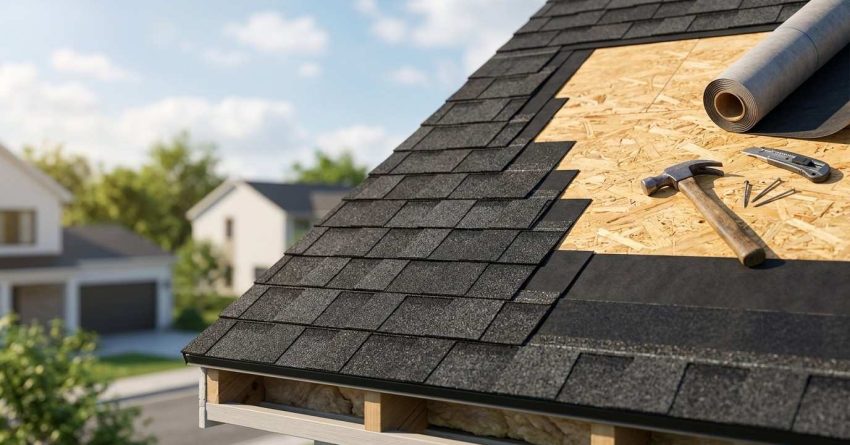
Roof underlayment is a water-resistant or waterproof sheet material installed directly over the structural deck, beneath the outer roofing material. It serves as a secondary moisture barrier — the last line of defense if water gets past the outer surface during a storm, wind event, or shingle failure.
Underlayment also protects the deck during installation, before the outer material is in place, and provides a slip-resistant surface for workers. In most US building codes, underlayment is a required component of any permitted roofing installation.
Felt vs. Synthetic Underlayment: Which Performs Better?
Traditional felt underlayment, made from organic or fiberglass materials saturated with asphalt, has been used for decades. It is affordable and widely available but can absorb moisture, wrinkle during installation, and degrade faster than newer alternatives.
Synthetic underlayment, made from woven or spun polypropylene, is lighter, stronger, and more resistant to moisture and UV exposure. It lays flatter, tears less during installation, and typically carries longer manufacturer warranties. Most roofing professionals in the USA now recommend synthetic underlayment for new installations and full replacements.
Choosing the right underlayment type for your climate and roof pitch is a decision best made with a professional — our underlayment installation guide walks through material options, installation standards, and when replacement is necessary.
Ice and Water Shield — Protection at the Vulnerable Edges
Ice and water shield is a self-adhering, rubberized asphalt membrane applied to the most vulnerable areas of a roof before underlayment and outer materials are installed. Unlike standard underlayment, it bonds directly to the deck and seals around fasteners, preventing water from migrating under the roofing material even when it is driven by wind or backed up by ice.
The most common application zones are the eaves, rakes, valleys, and around penetrations such as chimneys, skylights, and vent pipes. In cold climates, ice dams — ridges of ice that form at the eave and force meltwater back under shingles — are a primary cause of interior water damage. Ice and water shield is specifically designed to stop this infiltration.
Homes in cold climates or areas with heavy rainfall benefit most from a properly installed ice and water shield — a self-adhering membrane that prevents water infiltration at the roof’s most vulnerable points. Many US building codes require it at eaves in regions with significant snowfall, and some jurisdictions mandate it in valleys and around all penetrations regardless of climate.
The Outer Roofing Material — What You See From the Street
The outer roofing material is the topmost layer of the assembly — the surface exposed directly to sun, rain, wind, hail, and temperature extremes. It is the primary weather barrier and the most visible component of the roof. Material choice affects durability, energy performance, weight load on the structure, and long-term maintenance requirements.
In the USA, asphalt shingles are the most common residential roofing material, covering the majority of single-family homes. They are available in three-tab and architectural (laminated) profiles, with architectural shingles offering greater thickness, wind resistance, and a longer service life.
Comparing Shingles, Metal, Tile, and Flat Roofing Options
Metal roofing — including standing seam panels and metal shingles — offers exceptional longevity, often lasting 40 to 70 years with minimal maintenance. It reflects solar heat effectively, which can reduce cooling costs in warm climates.
Clay and concrete tile roofing is common in the Southwest and coastal regions. It is highly durable and fire-resistant but adds significant weight to the roof structure, which must be engineered to support it. Flat or low-slope roofing systems — including TPO, EPDM, and modified bitumen membranes — are standard on commercial buildings and some residential designs, requiring different installation methods and maintenance schedules than pitched roof systems.
If your outer roofing material has reached the end of its service life, understanding your roof replacement options helps you choose the right material for your home’s structure, climate, and budget before committing to a project.
Ventilation and Insulation — The Layers You Cannot See
Roof ventilation and insulation are not always visible from inside or outside the home, but they are critical to the long-term performance of every layer above them. Together, they regulate temperature and moisture levels in the attic space, preventing the conditions that cause premature material degradation.
Insulation slows heat transfer between the living space and the attic. In winter, it keeps conditioned heat inside the home. In summer, it reduces the amount of solar heat that radiates down from the roof deck into living areas. Proper insulation levels are measured in R-value, and requirements vary by climate zone across the USA.
How Poor Ventilation Damages Every Layer Below It
Without adequate airflow, heat and moisture accumulate in the attic. In summer, trapped heat can raise attic temperatures high enough to accelerate shingle aging and cause adhesive failure. In winter, warm air rising from the living space meets the cold underside of the roof deck, creating condensation that saturates insulation, promotes mold growth, and causes wood rot in the structural framing.
Proper airflow through the attic space is what keeps every layer of your roof performing as designed — our attic ventilation services explains how ventilation is assessed, corrected, and maintained to prevent premature roof failure.
Flashing — Where Leaks Begin If This Layer Fails
Roof flashing is thin metal sheeting — typically galvanized steel, aluminum, or copper — installed at every point where the roof surface meets a vertical structure or changes direction. These transition points include chimney bases, skylight perimeters, dormer walls, roof valleys, and the edges where the roof meets exterior walls.
Flashing works by directing water away from joints and seams that cannot be sealed with roofing material alone. When flashing is improperly installed, corroded, or separated from its sealant, water enters the structure at these exact points. Most interior water stains traced to the roof originate at a flashing failure rather than a shingle failure.
Flashing is inspected as part of any professional roof assessment and should be checked after major storms, especially if hail or high winds were involved. Damaged or improperly sealed flashing is one of the most common causes of interior water damage — our flashing repair services details how flashing is inspected, resealed, and replaced to stop leaks at their source.
When to Repair vs. Replace Individual Roof Layers
Not every roof problem requires a full replacement. In many cases, a single layer — the underlayment, flashing, or a section of decking — can be repaired or replaced independently without disturbing the rest of the assembly. The decision depends on the age of the system, the extent of damage, and whether the failure is isolated or symptomatic of broader deterioration.
A roof that is nearing the end of its expected service life — typically 20 to 30 years for asphalt shingles — may not justify the cost of repairing individual layers if the outer material will need replacement within a few years regardless. Conversely, a relatively new roof with isolated flashing damage or a small section of compromised decking is an excellent candidate for targeted repair.
Before deciding whether to repair or replace any layer, a professional assessment gives you an accurate picture of what is failing and why — our roof inspection process explains what inspectors evaluate, what reports include, and how findings guide repair decisions.
When a failed roof layer has already allowed moisture into the structure, the damage often extends beyond the roof itself — our water damage restoration explains how interior damage is assessed and remediated after a roof failure.
Conclusion
A roof assembly is a layered system where every component — from the structural deck to the outer surface — depends on the others to perform correctly. Understanding what each layer does helps homeowners identify problems earlier and make informed decisions about maintenance and repair.
Keeping each layer in good condition is the most cost-effective way to extend the life of the entire roof system and protect the structure beneath it.
At Mr. Local Services, our roofing professionals assess every layer of your roof assembly and provide clear, honest recommendations — contact us today to schedule an inspection and keep your roof performing at every level.
Frequently Asked Questions
What are the main layers of a roof assembly?
A standard roof assembly includes the structural deck, underlayment, ice and water shield, outer roofing material, flashing, and ventilation components. Each layer serves a specific protective function, and all must work together for the system to perform correctly.
How long does a typical roof assembly last?
The lifespan of a roof assembly depends on the outer material. Asphalt shingles typically last 20 to 30 years, while metal roofing can last 40 to 70 years. Underlying layers such as the deck and underlayment often last as long as the outer material when properly installed and ventilated.
Can individual roof layers be replaced without replacing the whole roof?
Yes. In many cases, damaged underlayment, flashing, or a section of decking can be repaired or replaced independently. A professional inspection determines whether the damage is isolated or part of a broader system failure that warrants full replacement.
What causes roof layers to fail prematurely?
Poor ventilation, improper installation, storm damage, and deferred maintenance are the most common causes of premature layer failure. Heat and moisture buildup in the attic accelerates material degradation across every layer of the assembly.
Is ice and water shield required on all roofs?
Requirements vary by location and building code. In cold climates and regions with significant snowfall, ice and water shield is typically required at the eaves and often in valleys. Some jurisdictions require it around all penetrations regardless of climate zone.
What is the purpose of roof flashing?
Flashing seals the transition points where the roof surface meets vertical structures such as chimneys, skylights, and walls. It directs water away from joints that cannot be sealed with roofing material alone. Most interior leaks traced to the roof originate at a flashing failure.
How do I know if my roof deck needs to be replaced?
Signs of deck damage include soft or spongy areas when walking on the roof, visible sagging from inside the attic, water stains on the underside of the sheathing, and delamination or rot visible during inspection. Any of these signs should be evaluated by a roofing professional before new materials are installed.