The rough-in phase is when your custom home’s mechanical, electrical, and plumbing systems are installed inside the walls, floors, and ceilings — before any insulation or drywall covers them. This is one of the most technically complex stages of a custom build, and what happens here determines how well every system in your home performs for decades. Getting MEP rough-in right the first time prevents costly rework, failed inspections, and hidden damage that surfaces long after move-in.
This guide explains what MEP means, what each trade installs during rough-in, and what homeowners need to know to stay informed and avoid expensive mistakes.
Understanding the rough-in phase helps you ask the right questions, set realistic expectations, and work confidently with your builder and trade contractors.
What Is the Rough-In Phase in Custom Home Construction?
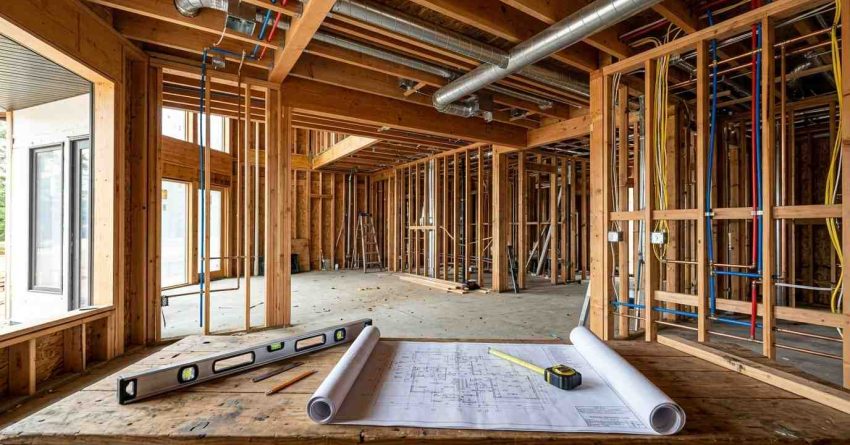
The rough-in phase is the construction stage that occurs after framing is complete and before interior finishes begin. During this window, trade contractors run all the infrastructure that will eventually be hidden inside your home’s structure — pipes, wires, ducts, and conduit.
The term “rough-in” refers to the rough, unfinished state of these systems at this stage. Nothing is connected to fixtures, outlets, or appliances yet. Pipes end at stub-outs. Wires terminate at junction boxes. Ducts connect to rough openings. The goal is to get every system into its correct position so that inspections can be passed and walls can be closed.
For custom homes, the rough-in phase is especially important because the layout is unique. Unlike production homes built from repeated floor plans, custom builds require trade contractors to interpret site-specific drawings and coordinate closely to avoid conflicts — a duct running where a pipe needs to go, or a beam blocking an electrical run.
Understanding what happens behind your walls during the rough-in phase is the first step toward a smooth build — our plumbing rough-in services explains exactly how licensed plumbers handle pipe placement, drain lines, and supply runs before drywall goes up.
What MEP Stands For and Why It Matters in Custom Builds
MEP stands for Mechanical, Electrical, and Plumbing — the three primary building systems installed during the rough-in phase. These three trades must coordinate carefully because their systems share the same wall cavities, floor joists, and ceiling spaces.
In custom home construction, MEP coordination happens at the design stage through MEP drawings — detailed plans that show exactly where each system runs, how systems avoid conflicts, and where penetrations through structural members are permitted. When MEP is planned and executed correctly, the rough-in phase runs efficiently and inspections pass on the first attempt.
When MEP coordination breaks down, the result is field conflicts that require rework, inspection failures, and schedule delays that push back every subsequent phase of the build.
Before insulation or drywall is installed, every wire, panel connection, and outlet box must be positioned correctly — our electrical rough-in work resource covers what licensed electricians complete during this critical stage of a custom home build.
Mechanical Systems in the Rough-In Phase
The mechanical rough-in covers your home’s HVAC system — the heating, ventilation, and air conditioning infrastructure. During this stage, mechanical contractors install supply and return ductwork, exhaust fans, fresh air intakes, and equipment platforms or chases.
Ductwork routing decisions made during mechanical rough-in directly affect airflow balance, energy efficiency, and noise levels throughout the finished home. Ducts that are undersized, poorly routed, or installed with excessive bends restrict airflow and force your HVAC equipment to work harder than it should.
Ductwork routing and equipment placement decisions made during the mechanical rough-in directly affect your home’s long-term comfort and energy efficiency — our HVAC rough-in process guide walks through what mechanical contractors install before walls are closed.
Electrical Systems in the Rough-In Phase
The electrical rough-in covers all wiring, panel installation, and device box placement. Electricians run cables from the main electrical panel to every outlet, switch, light fixture location, and dedicated circuit throughout the home.
During rough-in, electricians also install junction boxes, nail plates to protect wires running through studs, and any conduit required by local code. Every circuit is labeled at the panel, and wire lengths are left long enough to make final connections during the finish phase.
Custom homes often include more complex electrical rough-in requirements than standard builds — home automation wiring, EV charging circuits, whole-home generator connections, and structured media panels all need to be roughed in before walls close.
Plumbing Systems in the Rough-In Phase
The plumbing rough-in covers supply lines, drain lines, vent stacks, and stub-outs for every fixture in the home. Plumbers install the pipe network that will eventually connect to sinks, toilets, showers, tubs, dishwashers, washing machines, and outdoor hose bibs.
Drain lines must be installed at precise slopes — typically 1/4 inch per foot — to ensure proper drainage by gravity. Vent stacks must connect correctly to prevent sewer gas from entering the living space. Supply lines must be sized and routed to deliver adequate pressure to every fixture simultaneously.
The plumbing rough-in is also when water heater connections, pressure-reducing valves, and main shutoff locations are established — decisions that affect maintenance access and system performance for the life of the home.
When Does the Rough-In Phase Happen in the Build Timeline?
The rough-in phase begins after framing is complete and the home has passed its framing inspection. In most custom home builds, rough-in follows this sequence:
Framing is completed and inspected first. Once the structural shell is approved, trade contractors begin rough-in work. Plumbing typically starts first because drain lines run under the slab or through floor systems and must be in place before other trades can work around them. Mechanical and electrical rough-in follow, with all three trades coordinating to avoid conflicts in shared spaces.
After all three MEP trades complete their rough-in work, the home undergoes rough-in inspections — separate inspections for each trade conducted by the local building department. Only after all rough-in inspections are passed can insulation be installed and drywall begin.
Homeowners planning additions or major renovations face the same sequencing decisions as new custom builds — our home construction timeline overview explains how rough-in phases fit within broader remodeling and new construction schedules.
The rough-in phase typically takes two to four weeks in a custom home, depending on the size and complexity of the build, the availability of trade contractors, and how smoothly MEP coordination proceeds. Delays in one trade can push back the others, so scheduling and communication between trades is critical during this window.
What Happens During MEP Rough-In Inspections?
MEP rough-in inspections are conducted by local building department inspectors before walls are closed. Each trade — mechanical, electrical, and plumbing — is inspected separately, and each must pass before the next phase of construction can proceed.
Inspectors verify that all work meets the requirements of the applicable building codes, which in most of the USA are based on the International Residential Code (IRC) and the National Electrical Code (NEC). They check pipe sizing, drain slopes, wire gauge, circuit protection, duct sizing, and dozens of other code-specific requirements.
Common inspection checkpoints include:
- Plumbing: drain slope, vent connections, pipe support spacing, pressure test results
- Electrical: wire stapling, nail plate installation, panel labeling, AFCI and GFCI circuit placement
- Mechanical: duct sealing, equipment clearances, exhaust fan terminations, fresh air provisions
If an inspector identifies a deficiency, the contractor must correct it and schedule a re-inspection before work can continue. Re-inspections add time and cost to the project, which is why experienced trade contractors prioritize getting rough-in right the first time.
Minor framing corrections, blocking additions, and access panel installations often need to happen before MEP inspectors arrive — our pre-inspection repairs service helps homeowners address small but critical fixes before the inspection window closes.
Common Rough-In Mistakes That Cause Costly Delays
Even on well-managed custom home projects, rough-in mistakes happen. Understanding the most common errors helps homeowners ask better questions and catch problems before they become expensive.
Inadequate MEP coordination is the most frequent source of rough-in conflicts. When mechanical, electrical, and plumbing contractors work from separate drawings without cross-referencing each other’s plans, field conflicts are almost inevitable. A duct chase that blocks a plumbing vent, or a structural beam that forces an electrical reroute, can add days of rework to the schedule.
Incorrect pipe slope on drain lines is a plumbing rough-in error that causes chronic drainage problems after move-in. Pipes installed too flat allow solids to accumulate. Pipes installed too steep allow liquids to outrun solids, leaving residue that builds up over time.
Missing or misplaced blocking is a framing-related rough-in issue that affects all three MEP trades. Blocking — horizontal lumber installed between studs — is required to support pipe hangers, electrical panels, and HVAC equipment. When blocking is missing, contractors must open walls after drywall to add it.
Improperly secured pipe connections during rough-in are one of the leading causes of hidden water damage discovered months or years after move-in — our plumbing leak repairs team handles the remediation and restoration when early rough-in errors go undetected.
Undersized electrical circuits for high-demand appliances are another common rough-in error. Custom homes often include appliances and systems that require dedicated circuits — induction ranges, EV chargers, hot tubs, and whole-home generators all need circuits sized and protected correctly during rough-in.
How to Prepare for the MEP Rough-In Phase as a Homeowner
Homeowners who stay informed and engaged during the rough-in phase are far more likely to end up with a home that performs exactly as designed. Here is what you can do to prepare.
Review your MEP drawings before rough-in begins. Ask your builder or architect to walk you through the mechanical, electrical, and plumbing plans. You do not need to understand every technical detail, but knowing where your electrical panel is located, where your main water shutoff will be, and how your HVAC zones are divided helps you catch layout decisions that do not match your expectations before walls close.
Confirm fixture and appliance locations before rough-in starts. Once rough-in is complete and walls are closed, moving a sink, adding an outlet, or relocating a duct register requires opening walls. Finalizing your fixture layout, appliance selections, and any smart home or specialty system requirements before rough-in begins saves significant time and money.
Schedule a walkthrough during rough-in, not after. Ask your builder to schedule a homeowner walkthrough while the rough-in is still visible. This is your opportunity to see exactly where pipes, wires, and ducts are running — and to raise any concerns before drywall covers everything permanently.
Understand the inspection timeline. Know when rough-in inspections are scheduled and what trades are being inspected. If an inspection fails, ask your builder for a clear explanation of what was found and what the correction plan is.
Working with experienced, licensed professionals from the start of your custom home project is the most reliable way to avoid rough-in failures — our licensed plumbing contractors are available to review plans, coordinate with your builder, and ensure every system meets code before inspection.
Conclusion
The MEP rough-in phase is the foundation of every system in your custom home — mechanical, electrical, and plumbing infrastructure that must be installed correctly before a single wall is closed. Understanding what each trade installs, when inspections occur, and what mistakes to watch for puts you in a far stronger position as a homeowner.
Staying engaged during rough-in, reviewing your MEP drawings, and confirming fixture locations before work begins are the most effective steps you can take to protect your investment and avoid costly rework.
At Mr. Local Services, our licensed trade professionals handle MEP rough-in coordination, inspection preparation, and every phase of residential construction support — so your custom home is built right from the inside out.
Frequently Asked Questions
What does MEP stand for in construction?
MEP stands for Mechanical, Electrical, and Plumbing. These are the three primary building systems installed during the rough-in phase of construction, before insulation and drywall are applied.
When does the rough-in phase happen in a custom home build?
The rough-in phase begins after framing is complete and the framing inspection is passed. It typically takes two to four weeks, depending on the size and complexity of the home and the coordination between trade contractors.
Can I make changes to my home’s layout after rough-in is complete?
Changes after rough-in is complete are possible but expensive. Moving a fixture location, adding an outlet, or rerouting a duct after drywall is installed requires opening walls, which adds labor, material, and time costs to the project.
What happens if a rough-in inspection fails?
If a rough-in inspection fails, the trade contractor must correct the identified deficiency and schedule a re-inspection with the local building department. Work cannot proceed to the next phase until all rough-in inspections are passed.
How do I know if my MEP rough-in was done correctly?
The most reliable indicator is a passed rough-in inspection from your local building department. You can also request a walkthrough with your builder while rough-in is still visible, and ask your trade contractors to explain what was installed and why.
What is the difference between rough-in and finish plumbing?
Rough-in plumbing covers all the pipe runs, drain lines, vent stacks, and stub-outs installed inside the structure before walls close. Finish plumbing — also called trim-out — is the final stage where fixtures, faucets, and appliances are connected to the rough-in infrastructure after drywall and tile are complete.
Why is MEP coordination important in custom home construction?
Custom homes have unique layouts that require mechanical, electrical, and plumbing systems to be carefully coordinated to avoid conflicts in shared wall cavities and ceiling spaces. Poor MEP coordination leads to field conflicts, rework, inspection failures, and schedule delays that affect every subsequent phase of the build.