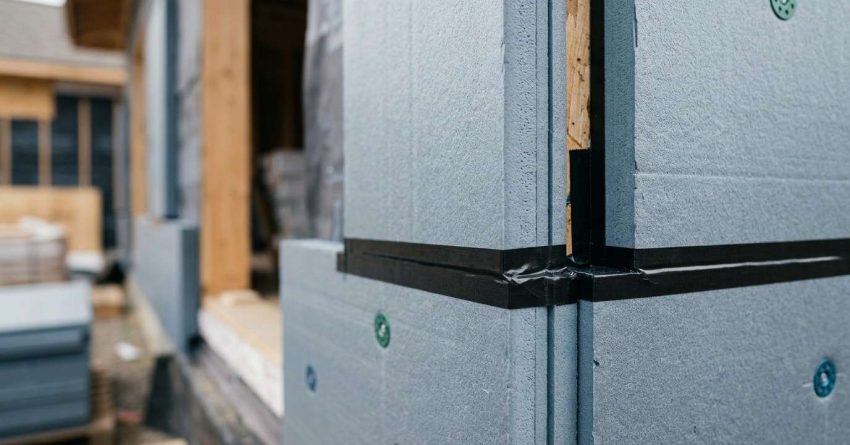
Continuous insulation (CI) is a building envelope strategy that places an unbroken layer of insulating material across all structural members, eliminating the thermal gaps that standard cavity insulation leaves behind. Homes built or retrofitted with CI consistently achieve lower heating and cooling costs, better moisture control, and stronger compliance with current energy codes. Understanding how CI works, where it is applied, and which materials perform best helps homeowners and property managers make confident decisions about insulation upgrades.
This guide explains the core principles behind continuous insulation and why it outperforms cavity-only approaches for long-term energy savings.
It covers material types, application locations, code requirements, installation practices, and cost considerations to help you plan an effective insulation project.
What Is Continuous Insulation and Why Does It Matter?
Continuous insulation is defined by the International Energy Conservation Code (IECC) as insulation that is uninterrupted across all structural members without thermal bridges other than fasteners and service openings. Unlike batt or blown-in insulation placed between studs, CI wraps the entire wall, roof, or foundation assembly from the outside, creating a thermal barrier that structural framing cannot interrupt.
The practical result is a building that loses significantly less heat in winter and gains significantly less heat in summer. Framing members in a standard wood-framed wall can account for 20 to 25 percent of the wall area, and wood conducts heat far more readily than insulation. Every stud, plate, and header in a cavity-insulated wall creates a path for heat to bypass the insulation entirely. CI eliminates that path.
Continuous insulation is one of the most effective approaches within the broader category of home insulation services — our complete guide to home insulation services covers every insulation method available for residential and commercial properties, helping you compare options and choose the right fit for your building.
How CI Differs from Cavity Insulation
Cavity insulation fills the space between framing members. It performs well within that space but stops at every stud, joist, and header. CI is installed on the exterior face of the framing, covering the entire structural plane. The two systems are not mutually exclusive. Many high-performance wall assemblies combine cavity insulation between studs with a continuous layer on the exterior to achieve both air sealing and maximum thermal resistance.
Types of Continuous Insulation Materials Used in Homes
Three material categories dominate residential CI applications. Each offers a different combination of R-value per inch, moisture resistance, fire performance, and cost.
Rigid Foam Board Insulation
Rigid foam board is the most widely used CI material in residential construction. Three product types are available: expanded polystyrene (EPS), extruded polystyrene (XPS), and polyisocyanurate (polyiso). EPS provides approximately R-3.6 to R-4.2 per inch and is vapor-permeable, making it suitable for assemblies where drying to the exterior is part of the moisture management strategy. XPS delivers R-5 per inch with lower vapor permeability and strong resistance to moisture absorption, making it a common choice for below-grade and foundation applications. Polyiso achieves the highest R-value per inch of the three — typically R-6 to R-6.5 — but its performance decreases in cold temperatures, which affects its effective R-value in cold climate zones.
Mineral Wool Continuous Insulation
Mineral wool (also called rock wool or slag wool) is available in rigid board form suitable for CI applications. It provides R-4 to R-4.2 per inch, is non-combustible, and offers strong acoustic performance. Its vapor permeability allows wall assemblies to dry in both directions, which is an advantage in mixed and marine climate zones where moisture management is complex. Mineral wool CI is increasingly specified in projects where fire resistance ratings are a priority.
Spray Foam as a Continuous Insulation Layer
Closed-cell spray polyurethane foam (ccSPF) applied to the exterior face of sheathing or the interior face of roof decking functions as a continuous insulation layer when applied at sufficient thickness. It simultaneously air-seals and insulates, eliminating the need for a separate air barrier. Spray foam applied as a continuous layer offers both air sealing and thermal resistance in a single step — our dedicated on spray foam insulation explains the difference between open-cell and closed-cell formulas, typical R-values achieved, and when each type is the right choice for your home.
Where Continuous Insulation Is Applied in Residential Buildings
CI can be incorporated into virtually every part of the building envelope. The three primary application zones each have distinct assembly requirements, code implications, and material preferences.
Exterior Wall Assemblies
The most common CI application is on the exterior face of wall sheathing, beneath the cladding. Rigid foam board or mineral wool panels are fastened to the sheathing, and cladding is then attached through the CI layer using long screws or a rainscreen furring system. This approach adds thermal resistance without reducing interior floor area and is compatible with most cladding types including fiber cement, vinyl, wood, and brick veneer. The thickness of CI on exterior walls is governed by climate zone R-value requirements and the need to keep the sheathing warm enough to avoid condensation.
Roof and Attic Applications
CI at the roof level is applied either above the roof deck (above-deck CI) or below the rafters on the interior. Above-deck CI using rigid foam or polyiso is common in low-slope commercial roofing but is also used in residential re-roofing projects. Below-rafter CI using rigid foam or spray foam creates an unvented conditioned attic, which brings ductwork and mechanical equipment inside the thermal envelope. When continuous insulation is applied at the roof deck or rafters, it changes how the entire attic assembly performs — our guide to attic insulation strategies walks through vented versus unvented assemblies, material choices, and the code requirements that apply to each approach.
Foundation and Below-Grade Installations
CI on foundation walls prevents heat loss through concrete and masonry, which are highly conductive materials. XPS and EPS are the preferred materials for below-grade applications because of their resistance to moisture absorption and long-term R-value stability. CI can be applied to the exterior of foundation walls before backfilling during new construction, or to the interior face of basement walls as a retrofit. Exterior foundation CI also protects the waterproofing membrane from physical damage and temperature cycling, extending its service life.
Energy Code Compliance and R-Value Requirements for CI
Current energy codes in the United States require continuous insulation in most climate zones for new residential construction. The IECC sets minimum total wall R-values and specifies how much of that R-value must come from CI versus cavity insulation, depending on the climate zone and framing type.
Meeting current energy code is one of the primary drivers behind continuous insulation adoption — our resource on IECC energy code breaks down R-value minimums by climate zone, explains how CI credit is calculated, and outlines what inspectors look for during a compliance review.
IECC Climate Zone Requirements for Continuous Insulation
The IECC divides the United States into eight climate zones. CI requirements increase with climate severity. In Climate Zone 3 (covering much of the Southeast), wood-framed walls typically require a minimum of R-5 CI in addition to cavity insulation. Climate Zone 5 (covering the upper Midwest and parts of the Northeast) requires R-10 CI for wood-framed walls. Climate Zones 6 through 8 require R-15 or more. These requirements apply to new construction and to additions and alterations that trigger code compliance review. Many states and municipalities have adopted more stringent local amendments, so verifying requirements with the local building department before specifying CI thickness is essential.
Installation Best Practices for Continuous Insulation
Correct installation determines whether CI delivers its rated performance in the field. Two issues account for the majority of CI performance failures: thermal bridging at fasteners and framing penetrations, and moisture accumulation within the wall assembly.
Managing Thermal Bridging at Fasteners and Framing
Every fastener that penetrates CI creates a small thermal bridge. In most residential applications, fastener bridging reduces the effective R-value of the CI layer by 3 to 5 percent — a manageable loss. However, when CI is attached using metal Z-furring or continuous metal channels, the bridging effect is substantially larger and can reduce effective R-value by 20 percent or more. Specifying thermally broken fastening systems, using wood furring instead of metal, or designing the attachment system to minimize metal contact with the CI layer are the primary strategies for controlling fastener bridging.
Proper continuous insulation installation directly affects how hard your heating and cooling systems must work — our HVAC services explains how a well-insulated building envelope reduces equipment load, extends system life, and lowers monthly energy costs for homeowners and property managers.
Vapor Control and Moisture Management with CI
CI changes the thermal profile of the wall assembly, which affects where condensation is likely to occur. In cold climates, adding CI to the exterior of a wall moves the sheathing temperature closer to the interior air temperature, reducing the risk of condensation on the sheathing. This is one of the primary moisture management benefits of exterior CI. However, the CI layer must be thick enough relative to the cavity insulation to keep the sheathing above the dew point during the heating season. Building science organizations publish minimum CI-to-cavity ratios by climate zone to guide this calculation. Vapor retarder selection — whether a Class I, II, or III retarder is appropriate — depends on the climate zone, the CI material’s vapor permeability, and the interior finish system.
Cost Considerations and Long-Term Value of Continuous Insulation
CI adds material and labor cost compared to cavity-only insulation. Rigid foam board CI for a typical 2,000-square-foot home exterior ranges from $1.50 to $4.00 per square foot installed, depending on material type, thickness, and regional labor rates. Mineral wool CI runs higher, typically $3.00 to $5.00 per square foot installed. These costs are partially offset by reduced HVAC equipment sizing requirements, lower monthly energy bills, and in many cases, utility rebates for meeting or exceeding energy code requirements.
The long-term value case for CI is strong. A properly installed CI system reduces heating and cooling loads consistently over the life of the building without degradation in performance. Unlike mechanical systems, insulation requires no maintenance and does not wear out. Continuous insulation is frequently added during exterior renovation or re-cladding projects, making it a natural part of a broader upgrade — our remodeling services outlines how insulation upgrades are coordinated with siding, window replacement, and structural work to maximize value and minimize disruption.
How Continuous Insulation Works with HVAC and Energy Systems
A building with effective CI requires less heating and cooling capacity to maintain comfortable interior temperatures. This has direct implications for HVAC system sizing. When a home is retrofitted with CI, the existing HVAC system may be oversized for the reduced load, which can cause short-cycling, humidity control problems, and accelerated wear. A Manual J load calculation performed after CI installation confirms whether the existing system is appropriately sized or whether right-sizing is warranted.
Continuous insulation and mechanical systems work as a paired system — when the building envelope is properly sealed and insulated, your equipment operates at peak HVAC efficiency, reducing runtime, cutting energy bills, and extending the service life of heating and cooling equipment. Homes with CI also benefit from more consistent interior temperatures, fewer cold spots near exterior walls, and reduced drafts — comfort improvements that go beyond what energy bills alone reflect.
Choosing a Contractor for Continuous Insulation Installation
CI installation requires familiarity with building science principles, local energy code requirements, and the specific assembly details that govern moisture management and fastener design. Not all insulation contractors have experience with exterior CI systems, particularly the attachment details and rainscreen requirements that come with thicker foam or mineral wool panels.
When evaluating contractors, ask specifically about their experience with the CI material you are considering, their familiarity with the IECC requirements for your climate zone, and whether they will provide documentation of the installed R-value for permit and inspection purposes. Selecting the right insulation contractor is as important as choosing the right material — our home insulation services outlines what to look for in a qualified installer, including licensing, experience with continuous insulation assemblies, and familiarity with local energy code requirements.
Mr. Local Services connects homeowners and property managers with skilled insulation professionals who understand continuous insulation assemblies, local code requirements, and the installation details that determine long-term performance. Contact us to discuss your project and get matched with a qualified contractor in your area.
Conclusion
Continuous insulation strategies address the fundamental limitation of cavity-only insulation by eliminating thermal bridging through framing and creating an unbroken thermal barrier across the entire building envelope. Material selection, application location, code compliance, and installation quality each play a critical role in determining how well a CI system performs.
The long-term benefits — lower energy costs, better moisture control, improved comfort, and stronger code compliance — make CI one of the highest-value investments available in residential building performance.
Mr. Local Services helps homeowners and property managers plan and execute continuous insulation projects with confidence, connecting you with experienced professionals who deliver quality workmanship and lasting results.
Frequently Asked Questions
What is the difference between continuous insulation and cavity insulation?
Cavity insulation fills the space between framing members but stops at every stud and joist, allowing heat to bypass the insulation through the framing. Continuous insulation covers the entire structural plane without interruption, eliminating those thermal bypass paths and delivering higher effective R-values across the full wall assembly.
How thick does continuous insulation need to be?
Required CI thickness depends on your climate zone and the IECC R-value minimums for your wall assembly type. In Climate Zone 3, R-5 CI is typically the minimum for wood-framed walls. In Climate Zone 6, R-15 CI is commonly required. Your local building department can confirm the specific requirements that apply to your project.
Can continuous insulation be added to an existing home?
Yes. CI is commonly added to existing homes during re-siding or re-cladding projects, when the exterior cladding is removed and the wall sheathing is exposed. It can also be added to basement walls as an interior retrofit. Adding CI during a planned exterior renovation is the most cost-effective approach because the cladding removal cost is already part of the project.
Does continuous insulation replace the need for a vapor barrier?
Not necessarily. Whether a separate vapor retarder is required depends on the climate zone, the vapor permeability of the CI material, and the wall assembly design. In many cold-climate assemblies, exterior CI reduces or eliminates the need for an interior vapor barrier by keeping the sheathing warm enough to prevent condensation. A building science professional or energy code consultant can advise on the correct vapor control strategy for your specific assembly.
What is the best continuous insulation material for exterior walls?
The best material depends on your climate zone, budget, and assembly requirements. Polyiso offers the highest R-value per inch and is cost-effective for above-grade applications. XPS provides strong moisture resistance and is preferred for below-grade and foundation use. Mineral wool is the best choice when fire resistance or vapor permeability is a priority. EPS is a versatile, cost-effective option for most above-grade residential applications.
How does continuous insulation affect HVAC system sizing?
CI reduces the heating and cooling load of a building, which means the HVAC system needs to do less work to maintain comfortable temperatures. In retrofit projects, existing equipment may be oversized after CI is added. A Manual J load calculation after installation confirms whether the system is appropriately sized or whether right-sizing the equipment would improve efficiency and comfort.
Is continuous insulation required by building code?
In most U.S. climate zones, the IECC requires CI as part of the minimum wall assembly R-value for new residential construction. Requirements vary by climate zone and framing type. Many states have adopted the 2021 IECC or later, which includes CI requirements for Climate Zones 3 through 8. Additions and alterations that trigger code compliance review are also subject to CI requirements in most jurisdictions.