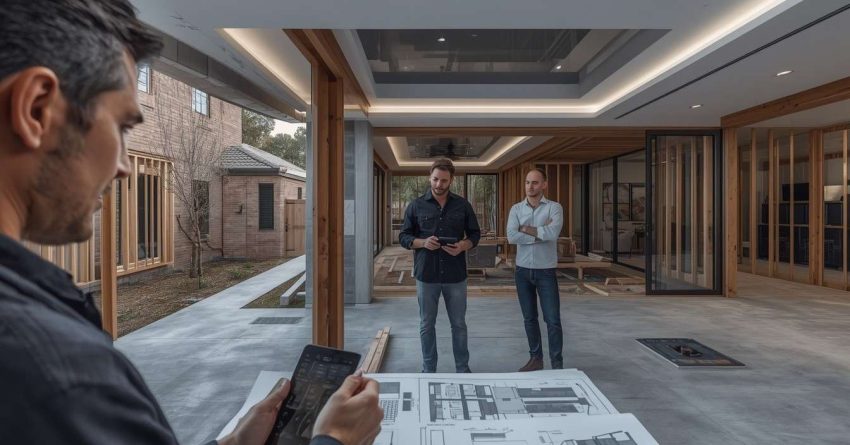
Smart home integration in a new build typically costs between $15,000 and $85,000 depending on system complexity, home size, and the number of automated systems included — with most homeowners spending around $25,000 to $45,000 for a well-equipped connected home.
Planning smart home technology during construction is the most cost-effective window you will ever have. Decisions made before the walls close determine what your home can do for decades.
This guide covers average costs by package tier, the key factors that drive pricing, which systems deliver the most value, and how to build a realistic budget before your build begins.
What Does Smart Home Integration Mean for a New Build?
Smart home integration is the process of connecting your home’s electrical, mechanical, and digital systems so they can communicate, be controlled remotely, and operate automatically based on your preferences. In a new build, this means planning and installing the wiring, hubs, sensors, and devices during construction rather than adding them after the fact.
The term covers a wide range of systems: lighting control, climate automation, security cameras, smart locks, motorized window treatments, whole-home audio, and energy management. These systems can operate independently or be unified under a single control platform such as Control4, Savant, Crestron, or consumer-grade ecosystems like Google Home and Amazon Alexa.
Smart home integration depends heavily on your home’s electrical infrastructure — our electrical services guide covers everything homeowners need to know about wiring capacity, panel upgrades, and circuit planning for modern connected systems.
The key distinction in a new build is access. Walls are open, conduit can be run cleanly, and every system can be designed to work together from the start. This is fundamentally different from retrofitting an existing home, where labor costs rise sharply because walls must be opened, wiring must be fished through finished spaces, and compromises are often unavoidable.
Average Smart Home Integration Cost for New Build Projects
The cost of smart home integration in a new build varies widely based on the scope of automation you choose. Costs are typically quoted as a percentage of total construction cost or as a flat system budget. Most integrators recommend allocating between 5% and 15% of your total build budget to smart home systems.
Entry-Level Smart Home Package Costs
An entry-level smart home package for a new build typically costs between $5,000 and $15,000. This tier covers the essentials: a smart thermostat, smart lighting in key rooms, a video doorbell, smart locks on exterior doors, and a basic security camera system. Devices at this level often run on consumer platforms like Google Home or Amazon Alexa and require minimal custom programming.
Pre-wiring for future expansion is the most important investment at this tier. Running low-voltage wiring and conduit during construction costs a fraction of what it costs to add later.
Mid-Range Smart Home System Costs
Mid-range smart home systems for new builds typically fall between $20,000 and $50,000. This tier introduces a dedicated control system, whole-home lighting scenes, motorized shades, multi-zone audio and video distribution, integrated security with professional monitoring, and smart HVAC zoning. A professional integrator programs and commissions the system, and ongoing support is typically included.
At this level, the control experience becomes seamless. A single app or touchscreen manages every system in the home, and automations run without manual input.
Whole-Home Automation Costs
Full whole-home automation in a new build typically costs between $50,000 and $150,000 or more for luxury properties. This tier includes enterprise-grade control platforms, custom programming, dedicated equipment rooms, structured wiring for every room, 4K video distribution, whole-home audio with in-ceiling speakers, advanced lighting design, motorized window treatments throughout, and full integration with HVAC, security, and energy management systems.
At this level, the smart home system is a significant line item in the construction budget and is typically designed by a certified integration specialist working alongside the architect and builder.
If you are ready to move beyond budgeting and start planning your system, our home automation services outlines every solution we offer for new build properties, from basic smart lighting to full whole-home control.
Key Factors That Affect Smart Home Integration Cost
No two new builds cost the same to automate. Several variables drive the final price, and understanding them helps you make informed decisions before committing to a scope.
Home Size and Layout
Larger homes require more devices, more wiring, and more programming time. A 2,500-square-foot home and a 6,000-square-foot home may use the same control platform, but the 6,000-square-foot home will need significantly more sensors, keypads, speakers, cameras, and cable runs. Cost scales roughly with square footage, though not linearly — common areas like kitchens and living rooms drive disproportionate device counts.
Multi-story homes and homes with complex layouts also increase labor time for rough-in wiring, which is typically billed by the hour or by the point (each device connection).
Number of Systems and Devices
Each system you add — lighting, audio, security, HVAC, shading, access control — adds both hardware cost and integration complexity. A home with five integrated systems costs more to program and commission than a home with two, even if the individual devices are similarly priced. Integration complexity grows faster than device count because every system must communicate reliably with every other system.
Device count also affects the cost of the control platform. Consumer-grade hubs handle dozens of devices. Professional platforms like Control4 or Crestron are licensed per project and scale to hundreds of devices with custom programming.
Wiring, Infrastructure, and Installation Complexity
Low-voltage wiring is the backbone of any smart home system. In a new build, this includes structured wiring for data, audio, video, security, and control — all run during the rough-in phase before drywall. The cost of low-voltage rough-in wiring for a mid-range smart home typically ranges from $3,000 to $12,000 depending on home size and system scope.
Homes with dedicated equipment rooms, home theaters, or whole-home audio require additional infrastructure including equipment racks, conditioned power, and acoustic treatments. These add cost but also protect your investment and simplify future upgrades.
Smart Home Systems Worth Budgeting for in a New Build
Not every smart home system delivers equal value. These categories consistently rank highest for return on investment, daily usability, and resale appeal.
Smart lighting control is the most universally valued integration. Automated scenes, occupancy sensing, and remote control add convenience and energy savings. Budget $3,000 to $15,000 depending on the number of fixtures and control complexity.
Smart security systems including cameras, motion sensors, and access control provide safety and peace of mind. Smart thermostats and zoned HVAC controls are among the highest-value integrations in any new build — our smart HVAC systems explains how connected climate control works and what it costs to install during construction.
Whole-home audio is a high-satisfaction addition that is dramatically easier and less expensive to install during construction than after. In-ceiling speakers, amplifiers, and streaming sources can be distributed throughout the home for $5,000 to $25,000 depending on zone count and speaker quality.
Smart security and access control round out the core package. Smart security systems, including connected locks and access control, are a core part of any new build automation plan — our smart lock installation service covers everything from keypad deadbolts to full access management systems.
Motorized window treatments are often overlooked but deliver strong energy savings and privacy control. Pre-wiring for motorized shades during construction costs very little; adding them after drywall is significantly more expensive.
Electrical and Wiring Costs for Smart Home Readiness
The electrical system in a new build must be designed with smart home integration in mind from the start. Standard residential electrical panels and wiring are often insufficient for a fully automated home without upgrades.
Key electrical considerations include panel capacity, dedicated circuits for smart home equipment, whole-home surge protection, and structured wiring distribution. A 200-amp panel is the minimum for most smart homes; larger homes with EV charging, whole-home generators, and extensive automation may require 400-amp service.
Low-voltage wiring — including Cat6 ethernet, coaxial cable, speaker wire, and control wiring — must be run during rough-in. The cost to pre-wire a new build for smart home readiness typically ranges from $4,000 to $15,000 for a mid-size home, depending on the number of rooms, devices, and systems planned.
Proper wiring is the foundation of any smart home system — our residential electrical installation team works directly with builders and homeowners during the construction phase to ensure every circuit, conduit, and panel is sized correctly from day one.
Skipping proper pre-wiring to save money during construction is one of the most common and costly mistakes new build buyers make. Retrofitting wiring after drywall installation can cost three to five times more than running it during rough-in.
How to Plan Your Smart Home Budget Before Construction Begins
Effective smart home budget planning starts at the design phase, not after the foundation is poured. The earlier you define your automation goals, the more cost-effectively they can be built in.
Start by identifying your must-have systems versus nice-to-have additions. Security, climate control, and lighting are the highest-priority categories for most homeowners. Audio, video distribution, and motorized treatments are valuable but can be phased in over time if budget is constrained.
Work with your builder to include low-voltage rough-in wiring in the base construction contract. This is the single highest-leverage investment you can make — it costs relatively little during construction and enables every future upgrade without opening walls.
Get quotes from at least two or three certified integration specialists before finalizing your scope. Integrators vary significantly in pricing, platform preferences, and programming capabilities. Ask for itemized quotes that separate hardware, labor, programming, and ongoing support costs.
For smaller smart home devices such as smart locks, thermostats, and video doorbells, our handyman installation services provide fast, affordable setup without the need for a full electrical contractor.
Finally, build a contingency of 10% to 15% into your smart home budget. Scope changes during construction are common, and having flexibility prevents compromises on the systems that matter most.
Smart Home Integration vs. Retrofitting: Why New Builds Cost Less
Installing smart home technology during new construction is consistently less expensive than retrofitting an existing home with the same systems. The cost difference is driven almost entirely by labor and access.
During construction, walls are open and wiring can be run in straight, clean paths with no demolition required. A low-voltage technician can wire an entire new build in a fraction of the time it takes to fish wire through finished walls, ceilings, and floors. Labor savings alone can reduce total smart home costs by 30% to 50% compared to a retrofit project of equivalent scope.
Retrofitting also introduces limitations that new builds avoid entirely. Older homes may have insufficient panel capacity, incompatible wiring types, or structural obstacles that make certain integrations impractical or prohibitively expensive. New builds start with a clean slate.
The resale value argument also favors new builds. Homes with integrated smart systems built in from the start are perceived as more modern and command stronger buyer interest than homes with visible add-on devices and exposed wiring.
Homeowners who missed the new build window and need to add smart systems to an existing property can explore our home remodeling costs to understand what retrofitting a connected home typically involves.
Conclusion
Smart home integration cost for a new build ranges from $5,000 for entry-level packages to $150,000 or more for full whole-home automation, with most homeowners finding the best value in the $20,000 to $50,000 mid-range tier.
The new build phase is the most cost-effective time to invest in smart home infrastructure — pre-wiring during construction eliminates the labor-intensive retrofitting costs that make adding automation to existing homes so expensive.
At Mr. Local Services, our team works with homeowners and builders throughout the construction process to plan, wire, and install smart home systems that deliver lasting value — contact us today to get a clear, itemized estimate for your new build project.
Frequently Asked Questions
How much does it cost to add smart home technology to a new build?
Smart home technology in a new build typically costs between $5,000 and $85,000 depending on the systems included. Most homeowners spend $20,000 to $50,000 for a mid-range connected home with lighting, security, climate, and audio integration.
What is the cheapest way to make a new build a smart home?
The most cost-effective approach is to pre-wire the home during construction and install consumer-grade devices like smart thermostats, smart locks, and smart lighting. Pre-wiring costs $3,000 to $8,000 and enables future upgrades without opening walls.
Is smart home wiring included in new build construction costs?
Standard new build contracts rarely include low-voltage smart home wiring. You typically need to add it as a separate line item or hire a low-voltage contractor during the rough-in phase. Costs range from $4,000 to $15,000 depending on scope.
What smart home systems add the most value to a new build?
Smart lighting control, security systems, smart thermostats, and whole-home audio consistently deliver the highest return on investment and the strongest buyer appeal at resale. These four categories are the recommended starting point for any new build smart home budget.
How early in the construction process should I plan smart home integration?
Smart home planning should begin at the design phase, before permits are pulled. Decisions about panel capacity, conduit routing, and low-voltage wiring paths must be made before framing begins to avoid costly changes later.
Can I add smart home features to a new build after construction is complete?
Yes, but it costs significantly more. Retrofitting smart home wiring after drywall installation typically costs three to five times more than running it during rough-in. Wireless devices can be added at any time, but wired systems require wall access.
What is the difference between a smart home hub and a smart home controller?
A smart home hub connects and manages devices within a single ecosystem, typically using Wi-Fi, Zigbee, or Z-Wave. A smart home controller is a professional-grade system like Control4 or Crestron that integrates multiple systems, supports custom programming, and is designed for whole-home automation at scale.