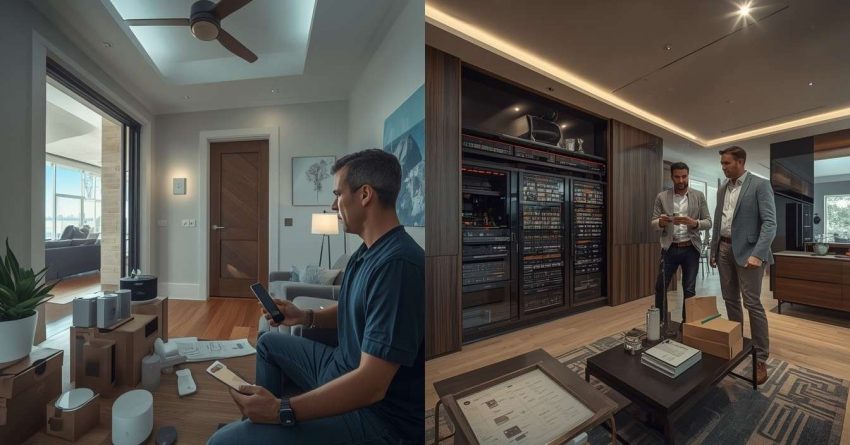
Choosing between a DIY smart home setup and hiring a professional integrator comes down to three factors: project complexity, your technical skill level, and how much reliability you need from day one. Simple device installations like smart plugs, thermostats, and video doorbells are well within reach for most homeowners. Whole-home automation systems with custom wiring, multi-room audio, and integrated security are a different story entirely.
This decision affects your budget, your timeline, and how well your system performs for years to come. Getting it wrong in either direction costs real money.
This guide breaks down both options clearly, covering costs, complexity, reliability, and the specific scenarios where each approach delivers the best outcome for your property.
What Is a DIY Smart Home Setup?
A DIY smart home setup means purchasing, installing, and configuring smart devices yourself without hiring a licensed technician or integration specialist. Most DIY systems rely on consumer-grade products designed for non-technical users, including smart speakers, app-controlled lighting, programmable thermostats, and plug-in security cameras.
The appeal is straightforward: lower upfront cost, flexible pacing, and full control over which products you choose. Platforms like Amazon Alexa, Google Home, and Apple HomeKit have made it easier than ever to connect devices from different manufacturers under one app. Most installations involve nothing more than mounting hardware, connecting to Wi-Fi, and following in-app setup instructions.
That said, DIY setups have real limitations. Consumer devices often lack the reliability and integration depth of professional-grade equipment. Troubleshooting connectivity issues, managing firmware updates, and reconfiguring automations after a router change all fall on the homeowner. For a single room or a handful of devices, this is manageable. For a whole-home system, it becomes a part-time job.
Understanding the full scope of what a smart home can include is essential before choosing your path — our smart home services guide covers every system type, from lighting and security to climate control and entertainment, so you know exactly what you are working with before committing to either route.
Common DIY Smart Home Devices and Systems
The most popular DIY-friendly smart home products include smart thermostats (Nest, Ecobee), video doorbells (Ring, Arlo), smart lighting (Philips Hue, Lutron Caseta), smart locks (Schlage, Yale), and plug-in sensors for motion, water, and smoke detection. These devices are designed for self-installation and work reliably within their intended scope.
What Skills and Tools DIY Installation Requires
Basic DIY smart home installation requires comfort with Wi-Fi configuration, smartphone apps, and light electrical tasks like replacing a standard thermostat or outlet. More advanced setups involving in-wall wiring, switch replacements, or hardwired cameras require familiarity with basic electrical safety. Any work involving your home’s main panel or low-voltage structured wiring moves beyond DIY territory for most homeowners.
What Does a Professional Smart Home Integrator Do?
A professional smart home integrator designs, installs, programs, and supports a complete home automation system tailored to your property and lifestyle. Unlike a general handyman or electrician, an integrator specializes in making multiple systems — lighting, HVAC, security, audio, video, and access control — work together as a unified, programmable environment.
The process typically begins with a site assessment and system design phase, where the integrator maps out device placement, wiring runs, network infrastructure, and control interfaces. Installation involves both physical hardware work and complex software programming, including scene creation, automation triggers, and remote access configuration. After installation, most professional integrators provide ongoing support, system updates, and troubleshooting services.
Professional integrators work with commercial-grade equipment from brands like Control4, Crestron, Savant, and Lutron RadioRA — systems that are not available through retail channels and require certified installation. These platforms offer significantly greater reliability, customization depth, and long-term support than consumer alternatives.
Many professional smart home integrations involve low-voltage wiring, panel connections, and code-compliant installations that fall under the scope of licensed electrical services, which is why certified technicians handle these components rather than general handymen.
Services Included in a Pro Integration Package
A full professional integration package typically includes system design and consultation, structured wiring installation, device procurement and configuration, network infrastructure setup, user interface programming, staff or homeowner training, and a post-installation support agreement. Some integrators also offer 24/7 remote monitoring and annual system maintenance visits.
How Pros Handle System Compatibility and Wiring
Professional integrators solve the compatibility problem that frustrates most DIY homeowners: getting devices from different manufacturers to communicate reliably. They use control processors and middleware platforms that translate between protocols — Z-Wave, Zigbee, Wi-Fi, Bluetooth, and proprietary systems — so every device responds consistently. Structured wiring installed during the build or renovation phase eliminates the wireless reliability issues that plague consumer setups in larger homes.
If you need a dedicated covering how these systems connect, our smart home device compatibility guide walks through every major protocol and what works together.
Cost Comparison: DIY Smart Home vs Pro Integrator
Cost is the most common reason homeowners start with DIY. A basic DIY smart home setup — thermostat, a few smart bulbs, a video doorbell, and a smart lock — typically runs between $300 and $800 in hardware, with no labor cost. A mid-range DIY system covering multiple rooms with lighting, security cameras, and a smart speaker hub can reach $1,500 to $3,000 depending on device count and brand selection.
Professional integration costs vary significantly based on home size, system complexity, and equipment tier. Entry-level professional systems for a standard single-family home typically start around $5,000 to $10,000 installed. Mid-range whole-home systems with multi-room audio, full lighting control, and integrated security commonly range from $15,000 to $40,000. High-end custom installations in larger homes can exceed $100,000.
The gap looks dramatic on paper, but the comparison is not always apples-to-apples. Professional systems include equipment that outperforms consumer alternatives in reliability, longevity, and integration depth. They also include design, programming, and ongoing support that DIY systems require you to provide yourself — often at a hidden cost in time, frustration, and eventual replacement of underperforming devices.
Smart home upgrades are frequently bundled with broader renovation projects — if you are already planning structural or cosmetic changes, our remodeling services explains how technology integration can be incorporated into a full home improvement scope, often reducing total installation cost by combining labor visits.
For a full breakdown of what professional installation costs by system type and home size, our smart home installation cost guide provides current pricing benchmarks and budget planning guidance.
Hidden Costs Homeowners Often Overlook
DIY setups carry hidden costs that rarely appear in initial budgets: replacement devices when products are discontinued, subscription fees for cloud-based features, Wi-Fi extenders or mesh network upgrades to support device density, and the time cost of troubleshooting. Professional systems carry their own ongoing costs — support contracts, software licensing for some platforms, and periodic hardware refresh cycles — but these are disclosed upfront and built into the service agreement.
When DIY Makes Sense for Smart Home Projects
DIY is the right choice when your project scope is limited, your technical comfort level is solid, and the consequences of a system failure are low. Single-room projects, rental property upgrades, and starter setups where you want to explore smart home technology before committing to a full system are all strong candidates for the DIY approach.
Renters and landlords managing multiple properties often find DIY solutions practical for adding smart locks, programmable thermostats, and basic security cameras without requiring professional installation at each location. The lower per-unit cost and the ability to self-service issues remotely make consumer-grade systems a reasonable fit for this use case.
DIY also makes sense when you are comfortable with technology, enjoy the setup process, and have time to invest in learning the platform. Homeowners who treat smart home configuration as a hobby rather than a chore often build impressive, highly customized systems at a fraction of professional cost — provided they are willing to own the ongoing maintenance.
Best Smart Home Projects for DIY Homeowners
The best DIY smart home projects are those with low installation complexity, clear manufacturer support, and minimal consequences if something goes wrong. Smart thermostats, video doorbells, smart lighting, plug-in smart outlets, and Wi-Fi-connected smoke and CO detectors are all strong starting points. These devices install in under an hour, require no wiring expertise, and deliver immediate, tangible value.
When to Hire a Professional Smart Home Integrator
Hiring a professional integrator makes sense when your project involves whole-home systems, new construction or major renovation, commercial-grade reliability requirements, or integration across multiple subsystems that must work together seamlessly. If you are building a new home, a renovation is already underway, or you are managing a high-value property where system failure has real consequences, professional installation is the more cost-effective long-term choice.
Property managers and landlords overseeing multi-unit buildings or high-end rental properties increasingly rely on professional integrators to install centrally managed access control, HVAC automation, and security systems that reduce operational overhead and improve tenant experience. The upfront investment is offset by reduced maintenance calls, lower energy costs, and the ability to manage systems remotely across multiple properties.
For smaller, low-complexity smart home tasks that do not require licensed work, a skilled technician through our handyman services can handle device mounting, basic wiring connections, and setup assistance at a lower cost than a full integration package — a practical middle ground for homeowners who want professional installation without the full integrator price point.
Signs Your Smart Home Project Needs a Pro
Your project needs a professional integrator when it involves in-wall wiring or conduit runs, integration with your home’s electrical panel, multi-room audio or video distribution, a centralized control processor, commercial-grade security or access control, or any system where failure would create a safety risk or significant financial loss. If you have already attempted a DIY setup and are experiencing persistent connectivity issues, inconsistent automation behavior, or device incompatibility problems, a professional assessment is the most efficient path to resolution.
Reliability, Safety, and Long-Term Performance
Reliability is where professional installation creates its clearest advantage. Consumer smart home devices are designed for ease of setup, not enterprise-grade uptime. They depend on cloud servers that can go offline, firmware updates that can break existing automations, and Wi-Fi networks that were not designed to support dozens of connected devices simultaneously. A professionally installed system uses dedicated network infrastructure, local processing where possible, and equipment built to commercial reliability standards.
Safety is a related but distinct concern. Improperly installed smart home devices — particularly those involving electrical connections, hardwired cameras, or integrated alarm systems — can create fire hazards, code violations, or security vulnerabilities. Professional integrators are licensed, insured, and accountable for code-compliant installation. DIY installations, even when done carefully, may not meet local building codes and can create liability issues when selling a property.
Smart home technology increasingly overlaps with accessibility and fall-prevention tools — our safety and mobility covers how automated lighting, smart locks, and sensor systems support aging-in-place and property safety goals for homeowners managing properties for elderly or mobility-limited occupants.
Long-term performance depends on both equipment quality and ongoing support. Professional systems are designed with upgrade paths in mind — when new devices or protocols emerge, a certified integrator can integrate them without replacing the entire system. Consumer platforms are more vulnerable to product discontinuation, company acquisitions, and ecosystem fragmentation that can render an entire setup obsolete within a few years.
Homeowners who want a complete picture of what professional smart home installation involves — including warranties, system monitoring, and post-install support — will find a full breakdown of service standards and expectations on our dedicated guide.
How Professional Installation Affects Home Value
Professional smart home installation can increase perceived home value, particularly in higher-end markets where buyers expect integrated technology as a standard feature. Whole-home automation, integrated security, and energy management systems are increasingly listed as selling points in real estate listings. However, the value impact depends heavily on system quality, documentation, and transferability — a well-documented professional system with a transferable support agreement adds more value than an undocumented DIY setup that a new owner cannot easily manage or expand.
For a detailed look at how smart home features affect resale outcomes, our smart home resale value guide covers what buyers actually prioritize and how to position your investment when selling.
Conclusion
The choice between DIY and professional smart home integration is not about which option is better in the abstract — it is about matching the right approach to your specific project scope, technical comfort, and long-term goals. DIY delivers real value for simple, contained projects. Professional integration delivers reliability, safety, and performance that consumer systems cannot match at scale.
Both paths have a place in a well-managed property strategy. The key is knowing where each one belongs and making the decision before you are halfway through an installation that has grown beyond its original scope.
At Mr. Local Services, our team connects homeowners and property managers with certified smart home professionals who assess your needs, design the right system, and deliver installations that perform reliably from day one — contact us to get started.
Frequently Asked Questions
Is DIY smart home installation safe for beginners?
DIY smart home installation is safe for beginners when limited to plug-in devices and simple wireless setups. Any installation involving in-wall wiring, electrical panel connections, or hardwired systems should be handled by a licensed professional to meet safety and code requirements.
How much does a professional smart home integrator charge?
Professional smart home integration typically starts around $5,000 for entry-level single-room systems and ranges from $15,000 to $40,000 for whole-home installations. Cost depends on home size, system complexity, equipment tier, and the scope of ongoing support included in the agreement.
Can I mix DIY devices with a professional smart home system?
Some professional platforms support integration with consumer devices, but compatibility is not guaranteed. Professional integrators generally recommend using the equipment specified in their system design to ensure reliability, warranty coverage, and consistent performance across all connected devices.
What is the biggest disadvantage of a DIY smart home?
The biggest disadvantage of a DIY smart home is the ongoing maintenance burden. Homeowners are responsible for troubleshooting connectivity issues, managing firmware updates, replacing discontinued products, and reconfiguring automations when network changes occur — tasks that a professional integrator handles as part of a support agreement.
Do smart home systems require a monthly subscription?
Many consumer smart home devices require monthly subscriptions for cloud storage, advanced automation features, or remote access. Professional systems often use local processing to reduce cloud dependency, though some platforms include annual software licensing fees as part of the support agreement.
Will a smart home system increase my property value?
A professionally installed, well-documented smart home system can increase property value in markets where buyers expect integrated technology. The value impact is strongest when the system is transferable, fully documented, and supported by a certified integrator who can assist the new owner.
What is the difference between a smart home and home automation?
A smart home refers broadly to a residence with internet-connected devices that can be monitored or controlled remotely. Home automation is a subset that involves programmed, trigger-based actions — such as lights turning on at sunset or the thermostat adjusting when you leave — that operate without manual input. Professional integrators typically deliver full home automation, while most DIY setups offer smart control with limited true automation depth.