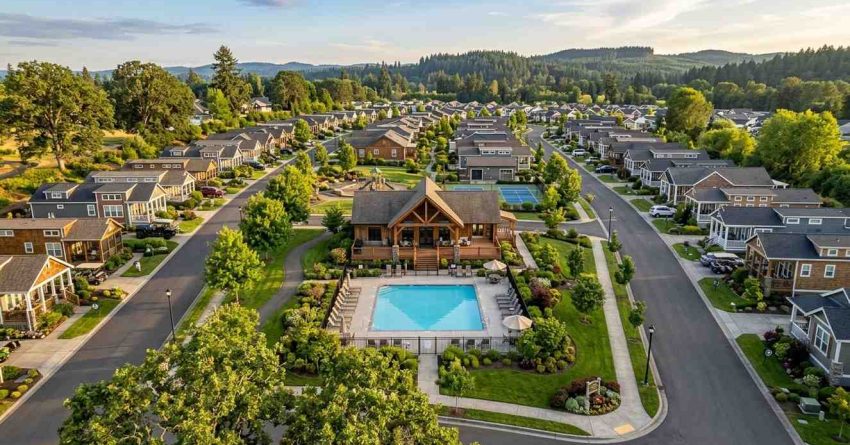
Park model communities offer an affordable, low-maintenance path to homeownership across the USA, with hundreds of established communities spanning retirement destinations, year-round residential neighborhoods, and seasonal vacation retreats. Whether you are searching for a 55+ community in Arizona, a lakeside retreat in the Pacific Northwest, or a full-time residential option in Florida, this directory organizes the most important information you need to compare, evaluate, and choose the right community with confidence.
Finding the right park model community involves more than picking a location — costs, rules, amenities, and maintenance access all shape your daily experience.
This guide covers community types, regional options, evaluation criteria, financial considerations, and home maintenance resources to help you make a well-informed decision.
What Is a Park Model Community?
A park model community is a planned residential development where residents own or lease compact homes — typically between 400 and 500 square feet — built to HUD recreational vehicle standards, situated on leased or owned lots within a managed community setting. These communities provide shared infrastructure, common amenities, and organized management, making them a practical and cost-effective alternative to traditional homeownership.
Park model homes are not the same as mobile homes or manufactured housing, though they are sometimes grouped together. They are purpose-built for semi-permanent or permanent placement, designed to meet specific construction and safety standards, and typically installed on a permanent or semi-permanent foundation within the community.
If you want a deeper look at how park model homes are built, regulated, and financed, our park model homes guide covers every specification, HUD standard, and ownership consideration in full detail.
Park Model Homes vs. Traditional Housing
Park model homes differ from traditional single-family homes in several important ways. The most significant difference is size — park model homes are intentionally compact, which reduces construction costs, utility expenses, and ongoing maintenance demands. Residents trade square footage for lower monthly costs, simplified upkeep, and access to community amenities that would be expensive to maintain privately.
Ownership structure also differs. In most park model communities, residents own the home but lease the lot it sits on, which means monthly lot fees replace a traditional mortgage payment for the land. This arrangement lowers the upfront purchase price significantly but introduces an ongoing lease obligation that varies by community.
Park model homes share several characteristics with compact alternative housing — our overview of tiny home living explains how these two housing styles compare in size, cost, and lifestyle fit.
Who Lives in Park Model Communities?
Park model communities attract a wide range of residents. Retirees and pre-retirees represent the largest segment, drawn by lower costs, simplified living, and warm-climate communities with active social programming. Younger buyers seeking affordable homeownership, remote workers prioritizing lifestyle over square footage, and seasonal residents who split time between two locations also make up a growing share of the park model community population.
The common thread across all resident types is a preference for lower-cost, lower-maintenance living within a community setting that provides shared amenities and a built-in social environment.
Types of Park Model Communities Across the USA
Park model communities are not one-size-fits-all. They fall into three broad categories based on residency type, target demographic, and community structure. Understanding which type fits your lifestyle is the first step toward narrowing your search.
Retirement and 55+ Park Model Communities
Age-restricted park model communities — typically requiring at least one resident per household to be 55 or older — are the most established and widely available community type in the USA. These communities are concentrated in Sun Belt states including Arizona, Florida, Texas, and Nevada, where mild winters and warm climates support year-round outdoor living.
Amenities in 55+ communities tend to be more developed than in general-population communities. Clubhouses, heated pools, fitness centers, organized activities, and on-site management are standard features in well-established retirement-focused parks. Residency rules, guest policies, and community governance structures are also more clearly defined, which many residents find reassuring.
A full breakdown of retirement community options includes amenity standards, residency rules, and top-rated locations across the country.
Year-Round Residential Park Model Communities
Year-round residential communities accept residents of all ages and are designed for full-time living rather than seasonal or vacation use. These communities are more geographically diverse than retirement-focused parks, appearing across all regions of the USA including four-season climates in the Midwest and Northeast.
Infrastructure in year-round communities is built to support permanent residency — utilities are connected for continuous use, community rules address full-time occupancy, and management structures are designed for ongoing resident relationships rather than seasonal turnover. Lot leases in these communities are typically longer-term and may include more comprehensive utility arrangements.
Vacation and Seasonal Park Model Communities
Seasonal and vacation-focused park model communities cater to residents who use their home for part of the year — typically during winter months in warm-climate destinations or summer months in cooler recreational areas. These communities often have more flexible occupancy rules, shorter lease terms, and amenities oriented toward recreation and outdoor activities rather than full-time residential life.
For those considering a part-time or vacation-focused lifestyle, our resource on seasonal park model living walks through the best regions, lease structures, and community features for short-term residents.
What to Look for in a Park Model Community
Choosing a park model community requires evaluating several factors that go beyond location and price. The communities that look most appealing in a brochure or online listing are not always the ones that deliver the best day-to-day living experience. Knowing what to examine before you commit saves time, money, and frustration.
Before signing any lease or purchase agreement, working through a structured community evaluation checklist helps you compare communities side by side and avoid costly surprises.
Lot Fees, Utilities, and Community Rules
Lot fees are the monthly payment you make to the community for the right to place your home on a specific lot. These fees vary significantly — from under $300 per month in rural or lower-demand areas to over $1,000 per month in premium locations with extensive amenities. What the lot fee includes also varies: some communities bundle water, sewer, trash, and basic cable into the fee, while others charge for each utility separately.
Community rules govern everything from home appearance standards and pet policies to guest duration limits and vehicle restrictions. Reading the community’s rules and regulations document in full before committing is essential — rules that seem minor on paper can have a significant impact on daily life.
Understanding exactly what a lot lease covers — and what it does not — is essential before committing to a community, and our lot lease explained resource breaks down every fee category, utility arrangement, and rule structure you are likely to encounter.
Amenities and Shared Facilities
Amenities are one of the primary reasons residents choose community living over standalone property ownership. Common amenities in established park model communities include swimming pools, fitness centers, clubhouses, laundry facilities, dog parks, walking trails, and organized social activities. Premium communities may also offer golf courses, tennis courts, pickleball courts, and on-site dining.
When evaluating amenities, look beyond the list of features and assess their condition and actual usage. A community with a long amenity list but poorly maintained facilities or low resident participation may deliver less value than a smaller community with fewer but well-maintained shared spaces and an active social calendar.
Location, Climate, and Accessibility
Location affects not just lifestyle but also practical considerations like healthcare access, shopping proximity, transportation options, and emergency services. Communities in remote or rural areas may offer lower lot fees and more natural surroundings but require longer drives for everyday needs.
Climate is particularly important for year-round residents. Communities in desert climates offer warm winters but extreme summer heat. Coastal communities provide mild temperatures but may carry higher insurance costs and storm risk. Four-season communities in the Midwest or Northeast require homes and infrastructure built to handle cold winters, which affects both comfort and utility costs.
Top Park Model Communities by Region
The USA’s park model community landscape is concentrated in specific regions, each offering distinct climate advantages, lifestyle characteristics, and cost profiles. The sections below provide a regional overview to help you focus your search.
Park Model Communities in the Southwest
The Southwest — particularly Arizona — is home to the largest concentration of park model communities in the USA. Communities in the Phoenix metro area, Tucson, Yuma, and surrounding regions attract retirees and snowbirds seeking warm winters, low humidity, and active outdoor lifestyles. Lot fees in Arizona communities range widely based on location and amenity level, with well-established communities in popular areas commanding premium pricing.
Our dedicated Southwest communities guide profiles the top-rated park model communities across Arizona, Nevada, New Mexico, and Texas, including lot availability, pricing ranges, and resident reviews.
Park Model Communities in the Southeast
Florida leads the Southeast in park model community density, with established communities concentrated along both coasts and in central Florida. The state’s year-round warm climate, no state income tax, and extensive healthcare infrastructure make it a top destination for retirees and full-time residents alike. Georgia, the Carolinas, and Tennessee also offer growing park model community options, particularly in mountain and lake regions.
The Southeast community listings covers Florida, Georgia, the Carolinas, and surrounding states — with detailed profiles on amenities, climate advantages, and community rules for each location.
Park Model Communities in the Pacific Northwest
The Pacific Northwest offers a different park model community experience — cooler temperatures, lush natural surroundings, and proximity to outdoor recreation including hiking, fishing, and water activities. Communities in Oregon and Washington tend to attract residents who prioritize natural beauty and a quieter lifestyle over the warm-climate amenities common in Sun Belt communities.
Residents drawn to cooler climates and natural surroundings will find our Pacific Northwest options useful for comparing communities across Oregon, Washington, and Northern California.
Park Model Communities in the Midwest and Northeast
Four-season park model communities in the Midwest and Northeast are less common than Sun Belt options but serve a growing segment of residents who prefer to stay close to family, established healthcare networks, and familiar surroundings. Communities in these regions are built to handle cold winters, with insulated homes, heated utility connections, and community infrastructure designed for year-round use.
Our Midwest and Northeast listings resource profiles communities across four-season climates, covering insulation standards, heating costs, and year-round accessibility for each location.
Home Maintenance and Services in Park Model Communities
Living in a park model community does not eliminate the need for home maintenance — it changes the scale and scope of it. Park model homes require the same core maintenance disciplines as any residential property: HVAC servicing, plumbing upkeep, exterior maintenance, appliance care, and periodic repairs. The compact size of park model homes makes many maintenance tasks more accessible, but it also means that deferred maintenance can affect livability more quickly than in a larger home.
Keeping a park model home in top condition requires access to reliable professionals across multiple trades — our home maintenance services overview explains every service category available to residential property owners and how to find qualified providers near your community.
Routine Upkeep for Park Model Homes
Routine maintenance for a park model home follows a predictable seasonal schedule. Heating and cooling systems should be inspected and serviced at least once per year — ideally before the season of peak demand. Because park model homes use compact heating and cooling systems that require seasonal attention, our HVAC maintenance guide covers inspection schedules, filter replacement, and when to call a professional for repairs.
Plumbing maintenance is particularly important in communities where homes may sit unoccupied during part of the year. Winterizing pipes and maintaining water connections are common concerns in park model communities — our plumbing upkeep tips resource explains what routine plumbing maintenance looks like for compact residential properties.
Exterior maintenance — including roof inspection, skirting condition, window seals, and door weatherstripping — should be checked annually. Many communities include exterior appearance standards in their rules, making regular upkeep both a practical necessity and a community obligation.
Finding Reliable Home Service Providers Near Your Community
One of the practical challenges of park model community living is finding qualified service providers who are familiar with compact residential structures and willing to work within community settings. Not all contractors are experienced with park model homes, and some communities have preferred vendor lists or access restrictions that affect which providers can work on-site.
Asking your community management office for a list of approved or recommended vendors is a good starting point. Connecting with neighbors and community social groups often surfaces reliable local providers through word-of-mouth referrals. For smaller repairs and general upkeep tasks that do not require a specialist, connecting with local handyman services is often the fastest and most cost-effective solution for park model homeowners.
How to Choose the Right Park Model Community for You
Choosing a park model community is a significant decision that deserves a structured approach. The communities that fit your lifestyle, budget, and long-term plans are not always the ones with the most impressive amenity lists or the lowest advertised lot fees. A methodical evaluation process helps you look past surface-level appeal and assess what daily life in each community will actually look like.
When you have narrowed your options to two or three locations, using a structured resource to compare communities side by side helps you weigh lot costs, amenities, rules, and location factors in a clear, organized format.
Questions to Ask Before You Commit
Before signing any agreement, get clear answers to the following questions from community management:
- What is included in the monthly lot fee, and what is billed separately?
- What are the lease terms, and how much notice is required to vacate?
- How often have lot fees increased over the past five years, and by how much?
- What are the rules regarding home modifications, additions, and exterior appearance?
- What is the community’s pet policy, including breed and size restrictions?
- Are there age restrictions, and how are they enforced?
- What is the process for resolving disputes between residents or with management?
- Is the community privately owned, resident-owned, or managed by a corporate operator?
The ownership structure of the community itself matters significantly. Resident-owned communities — where residents collectively own the land — offer greater stability and protection against lot fee increases or sudden ownership changes. Privately or corporately owned communities may offer more amenities but carry more risk of management changes and fee increases.
Visiting and Evaluating a Community in Person
No amount of online research replaces an in-person visit. When you visit a community, arrive at different times of day to get an accurate sense of activity levels, noise, and traffic. Walk the grounds, inspect the condition of common areas, and pay attention to the overall maintenance standard of both the community infrastructure and individual homes.
Talk to current residents — not just the sales or leasing office. Residents who have lived in the community for several years will give you the most honest picture of management responsiveness, fee history, community culture, and any ongoing issues. Ask specifically about how management handles maintenance requests, rule enforcement, and neighbor disputes.
Park Model Community Costs and Financial Considerations
Understanding the full cost of park model community living requires looking beyond the purchase price of the home. The ongoing costs — lot fees, utilities, insurance, taxes, and maintenance — determine whether a community is genuinely affordable over the long term.
Purchase Price vs. Lot Lease Costs
New park model homes typically range from $30,000 to $130,000 depending on size, features, manufacturer, and customization level. Used park model homes in established communities can be found for significantly less, though condition and remaining useful life vary widely. The purchase price of the home is a one-time cost — the lot lease is an ongoing monthly obligation that continues for as long as you live in the community.
Lot lease costs range from under $300 per month in lower-demand rural communities to over $1,200 per month in premium locations with extensive amenities and high-demand climates. Over a 10-year period, lot lease payments can easily exceed the original purchase price of the home, making the monthly lot fee one of the most important financial factors to evaluate carefully.
Insurance, Taxes, and Hidden Expenses
Standard homeowner insurance policies typically do not cover park model structures. Specialized park model or recreational vehicle insurance is required, and coverage options, premiums, and exclusions vary significantly between providers. Because standard homeowner policies often do not cover park model structures, reviewing your park model insurance options before purchasing or leasing is an important step that many first-time buyers overlook.
Property taxes on park model homes vary by state and county. In some jurisdictions, park model homes are taxed as personal property rather than real estate, which affects both the tax rate and the assessment process. Some communities include property tax in the lot fee; others require residents to pay separately. Clarifying the tax treatment of your home before purchase prevents unexpected costs.
Hidden expenses to budget for include community-specific fees such as move-in fees, storage fees, guest parking fees, and amenity access fees that may not be included in the advertised lot fee. Maintenance reserves — funds set aside for major repairs like roof replacement or HVAC system replacement — are also important to plan for, particularly in older homes.
Resources for Park Model Community Residents
Once you are settled in a park model community, maintaining your home and outdoor space becomes part of your regular routine. The compact nature of park model living makes many tasks manageable independently, but having access to reliable service providers for more complex work is essential.
Maintaining outdoor spaces in a park model community often involves working within tight lot boundaries — our resource on landscaping for small lots covers practical, low-maintenance approaches that work well in compact residential settings.
Residents who want to keep their park model home in excellent condition between seasonal visits or during turnover periods can benefit from scheduling professional cleaning services through a trusted local provider.
Mr. Local Services connects park model community residents with skilled professionals across all major home service categories — from routine maintenance and seasonal upkeep to repairs and improvements. Whether you need a one-time service or ongoing support, our network of vetted providers is ready to help you keep your home safe, functional, and well-maintained year-round.
Conclusion
Park model communities offer a practical, cost-effective path to residential living across the USA, with options spanning retirement destinations, year-round neighborhoods, and seasonal retreats in every major region. The right community depends on your lifestyle priorities, financial situation, residency type, and long-term plans — all factors this directory is designed to help you evaluate clearly.
Understanding the full cost picture — lot fees, insurance, taxes, and maintenance — is as important as evaluating amenities and location when comparing communities. The communities that deliver the best long-term value are those where costs are transparent, management is responsive, and the resident experience matches what is advertised.
At Mr. Local Services, we support park model community residents with reliable home maintenance, repair, and improvement services across all major service categories — contact us today to connect with a qualified professional near your community.
Frequently Asked Questions
What is the average cost of living in a park model community?
The total monthly cost of park model community living typically ranges from $500 to $1,500 or more, depending on location, lot fee, utilities, and insurance. Lot fees alone range from under $300 to over $1,200 per month in premium communities.
Can I live in a park model community year-round?
Yes. Many park model communities are designed for full-time, year-round residency. Year-round communities have utilities and infrastructure built for continuous use, though some communities — particularly vacation-focused parks — may have seasonal occupancy restrictions.
Do I own the land in a park model community?
In most park model communities, residents own the home but lease the lot from the community owner. Some resident-owned communities allow residents to collectively own the land, which provides greater stability and protection against lot fee increases.
What is the difference between a park model community and a mobile home park?
Park model communities typically feature smaller, purpose-built homes designed to HUD recreational vehicle standards, with a stronger emphasis on community amenities and managed environments. Mobile home parks generally accommodate larger manufactured homes built to HUD manufactured housing standards, with varying levels of community management and amenities.
Are pets allowed in park model communities?
Pet policies vary by community. Most communities allow pets but impose restrictions on breed, size, and number. Some 55+ communities have stricter pet policies than general-population parks. Always review the community’s pet policy in full before committing.
How do I find a reputable park model community in my target region?
Start by identifying your preferred region, residency type, and budget range. Use regional directories, visit communities in person, speak with current residents, and review the community’s rules, fee history, and ownership structure before making a decision.
What home maintenance services do park model community residents need most?
The most common maintenance needs for park model homes include HVAC servicing, plumbing upkeep, roof inspection, exterior maintenance, appliance care, and general repairs. Access to reliable local service providers across these categories is essential for keeping a park model home in good condition year-round.
Is park model community living a good investment?
Park model homes do not typically appreciate in value the way traditional real estate does, and the ongoing lot lease obligation is a significant long-term cost. However, for residents prioritizing affordable housing, simplified living, and community amenities, the lifestyle value can be substantial — particularly in well-managed communities with stable fee structures.