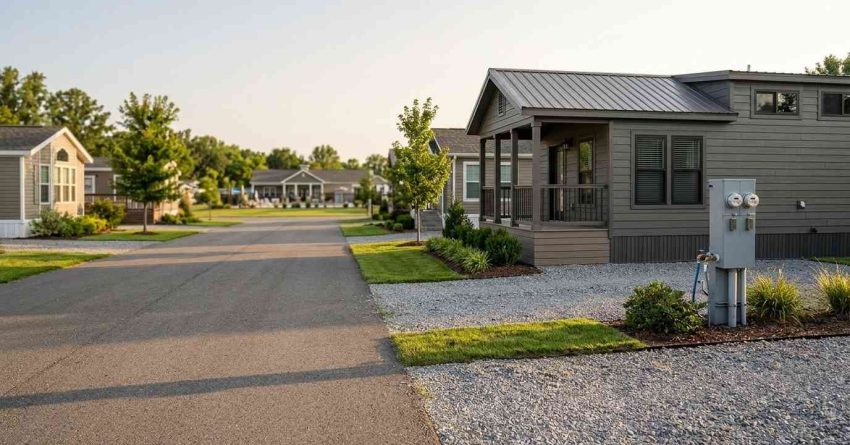
Park model lot rent in the USA typically ranges from $300 to $1,000 per month, depending on location, community type, and included amenities. In high-demand areas like Florida, Arizona, and coastal regions, monthly lot rent can climb above $1,200, while rural and inland communities often fall between $300 and $500.
Understanding lot rent is one of the most important financial decisions a park model owner faces. Without a clear picture of what you are paying for and why costs vary, budgeting becomes guesswork.
This guide covers average lot rent costs by region, the factors that drive pricing, what lot rent typically includes, and the additional expenses every park model owner should plan for.
What Is Park Model Lot Rent?
Park model lot rent is the monthly fee a homeowner pays to lease the land where their park model home sits. Unlike traditional homeownership, park model residents own their structure but rent the ground beneath it from a community operator or private landowner.
This arrangement is common across RV parks, manufactured home communities, and resort-style developments throughout the USA. The lease agreement defines what the monthly payment covers, how rent can be adjusted, and the rules governing the property.
What Does Lot Rent Cover?
Lot rent typically covers the right to occupy a designated lot within a community. Most agreements also include basic infrastructure access such as water, sewer connections, and trash removal. Some communities bundle additional services like lawn care for common areas, road maintenance, and security into the monthly fee.
What is included varies significantly from one community to the next. A resort-style community with a pool, clubhouse, and organized activities will charge more than a simple rural park with utility hookups only.
How Lot Rent Differs from Traditional Rent
Traditional rent pays for both the structure and the land. Park model lot rent pays only for the land. The homeowner is responsible for the structure itself, including all interior and exterior maintenance, repairs, and improvements. This distinction matters because it shifts a significant portion of ongoing costs directly to the owner rather than the landlord.
Understanding lot rent starts with knowing how park model homes work as a housing category — our park model homes guide covers ownership structure, placement options, and what makes these homes different from traditional housing.

Average Park Model Lot Rent Costs in the USA
Monthly lot rent across the USA averages between $400 and $800 for most communities, though the range is wide. According to the Manufactured Housing Institute, land-lease community costs vary substantially by state, with the highest rates concentrated in coastal and Sun Belt markets.
Lot Rent by Region
Regional pricing reflects land values, demand, and the density of park model communities in each area.
- Southeast (Florida, Georgia, South Carolina): $500–$1,200/month. Florida retirement and resort communities drive the upper end of this range.
- Southwest (Arizona, Nevada, New Mexico): $400–$900/month. Snowbird communities in Arizona are among the most in-demand in the country.
- Pacific Coast (California, Oregon, Washington): $600–$1,500/month. Land scarcity and high property values push lot rent significantly higher.
- Midwest (Ohio, Indiana, Michigan, Wisconsin): $300–$550/month. Lower land costs and less seasonal demand keep rates more affordable.
- Mountain West (Colorado, Utah, Idaho): $400–$750/month. Proximity to recreation areas and growing demand are pushing rates upward.
- Northeast (New York, Pennsylvania, New England): $450–$900/month. Seasonal communities dominate this region, with year-round parks commanding premium rates.
Seasonal vs. Year-Round Community Rates
Seasonal communities, which operate only during warmer months, often charge lower monthly rates but may require annual contracts that spread costs across the full year. Year-round communities typically charge higher monthly rates but offer more stable lease terms and consistent access to amenities. Owners who plan to use their park model as a primary residence should prioritize year-round communities and factor the higher monthly cost into their long-term budget.
Lot rent is just one part of the total financial picture — the full park model home costs breakdown covers purchase price, setup fees, and ongoing expenses that every buyer should review before committing.
Factors That Affect Park Model Lot Rent
Several variables determine what a community charges each month. Understanding these factors helps owners compare communities accurately and negotiate lease terms with confidence.
Location and Land Value
Land value is the single largest driver of lot rent pricing. Communities located near beaches, lakes, golf courses, national parks, or major retirement destinations charge significantly more than inland or rural parks. State-level property taxes and zoning regulations also influence what operators charge to cover their own costs.
Community Amenities and Services
A community with a heated pool, fitness center, clubhouse, organized social events, gated entry, and on-site management will charge more than a basic park with utility hookups and gravel roads. Owners should evaluate which amenities they will actually use before paying a premium for features that do not add value to their lifestyle.
Location, amenities, and lease structure all shape what you pay each month, and these same factors influence the broader economics of tiny home living costs that park model owners navigate year-round.
Lease Terms and Community Type
Month-to-month leases typically carry higher monthly rates than annual or multi-year agreements. Some communities offer discounts for long-term commitments. Community type also matters: resort-style developments, age-restricted communities (55+), and RV-hybrid parks each operate under different pricing models and regulatory frameworks.

What Is Typically Included in Lot Rent?
The specific inclusions in a lot rent agreement depend entirely on the community. However, most standard agreements cover a predictable set of services and access rights.
Utilities, Maintenance, and Common Area Access
Most lot rent agreements include:
- Water and sewer connection access
- Trash and recycling pickup
- Common area maintenance (roads, landscaping, shared spaces)
- Basic security or gated entry (in many communities)
Electricity and natural gas are almost always metered separately and billed directly to the resident. Internet and cable services are typically the resident’s responsibility as well, though some communities offer bundled packages.
Our guide to community amenity inclusions explains exactly what residents can expect from water hookups and trash service to pool access and clubhouse use.
Additional Costs Beyond Lot Rent
Lot rent covers the land and shared infrastructure. Everything related to the home itself falls on the owner. These additional costs are often underestimated by first-time park model buyers.
Maintenance, Repairs, and Property Upkeep
Park model homes require the same categories of maintenance as any residential structure, including roofing, plumbing, electrical systems, HVAC, appliances, and exterior upkeep. Because the owner bears full responsibility for the structure, these costs are ongoing and unpredictable.
Common annual maintenance expenses for park model owners include:
- HVAC servicing: $150–$500 per year for routine maintenance
- Plumbing inspections and minor repairs: $100–$400 annually
- Exterior maintenance (siding, skirting, decking): $200–$800 depending on condition
- Appliance repairs or replacements: Variable, typically $200–$1,500 per incident
- Roof inspections and minor repairs: $150–$600 annually
Keeping a park model in good condition requires budgeting for repairs and upkeep beyond what lot rent covers — home maintenance services from skilled professionals help owners protect their investment and avoid costly emergency fixes.
How to Evaluate Whether Lot Rent Is Worth It
Lot rent is a recurring cost that never builds equity. Unlike a mortgage payment, monthly lot rent does not reduce a debt or increase ownership stake in the land. This is the most important financial reality for prospective park model buyers to understand before committing to a community.
Comparing Total Cost of Ownership
To evaluate whether lot rent is worth it, compare the total monthly cost of park model living against the alternatives. A park model with $600/month lot rent, $150/month in utilities, and $100/month in average maintenance costs totals approximately $850/month in recurring expenses, not counting the original purchase price.
That figure compares favorably to apartment rents in many markets and to the full cost of traditional homeownership when property taxes, HOA fees, insurance, and maintenance are included. The trade-off is the absence of land equity and the risk of rent increases over time.
Our cost comparison guide walks through mortgage payments, property taxes, HOA fees, and maintenance to give you a complete picture of how park model living stacks up financially.
As lot rent costs become clearer, many park model owners turn their attention to the ongoing upkeep their home requires — handyman repair services provide a practical, cost-effective way to handle routine maintenance and minor repairs without overpaying for specialized contractors.

Park Model Home Maintenance and Upkeep Costs
Beyond lot rent, the long-term cost of owning a park model depends heavily on how well the home is maintained. Deferred maintenance compounds quickly in smaller structures where systems are closely integrated and minor issues can escalate into major repairs.
Plumbing issues are among the most common and costly maintenance surprises for park model owners, and understanding plumbing repair costs in advance helps residents budget accurately and respond quickly when problems arise.
Climate control is a significant ongoing expense for park model residents, and knowing typical HVAC maintenance costs helps owners plan seasonal service, avoid system failures, and keep energy bills under control.
Owners who budget proactively for maintenance, build a relationship with reliable service professionals, and address small problems before they grow will consistently spend less over time than those who react only when something breaks. A realistic annual maintenance budget for a well-maintained park model falls between $1,200 and $3,000, depending on the home’s age, condition, and climate.
Conclusion
Park model lot rent costs range widely across the USA, shaped by location, community type, amenities, and lease structure. Understanding what lot rent covers, what it does not, and how it fits into the total cost of ownership gives buyers and current residents the clarity they need to make sound financial decisions.
Maintenance and repair costs add a meaningful layer to the monthly budget that lot rent alone does not capture. Planning for these expenses from the start protects the home’s value and prevents costly surprises.
At Mr. Local Services, our network of skilled professionals helps park model owners stay ahead of maintenance needs with reliable, transparent service across plumbing, HVAC, handyman repairs, and more — keeping your home in top condition year-round.
Frequently Asked Questions
What is the average lot rent for a park model home in the USA?
The average lot rent for a park model home in the USA ranges from $400 to $800 per month. Costs vary significantly by region, with coastal and Sun Belt markets often exceeding $1,000 per month.
Is lot rent included in a park model home purchase price?
No, lot rent is not included in the purchase price of a park model home. The purchase price covers the structure only. Lot rent is a separate, ongoing monthly payment made to the community or landowner.
Can park model lot rent be increased by the community operator?
Yes, most lot rent agreements allow the community operator to increase rent, typically with advance written notice ranging from 30 to 90 days. The specific rules depend on the lease agreement and state regulations governing land-lease communities.
What happens if I stop paying lot rent on my park model?
Failure to pay lot rent can result in eviction from the community. Because the owner holds title to the home but not the land, the community operator has legal grounds to require removal of the structure if rent obligations are not met.
Does lot rent cover electricity and gas for my park model?
In most communities, electricity and gas are metered separately and billed directly to the resident. Lot rent typically covers water, sewer, and trash service, but utility inclusions vary by community and should be confirmed in the lease agreement.
Is lot rent tax deductible for park model owners?
Lot rent is generally not tax deductible for primary residence owners. However, if the park model is used as a rental property or for business purposes, a portion of lot rent may be deductible. Consult a qualified tax professional for guidance specific to your situation.
How does lot rent compare to HOA fees in traditional communities?
Lot rent and HOA fees serve similar functions but differ in scope. HOA fees typically cover shared amenity maintenance in communities where residents own their land. Lot rent covers both land use and shared services, making it a broader recurring cost that replaces both land ownership and HOA obligations in a single monthly payment.