A prefab home is any home that is partially or fully built in a factory before being transported and assembled on a permanent site. The term covers a wide range of housing types — from modular homes built in sections to manufactured homes delivered on a steel chassis to container homes converted from shipping units. What they share is that most of the construction happens off-site, under controlled conditions, before the home ever reaches the land it will sit on.
Understanding the differences between prefab categories matters now because each type carries its own financing rules, zoning requirements, and long-term maintenance needs.
This guide explains every major prefab home category, what sets each one apart, what buyers can expect to spend, and what ongoing upkeep looks like for each type.
What Makes a Home “Prefab”?
Prefab is short for prefabricated, which simply means built before placement. A prefab home is constructed — fully or in large part — at a manufacturing facility, then shipped to a prepared site where it is set on a foundation or chassis and finished. The degree of factory completion varies by type. Some prefab homes arrive nearly finished. Others arrive as panels or kits that still require significant on-site assembly.
The defining characteristic is not the size, style, or price of the home. It is the location where the primary construction takes place. If the walls, floors, roof sections, or entire modules are built in a controlled factory environment rather than framed stick-by-stick on the lot, the home qualifies as prefab.
How Prefab Homes Are Built
The factory construction process begins with design approval and material sourcing. Workers build wall panels, floor systems, and roof trusses on assembly lines using the same materials found in site-built homes — wood framing, insulation, drywall, plumbing rough-ins, and electrical wiring. Quality control inspections happen at multiple stages before any section leaves the facility.
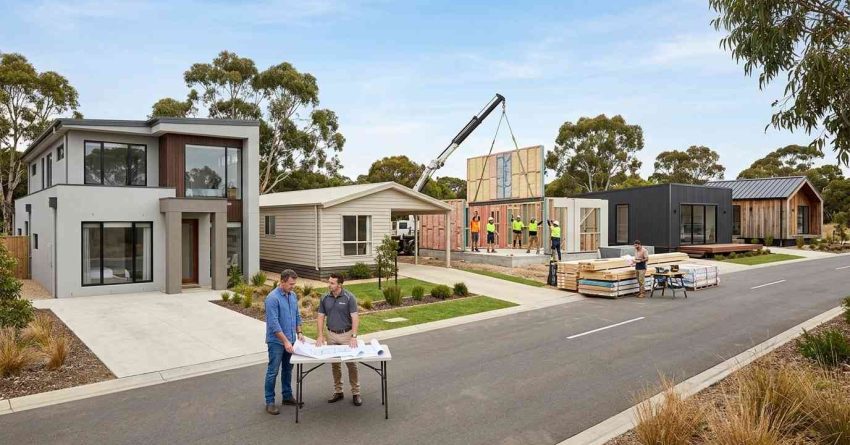
Once complete, the sections or panels are loaded onto flatbed trucks and transported to the prepared site. A crane lifts the modules or panels into position. A local crew then connects utilities, seals joints, installs finish materials, and completes any remaining interior work. The entire process — from factory to move-in — typically takes less time than traditional construction because weather delays and material shortages affect the factory far less than an open job site.
Prefab vs. Traditional Site-Built Homes
A site-built home is framed, insulated, drywalled, and finished entirely on the lot where it will stand. Every stage of construction is exposed to weather, scheduling delays, and on-site labor coordination. Prefab construction removes most of that variability by moving the primary build phase indoors.
The result is often faster timelines, more consistent quality control, and reduced material waste. The trade-off is less flexibility for custom design changes once production begins, and the need for a prepared site — including foundation work, utility connections, and access roads — before delivery.
Modular Homes
A modular home is a prefab home built in three-dimensional sections, called modules, inside a climate-controlled factory. Each module is a complete room or group of rooms — with framing, insulation, wiring, plumbing, and interior finishes already installed. The modules are transported to the site and stacked or joined by a crane, then connected to a permanent foundation.
Modular homes are built to the same local and state building codes as site-built homes. They are inspected at the factory and again on-site after assembly. Once complete, a modular home is legally and structurally identical to a traditionally built home. It can be financed with a conventional mortgage, appraised like any other residential property, and resold on the open market.
How Modular Construction Works
The factory builds each module to the buyer’s approved floor plan. Modules typically arrive 80–90% complete. On-site crews set the modules on a prepared foundation — crawl space, basement, or slab — using a crane. Workers then connect the modules, seal the marriage walls, install exterior siding and roofing at the seams, and complete interior finish work. The process from factory delivery to move-in typically takes four to eight weeks, depending on the complexity of the floor plan and the site conditions.
Who Modular Homes Are Best For
Modular construction suits buyers who want a permanent, traditionally financed home with faster delivery than site-built construction allows. It works well for primary residences, vacation homes, and accessory dwelling units on existing properties. Buyers who need a highly customized floor plan should confirm design options with the manufacturer early, since changes become costly once production begins.
Manufactured Homes
A manufactured home is a prefab home built entirely in a factory on a permanent steel chassis, then transported to a site in one or more sections. Unlike modular homes, manufactured homes are built to a federal standard — the HUD Code — rather than local building codes. The HUD Code governs construction, design, strength, energy efficiency, fire resistance, and installation.
Manufactured homes were previously called mobile homes, though the term is now outdated. Homes built before June 15, 1976 — the date the HUD Code took effect — are technically mobile homes. Homes built after that date are manufactured homes, regardless of whether they are ever moved.
HUD Standards and What They Mean for Buyers
The HUD Code sets minimum requirements for structural integrity, thermal performance, plumbing, electrical systems, and fire safety. Every manufactured home leaves the factory with a red HUD certification label affixed to the exterior of each section. This label confirms the home was inspected and meets federal standards. Buyers should verify that the label is present and undamaged before purchase, as its absence can complicate financing and resale.
Single-Wide, Double-Wide, and Triple-Wide Options
Manufactured homes are categorized by width. A single-wide unit is one section, typically 14 to 18 feet wide and 52 to 80 feet long. A double-wide consists of two sections joined on-site, creating a home 24 to 36 feet wide. Triple-wide units add a third section for larger floor plans. Double-wide and triple-wide homes are the most common choice for families seeking more living space, and they are generally more stable and energy efficient than single-wide units due to their reduced exterior wall-to-floor-area ratio.
Panelized Homes
A panelized home is built from flat wall, floor, and roof panels manufactured in a factory and assembled on-site. Unlike modular construction, panelized homes do not arrive as three-dimensional rooms. They arrive as flat components that a local crew assembles on a prepared foundation, similar to traditional framing — but faster, because the panels are pre-cut, pre-insulated, and sometimes pre-wired.
Panelized construction reduces on-site framing time significantly. Because the panels are built to precise measurements in a controlled environment, waste is lower and fit is tighter than hand-framed construction. The finished home is indistinguishable from a site-built home and is subject to the same local building codes.
Structural Insulated Panels (SIPs) vs. Stick-Built Panels
Panelized homes use one of two main panel types. Structural Insulated Panels, known as SIPs, consist of a rigid foam insulation core bonded between two structural facing boards — typically oriented strand board. SIPs provide superior insulation values and structural strength compared to standard framing, and they reduce air infiltration significantly. Stick-built panels use traditional wood framing assembled in the factory rather than on-site, offering the same construction method as a site-built home but with factory precision and speed. SIPs cost more upfront but typically reduce heating and cooling costs over the life of the home.
Interior finishing work — including drywall installation and ceiling work — is completed after the panels are set on-site. Our drywall installation services explains what this finishing phase involves for homeowners coordinating post-panel interior work.
Pre-Cut and Kit Homes
A pre-cut home, also called a kit home, is a prefab home in which all structural components are cut to size at a factory and shipped to the site as a package. The buyer or a local contractor assembles the components on-site following detailed manufacturer instructions. Pre-cut homes require more on-site labor than modular or panelized construction, but they offer greater design flexibility and are often less expensive to purchase upfront.
Kit homes are popular for cabins, vacation homes, and owner-builder projects where the buyer wants to participate in construction. They are also common for timber frame and log home styles, where the aesthetic value of the structural material is part of the design intent.
What Comes in a Home Kit
A standard home kit includes pre-cut framing lumber or timber, wall panels or logs, roofing materials, windows, exterior doors, and detailed assembly drawings. Some kits include interior components such as stairs, cabinetry, and finish trim. What is not typically included: foundation work, utility connections, insulation, drywall, flooring, plumbing fixtures, and electrical wiring. Buyers should review the kit specification sheet carefully to understand exactly what is and is not provided before comparing kit prices to other prefab options.
Tiny Homes and Small Prefab Structures
A prefab tiny home is a small dwelling — typically under 400 square feet — built in a factory and delivered to a site. Tiny homes fall into two main categories: those built on a permanent foundation and those built on a trailer chassis, known as tiny homes on wheels (THOW). Foundation-based tiny homes are treated similarly to modular or panelized construction and are subject to local building codes. THOW units are typically classified as recreational vehicles and regulated differently.
Prefab tiny homes have grown into a recognized housing category of their own — if you are exploring tiny home options for your property, our service covers the full range of structures, sizes, and setup considerations available through Mr. Local Services.
Prefab Tiny Homes vs. Traditionally Built Tiny Homes
A traditionally built tiny home is framed on-site the same way a full-size house is, just at a smaller scale. A prefab tiny home is built in a factory and delivered complete or nearly complete. The prefab version typically costs less per square foot to build, arrives faster, and benefits from factory quality control. The trade-off is less flexibility for site-specific customization. Both types face the same zoning and placement challenges — many municipalities restrict where tiny homes can be placed, particularly THOW units.
Container Homes
A container home is a residential structure built from repurposed intermodal shipping containers — the steel boxes used to transport goods by ship, rail, and truck. Standard containers come in 20-foot and 40-foot lengths. Builders cut openings for windows and doors, add insulation, install interior finishes, and connect utilities to create livable spaces. Multiple containers can be stacked or arranged side by side to create larger floor plans.
Container homes appeal to buyers interested in sustainable construction, industrial aesthetics, and durable structures. Steel containers are inherently strong and resistant to wind and seismic forces, though they require significant modification to become comfortable, energy-efficient homes.
Structural Modifications and Livability Considerations
The steel walls of a shipping container conduct heat and cold efficiently — which is a problem for livability. Proper insulation is the most critical modification in any container home build. Spray foam insulation applied to the interior walls is the most common solution, though it reduces interior square footage. Exterior cladding is another option that preserves interior space. Ventilation must also be addressed carefully, as sealed steel structures can trap moisture and create condensation problems without adequate airflow.
Container homes require custom window and door cutouts that must be properly framed and sealed to prevent moisture intrusion and maintain structural integrity. Our window installation services covers what professional window fitting and weatherproofing involves for non-standard openings like those found in container construction.
Barndominiums and Hybrid Prefab Structures
A barndominium is a residential structure built inside or alongside a metal agricultural building — typically a steel post-frame structure. The exterior shell is a prefabricated metal building kit. The interior is finished as a living space, often combining an open-plan home with a workshop, garage, or storage area. Barndominiums are popular in rural areas where large lots, agricultural zoning, and lower land costs make the format practical.
When a Barndominium Qualifies as Prefab
A barndominium qualifies as prefab when its primary structural shell — the steel frame and metal panel exterior — is manufactured off-site and delivered as a kit. The prefab component is the building envelope. Interior framing, insulation, drywall, plumbing, and electrical work are completed on-site by local contractors. Some barndominium builders offer more complete packages that include interior wall framing and rough-in work, moving them closer to panelized construction. Buyers should confirm exactly what the kit includes and what requires separate contractor coordination before committing to a package.
Costs, Timelines, and What to Expect
Prefab home costs vary significantly by type, size, location, and finish level. The factory-built portion of the home is only one part of the total cost. Land, site preparation, foundation work, utility connections, permits, and on-site finishing all add to the final price. Buyers who compare only the base price of a prefab home to the base price of a site-built home often underestimate the total project cost.
Prefab homeowners who want to expand, upgrade, or reconfigure their living space after move-in will find that many renovation options are available — our home remodeling services covers what interior and exterior improvement projects typically involve, from planning through completion.
Average Cost Ranges by Prefab Category
Modular homes typically cost between $100 and $200 per square foot for the factory-built modules, with total project costs — including land, foundation, and site work — ranging from $150,000 to $400,000 or more depending on size and location. Manufactured homes are the most affordable prefab option, with new single-wide units starting around $50,000 to $80,000 and double-wide units ranging from $100,000 to $160,000 before site costs. Panelized and kit homes vary widely based on the level of completion included in the package. Container homes typically cost $150 to $350 per square foot when fully finished, depending on the number of containers and the complexity of modifications. Barndominiums generally range from $30 to $60 per square foot for the shell, with total finished costs reaching $100 to $200 per square foot.
How Long Does It Take to Build a Prefab Home?
Modular homes typically move from contract to move-in in four to seven months, with factory production taking six to fourteen weeks and on-site assembly and finishing taking four to eight additional weeks. Manufactured homes can be delivered and set up in as little as two to three months from order. Panelized and kit homes depend heavily on the speed of the local contractor completing on-site assembly and finishing — typically five to ten months total. Container and barndominium projects vary widely based on the complexity of modifications and the availability of local contractors.
Zoning, Permits, and Land Requirements
Not all land accepts all prefab home types. Zoning laws, deed restrictions, and local ordinances determine what can be placed on a given parcel. Manufactured homes face the most restrictions — many residential zones prohibit them entirely or require placement in designated manufactured home communities. Modular homes, once assembled, are treated as site-built homes and are generally permitted wherever traditional construction is allowed.
Land preparation is required before any prefab home can be placed. This includes clearing and grading the site, installing a foundation or anchoring system, connecting to water and sewer or installing a well and septic system, and running electrical service to the site. These costs are separate from the home purchase price and must be budgeted independently.
Land preparation and site grading are often required before a prefab home can be placed, and ongoing exterior upkeep contributes to both curb appeal and property compliance — our landscape planning services explains what site preparation and yard maintenance services include for homeowners managing new or existing properties.
Common Zoning Restrictions for Prefab Homes
Manufactured homes are subject to the most restrictive zoning rules. Many municipalities require them to be placed in designated manufactured home parks or communities. Some jurisdictions allow manufactured homes on private land only if they meet specific appearance standards — such as a minimum roof pitch, exterior siding requirements, or a permanent foundation. Modular homes face far fewer restrictions and are typically permitted in any residential zone. Tiny homes on wheels are often classified as recreational vehicles and may not be permitted as permanent residences in most zones. Buyers should verify zoning compliance with the local planning department before purchasing land or a home.
Maintenance, Repairs, and Long-Term Upkeep
Prefab homes require the same ongoing maintenance as any residential property. The systems inside a modular or manufactured home — HVAC, plumbing, electrical, roofing — function identically to those in a site-built home and need the same periodic inspection and servicing. What differs is the construction method, not the maintenance requirements.
Manufactured homes have a few unique maintenance considerations. The steel chassis underneath a manufactured home should be inspected periodically for rust and structural integrity. Skirting — the material that encloses the space between the home and the ground — should be checked for damage and gaps that allow pests or moisture to enter. Tie-down anchors, which secure the home to the ground in wind events, should be inspected and retightened as needed.
Prefab homes rely on the same mechanical systems as site-built homes, and climate control is no exception — our HVAC maintenance services explains what routine inspections, filter replacements, and system tune-ups involve for homeowners managing any property type.
Water supply and drainage systems in prefab homes require the same professional attention as any residential property — our plumbing repair services outlines what inspections, leak repairs, and pipe maintenance typically include.
Roof integrity is one of the most critical maintenance priorities for prefab homeowners, particularly in regions with heavy precipitation or temperature swings — our roofing inspection services details what a professional roof assessment covers and when repairs or replacement become necessary.
Which Home Services Prefab Owners Need Most
The most common service needs for prefab homeowners align closely with those of any residential property owner. HVAC servicing, plumbing inspections, roof assessments, and electrical checks are the core recurring needs. Beyond those, exterior maintenance — including siding, skirting, and foundation inspection — is particularly important for manufactured homes, where the undercarriage and perimeter are more exposed than in a site-built home.
Electrical systems in prefab and manufactured homes must meet local code requirements, and periodic inspections protect both safety and property value — our electrical inspection services explains what a licensed electrician checks during a residential inspection.
Many routine maintenance tasks in prefab homes — from door adjustments to minor drywall repairs — fall within the scope of general handyman work, and our handyman repair services outlines the full range of tasks a skilled technician can handle in a single visit.
Conclusion
Prefab homes span a wide range of types — modular, manufactured, panelized, kit, tiny, container, and barndominium — each with distinct construction methods, costs, and regulatory requirements. Understanding which category fits your situation is the first step toward a sound housing decision.
Each prefab type carries its own financing path, zoning considerations, and long-term maintenance profile. Knowing those differences upfront helps buyers avoid costly surprises and plan realistically for total project costs and timelines.
At Mr. Local Services, we support prefab homeowners with the full range of maintenance, repair, and improvement services their properties need — from HVAC and plumbing to roofing and electrical — so your home stays safe, functional, and well-maintained year-round.
Frequently Asked Questions
What is the difference between a prefab and a modular home?
A modular home is one specific type of prefab home. “Prefab” is the broader category that includes modular, manufactured, panelized, kit, tiny, container, and barndominium homes. All modular homes are prefab, but not all prefab homes are modular.
Are prefab homes considered real property?
Modular homes placed on a permanent foundation are classified as real property, the same as site-built homes. Manufactured homes may be classified as personal property unless they are permanently affixed to land the owner also owns, in which case they can be converted to real property through a title elimination process.
Can you get a mortgage on a prefab home?
Modular homes qualify for conventional mortgages, FHA loans, VA loans, and USDA loans, the same as site-built homes. Manufactured homes have more limited financing options — FHA Title I and Title II loans, VA loans, and chattel loans are the most common. Kit and container homes may require construction loans or portfolio lending depending on the lender.
How long do prefab homes last?
A well-maintained modular home lasts as long as a site-built home — 50 years or more. Manufactured homes built to HUD Code standards are designed for a lifespan of 30 to 55 years with proper maintenance. Container homes, if properly insulated and sealed, can last 25 years or more. All prefab types benefit significantly from regular maintenance and timely repairs.
Are prefab homes energy efficient?
Modular and panelized homes built with SIPs or advanced framing techniques can be highly energy efficient — often exceeding the performance of standard site-built construction. Manufactured homes built to current HUD Code standards include minimum insulation and window requirements, though older units may be less efficient. Energy performance varies significantly by manufacturer, design, and the insulation and window specifications chosen.
Do prefab homes require the same maintenance as site-built homes?
Yes. The HVAC, plumbing, electrical, and roofing systems in a prefab home require the same routine maintenance as any residential property. Manufactured homes have a few additional maintenance items specific to their construction — chassis inspection, skirting maintenance, and tie-down anchor checks — that site-built homes do not require.
What is the cheapest type of prefab home?
Manufactured homes are consistently the most affordable prefab option. New single-wide manufactured homes start around $50,000 to $80,000 before site costs. Kit homes can also be cost-effective for buyers who contribute their own labor. Modular homes cost more upfront but are comparable to site-built homes in total project cost and offer stronger long-term resale value.