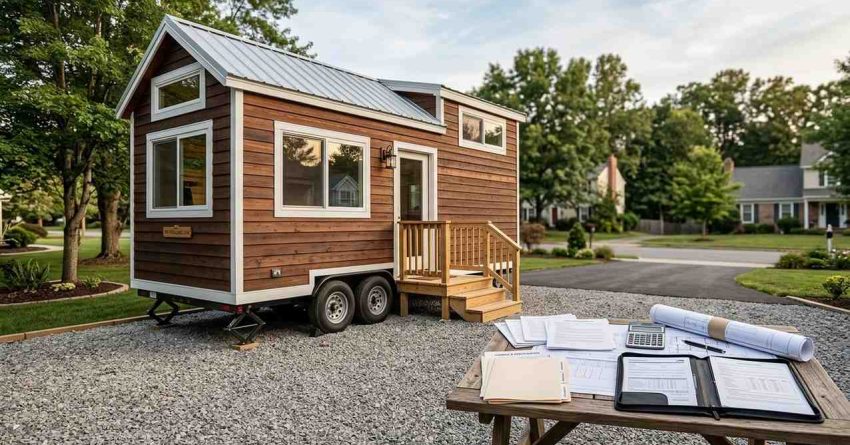
Financing a tiny home on wheels starts with one critical step: a THOW financing consultation. This meeting connects you with a lender or financial advisor who evaluates your situation, explains your loan options, and helps you understand what it takes to fund a THOW build or purchase in the USA.
Most buyers underestimate how different THOW financing is from a standard mortgage — and that gap in knowledge costs time and money.
This guide explains what a THOW financing consultation covers, which loan products apply, what lenders look for, and how to choose the right path forward.
What Is a THOW Financing Consultation?
A THOW financing consultation is a structured meeting between a prospective tiny home on wheels buyer and a lender, financial advisor, or THOW specialist. The goal is to assess your financial profile, clarify how lenders classify your THOW, and identify which loan products you qualify for.
Unlike a traditional home loan consultation, a THOW consultation must account for how the structure is built, titled, and used. Lenders do not treat all tiny homes the same way. A THOW on a trailer may qualify as an RV, a personal property loan, or a specialty loan depending on certification, construction, and intended use.
For anyone exploring tiny home options, our complete tiny home options resource covers everything from design and construction to placement and legal requirements so you can approach your consultation fully informed.
Why Homeowners and Builders Request This Consultation
Most people request a THOW financing consultation because standard mortgage lenders decline their application outright. THOWs do not qualify for conventional mortgages because they are not permanently affixed to land. This leaves buyers navigating a narrower set of loan products that require specific knowledge to access.
A consultation helps you avoid wasted applications, understand realistic loan terms, and enter the process with accurate expectations about rates, down payments, and approval timelines.
What to Expect During a THOW Financing Consultation
A typical THOW financing consultation runs 30 to 60 minutes and covers four core areas: your financial profile, your THOW’s classification, available loan products, and next steps. The lender or advisor will ask detailed questions about your income, credit history, the THOW builder, and how you plan to use and park the structure.
Expect the conversation to move quickly. Lenders who specialize in THOW financing are familiar with the classification challenges and will guide you through the distinctions that affect your eligibility.
Documents and Information You Should Prepare
Arriving prepared shortens the consultation and improves your outcome. Bring or have ready:
- Proof of income (pay stubs, tax returns, or bank statements for the past two years)
- Credit report or authorization for a soft credit pull
- Builder quote or contract for the THOW
- RVIA certification status of the builder or unit (if applicable)
- Intended parking or land arrangement documentation
- Any existing debt obligations or monthly financial commitments
The more specific your documentation, the faster a lender can match you to the right product.
How Lenders Evaluate THOW Loan Applications
Lenders evaluate THOW applications differently than standard home loans. The primary factors are your credit score, debt-to-income ratio, the THOW’s classification (RV-certified vs. non-certified), and the loan amount relative to the unit’s appraised or quoted value.
Because THOWs depreciate differently than real property, lenders apply stricter loan-to-value ratios and shorter repayment terms than you would see on a traditional mortgage. Most THOW loans carry terms between 7 and 20 years depending on the product type.
THOW Financing Options Explained
There is no single loan product designed exclusively for tiny homes on wheels. Instead, buyers access financing through three primary channels, each with distinct eligibility requirements and trade-offs.
Understanding which loan product fits your situation is easier when you have a clear overview of all available paths — our THOW financing guide breaks down every option, eligibility requirement, and lender type in one place.
Personal Loans for Tiny Homes on Wheels
Personal loans are the most accessible THOW financing option and require no collateral. They are unsecured, meaning the lender evaluates your creditworthiness rather than the value of the THOW itself. Loan amounts typically range from $5,000 to $100,000, with repayment terms of 2 to 7 years.
The trade-off is interest rate. Personal loan rates for THOW financing generally run higher than secured loan products, particularly for borrowers with credit scores below 700. This option works best for buyers purchasing smaller, lower-cost units or those who want to avoid the certification requirements tied to RV loans.
RV Loans and THOW Eligibility
RV loans offer longer repayment terms and lower interest rates than personal loans, but they come with a critical requirement: the THOW must be built by an RVIA-certified builder and carry a certification label. Lenders use this certification to confirm the unit meets safety and construction standards that justify the secured loan structure.
If your THOW builder is RVIA-certified, an RV loan is often the most cost-effective financing path. Terms typically range from 10 to 20 years, and loan amounts can reach $150,000 or more depending on the lender and your financial profile.
Specialty Lenders and Alternative Financing
A growing number of specialty lenders focus specifically on tiny home and alternative housing financing. These lenders understand THOW classification nuances and offer products that fall between personal loans and RV loans in terms of structure and cost.
Alternative options include home equity loans or lines of credit (if you own traditional property), builder financing programs offered directly through THOW manufacturers, and credit union products designed for non-traditional housing. Each carries different eligibility criteria and should be evaluated during your consultation.
Key Factors That Affect Your THOW Loan Approval
Lenders assess several variables simultaneously when reviewing a THOW application. Understanding these factors before your consultation helps you identify gaps and address them proactively.
Lenders treat THOW classification as a core approval factor, and understanding how your build is categorized starts with knowing what defines a tiny home — our tiny home classification resource explains the key distinctions that affect how lenders assess your application.
Credit Score, Income, and THOW Classification
Credit score thresholds vary by loan type. Personal loan lenders typically require a minimum score of 580 to 640, while RV loan lenders generally look for 680 or higher. Your debt-to-income ratio should fall below 43% for most products, though specialty lenders may allow slightly higher ratios.
THOW classification is equally important. A unit without RVIA certification limits your loan options to personal loans or specialty products. A certified unit opens access to RV loan programs with better terms. Your consultation should clarify exactly how your THOW will be classified before you apply anywhere.
How to Choose the Right Financing Path for Your THOW
The right financing path depends on three variables: your credit profile, your THOW’s certification status, and your total budget including interest costs over the loan term. A lender who specializes in THOW financing can model multiple scenarios during your consultation so you can compare total cost of ownership across products.
Do not commit to a loan product before running those numbers. A lower monthly payment on a longer-term loan often costs significantly more over time than a higher payment on a shorter-term product.
Choosing between loan types requires comparing terms, rates, and lender requirements side by side — our financing path comparison walks through each option so you can match the right product to your specific THOW build and financial profile.
Questions to Ask Before You Commit
Use your consultation to get clear answers to these questions:
- What loan products do I qualify for based on my current credit and income?
- Does my THOW builder’s certification status affect my eligibility?
- What is the total cost of this loan over its full term, not just the monthly payment?
- Are there prepayment penalties if I pay off the loan early?
- What happens to the loan if I relocate the THOW to a different state?
- Does this lender have experience with THOW financing specifically?
A lender who cannot answer these questions clearly is not the right fit for a THOW transaction.
Conclusion
A THOW financing consultation gives you the information you need to move from interest to action. It clarifies your loan options, surfaces potential approval barriers, and helps you compare products before committing to any single path.
Preparation is what separates a productive consultation from a frustrating one. Knowing your credit profile, your builder’s certification status, and your total budget puts you in control of the conversation.
At Mr. Local Services, we connect homeowners and property managers with trusted professionals across every stage of property ownership — including the resources and guidance you need to make confident decisions about tiny home financing and beyond.
Frequently Asked Questions
What is the purpose of a THOW financing consultation?
A THOW financing consultation helps you understand which loan products apply to your tiny home on wheels, what lenders require for approval, and how to prepare your application. It is the most efficient way to identify your financing options before submitting any formal loan request.
Can I get a mortgage for a tiny home on wheels?
No. THOWs do not qualify for conventional mortgages because they are not permanently affixed to land. Buyers typically access financing through personal loans, RV loans, or specialty lenders depending on the unit’s certification status and the buyer’s financial profile.
What credit score do I need to finance a THOW?
Credit score requirements vary by loan type. Personal loans for THOWs generally require a minimum score of 580 to 640. RV loans typically require 680 or higher. Specialty lenders may have different thresholds, which your consultation will clarify.
Does my THOW need to be RVIA-certified to get financing?
RVIA certification is required for RV loan eligibility but not for personal loans or some specialty products. Certification significantly expands your loan options and typically results in better interest rates and longer repayment terms.
How long does a THOW financing consultation take?
Most THOW financing consultations run between 30 and 60 minutes. The length depends on the complexity of your financial profile, the number of loan products being evaluated, and how prepared you are with documentation when the meeting begins.
What documents should I bring to a THOW financing consultation?
Bring proof of income, two years of tax returns or bank statements, your credit report, a builder quote or contract, and documentation of your intended parking arrangement. RVIA certification information for your builder is also useful if available.
Are there financing options for THOWs without RVIA certification?
Yes. Non-certified THOWs can be financed through personal loans, credit union products, home equity loans (if you own traditional property), or builder financing programs. These options typically carry shorter terms and higher rates than RV loans but remain accessible to most buyers.