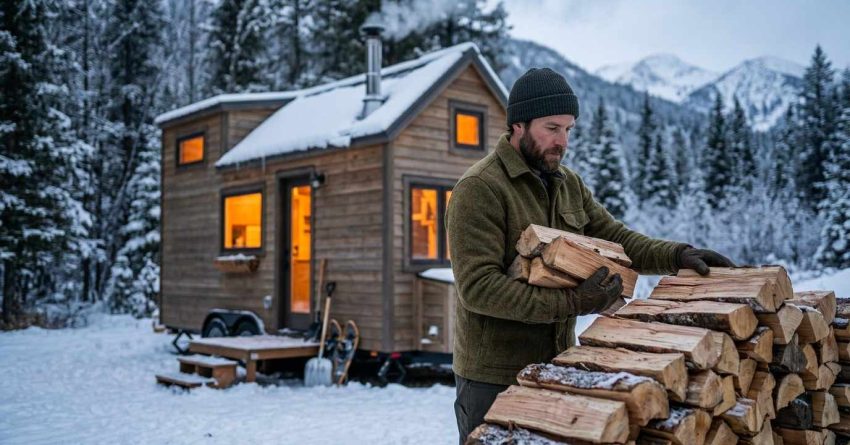
Living in a tiny home on wheels through winter is entirely achievable — but it requires deliberate preparation across insulation, heating, plumbing, and safety systems before temperatures drop. THOWs present unique cold-weather challenges that standard homes do not, and understanding those differences is the first step toward a warm, functional winter season.
Cold weather exposes every weak point in a THOW’s envelope, from underbelly gaps to drafty window seals, and the consequences of skipping preparation range from frozen pipes to dangerous heating failures.
This guide covers the core strategies THOW owners use to winterize effectively — from insulation choices and heating systems to plumbing protection, exterior maintenance, and site setup.
What Makes Cold Weather Challenging for THOWs
THOWs are built for mobility, which means their construction prioritizes light weight over the thermal mass that keeps standard homes warm. Walls are thinner, cavities are shallower, and the entire structure sits exposed to ambient air on all sides — including underneath.
Thermal Mass Limitations in Tiny Structures
Standard homes retain heat through dense materials like concrete, brick, and thick framing. THOWs use lightweight framing and thin wall assemblies that lose heat quickly when outdoor temperatures fall. A THOW can drop several degrees in temperature within an hour of a heating system shutting off, which means heating systems must run more consistently and insulation must work harder to compensate.
Moisture and Condensation Risks
Cold weather amplifies condensation problems in small, tightly occupied spaces. Cooking, breathing, and showering all release moisture into a compact interior, and when that moisture contacts cold wall surfaces, it condenses. Without a proper vapor barrier and adequate ventilation, condensation accumulates inside wall cavities, leading to mold growth and structural deterioration over a single winter season.
Insulation Strategies for THOW Cold Weather Living
Insulation is the single most impactful investment a THOW owner can make before winter. The goal is achieving the highest possible R-value within the shallow wall and roof cavities available in a typical THOW build.
Wall and Roof Insulation Options
Closed-cell spray foam is the most effective insulation choice for THOWs because it delivers a high R-value per inch (approximately R-6 to R-7 per inch), acts as its own vapor barrier, and adheres directly to framing without gaps. Rigid foam board is a cost-effective alternative for flat surfaces, while mineral wool offers fire resistance and moisture tolerance for roof applications. Insulation decisions in a THOW start with understanding how tiny home construction differs from standard builds — our tiny home insulation resource covers the full range of materials, R-value targets, and installation approaches suited to compact mobile structures.
Skirting and Underbelly Protection
The underbelly of a THOW is one of the most overlooked heat-loss points in cold weather. Cold air circulates freely beneath the trailer frame, chilling the floor and any plumbing running through the underbelly. Rigid foam skirting panels installed around the trailer perimeter create a dead air space that significantly reduces floor heat loss. Underbelly wrap — a foil-faced insulation blanket applied directly to the trailer underside — adds a second layer of protection for pipe runs and holding tanks.
Heating Systems Best Suited for Tiny Homes on Wheels
No single heating system is right for every THOW. The best choice depends on your climate zone, available utilities at your site, and how well your THOW is insulated.
Propane and Mini-Split Options
Propane wall heaters and vented propane furnaces are the most common heating solutions for off-grid THOW living because they operate independently of electrical hookups. A properly sized propane heater can maintain comfortable temperatures in a well-insulated THOW even in sub-freezing conditions. Mini-split heat pumps are an increasingly popular alternative for THOWs with reliable electrical hookups — they are highly efficient down to approximately 5°F with modern cold-climate models and provide both heating and cooling from a single system. Choosing the right heat source for a THOW requires matching BTU output to your specific floor plan and climate zone — explore the complete breakdown of THOW heating options to compare propane, mini-split, and radiant systems side by side.
Radiant Floor Heating in THOWs
Hydronic radiant floor heating — where warm water circulates through tubing embedded in or beneath the floor — provides even, comfortable heat without the drafts associated with forced-air systems. While more complex to install, radiant systems are well-suited to THOWs with solid subfloor construction and a reliable heat source such as a propane boiler or on-demand water heater. Electric radiant mats are a simpler alternative for targeted zones like bathrooms.
Plumbing Winterization for THOWs
Frozen pipes are the most common and most damaging cold-weather problem THOW owners face. Water expands when it freezes, and even a single freeze event can split PEX tubing, crack fittings, or damage a pump.
Pipe Freeze Prevention Methods
Heat tape — also called heat cable — is the standard solution for exposed pipe runs in a THOW. Self-regulating heat tape adjusts its output based on ambient temperature, drawing more power as temperatures drop and less as they rise, which prevents both freezing and overheating. Pipe insulation foam sleeves add a secondary layer of protection and reduce the load on heat tape. All pipe runs in the underbelly and any sections passing through unheated cavities should be treated before the first freeze.
Water Hose and Tank Management
The freshwater hose connecting a THOW to a campground or RV hookup is vulnerable to freezing at any point along its length. A heated drinking water hose — rated for continuous use in freezing temperatures — eliminates this risk and is a straightforward upgrade. Freshwater and gray water tanks mounted in exposed underbelly locations benefit from tank heater pads, which are thermostatically controlled electric pads that activate only when tank temperatures approach freezing. Winterizing your water system is one of the most time-sensitive tasks before temperatures drop, and the steps vary depending on whether your THOW uses a city hookup or a self-contained tank — the THOW plumbing guide walks through both setups with step-by-step freeze prevention methods.
Roof and Exterior Maintenance Before Winter
The THOW exterior takes the full force of winter weather — snow load, ice, wind-driven rain, and freeze-thaw cycling. Addressing vulnerabilities before winter prevents water infiltration that can cause interior damage and structural deterioration.
Roof Inspection and Sealing
THOW roofs use lap sealant at all seams, vents, and penetrations, and that sealant degrades with UV exposure and temperature cycling. A pre-winter inspection should check every seam and penetration point for cracking, lifting, or gaps. Self-leveling lap sealant compatible with your roof membrane — EPDM, TPO, or metal — should be applied to any compromised areas and allowed to cure fully before rain or snow arrives. A professional roof inspection before winter can catch failing lap sealant, lifted seams, or micro-cracks that allow water infiltration once freeze-thaw cycles begin — roof inspection services from a qualified technician are the most reliable way to confirm your THOW roof is sealed and ready for cold weather.
Window and Door Weatherproofing
Windows and doors are the primary air infiltration points in a THOW. Weatherstripping compresses and loses its seal over time, and door thresholds can develop gaps as the trailer frame flexes during travel. Replacing worn weatherstripping, applying door sweep seals, and adding window insulation film to single-pane windows are all low-cost interventions that meaningfully reduce heat loss. Drafty windows are one of the leading causes of heat loss in a THOW during winter, and addressing gaps with proper weatherstripping or window film is a straightforward fix — window sealing services can handle the full perimeter assessment and installation if DIY weatherproofing has not held up in previous seasons.
Preparing Your THOW Site for Winter Conditions
Where you park your THOW in winter matters as much as how you insulate it. Site selection and setup directly affect heat retention, structural stability, and access during severe weather.
Leveling, Anchoring, and Wind Protection
A THOW parked on an unlevel surface places stress on the frame and can cause doors and windows to bind, creating air gaps. Stabilizer jacks should be deployed at all four corners and checked regularly as ground conditions change with freezing and thawing. Wind is a significant heat-loss factor for THOWs — positioning the THOW with its narrowest profile facing the prevailing wind direction, or using natural windbreaks like tree lines or structures, reduces convective heat loss substantially. Selecting and preparing the right winter site for your THOW affects everything from heat retention to structural stability during high winds — the THOW site setup section covers leveling requirements, anchoring methods, and windbreak positioning for cold-climate parking.
Safety Considerations for Cold Weather THOW Living
Heating a small, tightly sealed space introduces safety risks that require active management. Carbon monoxide and fire are the two most serious hazards in a winter THOW.
Carbon Monoxide, Fire Risk, and Emergency Planning
Any combustion heating source — propane, wood, or kerosene — produces carbon monoxide, and in a small enclosed space, CO can reach dangerous concentrations quickly. A UL-listed combination CO and smoke detector should be installed at sleeping level and tested monthly. Propane systems require annual inspection of connections, regulators, and burner assemblies to ensure complete combustion. A fire extinguisher rated for Class B (flammable liquid) and Class C (electrical) fires should be mounted within reach of the cooking and heating areas. Propane and combustion heating systems in a THOW require annual servicing to ensure safe operation, especially in tightly sealed winter configurations — scheduling an HVAC safety inspection before the heating season is the most effective way to prevent carbon monoxide buildup and combustion-related hazards.
Conclusion
THOW cold weather living is a practical reality for thousands of owners across the USA, and the difference between a comfortable winter and a damaging one comes down to preparation. Insulation, heating system selection, plumbing winterization, and exterior sealing are the four pillars that determine how well a THOW performs when temperatures drop.
Addressing each system before winter arrives — rather than reactively during a cold snap — protects both the structure and the people living in it. Site selection and safety planning complete the picture, turning a vulnerable mobile structure into a resilient year-round home.
At Mr. Local Services, our team connects THOW owners with skilled professionals across roofing, HVAC, plumbing, and window services — so every system in your tiny home is ready before the first freeze hits.
Frequently Asked Questions
What is the minimum R-value recommended for a THOW in cold climates?
Most cold-climate THOW builders target R-24 or higher in walls and R-30 or higher in the roof. Closed-cell spray foam is the most efficient way to reach these values within the shallow cavities typical of THOW construction.
Can a mini-split heat pump work in a THOW during freezing temperatures?
Yes. Modern cold-climate mini-split heat pumps operate efficiently down to approximately 5°F and provide reliable heating for well-insulated THOWs with electrical hookups. They also function as air conditioners in warmer months, making them a versatile year-round system.
How do I prevent my THOW pipes from freezing overnight?
Self-regulating heat tape applied to all exposed pipe runs, combined with pipe insulation foam sleeves and a heated freshwater hose at the hookup connection, provides reliable freeze protection in most cold-weather conditions. Keeping interior temperatures above 55°F also protects pipes running through interior walls.
Is skirting necessary if my THOW has underbelly insulation?
Skirting adds a significant layer of protection even when underbelly insulation is present. It creates a dead air space that buffers the underbelly from wind chill, which is the primary driver of heat loss and pipe freezing in exposed trailer undercarriages.
How often should I inspect my THOW roof sealant before winter?
Lap sealant should be inspected at least once per year, ideally in early fall before winter weather arrives. Any sealant showing cracking, lifting, or discoloration should be removed and replaced with fresh sealant compatible with your specific roof membrane type.