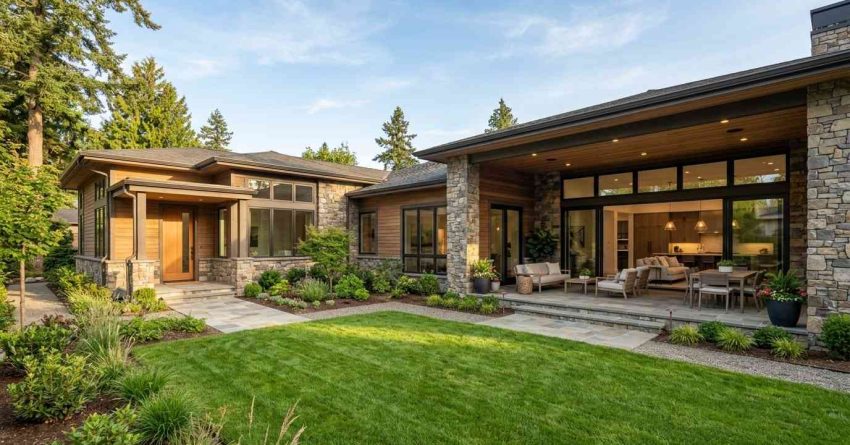
A custom home built for multigenerational living is a single-family residence designed from the ground up to house two or more generations of the same family under one roof — with dedicated private spaces, shared common areas, and structural features that support both independence and connection. Unlike a standard home adapted after the fact, a multigenerational custom home integrates separate entrances, private suites, accessible layouts, and shared systems into the original build plan, making it a practical long-term housing solution for families caring for aging parents, supporting adult children, or simply choosing to live together.
Multigenerational households are growing across the USA, driven by rising housing costs, aging demographics, and shifting family priorities that make shared living both financially and practically appealing.
This guide covers what defines a multigenerational custom home, the key design features to plan for, how it compares to a spec home, what the building process involves, and how to manage ongoing maintenance across shared systems.
What Is a Custom Home for Multigenerational Living?
A custom home for multigenerational living is a residence designed specifically to accommodate multiple generations of a family — typically parents, adult children, and grandparents — within a single property. The defining characteristic is intentional design: every structural and spatial decision is made with the needs of multiple households in mind, rather than retrofitting a standard floor plan after the fact.
These homes differ from standard single-family builds in meaningful ways. A conventional home is designed for one household unit with shared access to all spaces. A multigenerational custom home creates defined zones — private living quarters for each generation, separate or semi-separate entrances, and shared spaces that are deliberately sized and positioned to serve everyone comfortably.
How It Differs from a Standard Single-Family Home
The core difference is zoning within the structure. A multigenerational custom home typically includes at least one fully private suite — sometimes called an in-law suite, accessory dwelling unit (ADU), or secondary suite — with its own bedroom, bathroom, and often a kitchenette or full kitchen. This suite functions as a self-contained living space while remaining connected to the main home through interior access points.
Standard single-family homes rarely include this level of internal separation. Adding it after construction is possible but expensive and often limited by the existing floor plan. Building it into a custom home from the start is more cost-effective and produces a better functional result.
Who Builds Multigenerational Custom Homes?
Families building multigenerational custom homes typically fall into one of three situations. The first is aging parents moving in with adult children, where accessibility features and proximity to caregivers are the primary drivers. The second is adult children returning home or remaining home longer, where privacy and independence within a shared property matter most. The third is extended family choosing to pool resources and share a property for financial and lifestyle reasons. Each situation shapes different design priorities, which is why custom construction — rather than buying an existing home — gives families the flexibility to build exactly what they need.
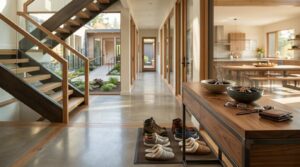
Key Design Features of a Multigenerational Custom Home
The design of a multigenerational custom home is what separates it from a standard build. Specific features must be planned at the architectural stage to function correctly — they cannot be fully replicated through renovation alone.
Private Suites and Separate Entrances
Every multigenerational home needs at least one fully private living suite. This suite should include a bedroom, a full bathroom, and ideally a kitchenette or small kitchen to allow the occupants to live independently when they choose. A separate exterior entrance — either a dedicated door or a private entry from a garage or covered walkway — is equally important. It allows each generation to come and go without moving through the other household’s living space, which preserves privacy and reduces daily friction.
Interior connecting doors between the suite and the main home are standard in well-designed multigenerational builds. These doors allow easy access when families want to spend time together while maintaining the option for complete separation.
Shared Common Areas and Kitchen Configurations
Shared spaces in a multigenerational home require more square footage and more deliberate layout than in a standard home. A larger main kitchen, an expanded dining area, and a living room sized for the full household are common design priorities. Some families opt for two full kitchens — one in the main home and one in the private suite — while others prefer a single shared kitchen with a secondary prep area or kitchenette in the suite.
The right configuration depends on how much the family intends to share daily routines. Families who eat together regularly may prioritize one large, well-equipped kitchen. Families who value more independent daily schedules often benefit from two separate cooking spaces.
Accessibility and Safety Features
Multigenerational homes built to accommodate aging parents or family members with mobility limitations need accessibility features designed into the structure from the start. Wide doorways (minimum 36 inches) allow wheelchair and walker access. Zero-threshold showers eliminate trip hazards. Grab bars in bathrooms, non-slip flooring, and single-floor living arrangements for the private suite reduce fall risk significantly.
Ramps instead of steps at exterior entrances, lever-style door handles, and rocker light switches are low-cost additions at the build stage that become expensive retrofits later. Planning these features into the original design is both more affordable and more effective than adding them after construction.
For families exploring dedicated aging-in-place modifications and safety upgrades, our aging-in-place home modifications guide covers the full range of structural and equipment options available for multigenerational properties.
Custom Home vs Spec Home — Which Works Better for Multigenerational Living?
A spec home — built by a developer to a standard floor plan and sold as-is — rarely meets the specific needs of a multigenerational family without significant modification. The floor plans are designed for a single household, private suites are uncommon, and accessibility features are typically absent unless the buyer requests and pays for upgrades.
A custom home, by contrast, is designed entirely around the family’s requirements. Every room, entrance, suite, and shared space is planned before construction begins. This produces a home that functions correctly for multigenerational living from day one, without the cost and disruption of post-purchase renovation.
Investment and Long-Term Value Comparison
Custom homes for multigenerational living carry higher upfront construction costs than comparable spec homes. The additional square footage, private suite construction, separate entrances, and accessibility features all add to the build budget. However, the long-term financial picture is more favorable than the initial cost comparison suggests.
Multigenerational households reduce housing costs by consolidating what would otherwise be two or three separate housing expenses into one shared property. The private suite can also function as a rental unit if family circumstances change, generating income that offsets mortgage costs. Before choosing a multigenerational custom home, understanding how it compares financially to a spec home is essential — our custom home investment analysis breaks down long-term costs, resale value, and ROI across both building paths.
Planning and Building Your Multigenerational Custom Home
Building a multigenerational custom home requires more planning than a standard residential build. The complexity of the design — multiple living zones, shared systems, accessibility requirements — means that the pre-construction phase is where most of the critical decisions are made.
Working with Architects and Contractors
The architect is the most important professional in the early planning stage. A residential architect with experience in multigenerational or ADU design will understand how to create functional separation within a single structure, how to size shared systems correctly, and how to meet local building codes for secondary suites and separate entrances.
The general contractor manages the build itself and coordinates all subcontractors — framing, plumbing, electrical, HVAC, and finishing trades. Selecting a contractor with experience in custom residential construction, rather than production home building, is important. Custom builds require more coordination, more design flexibility, and more communication between the contractor and the family throughout the process.
Permits, Zoning, and Local Regulations in the USA
Multigenerational homes — particularly those with separate suites, ADUs, or secondary kitchens — are subject to local zoning regulations that vary significantly across the USA. Some municipalities have specific ADU ordinances that govern the size, placement, and occupancy of secondary units. Others restrict the number of kitchens in a single-family residence or require separate utility meters for secondary suites.
Checking local zoning laws before finalizing the design is essential. A permit application for a multigenerational home with a secondary suite will typically require architectural drawings, a site plan, and documentation that the design meets local building codes for egress, fire separation, and utility connections. Working with an architect familiar with local regulations reduces the risk of design changes late in the process. For a detailed breakdown of ADU regulations and permit requirements by state, our ADU zoning laws guide covers the key rules families need to understand before breaking ground.
Maintenance and Home Services for Multigenerational Homes
A multigenerational custom home is a larger, more complex property than a standard single-family home. The maintenance demands are proportionally higher, and the shared systems that serve multiple households require more frequent inspection and servicing.
Shared Systems — HVAC, Plumbing, and Electrical
HVAC, plumbing, and electrical systems in a multigenerational home serve a higher daily load than in a standard residence. A home housing two or three generations uses more hot water, more electricity, and more heating and cooling capacity than a single-household home of similar size. Systems must be sized correctly at the build stage to handle this load without premature wear.
Zoned HVAC systems — which allow different areas of the home to be heated or cooled independently — are particularly well-suited to multigenerational homes. They allow each household to control the temperature in their living area without affecting the rest of the home, and they reduce energy waste in unoccupied zones. Plumbing systems with separate water heaters for the main home and the private suite are another common configuration that reduces conflict over hot water availability.
Multigenerational homes carry higher ongoing maintenance demands than standard builds, and the spec home comparison guide explores how service costs and upkeep responsibilities differ between custom and pre-built options.
Ongoing Upkeep and Property Management
Routine maintenance in a multigenerational home covers a wider range of systems and surfaces than in a standard residence. Roofing, exterior painting, window and door maintenance, landscaping, and pest control all apply to a larger footprint. Shared systems — HVAC filters, water heaters, electrical panels — need regular inspection to ensure they are performing correctly under higher-than-average load.
Establishing a clear maintenance schedule and assigning responsibility for shared systems between the households living in the home prevents deferred maintenance from becoming costly repairs. Many multigenerational families benefit from working with a home services provider that can handle multiple service categories — from HVAC and plumbing to cleaning and landscaping — under a single point of contact, reducing the coordination burden on the family.
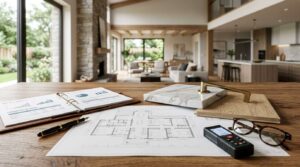
Costs and Financing a Custom Multigenerational Home
The cost to build a custom multigenerational home in the USA varies widely based on location, size, materials, and the complexity of the design. A home with a fully separate suite, dual kitchens, and accessibility features will cost more per square foot than a standard custom build, but the additional cost is offset by the functional value the design delivers.
Financing options for custom multigenerational homes include construction-to-permanent loans, which cover the build phase and convert to a standard mortgage upon completion. Some lenders offer specific products for ADU construction or multigenerational home builds. FHA and VA loans can be used for multigenerational properties in some configurations, though eligibility depends on the specific design and how the secondary suite is classified.
Families should work with a lender experienced in custom home construction financing early in the planning process — before the design is finalized — to understand what loan products are available and how the design choices affect financing eligibility. For a full breakdown of financing paths available to multigenerational families, our custom home financing guide covers loan types, eligibility requirements, and lender selection criteria in detail.
Is a Custom Multigenerational Home Right for Your Family?
A custom multigenerational home is the right choice for families who have a clear, long-term need for shared living and want a property designed to support it from the ground up. It is a significant financial and logistical commitment — the planning process is longer, the build is more complex, and the upfront cost is higher than buying an existing home.
The families who benefit most are those with specific design requirements that an existing home cannot meet: aging parents who need accessibility features, adult children who need genuine privacy within a shared property, or extended families who want to share costs without sacrificing independence. For these families, a custom build produces a home that works correctly for their situation rather than one they are constantly adapting.
Families who are less certain about the long-term arrangement, or who need to move quickly, may find that purchasing an existing home with an in-law suite or adding an ADU to a current property is a more practical starting point. The right decision depends on the family’s timeline, budget, and how confident they are that multigenerational living is a permanent rather than temporary arrangement.
Mr. Local Services connects multigenerational homeowners and property managers with skilled professionals across every service category — from HVAC and plumbing to accessibility modifications and ongoing maintenance — making it easier to keep a complex property running smoothly year-round.
Conclusion
A custom home for multigenerational living brings together intentional design, shared systems, and private spaces to create a property that genuinely works for multiple generations under one roof.
Planning the right features — private suites, accessible layouts, correctly sized HVAC and plumbing — from the build stage produces a home that functions better and costs less to maintain than a retrofitted standard property.
When you are ready to plan, build, or maintain a multigenerational custom home, Mr. Local Services connects you with experienced professionals across every service category to keep your property safe, functional, and well-maintained for every generation living in it.
Frequently Asked Questions
What makes a home “custom” for multigenerational living?
A custom multigenerational home is designed from the ground up to house multiple generations, with private suites, separate entrances, shared common areas, and accessibility features built into the original floor plan rather than added later.
How much does it cost to build a custom multigenerational home in the USA?
Costs vary widely by location, size, and design complexity. Homes with fully separate suites, dual kitchens, and accessibility features typically cost more per square foot than standard custom builds, but the added functionality reduces the need for expensive post-construction modifications.
Do I need a special permit to build a multigenerational home with a secondary suite?
Yes, in most US jurisdictions. Secondary suites and ADUs are subject to local zoning regulations that govern size, placement, and occupancy. Permit requirements vary by municipality, so checking local rules before finalizing the design is essential.
What is the difference between an in-law suite and an ADU in a multigenerational home?
An in-law suite is a private living space within the main home structure, typically connected by an interior door. An ADU (accessory dwelling unit) is a more fully separate unit — sometimes detached — with its own entrance, kitchen, and utilities. Both serve multigenerational living but differ in the degree of separation they provide.
What HVAC system works best for a multigenerational home?
Zoned HVAC systems are the most practical choice for multigenerational homes. They allow each living area to be heated or cooled independently, reduce energy waste in unoccupied zones, and prevent conflicts between households with different temperature preferences.
Can a multigenerational custom home be financed with a standard mortgage?
Yes, in most cases. Construction-to-permanent loans are the most common financing path for custom builds. Some lenders offer specific products for ADU construction. FHA and VA loans may also apply depending on the design and how the secondary suite is classified.
How do families manage maintenance responsibilities in a multigenerational home?
Most multigenerational families establish a shared maintenance schedule that assigns responsibility for specific systems and areas to each household. Working with a home services provider that covers multiple categories — HVAC, plumbing, cleaning, landscaping — under one contact simplifies coordination and reduces the risk of deferred maintenance.