Sewage in a tiny house works by collecting wastewater from toilets, sinks, and showers, then routing it through one of three systems: a composting toilet, an RV-style holding tank, or a connection to a septic or municipal sewer line. The choice depends on whether the home is stationary or mobile, local code requirements, and how much water the household uses each day.
How Sewage Works in a Tiny House
A tiny house sewage system separates waste into two streams. Blackwater comes from toilets. Graywater comes from sinks, showers, and washing machines. Each stream needs proper handling to meet health codes and protect the surrounding land.
Stationary tiny houses usually connect to a septic tank or a city sewer line, exactly like a traditional home. Mobile tiny houses rely on holding tanks emptied at dump stations, similar to an RV. Composting toilets offer a third path, processing solid waste on-site without water.
Local plumbing codes determine which option is legal. Many counties in the USA require a permitted septic system for permanent installations.
The Three Main Sewage System Options
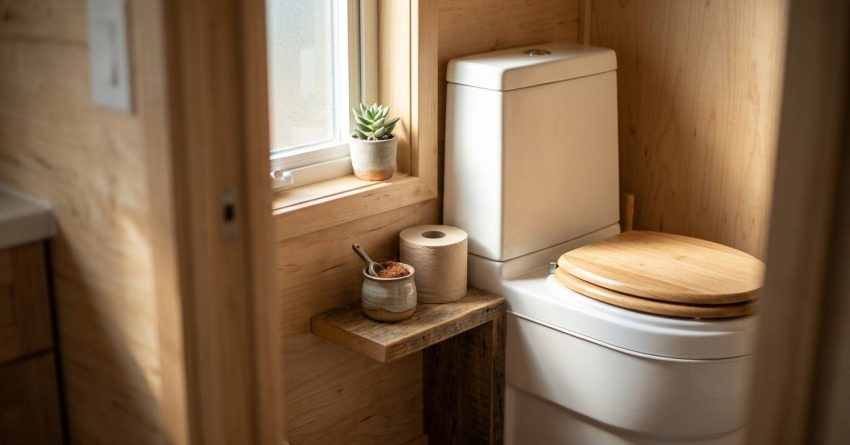
Tiny house owners typically choose between three setups. Composting toilets break down solid waste through aerobic decomposition, requiring no water and producing usable compost over time. Holding tanks store blackwater and graywater separately, then get pumped at an RV dump station every one to three weeks. Septic or sewer connections function like a standard home, sending waste through underground pipes to a tank or municipal line.
Each option has different installation costs, maintenance routines, and legal requirements. The right choice depends on mobility, location, and local code compliance.
Blackwater vs. Graywater Explained
Blackwater contains human waste and must be treated before release. It cannot be dumped on open ground anywhere in the USA. Graywater, by contrast, can sometimes be filtered and reused for irrigation, depending on state law.
Keeping the two streams separate gives owners more flexibility. Many tiny house builds route graywater to a small filtration bed or French drain, while blackwater goes to a sealed tank or composting unit.
The full tiny house plumbing setup ties these streams together with vent stacks, traps, and shutoff valves.
Choosing the Right Sewage System for Your Tiny House
The decision starts with one question: will the tiny house stay in one place or travel? Permanent builds on a foundation usually need a residential septic system installation, which requires soil testing, permits, and professional installation.
Mobile tiny houses on trailers work better with RV-style holding tanks. Off-grid builds in remote areas often combine composting toilets with graywater systems to avoid water and sewer infrastructure entirely.
Budget plays a major role. Composting toilets range from $900 to $2,500 upfront. Full septic installations can cost $3,500 to $10,000 depending on soil and tank size. Holding tank setups fall in between.
Stationary vs. Mobile Tiny House Setups
A stationary tiny house benefits from a sewer or septic line because it handles high water use without manual emptying. Cities with tiny house ordinances often require this connection.
Mobile tiny houses need flexibility. Owners typically install black and gray holding tanks under the trailer, sized between 30 and 60 gallons. These connect to standard mobile waste hookup options at campgrounds and RV parks.
Maintenance, Costs, and Common Issues
Routine maintenance keeps any sewage system running cleanly. Holding tanks need flushing and deodorizing after every dump. Composting toilets require regular emptying of the solids bin and occasional bulking agent refills.
Septic tanks need pumping every three to five years. Common problems include frozen pipes in cold climates, clogged vent stacks, and odor leaks from improperly sealed tank connections. Insulating exposed plumbing and using RV-grade hoses prevents most cold-weather failures.
Conclusion
Sewage in a tiny house relies on composting, holding tanks, or septic connections, with the right choice shaped by mobility, codes, and water use. Each system separates blackwater and graywater for safe, code-compliant handling.
Planning the system early prevents costly retrofits and keeps your property safe, legal, and comfortable for long-term living across changing seasons and locations.
Need expert help with tiny house sewage planning, septic installation, or plumbing repairs? Call Mr. Local Services today for trusted, end-to-end home service solutions.
Frequently Asked Questions
Do tiny houses need a septic tank?
Only stationary tiny houses on a foundation usually need a septic tank. Mobile tiny houses use holding tanks emptied at RV dump stations instead.
Can a tiny house connect to city sewer?
Yes. Stationary tiny houses in zoned areas can connect to municipal sewer lines, provided local building codes and permit requirements allow the connection.
How often do you empty a tiny house holding tank?
Most tiny house holding tanks need emptying every one to three weeks, depending on tank size, household size, and daily water use patterns.
Are composting toilets legal in tiny houses?
Composting toilets are legal in most USA states, but rules vary by county. Always check local health department codes before installing one permanently.
Where does graywater go in a tiny house?
Graywater typically flows into a holding tank, a filtration bed, or a permitted irrigation system, depending on local regulations and the home’s location