Commercial and specialty plumbing covers the design, installation, repair, and maintenance of water, waste, and gas systems in non-residential buildings and specialized applications where scale, code requirements, and operational demands far exceed those of standard residential plumbing.
Failing commercial plumbing systems shut down operations, trigger code violations, damage tenants and inventory, and create liability exposure that residential repairs rarely match, making informed property decisions essential for owners.
This guide covers system differences, core services, specialty applications, industry requirements, drain and waste systems, water heating, gas lines, leak management, codes, maintenance, costs, emergencies, and selecting the right provider.
What Is Commercial and Specialty Plumbing?
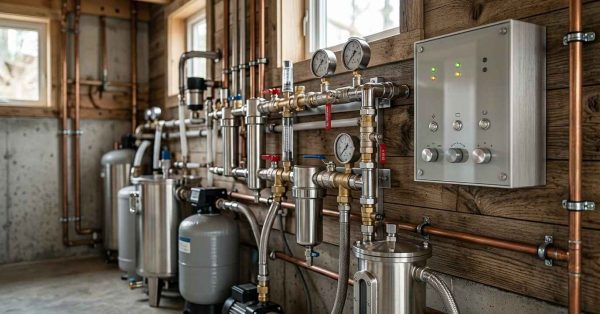
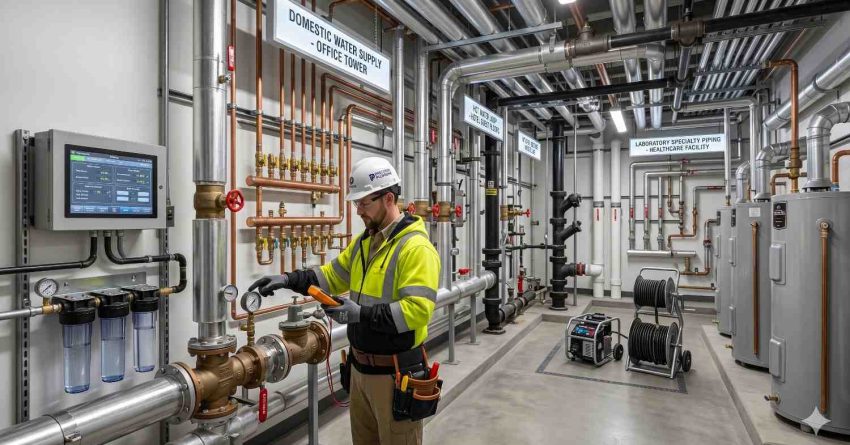
Commercial plumbing refers to the network of supply, drainage, venting, and gas piping that serves businesses, institutions, and multi-occupant buildings. It includes office complexes, retail centers, restaurants, healthcare facilities, hotels, schools, warehouses, manufacturing plants, and apartment buildings. Specialty plumbing extends this category further, covering systems with unique technical demands such as medical gas piping, laboratory waste lines, industrial process piping, fire suppression connections, and grease management.
The defining characteristic is complexity. A commercial system may serve dozens or hundreds of fixtures across multiple floors, operate under continuous demand, and combine ordinary water service with specialized subsystems. Specialty applications add further layers, such as backflow prevention assemblies, water reclamation lines, or chemical-resistant drainage. Together, these systems support the operational core of a property, and any failure quickly translates into business disruption, tenant dissatisfaction, or regulatory exposure.
Property owners, landlords, and facility managers benefit from understanding commercial plumbing as an integrated infrastructure rather than a collection of individual fixtures. Decisions about installation quality, materials, and service partnerships influence reliability for decades, which is why a clear orientation across every major subsystem matters before any specific project moves forward.
How Commercial Plumbing Differs From Residential Plumbing
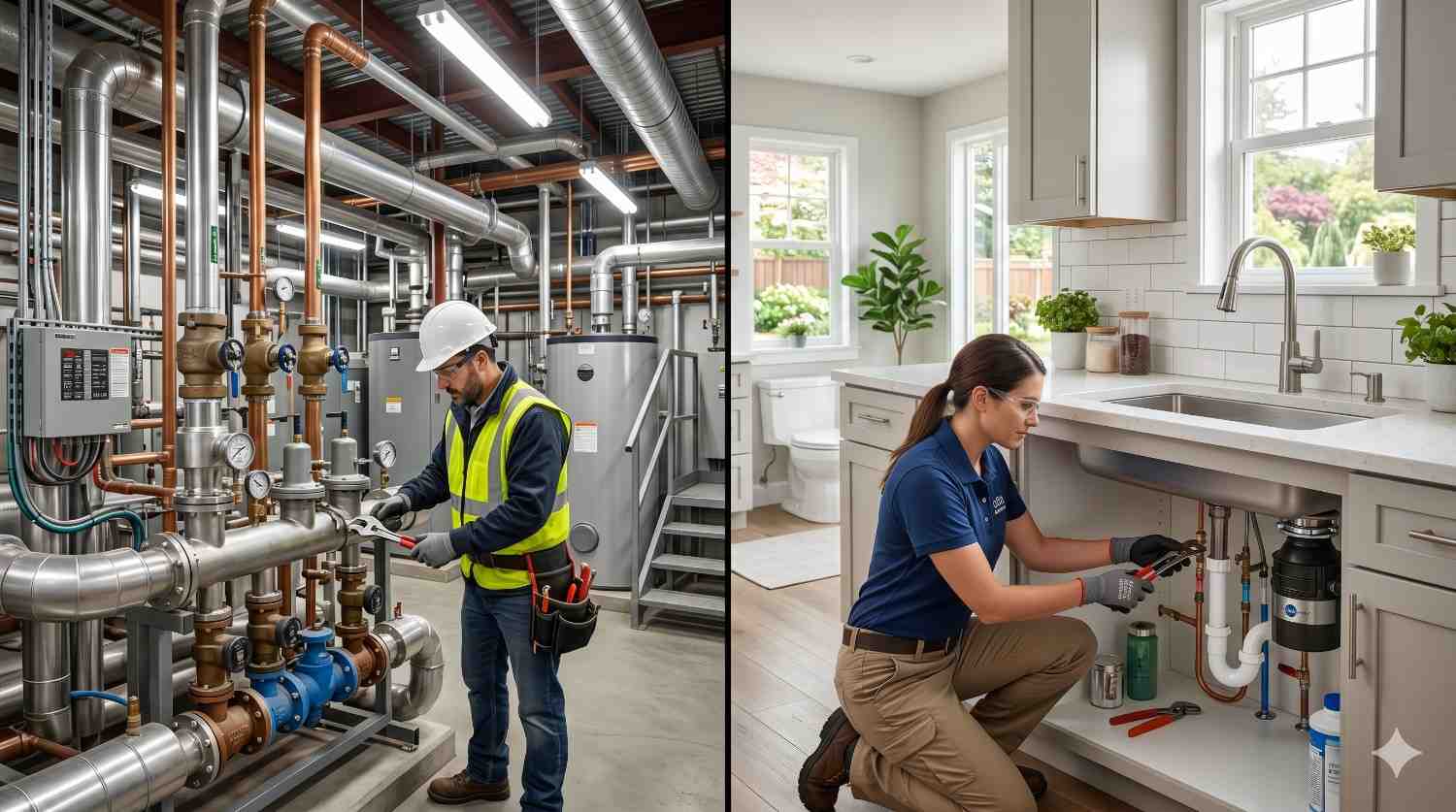
Although both share fundamental principles, commercial plumbing operates under conditions that change nearly every variable. Pipe diameters are larger, fixture counts are higher, water demand is more variable, and code requirements are stricter. Many systems include features rarely seen in homes, such as booster pumps, recirculating hot water loops, reduced-pressure-zone backflow preventers, multi-stage water heaters, and grease interceptors.
Usage patterns differ as well. A residential bathroom may serve a handful of daily uses, while a commercial restroom in a busy retail center can absorb thousands. This intensifies wear on faucets, flush valves, drain lines, and water heaters. Materials selected for commercial duty must therefore tolerate continuous operation, higher pressures, and more aggressive cleaning chemicals.
Code compliance also takes a much heavier role. Commercial work typically requires permits, plan reviews, licensed installation, and ongoing inspections. Health departments oversee restaurants and food service facilities, while specialty inspectors govern medical, industrial, and hazardous-use applications. The result is a discipline that demands experienced contractors, careful planning, and rigorous documentation at every stage.
Core Commercial Plumbing Services
Commercial plumbing service categories fall into three primary functions: installation, repair, and ongoing maintenance. Each category includes a broad range of work that varies dramatically by property type, building age, and operational requirements. Understanding these categories helps owners and property managers scope projects accurately, request meaningful estimates, and avoid costly surprises when a project moves from concept to execution.
Installation work covers new construction, tenant fit-outs, system expansions, fixture replacements, and the addition of specialty equipment. A standard installation often involves coordinated planning with general contractors, mechanical engineers, and inspectors. Sequence matters as much as workmanship: rough-in must occur at the right stage of construction, supply and waste lines must align with architectural plans, and every connection must support the long-term operating profile of the building. Property owners planning a build-out, renovation, or fixture upgrade will benefit from reviewing detailed coverage of commercial plumbing installation, where scope, sequencing, and material selection determine the long-term reliability of the entire system.
Repair work handles failures that occur in active systems, ranging from leaking fixtures and broken supply lines to failed valves, ruptured drains, or damaged gas piping. Commercial repairs frequently require fast response to limit operational disruption, and successful outcomes depend heavily on accurate diagnosis. Misidentifying a leak, replacing the wrong component, or missing a code update can turn a small problem into a recurring expense. A well-organized approach to commercial plumbing repair emphasizes targeted troubleshooting, code-compliant fixes, and clear documentation for property records and insurance.
Maintenance services tie the program together. Regular inspections, fixture servicing, drain cleaning, water heater flushing, backflow testing, and pressure checks extend the life of every component and reduce the likelihood of disruptive failures. The most successful properties treat maintenance as a planned investment rather than an optional cost, building scheduled service into operating budgets and tracking results year over year. Beyond the three primary categories, many commercial properties also require periodic specialty services such as hydro jetting, sewer camera inspections, or annual backflow certification, which often fall outside routine contracts.
Specialty Plumbing Systems and Applications
Specialty plumbing extends well beyond ordinary water and waste service. These systems are engineered for unique technical, regulatory, or safety requirements, and they typically demand certified installers, specialized materials, and dedicated testing protocols.
Common specialty systems include backflow prevention assemblies that protect public water supplies from contamination, grease interceptors that capture fats and oils before they enter municipal sewers, and medical gas piping that delivers oxygen, nitrous oxide, and other gases throughout healthcare facilities. Laboratory environments often rely on acid-resistant waste piping made from specialty polypropylene or borosilicate glass, while manufacturing operations may use process piping for steam, chemicals, compressed air, or deionized water.
Other specialty work includes fire sprinkler connections, water reclamation and greywater systems, rainwater harvesting plumbing, and sustainable systems designed to meet green building certifications. Each comes with its own engineering standards, inspection requirements, and operational risks. When these systems perform reliably, they remain invisible. When they fail, they can shut down operations, trigger regulatory penalties, or threaten occupant safety, which is why specialty plumbing belongs in the hands of contractors with proven credentials in the specific subsystem involved.
Industry-Specific Plumbing Requirements
Different industries impose distinct plumbing requirements driven by usage volume, health and safety regulations, and operational continuity. Restaurants and food service operations demand grease management systems, three-compartment sinks, hand-wash stations, hot water delivery sized for peak loads, and sanitation-grade drains. Failure in any one of these components can pause service and attract health department attention immediately.
Healthcare facilities such as hospitals, clinics, dental offices, and surgical centers operate under the most demanding standards. They require medical gas systems, sterilizer drains, laboratory plumbing, isolation room fixtures, and emergency water supplies. Hospitality properties including hotels, resorts, and conference centers must support consistent guest experiences, which means quiet, reliable systems with redundant capacity for hot water, drainage, and pressure delivery.
Industrial and manufacturing properties typically require process piping, chemical-resistant drainage, heavy-duty backflow protection, and high-capacity water service. Multi-family residential buildings such as apartment complexes and condominiums add their own complexity, with shared risers, centralized water heating, and the constant challenge of isolating service to one unit without affecting others. Educational institutions, warehouses, automotive service centers, and laundromats each carry their own technical fingerprint.
A contractor familiar with the specific industry, building type, and regulatory framework will deliver consistently better results than a generalist working outside their typical scope, particularly when specialty subsystems or industry-specific inspections come into play.
Commercial Drain, Sewer, and Waste Management
The drainage side of a commercial system carries more risk than most owners realize. Drains and sewer lines move waste under continuous demand, frequently encountering grease, food solids, paper products, cleaning chemicals, and sediment that progressively narrow pipe interiors. A small slowdown can become a complete blockage within days, and a complete blockage in a restaurant, retail center, or apartment building can mean immediate shutdown, water damage, and customer or tenant impact.
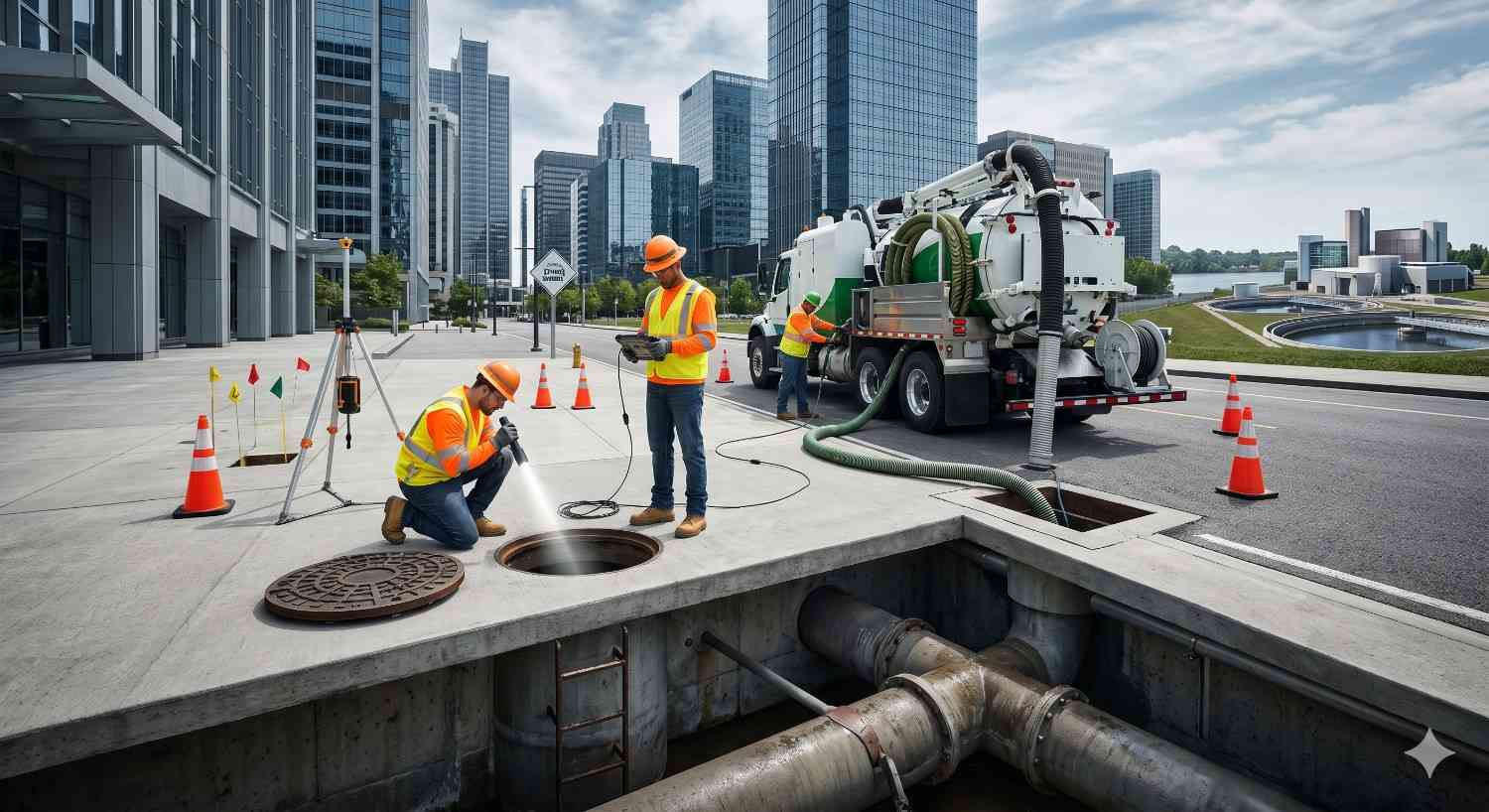
Effective management combines proactive cleaning, accurate diagnostics, and timely repair. High-volume properties benefit from regular hydro jetting, which uses pressurized water to scour pipe walls and remove buildup before it causes failures. Routine commercial drain cleaning services prevent the most common emergencies and protect both the building and the surrounding municipal system, which is especially important for grease-producing operations.
Sewer lines themselves require their own attention. Older buildings often have aging cast iron, clay, or Orangeburg lines that develop cracks, root intrusion, bellies, or full collapses. Camera inspections identify the exact location and condition of any defect, allowing repair or replacement to proceed with minimal excavation. Trenchless techniques such as pipe bursting and cured-in-place lining have transformed sewer rehabilitation, restoring full flow without tearing up parking lots, sidewalks, or landscaping. For properties showing repeated backups, slow drainage, or unexplained odors, a complete sewer evaluation should be the first step.
Commercial Water Heating Systems
Commercial water heating exists on a different scale than residential. Where a home may rely on a single tank or tankless unit, a commercial property frequently requires multiple high-capacity units operating in parallel, often with storage tanks, recirculation loops, and digital controls that maintain precise delivery temperatures across an entire building.
System options include high-output gas-fired tank heaters, condensing tankless systems, electric units, heat pump water heaters, and indirect systems tied to building boilers. The right choice depends on peak demand patterns, available fuel types, ventilation, and total daily volume. Hotels and apartment buildings often face their largest demand surges in early morning, while restaurants spike during meal preparation and cleanup. Sizing the system correctly avoids both the cost of oversized equipment and the embarrassment of running out of hot water during peak hours.
Installation, replacement, and capacity upgrades require careful coordination with gas service, venting, electrical capacity, and code requirements. A detailed approach to commercial water heater installation covers load calculations, equipment selection, and configuration of recirculation and tempering to maximize efficiency and safety. Ongoing service such as annual flushing, anode replacement, and combustion testing keeps these systems running through their expected lifespan and reduces the risk of sudden failure.
Gas Line Systems for Commercial Properties
Natural gas and propane systems power commercial cooking equipment, water heaters, boilers, rooftop HVAC units, dryers, and process equipment. Because gas piping carries combustible fuel under pressure, commercial gas work falls under some of the most stringent regulatory requirements in plumbing.
System components include service entry piping, regulators, meters, distribution mains, branch lines, shutoff valves, and connections to individual appliances. Materials may include black iron, corrugated stainless steel tubing, polyethylene for underground service, and copper in certain limited applications. Sizing must account for total connected load and the simultaneous-use factor of the appliances, while installations must support pressure testing, leak detection protocols, and inspection sign-off before being placed into service.
Routine maintenance is non-negotiable. Leaks present immediate fire and explosion risks, and even minor seepage can produce serious health effects in enclosed spaces. Property managers should establish a schedule for regular inspections, pressure testing, and prompt repair of any suspected leak. A qualified contractor experienced with commercial gas line services will handle permitting, code compliance, and coordination with the local utility, ensuring that installations and repairs meet every safety standard.
Leak Detection and Water Pressure Management
Two closely related disciplines protect the integrity of a commercial water system: leak detection and pressure management. Each focuses on a different aspect of the same fundamental question, whether the water flowing through the building is doing what it should and only what it should. In commercial environments where occupancy is high, fixtures are numerous, and water damage spreads quickly, both disciplines carry operational and financial weight.
Leaks in a commercial property rarely announce themselves. A pinhole in a copper line above a ceiling, a slow seepage in a slab, or a hidden failure in an irrigation system can waste thousands of gallons before anyone notices. By the time visible damage appears, drywall, insulation, flooring, and even structural elements may already be compromised. Modern non-invasive commercial leak detection uses acoustic listening devices, thermal imaging, tracer gas testing, and moisture meters to pinpoint problems precisely, often without opening walls or floors. Catching leaks early limits water damage, lowers utility bills, and protects building materials from prolonged exposure.
Water pressure plays its own essential role. Too little pressure starves upper floors and fixtures, frustrates tenants, and prevents fixtures from clearing properly. Excessive pressure stresses pipes, joints, and fixtures, leading to premature failure of supply lines, faucets, and water heater components. Pressure-reducing valves, booster pumps, and expansion tanks balance the system across floors and zones, and periodic water pressure diagnosis identifies imbalances before they cause damage to the building or its equipment.
Commercial Water Quality and Filtration
Water quality has direct consequences for equipment lifespan, occupant satisfaction, and operational performance. Hard water deposits scale inside heat exchangers, boilers, and water heaters, reducing efficiency and shortening service life. Sediment damages valves, fixtures, and irrigation systems. Improperly treated water introduces taste, odor, or contamination concerns that affect tenants, customers, and sensitive processes.
A well-designed water treatment system begins with testing. Understanding hardness, chlorine levels, total dissolved solids, pH, and any local contaminants of concern allows the right combination of softening, filtration, and treatment to be configured for the property. Common installations include whole-building softeners, sediment filters, carbon filtration for chlorine and taste, reverse osmosis systems for sensitive applications, and ultraviolet treatment for microbial control. Specialty environments such as healthcare facilities, food service operations, and laboratories may require purpose-built systems matched to their use case.
Maintenance keeps these systems functioning as designed. Filter cartridges, softener salt, ultraviolet bulbs, and reverse osmosis membranes all require periodic service. Skipping maintenance reduces both treatment quality and equipment life. A structured look at commercial water filtration translates equipment options and treatment strategies into clear operational decisions for property owners and managers planning upgrades or new installations.
Plumbing Codes, Permits, and Compliance
Commercial plumbing work operates inside a dense framework of codes and regulations. Federal, state, and local authorities set requirements for materials, design, installation, testing, inspection, and ongoing operation. The Uniform Plumbing Code and the International Plumbing Code form the foundation in most jurisdictions, supplemented by local amendments, health department rules, energy codes, accessibility standards, and industry-specific regulations.
Permits are mandatory for nearly all commercial work beyond minor repair. Skipping the permit process exposes owners to fines, forced corrective work, insurance complications, and liability if a failure causes injury or damage. Permitted work undergoes inspection at multiple stages, including underground, rough-in, and final completion, which confirms that materials, methods, and system performance meet code.
Backflow prevention assemblies require annual testing by certified testers. Grease interceptors must be sized, installed, and maintained according to local ordinances and reported on a defined schedule. Medical and industrial systems carry additional layers of certification. Property owners and managers benefit from working with licensed plumbing contractors who handle the entire compliance process, including permit applications, plan reviews, inspections, and the documentation required by jurisdictions, insurers, and lenders. A thorough understanding of plumbing codes and permits protects the property and the people who occupy it.
Preventive Maintenance for Commercial Properties
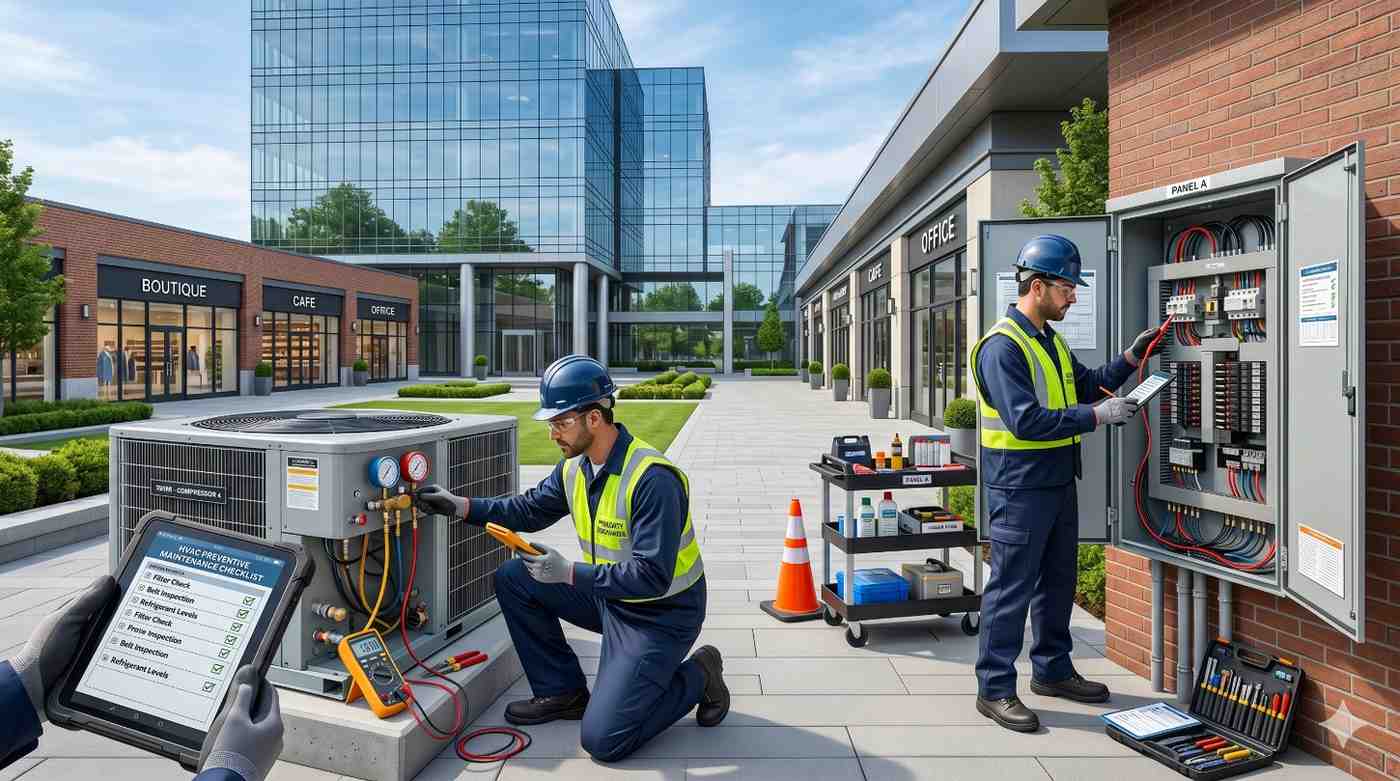
Preventive maintenance is the most cost-effective discipline in commercial plumbing. Scheduled inspections, cleaning, testing, and small repairs cost a fraction of emergency response and minimize disruption to operations. The goal is straightforward: catch issues while they are small, predictable, and easy to address.
A well-structured maintenance program covers every major system. Drains receive periodic cleaning to prevent buildup. Water heaters are flushed and inspected annually. Backflow assemblies are tested on the schedule required by the jurisdiction. Fixtures are checked for leaks, flow, and proper operation. Pressure is measured and adjusted as needed. Sewer lines are camera-inspected on a multi-year cycle. Gas piping is pressure-tested, and shutoff valves are exercised so they remain functional in emergencies.
The most effective programs combine on-site inspections by qualified technicians with property-level recordkeeping, so owners maintain a clear history of what has been serviced, what has been repaired, and what may need attention in the coming year. Service contracts often include priority response, defined response times, and predictable budgeting, which property managers can build into operating plans. A structured approach to commercial plumbing maintenance protects asset value, extends system life, and helps avoid the operational consequences of unexpected failure.
Commercial Plumbing Costs and Budgeting
Commercial plumbing costs vary widely based on building type, system complexity, scope of work, material choices, labor rates, and regional code requirements. Owners and property managers benefit from understanding the major cost drivers so they can plan accurately and recognize when an estimate aligns with the work involved.
Installation projects scale with fixture count, pipe size, length of runs, materials, and the coordination required with other trades. Repairs are priced by scope, access difficulty, and urgency, with after-hours emergency calls commanding premium rates. Maintenance contracts typically charge a flat monthly or quarterly fee for scheduled service, with separate billing for any repairs uncovered during inspections. Specialty work such as medical gas, process piping, or backflow certification carries its own pricing structure tied to the additional credentials and equipment involved.
Smart budgeting balances the temptation to choose the lowest bid with the practical reality that commercial plumbing rewards quality. A well-installed system using durable materials by a licensed contractor will outlast a budget installation by decades and produce far lower lifetime cost. Financing options, capital planning, and tiered maintenance programs all help spread expense over time. A clear framework for plumbing costs and pricing gives owners the tools to evaluate proposals and plan capital projects with confidence.
Emergency Commercial Plumbing Response
Emergencies in commercial properties have outsized consequences. A burst supply line floods a retail center. A failed water heater shuts down a hotel. A sewer backup contaminates a restaurant kitchen at the start of dinner service. In each case, the speed and quality of the response determine whether the incident is a minor inconvenience or a major loss.
A capable emergency provider arrives quickly, isolates the affected area, controls water or gas flow, and stabilizes the situation before turning to permanent repair. The team should arrive equipped to handle most common failures on the first visit, with the tools, parts, and diagnostic equipment to address pipe ruptures, sewer backups, water heater failures, gas leaks, and pump failures without delay. Reliable commercial emergency plumbing services operate around the clock, maintain clear communication during the response, and follow up with documentation that supports insurance claims and code compliance.
Preparation makes emergencies less costly. Property managers should know the location of every main shutoff valve, maintain current contact information for their plumbing partner, and document the history of their systems. Combined with a strong maintenance program, these steps reduce both the frequency and the impact of unexpected failures.
Choosing the Right Commercial Plumbing Partner
Selecting a commercial plumbing provider is one of the most consequential decisions a property owner or manager makes. The right partner protects building value, supports tenants, controls long-term cost, and stands ready when problems arise. The wrong partner produces repeat failures, missed inspections, and ongoing frustration.
Strong candidates demonstrate proper licensing for the type of work involved, current insurance with appropriate limits for commercial exposure, and verifiable experience with the property type and systems in question. References from comparable properties, a record of permit and inspection success, and clear documentation practices all reinforce trust. Specialty certifications such as backflow testing, medical gas installation, or industrial process piping confirm capability where the work demands it.
Equally important are operational qualities such as responsiveness, clarity of communication, transparent pricing, and a willingness to explain technical decisions in language that property managers and ownership groups can act on. Mr. Local Services connects property owners and managers with experienced commercial plumbing professionals who deliver dependable workmanship, transparent service, and consistent results across the full range of commercial and specialty work.
Conclusion
Commercial and specialty plumbing forms the operational backbone of non-residential property, integrating water, waste, gas, and specialty systems that support tenants and daily operations.
Each subtopic represents a deeper discipline, and the linked cluster resources provide the depth needed to plan, budget, and execute every project with confidence.
We at Mr. Local Services connect property owners with trusted commercial plumbing professionals nationwide, delivering dependable workmanship, transparent pricing, and consistent service every property deserves.
Frequently Asked Questions
What qualifies as commercial plumbing versus residential plumbing?
Commercial plumbing serves non-residential buildings using larger pipes, higher fixture counts, and stricter codes. It requires licensed contractors, permits, and inspections that residential work usually does not.
Do commercial plumbing projects always require permits?
Most commercial plumbing work beyond minor repairs requires permits. Skipping permits creates fines, insurance problems, and liability exposure, so always confirm permitting with your licensed contractor before starting work.
How often should a commercial property schedule plumbing maintenance?
Most commercial properties benefit from quarterly inspections of drains, fixtures, and water heaters. High-volume operations like restaurants often need monthly service, while specialty systems may require additional scheduled testing.
What is backflow prevention and why is it required?
Backflow prevention stops contaminated water from flowing backward into clean supply lines. Most jurisdictions require certified backflow assemblies on commercial buildings, with annual testing by a licensed tester.
How long do commercial plumbing systems typically last?
Properly installed commercial plumbing systems typically last 30 to 75 years depending on materials, water quality, and usage. Copper supply lines, cast iron drains, and PEX have different expected lifespans.
What is the difference between hydro jetting and snaking?
Snaking uses a mechanical cable to break through clogs while hydro jetting uses high-pressure water to scour pipe interiors clean. Hydro jetting works better for grease, sediment, and recurring buildup.
How quickly should a commercial plumbing emergency be addressed?
Commercial plumbing emergencies should be addressed within one to two hours. Burst lines, gas leaks, and sewer backups cause escalating damage and operational losses every minute they remain unresolved.