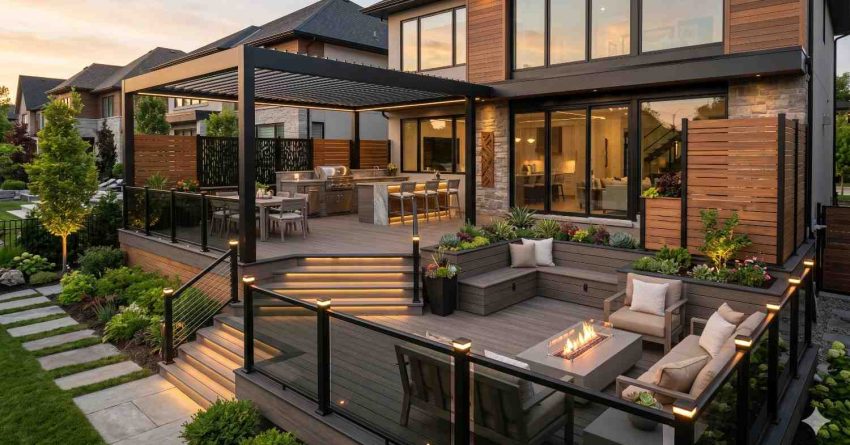
Deck features and accessories transform a simple outdoor platform into a fully functional living space, encompassing everything from deck lighting and pergolas to outdoor kitchens, hot tubs, fire features, and privacy screens. The right combination defines how a deck is used, enjoyed, and experienced throughout the year.
Homeowners who plan their deck features and accessories during the initial design stage consistently achieve better value, stronger structural integrity, and lower project costs than those who retrofit them later.
This guide covers deck lighting, pergolas and shade structures, built-in features, outdoor kitchens, hot tubs, fire features, privacy screens, outdoor living accessories, design integration, code requirements, and ongoing feature maintenance.
What Are Deck Features and Accessories?
Deck features are permanent or semi-permanent additions that expand what a deck can do. They transform structural outdoor space into fully functional living zones. Accessories are movable or modular elements that enhance comfort, aesthetics, and usability without requiring structural modification.
The distinction matters for planning purposes. A built-in outdoor kitchen is a feature: it requires utility connections, structural consideration, and potentially a permit. A freestanding gas grill cart is an accessory: it can be moved, changed, or removed without consequence.
Features generally include lighting systems, pergolas and shade structures, built-in seating, outdoor kitchens, hot tubs and spas, fire features, privacy screens, and under-deck drainage or ceiling systems. Accessories include outdoor furniture, rugs, heaters, misting systems, audio equipment, and outdoor televisions.
Both categories matter. Features determine what a deck can structurally support and how its zones are organized. Accessories determine how comfortable and inviting those zones feel day to day. Together, they shape every outdoor living experience a deck provides.
When planning either type of addition, the order of operations matters enormously. Features integrated during the original build cost significantly less than retrofits because utility lines, structural members, and layout decisions are resolved before the decking is installed. Accessories, by contrast, can be added at any point with no structural consequence. Understanding this distinction helps homeowners make smarter decisions about sequencing, budget, and timing.
Deck Lighting: Ambiance, Safety, and Smart Technology
Deck lighting serves three fundamental purposes: safety, ambiance, and extended functionality. A well-lit deck is safer to navigate after dark, more inviting for evening gatherings, and usable well beyond daylight hours. According to the American Lighting Association, outdoor lighting consistently ranks among the top home improvements for perceived property value and everyday enjoyment.
Types of Deck Lighting
Post-cap lights sit atop railing posts and provide wide, low-intensity ambient illumination. They work well as primary lighting for smaller decks and complement other fixture types on larger ones. Recessed deck floor lights create a flush, modern look by mounting directly into the deck surface or between railing balusters, guiding foot traffic without producing glare. Stair riser lights are among the most safety-critical fixtures on any elevated deck, illuminating each step individually and reducing fall risk significantly. String lights remain one of the most popular and cost-effective ambiance options, and solar-powered versions require no wiring whatsoever.
Solar vs. Hardwired Deck Lights
Solar lights are easy to install and reposition, requiring no electrician and no wiring. However, their brightness and runtime depend on sun exposure, and performance degrades significantly in shaded environments or overcast climates. Hardwired low-voltage systems deliver consistent, programmable illumination regardless of weather. They require a transformer, surface or conduit wiring, and typically a licensed electrician for the primary circuit connection, but they outperform solar in reliability and output.
Smart and Color-Changing Deck Lighting
Smart deck lighting systems connect to home automation platforms including Amazon Alexa, Google Home, and Apple HomeKit. They allow voice and app control over brightness, color temperature, and scheduling. Color-changing RGB LED fixtures allow homeowners to shift deck atmosphere from functional white light during cooking to warm amber for dining to vibrant event colors for entertaining.
From low-voltage post-cap lights to smart color-changing LED systems, the options for illuminating a deck are broader than most homeowners expect — our complete guide to deck lighting covers every fixture type, installation method, wiring approach, and product recommendation you need to light your outdoor space effectively and safely.
Pergolas, Awnings, and Shade Structures
Shade is one of the most functional investments a deck homeowner can make. A deck without overhead protection becomes unusable during peak afternoon hours across much of the U.S., particularly in southern and southwestern states where UV intensity and heat are most severe. The right shade structure extends usable deck hours, reduces surface temperatures, and provides a degree of rain protection that keeps outdoor plans from being disrupted by passing showers.
Pergola Materials: Wood, Aluminum, and Vinyl
Traditional pergolas built from cedar, redwood, or pressure-treated pine offer a natural, architectural appearance that complements wood and composite decks alike. Wood pergolas accept stain, paint, and custom dimensions readily. Aluminum pergolas are more durable, require no maintenance, and resist rot and insect damage permanently, though they carry a higher material cost. Vinyl pergolas provide excellent moisture resistance with minimal upkeep, though they offer fewer customization options and tend to feel less premium in finished appearance.
Louvered Pergolas and Retractable Awnings
Louvered pergola systems are one of the fastest-growing categories in the outdoor structure market. Motorized roof louvers open and close at the touch of a button, giving homeowners independent control over sunlight, ventilation, and rain protection. Premium brands including StruXure, Renson, and Palmiye offer systems with integrated drainage channels, LED perimeter lighting, and retractable side screens built into the frame. Retractable awnings mount directly to the house structure and extend over the deck on a folding arm mechanism. They are less architectural but significantly more affordable, with quality motorized versions ranging from $3,000 to $8,000 installed.
Sail Shades and DIY Options
Sail shade canopies use tensioned UV-blocking fabric panels suspended between anchor points to create partial coverage with excellent airflow. They block direct UV rays while maintaining the open-air feeling many homeowners prefer. Hardware kits and pre-cut panels are available at most home improvement retailers, making sail shades among the most accessible DIY shade projects available.
Choosing the right shade structure depends on climate, budget, and preferred aesthetics — our guide to deck pergolas and shade structures breaks down every option from budget-friendly sail shades to fully motorized louvered systems, with brand comparisons and installation details included.
Built-In Features: Benches, Planters, Storage, and More
Built-in features are what elevate a deck from a simple platform to a custom outdoor room. Unlike movable furniture, built-ins are integrated directly into the deck structure, becoming permanent additions that increase both function and property value. They also eliminate the visual clutter that movable furniture and accessories can create on small or medium-sized decks.
Built-In Bench Seating and Bar Tops
Built-in benches are the most common deck built-in and among the most practical. They eliminate the need for movable chairs, maximize seating capacity in a fixed footprint, and can incorporate storage, planters, or armrests as design extensions. Benches are typically framed with 2×4 or 2×6 lumber and finished with decking boards that match or intentionally contrast the main deck surface. A built-in bar top along the perimeter railing transforms the edge of a deck into a serving and gathering station, particularly effective on L-shaped decks where one wing functions as an entertainment counter.
Integrated Planters and Garden Beds
Integrated planters bring greenery directly into the deck structure. Cedar and composite planter boxes built into bench surrounds or railing sections can hold herbs, annuals, small shrubs, or trailing vines. Proper drainage is essential: a gravel layer at the base combined with a moisture barrier between soil and framing lumber prevents rot damage to the surrounding deck structure.
Storage Boxes, Privacy Screens, and Hot Tub Surrounds
Under-bench storage boxes with hinged lids address one of the most persistent deck problems: where to store cushions, tools, and outdoor supplies without creating clutter. Built-in privacy screens, typically constructed from cedar or composite slatted boards, can be integrated into the railing system at key sightline locations without requiring a freestanding structure. Built-in hot tub surrounds frame an inset or semi-recessed hot tub with matching decking material, creating a seamless, finished appearance that freestanding tub exteriors cannot replicate.
Built-in features represent some of the highest-value additions you can make to a deck, and the design possibilities extend well beyond basic bench seating — our complete guide to built-in deck features walks through every option, from custom bar tops and integrated planters to hidden storage boxes and hot tub surrounds.
Outdoor Kitchens and Grilling Stations
The outdoor kitchen category has experienced substantial growth over the past decade, driven by increased time spent at home and the expanding range of outdoor-rated appliances available at mid-market price points. According to the Hearth, Patio and Barbecue Association, over 79% of American adults own a grill or smoker, and a growing share is investing in permanent outdoor cooking infrastructure rather than portable equipment.
A complete outdoor kitchen goes well beyond a grill. It includes counter space for food preparation, a sink for cleanup, refrigeration for beverages and ingredients, storage for tools and accessories, and potentially a pizza oven, smoker, or outdoor-rated warming drawer. The complexity of these installations ranges from a simple L-shaped grill counter with a drop-in grill and mini-fridge to fully equipped outdoor kitchens with gas burners, ice makers, and pergola-covered dining areas.
Grill Placement and Code Compliance
Grill placement on a deck is governed by both manufacturer specifications and local fire or building codes. Gas grills typically require minimum clearances of 24 to 36 inches from any combustible wall, overhead structure, or railing panel. On wood decks, the area directly beneath the grill is often replaced with non-combustible pavers, stone tiles, or heat-rated composite decking. Gas line extensions from the home’s supply require a licensed plumber or gas fitter in most jurisdictions, and the work is subject to inspection.
Outdoor Kitchen Materials and Countertops
Outdoor kitchen frames are typically constructed from concrete masonry units, aluminum stud framing, or powder-coated steel. All are rated for permanent outdoor exposure. Countertops must be specified for outdoor use: granite, porcelain slab, concrete, quartzite, and stainless steel are the most durable options. Cabinetry faces are typically stainless steel, teak, or marine-grade polymer, all of which resist moisture and UV degradation effectively.
Plumbing, Gas Lines, and Outdoor Refrigeration
Adding a sink to an outdoor kitchen requires either a direct connection to the home’s domestic water supply and drain line or a self-contained tank-and-drain system for locations where plumbing extension is not feasible. Gas line runs for grills, side burners, and pizza ovens must be installed by licensed professionals and require inspection. Outdoor refrigerators carry UL outdoor ratings that classify them for full-weather exposure, including the temperature extremes that indoor units cannot tolerate.
Designing a functional outdoor kitchen requires careful coordination of code requirements, utility connections, and material selection — our guide to outdoor kitchens on decks covers grill placement, gas line installation, countertop materials, appliance selection, and every planning consideration from initial layout through final installation.
Hot Tubs, Spas, and Cold Plunge Integration
Hot tubs are among the most structurally demanding features a homeowner can add to an existing deck. A filled residential hot tub weighs approximately 90 to 100 lbs per square foot when occupied. A standard 7-by-7-foot hot tub with water and users may exceed 5,000 lbs total, far beyond the 40 lb/sq ft live load for which most residential decks are designed. Structural reinforcement is always required.
Structural Reinforcement Requirements
Before any hot tub is placed on a deck, a structural engineer should evaluate the existing framing to determine whether additional posts, beams, or footings are necessary. In many cases, the hot tub zone is framed as a semi-independent structure with its own dedicated footings, completely isolated from the main deck load path. This approach costs more upfront but eliminates uncertainty about long-term load capacity and avoids the need to retroactively reinforce an existing structure.
Recessed vs. Surface-Mounted Hot Tubs
Surface-mounted hot tubs sit on the deck surface and require a three-sided or four-sided surround built from matching decking material to conceal the tub’s exterior shell and mechanical compartment. Recessed or semi-recessed hot tubs are partially lowered into an opening cut into the deck framing, creating a built-in appearance that integrates seamlessly with the surrounding deck level. Recessed installation requires significantly more structural planning but delivers the most sophisticated finished result.
Electrical Requirements and Cold Plunge Tubs
Hot tubs require a dedicated 240V/50-amp electrical circuit, installed by a licensed electrician, with a weatherproof GFCI disconnect panel located within six to ten feet of the unit per NEC code. The growing cold plunge trend has introduced a second water feature category to deck spaces. Compact cold plunge units require far less structural reinforcement than traditional hot tubs and are available in both 110V and 240V configurations, making them more accessible for retrofit installation on existing decks.
Adding a hot tub is one of the most structurally demanding deck upgrades, and getting it right requires engineering input, licensed electrical work, and careful product selection — our comprehensive resource on adding a hot tub to a deck covers structural reinforcement, recessed vs. surface-mounted installation, electrical coordination, and the full range of spa and cold plunge options available for deck integration.
Fire Pits, Fire Tables, and Outdoor Fireplaces
Fire features extend the usable season of a deck into fall and early spring in most U.S. climates, adding warmth and ambiance that no other category of feature can replicate. They create a natural gathering focal point and are consistently rated among the top deck features homeowners wish they had included from the start.
Gas vs. Wood-Burning Fire Features
Gas fire pits and fire tables connect to natural gas or propane and ignite with a key-valve or push-button ignition. They produce no sparks, minimal smoke, and are the only type of fire feature permitted by many HOAs and some municipalities with outdoor burn restrictions. Gas fire tables, which combine a fire bowl with a surrounding stone, concrete, or tile tabletop, are currently the most popular residential fire feature category.
Wood-burning fire pits produce the aromatic, crackling fire that many homeowners prefer for ambiance and social appeal. They require spark screens or arrestors when positioned on or near combustible decking, and they produce ash and airborne embers that can permanently mark composite decking surfaces if a non-combustible pad is not used beneath them.
Clearance Rules and Code Requirements
Fire features must maintain minimum clearances from combustible surfaces per manufacturer specifications and local codes. Most gas fire features require at least 36 inches of clearance from any overhead structure, which means many pergola-covered or enclosed patio areas are not compliant without documented manufacturer approval for enclosed installation. Wood-burning fire pits should sit on a non-combustible pad — a fire pit mat, natural stone pavers, or a concrete pad — whenever placed on any combustible decking material.
Built-In Linear Tables and Outdoor Fireplaces
Built-in linear gas fire features are elongated gas burners recessed into a concrete or stone surround, creating an architectural statement piece that works particularly well in modern deck designs. Outdoor fireplaces constructed from stone veneer, stucco, or manufactured masonry provide a permanent, visually dominant anchor at one end of a deck and support either a wood-burning firebox or a gas insert.
Whether you want a gas fire table for evening ambiance or a wood-burning outdoor fireplace as a dramatic focal point, fire features require careful attention to clearance rules and code compliance — our deck fire features guide explains every option in detail, from portable fire pit tables and fire rings to built-in linear gas fireplaces and full outdoor fireplace construction.
Privacy Screens and Visual Barriers
Privacy is consistently among the top three homeowner priorities for deck design, particularly in urban and suburban settings where homes are closely spaced or where second-story decks have direct sightlines into neighboring properties. An intentional privacy strategy transforms an exposed platform into an enclosed outdoor room, increasing the comfort and enjoyment of every deck activity from morning coffee to evening gatherings.
Lattice, Slatted Wood, and Metal Screens
Lattice panels are the most traditional and affordable privacy solution, available in wood, vinyl, and metal. They can be attached to existing railing posts or mounted on independent frames. They transmit partial light while obscuring direct sightlines. Slatted wood privacy screens, typically built from cedar or redwood 1×4 boards spaced a half inch to one inch apart, offer a modern horizontal-line aesthetic and can be painted or stained to match the deck finish. Metal privacy screens in Corten steel, powder-coated aluminum, or laser-cut decorative patterns offer superior durability and design versatility compared to wood.
Living Walls and Bamboo Solutions
Vertical garden panels incorporate planters, moss elements, or trellised plants into the privacy screen structure, adding biological texture and a living quality to what would otherwise be a flat surface. They require irrigation planning and appropriate plant selection for the local climate. Bamboo screening provides a natural, tropical aesthetic and performs well in mild climates, though exposed bamboo materials require protection from freeze-thaw cycles in northern zones.
Pergola-Mounted Curtains and Panel Systems
Outdoor curtains suspended from pergola beams or mounted on track systems provide flexible, adjustable privacy that can be drawn open or closed as conditions change. Solution-dyed acrylic fabric resists UV fading and mold growth effectively and maintains its appearance through multiple seasons without significant maintenance. Rigid panel systems, whether composite boards or tensioned fabric mounted between posts, provide a more permanent, architectural privacy solution that integrates with the deck structure itself.
The right privacy solution depends on your yard layout, aesthetic preferences, and how much natural light you want to retain — our deck privacy screen ideas guide covers every approach, from lattice panels and slatted wood screens to living walls, bamboo solutions, and pergola-mounted curtains, with installation details and product guidance included.
Outdoor Living Accessories: Furniture, Comfort, and Technology
Accessories are the layer that makes a deck livable day after day. They require no permits, no structural modification, and no utility connections, but they have an enormous impact on how a deck actually functions and how often it gets used. The most successful outdoor living spaces are designed with accessories in mind from the beginning rather than assembled as an afterthought.
Outdoor Furniture and Rugs for Decks
Outdoor furniture is available in teak, aluminum, all-weather wicker, powder-coated steel, and recycled plastic lumber, each offering distinct advantages. Teak provides natural beauty and exceptional durability with minimal maintenance when left to silver naturally. Aluminum is lightweight, rust-proof, and available in a wide range of finishes. All-weather wicker frames offer visual warmth and comfort comparable to indoor furniture. Outdoor rugs made from polypropylene or solution-dyed acrylic define zones on larger decks, add texture and color to the space, and resist moisture, UV exposure, and mold growth when maintained with basic rinsing and drying.
Heaters and Misting Systems
Patio heaters extend the usable season of a deck in colder climates. Freestanding propane heaters provide the widest coverage radius and require no installation. Ceiling-mounted infrared electric heaters deliver efficient, directional heat without the refill logistics of propane and can be hardwired to a dedicated circuit or connected to a weatherproof GFCI outlet. Misting systems use fine-atomized water droplets to reduce ambient temperature by 15 to 20 degrees Fahrenheit in hot, dry climates. They are most effective in low-humidity regions and least effective in high-humidity areas where the cooling effect is limited by air saturation.
Outdoor Audio, TVs, and Smart Technology
Outdoor audio systems range from portable Bluetooth speakers on a weatherproof charging pad to hardwired multi-zone systems with outdoor-rated in-ceiling or wall-style speakers driven by a dedicated amplifier. Outdoor televisions engineered for full-sun viewing include anti-glare screens, weatherproof enclosures, and IP-rated components. Brands including SunBriteTV, Samsung, and Séura offer full-sun models rated for permanent outdoor installation. Smart home integration is increasingly available for outdoor spaces, with systems that control lighting, audio, TV, heaters, and pergola louvers from a single app or voice command.
Furniture selection, heating, outdoor entertainment systems, and comfort upgrades can completely transform how a deck is used across all four seasons — our outdoor living deck accessories guide reviews the best furniture styles, patio heaters, misting systems, outdoor speakers, weatherproof TVs, bug-repellent solutions, and smart storage options available today.
Planning Deck Features Around Your Overall Design
Every feature on this works best when it is planned in coordination with the overall deck layout, not selected in isolation after the deck is built. Features integrated during the design phase benefit from proper structural planning, efficient utility routing, pre-run conduit and gas lines, and cohesive aesthetic coordination between features and deck materials. Features retrofitted after construction often require costly structural workarounds or compromise the original deck’s framing and waterproofing.
Zoning is the organizing principle that connects feature selection to deck design. A well-designed deck divides its square footage into functional zones: a primary dining zone, a lounging zone, a cooking zone, and possibly a water feature zone. Each zone has different electrical, structural, and material requirements. Resolving these before construction begins allows a single contractor mobilization to address all utility and structural work, rather than multiple retrofit visits with separate cost implications.
For example, positioning an outdoor kitchen requires pre-running gas lines and electrical conduit during framing, before the decking is installed. Planning a hot tub zone requires locating independent footings and routing a dedicated 240V circuit to the correct location before the deck boards are laid. Privacy screen attachment points can be pre-blocked into the railing post frames during framing for a fraction of the cost of adding them afterward.
The full framework for integrating features into a cohesive, functional outdoor living space — including zoning strategies, functional area planning, and feature compatibility workflows — is covered in The Complete Guide to Deck Design and Planning, which walks through every decision from initial concept through final specification.
Code, Safety, and Structural Requirements for Deck Features
Many of the most impactful deck features are also among the most regulated. Fire features, hot tubs, outdoor kitchens, and permanent lighting systems may each require permits, inspections, and compliance with local codes before installation can begin or pass final inspection.
Hot Tub Structural Loads
Residential decks designed under the International Residential Code are typically engineered for a 40 lb/sq ft live load. Filled hot tubs can impose loads of 80 to 100 lb/sq ft or more, depending on tub size and occupancy. Any hot tub installation should be preceded by a structural engineering review to confirm whether existing footings, beams, and joists are adequate or to specify the reinforcement required to meet safe load capacity.
Fire Pit Clearances and Gas Line Permits
The IRC and most local fire codes specify minimum clearances for fire features near combustible structures. Many jurisdictions require open-flame features to maintain a 10-foot clearance from any structure, though local Authority Having Jurisdiction (AHJ) requirements vary and may be more or less restrictive than the model code. Gas line extensions serving outdoor kitchens or fire features require a permit and inspection of the connection by a licensed plumber or gas fitter. Non-compliant gas installations represent both a permit violation and a serious safety hazard.
Electrical Requirements for Deck Features
All hardwired electrical work above certain amperage thresholds requires a permit and a licensed electrician. This includes outdoor kitchen circuits, hot tub disconnect panels, low-voltage lighting transformer installations in some jurisdictions, and any electrical work within three feet of a water feature. Failure to permit electrical work for deck features can result in inspection failures at the point of home sale, insurance claim denials, and safety liability.
Understanding which features require permits and what inspectors look for during the review process is critical before installing any permanent addition to a deck; The Complete Guide to Deck Permits, Codes and Safety provides jurisdiction-specific guidance, code summaries, and inspection checklists for fire, electrical, structural load, and hot tub-related requirements.
Maintaining Deck Features Over Time
Every feature added to a deck creates specific ongoing maintenance requirements. Neglecting feature maintenance leads to accelerated deterioration, safety hazards, and repair costs that routine care would have prevented.
Outdoor kitchens require regular cleaning of grill grates, burner ports, and stainless steel surfaces. Grease traps must be emptied and cleaned seasonally. Stone and concrete countertops should be resealed annually to prevent staining and moisture absorption. Hot tubs require weekly water chemistry testing, quarterly filter cleaning, and full drain-and-refill cycles two to four times per year. Gas fire burner pans, ignition systems, and gas line fittings should be inspected by a qualified technician annually.
Deck lighting fixtures, particularly low-voltage LED systems, are relatively low-maintenance, but moisture intrusion into fixture housings is a common failure point that annual inspection catches early. Low-voltage transformer output should be verified each spring to ensure consistent voltage delivery to the fixture run. Pergola structures require annual inspection for wood rot, hardware corrosion, and any structural loosening at post bases and rafter connections. Wood pergolas should be refinished with penetrating stain or sealer every two to three years depending on climate exposure.
Privacy screens built from wood require the same sealing and finishing schedule as the deck surface itself. Composite privacy panels are lower-maintenance but should be inspected annually for fastener integrity and any surface damage that exposes the board core.
Every feature you add creates specific ongoing maintenance needs that vary by material, climate, and use intensity — The Complete Guide to Deck Maintenance and Care provides material-specific care schedules for every type of deck addition, including seasonal preparation guides and professional service recommendations.
What Does It Cost to Add Features to a Deck?
Feature costs vary widely depending on complexity, material grade, and regional labor rates. The table below provides orientation-level ranges for each major feature category.
| Feature Category | Entry-Level | Mid-Range | Premium |
| Deck lighting (full system) | $500-$1,500 | $1,500-$4,000 | $4,000-$10,000+ |
| Pergola or shade structure | $3,000-$6,000 | $6,000-$15,000 | $15,000-$40,000+ |
| Built-in bench seating | $800-$1,500 | $1,500-$3,500 | $3,500-$6,000 |
| Outdoor kitchen | $5,000-$10,000 | $10,000-$25,000 | $25,000-$75,000+ |
| Hot tub (installed) | $5,000-$10,000 | $10,000-$20,000 | $20,000-$40,000+ |
| Gas fire feature | $500-$2,000 | $2,000-$6,000 | $6,000-$20,000+ |
| Privacy screen system | $500-$1,500 | $1,500-$4,000 | $4,000-$10,000 |
Among feature types, outdoor lighting, shade structures, and built-in seating offer the most favorable cost-to-impact ratio for most homeowners. They directly expand how and when the deck is used without the maintenance complexity of water features or cooking systems. Outdoor kitchens and hot tubs deliver significant lifestyle value and strong buyer appeal in the resale market but carry the highest installation costs and ongoing maintenance commitments of any feature category.
Features planned during initial construction cost significantly less than retrofits. A gas line run during framing costs a fraction of what it costs to core-drill through an existing deck, run conduit through finished spaces, and restore surfaces afterward. For a detailed cost breakdown by feature type and finish level, including labor splits, regional cost adjustments, and budget prioritization guidance, our deck feature cost breakdown provides the specific pricing data homeowners need to plan feature investments with confidence.
Conclusion
Deck features and accessories define the full outdoor living experience: from lighting and shade to fire, water, cooking, and privacy.
Planning these elements together, and linking them to your broader deck design, materials, and code requirements, ensures a cohesive, code-compliant result.
We at Mr. Local Services connect homeowners with skilled professionals who handle every feature, from design through installation and ongoing maintenance.
Frequently Asked Questions
What is the difference between a deck feature and a deck accessory?
A deck feature is a permanent or structural addition, such as a pergola, outdoor kitchen, or built-in bench, while an accessory is a movable element like furniture or heaters. Features require planning and often permits; accessories do not.
Do I need a permit to add a hot tub or outdoor kitchen to my deck?
Yes, in most U.S. jurisdictions. Hot tubs require an electrical permit for the 240V circuit and disconnect panel. Outdoor kitchens with gas lines require a mechanical or gas permit. Structural modifications to support hot tub loads typically require a building permit as well.
How much does it cost to add an outdoor kitchen to a deck?
Outdoor kitchens range from approximately $5,000 for a basic drop-in grill counter to $75,000 or more for a fully equipped, covered outdoor cooking space. Mid-range projects with a grill, refrigerator, sink, and countertop typically run $10,000 to $25,000 installed.
What is the best type of deck lighting for safety and ambiance combined?
For safety, stair riser lights and recessed floor lights are most effective, illuminating pathways without producing glare. For ambiance, warm-white LED post-cap lights paired with dimmable low-voltage accent lighting or string lights create the most inviting evening atmosphere.
Can I safely add a fire pit to a wood or composite deck?
Yes, with proper precautions. Gas fire features with manufacturer-specified clearances are the safest option. Wood-burning fire pits require a non-combustible pad beneath them and a spark screen. Minimum clearances from railings, overheads, and combustible surfaces must be respected per manufacturer specifications and local codes.
How do I add privacy to a deck without eliminating natural light?
Slatted wood or metal screens with half-inch to one-inch spacing between boards obstruct direct sightlines while maintaining airflow and diffuse light transmission. Lattice panels and translucent polycarbonate panels also provide effective privacy while admitting significant natural light throughout the day.
Which deck features deliver the best return on investment at resale?
According to Remodeling Magazine’s Cost vs. Value data, deck additions broadly deliver strong ROI. Among feature categories, outdoor lighting, shade structures, and built-in seating offer the best combination of cost-effectiveness and wide buyer appeal. Outdoor kitchens attract premium-segment buyers but deliver lower universal return rates compared to simpler functional upgrades.