Composite decking is an engineered outdoor flooring material made from recycled wood fibers, recycled plastics, and bonding agents that resists rot, splinters, and insect damage far better than traditional lumber. Today it’s the fastest-growing residential deck material in the United States, chosen by homeowners, landlords, and property managers who want a low-maintenance outdoor surface that holds its look for decades and delivers strong long-term value.
Composite has changed how Americans build outdoor living spaces, and getting the choice right protects both your budget and your property’s value for the next 25 to 30 years.
This guide covers materials, types, costs, design, installation, maintenance, staining, repair, restoration, replacement, and how to hire the right composite deck builder.
What Is Composite Decking?
Composite decking is an engineered building product designed specifically as an alternative to pressure-treated lumber, cedar, and exotic hardwoods. Each board is manufactured from a precise blend of organic and synthetic ingredients that combine the workability of wood with the weather resistance of plastic.
Definition and Core Composition
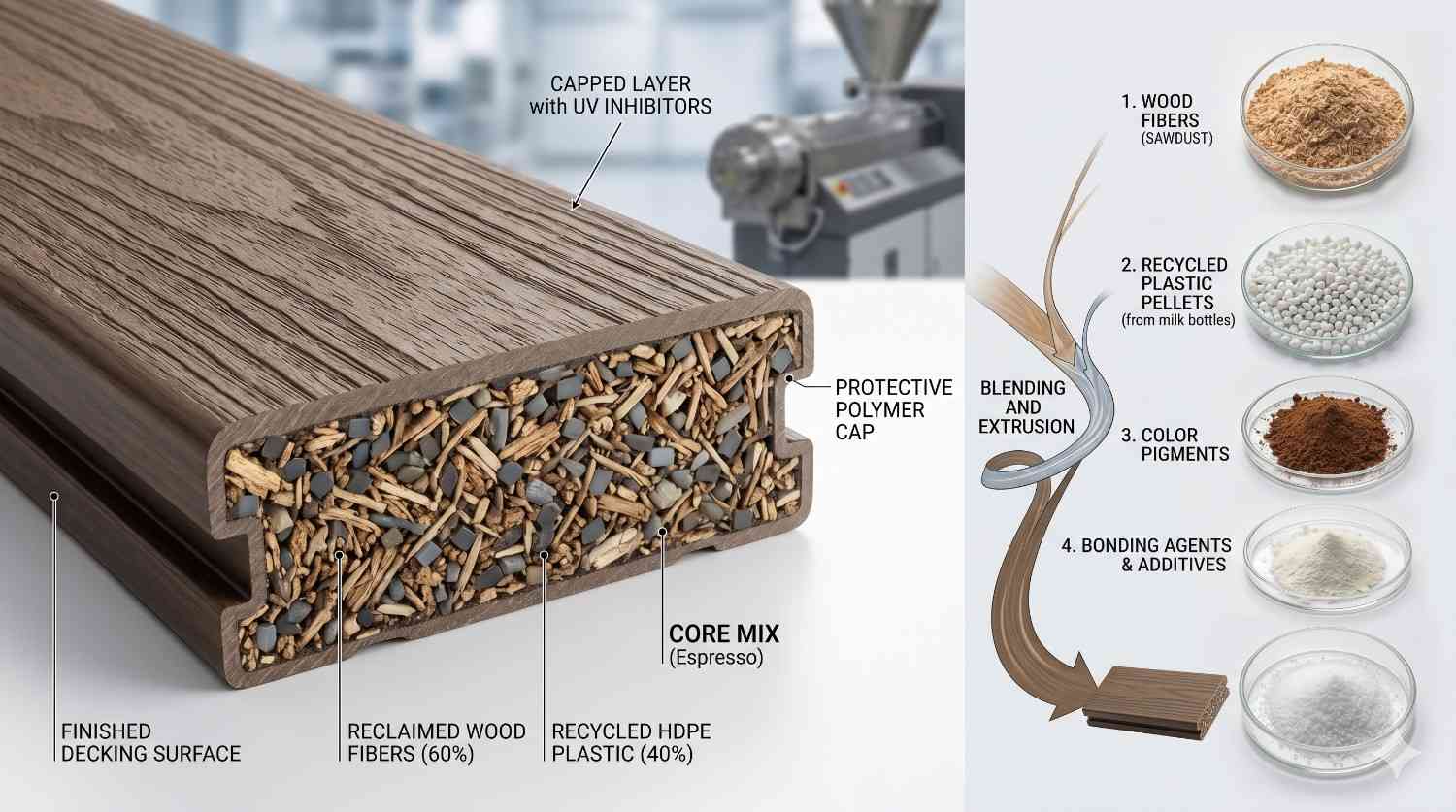
A standard composite deck board contains roughly 50 to 65 percent recycled wood fibers (often sawdust or reclaimed wood flour) and 30 to 50 percent recycled plastics such as high-density polyethylene (HDPE) or polypropylene. According to the U.S. Environmental Protection Agency’s sustainable materials data, composite lumber products help divert hundreds of millions of pounds of plastic and wood waste from landfills each year.
How Composite Differs From Traditional Decking
Unlike natural wood, composite never needs sanding, staining, or sealing to perform. It also resists the three failure modes that destroy wood decks: moisture intrusion, fungal rot, and insect damage. The trade-offs are surface temperature in direct sun and a higher upfront cost, both of which we’ll address later in this guide.
How Composite Decking Is Made: Materials and Composition
Manufacturing has evolved dramatically since composite decking first entered the market in the 1990s. Modern boards are denser, more colorfast, and engineered with protective outer shells.
Recycled Wood Fibers and Plastics
The base mix is extruded under heat and pressure to form a uniform board. Recycled HDPE — often sourced from milk jugs and plastic bags — gives composite its weather resistance, while wood fibers provide rigidity and a natural feel underfoot.
Capped vs. Uncapped Construction
The most important modern distinction is whether a board is capped (encased in a protective polymer shell on three or four sides) or uncapped (the older single-material design). Capped composite resists fading, staining, mold, and scratching far better than uncapped — and now represents the majority of new residential installations. We’ve also documented the full technical breakdown in our capped vs. uncapped composite decking guide , which explains performance differences, warranty implications, and cost variance between the two constructions.
Composite Decking vs. Wood, PVC, and Aluminum
Choosing the right deck material starts with an honest comparison. Composite sits between traditional wood and full-plastic PVC in both performance and price.
| Material | Avg. Lifespan | Maintenance | Cost per Sq. Ft. (Materials) |
| Pressure-Treated Wood | 10–15 years | High (annual sealing) | $2–$5 |
| Cedar / Redwood | 15–20 years | Medium-High | $5–$11 |
| Composite (capped) | 25–30 years | Low (occasional wash) | $4–$13 |
| PVC / Vinyl | 30+ years | Very Low | $7–$13 |
| Aluminum | 40+ years | Very Low | $15–$20 |
Wood costs less upfront but demands roughly 75% more lifetime maintenance hours than composite. PVC offers slightly better moisture immunity but lacks the natural look most homeowners prefer. For an in-depth side-by-side breakdown of every cost line and lifespan factor, see our composite decking vs. wood comparison guide, which walks through 10-year, 20-year, and 30-year total cost of ownership for both materials.
Types and Performance Grades of Composite Decking
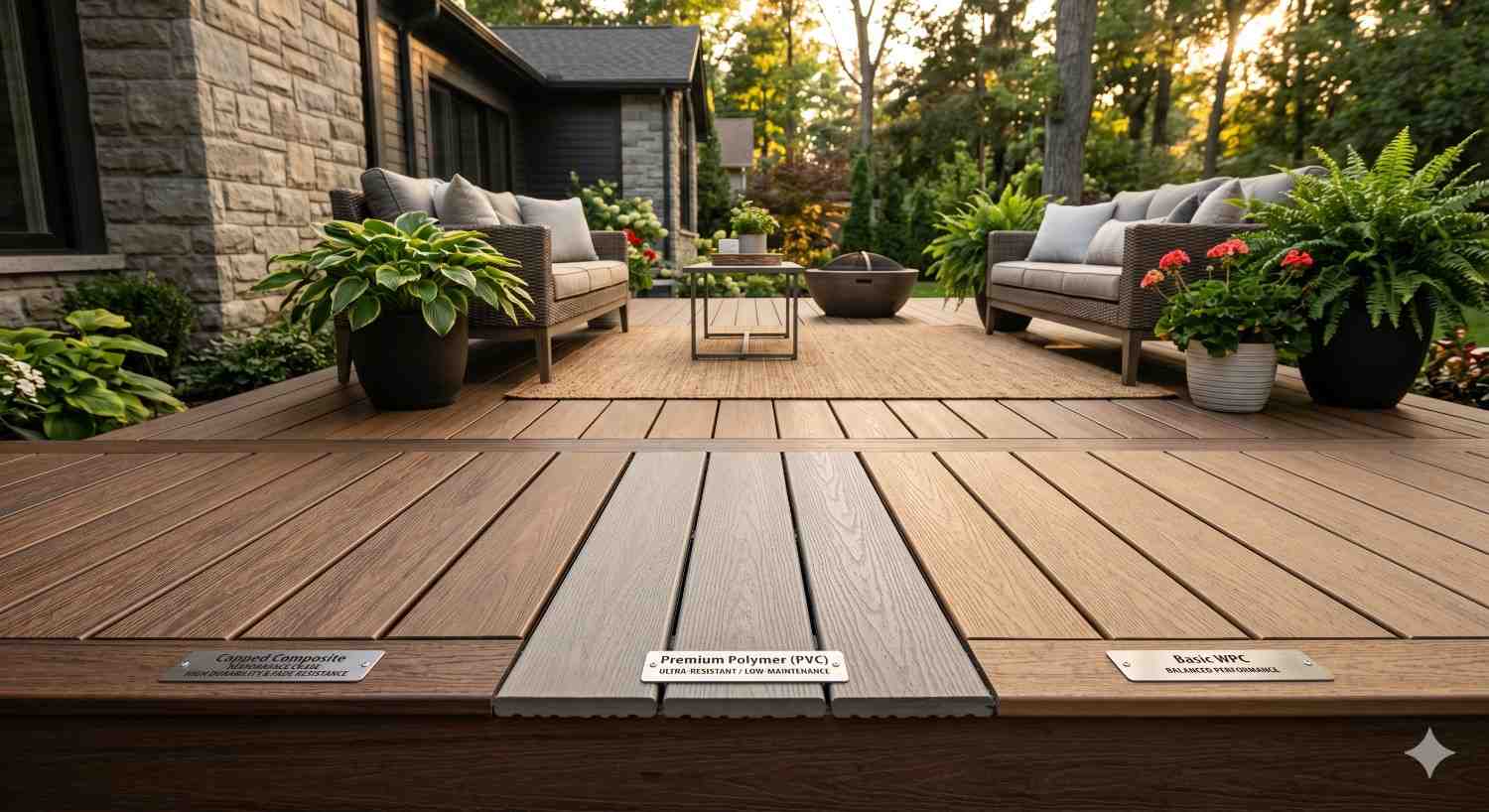
Composite is sold in three broad performance tiers, and the differences in fade resistance, scratch resistance, and warranty length are significant.
Entry-Level, Mid-Tier, and Premium
- Entry-level boards are typically uncapped or partially capped with 10–15 year limited warranties.
- Mid-tier boards feature full four-sided capping and 25-year warranties.
- Premium boards add streaking, multi-tonal grain patterns, and 30–50 year fade and stain warranties.
Most major manufacturers — including Trex, TimberTech, Fiberon, and Deckorators — offer products in all three tiers. For a brand-by-brand breakdown including board profiles, warranty coverage, and real-world performance, our top composite decking brands comparison reviews the strongest products in every tier.
Solid vs. Hollow Boards
Solid boards feel and sound more like real wood underfoot, while hollow boards are lighter and slightly less expensive. Both can perform well; framing requirements differ.
Key Benefits of Composite Decking
The case for composite is straightforward: lower maintenance, longer life, fewer surprises.
- Low maintenance: No sanding, staining, or sealing under normal use.
- Long lifespan: Quality capped composite typically lasts 25 to 30 years.
- Rot, insect, and splinter resistance: Protects against the three top failure points of wood.
- Color and texture variety: Hundreds of shades from light driftwood to deep mahogany.
- Eco-friendly inputs: Built largely from recycled content.
- Strong resale value: Outdoor living upgrades regularly recoup 60–75% of project cost at resale according to industry cost-vs-value research.
For homeowners and property managers looking at total cost of ownership, composite often wins despite the higher upfront investment.
Limitations and Common Concerns to Know
No material is perfect. Composite has three honest drawbacks worth understanding before purchase.
- Surface heat: Dark-colored boards in full sun can reach uncomfortable temperatures.
- Higher upfront cost: Materials typically cost 2–3x pressure-treated wood.
- Initial fade: Capped composites still lighten slightly during the first 90 days of UV exposure before stabilizing.
Mold and mildew can grow on the surface of any deck if debris is left to decompose, but the boards themselves do not rot from within.
Composite Decking Costs and Budget Planning
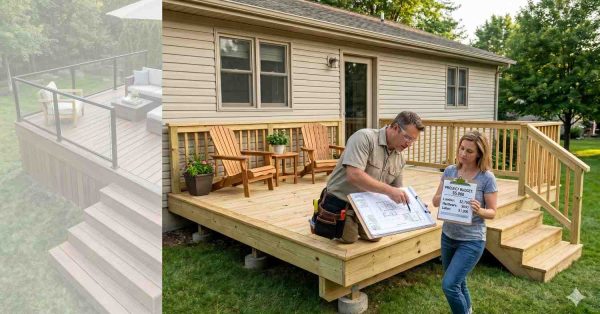
A full composite deck installation in the United States typically costs $30 to $60 per square foot including labor, framing, fasteners, and finishing details.
Cost per Square Foot by Tier
| Project Tier | All-In Cost per Sq. Ft. | What’s Included |
| Basic | $30–$40 | Entry-level boards, standard framing, ground-level layout |
| Mid-Range | $40–$50 | Capped composite, elevated framing, basic railing |
| Premium | $50–$80+ | Premium boards, custom railing, lighting, multi-level design |
Permits, demolition of an existing deck, and complex elevations add to the total. We’ve created a complete composite decking cost guide that walks through every cost line, regional pricing differences, financing options, and how to spot inflated estimates.
Designing and Building a Custom Composite Deck
A great composite deck starts on paper. Layout, elevation, sightlines, traffic flow, and integration with the home’s architecture all shape the final result.
Custom design considerations include:
- Multi-level platforms for sloped yards
- Built-in seating, planters, and pergolas
- Integrated lighting at stair risers and railings
- Wide-plank, herringbone, or picture-frame board patterns
- Hidden fastener systems for a clean finished surface
Custom composite deck construction blends personalized layouts, structural engineering, and premium board selection to fit a specific yard, lifestyle, and budget, and our custom composite deck construction services walk through every design consultation, framing decision, and finish detail required to deliver a one-of-a-kind outdoor living space.
The Composite Deck Installation Process
Installation quality determines whether a composite deck lasts 10 years or 30. Manufacturer warranties depend on it.
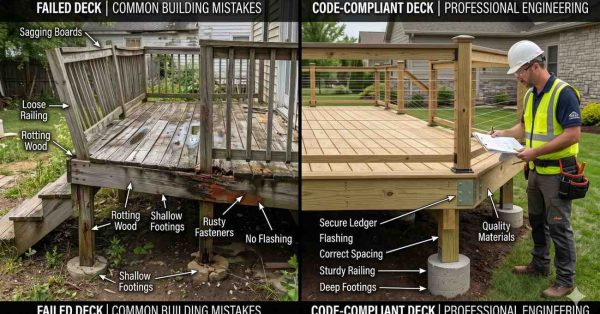
A code-compliant install includes:
- Permit application and site assessment
- Footings and ledger board attachment
- Pressure-treated framing with proper joist spacing (typically 12″ or 16″ on center)
- Flashing and drainage protection
- Deck board layout with hidden or top-down fasteners
- Stair, railing, and trim finishing
- Final inspection
Joist spacing, fastener selection, and ventilation under the deck all directly affect long-term performance. Professional installation determines how long a composite deck performs, how safely it carries load, and how cleanly it ages, which is why our composite deck installation services detail every framing standard, fastener choice, ventilation rule, and code requirement needed for a code-compliant, manufacturer-warranty-protected build.
Maintenance, Cleaning, and Long-Term Care
Composite is low-maintenance, not no-maintenance. A predictable annual care routine keeps boards performing and looking new.
Routine care includes:
- Sweeping debris weekly during heavy use
- Washing twice a year with mild soap and water
- Spot-cleaning grease, food, and tannin stains promptly
- Inspecting fasteners and railing connections each spring
- Clearing gaps between boards to prevent drainage issues
Pressure washing is acceptable on most modern composites at low PSI, but using too much pressure or the wrong tip can damage the protective cap. Our detailed composite deck cleaning guide walks through the exact products, tools, pressure settings, and stain-removal techniques recommended by leading manufacturers.
Staining and Sealing a Composite Deck
Most modern capped composite decks never need to be stained or sealed, and doing so can void the warranty. Older uncapped composites are a different story.
Older first-generation composite boards and decks showing significant fade or surface oxidation can benefit from manufacturer-approved restoration stains. These specialty products are formulated to bond with composite surfaces rather than penetrate wood fiber.
Some composite boards never need traditional staining, but uncapped first-generation composites and older weathered decks benefit from specialized sealants and color refresh treatments, and our deck staining and sealing services explain which products are safe for composite materials, when sealing is appropriate, and how the right finish extends usable deck life by years.
Repairing Composite Deck Damage
Even high-end composite decks can sustain damage from heavy impacts, dragged furniture, and structural wear over time. The good news: most issues can be repaired without full replacement.
Common composite deck repairs include:
- Replacing a single damaged board within a larger run
- Tightening or replacing loose hidden fasteners
- Reinforcing weakened framing or ledger boards
- Resetting wobbly stair stringers or railing posts
- Color-matching new boards into older, faded surfaces
Targeted repairs preserve the structural integrity of an otherwise healthy composite deck and prevent small issues from becoming full replacements, and our composite deck repair services cover the complete repair workflow, common board and framing problems we solve, and how we color-match replacement boards to existing finishes.
Restoring an Aging Composite Deck
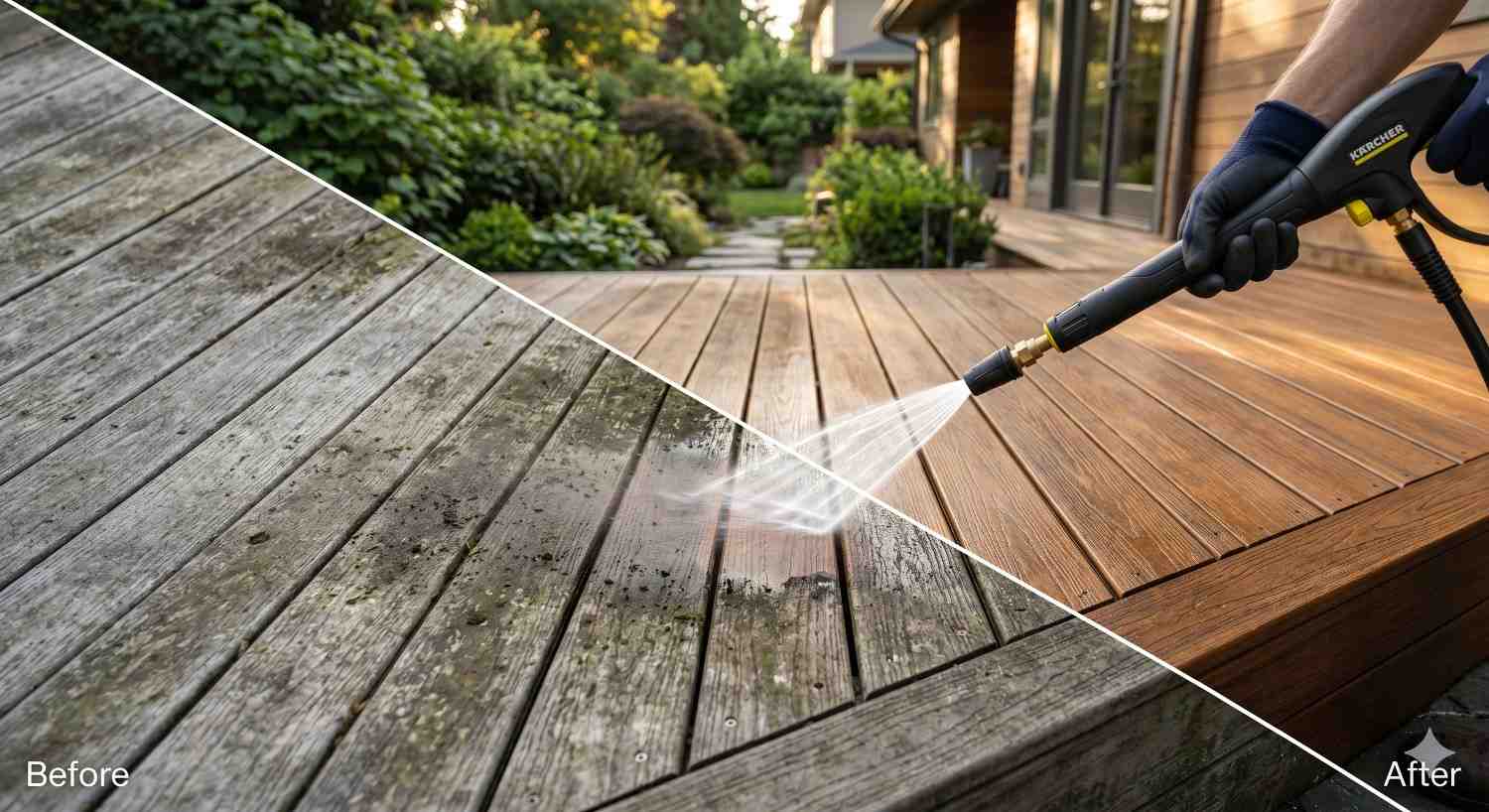
Restoration is different from repair. Where repair addresses physical damage, restoration tackles surface fade, oxidation, stains, mold growth, and the general “tired” look that decks develop after 10 to 15 years of weather exposure.
A professional restoration may include deep cleaning with composite-specific brighteners, oxidation removal, mildew treatment, color refresh applications on uncapped boards, and selective board replacements.
Composite deck restoration brings faded, oxidized, and weathered surfaces back to near-new appearance through deep cleaning, surface rejuvenation, and targeted treatments, and our composite deck restoration services break down every restoration method we use, from light refresh cleaning to full surface revitalization for aging boards.
When to Replace Your Composite Deck
There comes a point when repair and restoration no longer make economic sense. Signs that replacement is the better path include:
- Widespread soft spots or rot in the framing beneath the boards
- Multiple structural connection failures
- Discontinued board profiles that cannot be matched
- Code non-compliance from older builds
- A property usage change that demands a different layout or footprint
The lifespan of a quality composite deck is typically 25 to 30 years, after which a planned replacement protects both safety and property value. A full replacement is the right call when framing, fasteners, or board systems are too compromised for repair, and our composite deck replacement services explain the complete inspection, safe demolition, structural redesign, and rebuild process required to deliver a modern, code-compliant deck.
How to Choose the Right Composite Deck Builder
The contractor matters as much as the boards themselves. A poorly built premium deck will fail before a well-built budget deck.
Vet every builder against these criteria:
- Verified state licensing and active liability insurance
- Manufacturer certification from the brand you’re installing
- Proven portfolio of completed composite projects (not just wood decks)
- Detailed written estimates with line-item pricing
- Workmanship warranty separate from the manufacturer warranty
- Strong recent reviews and verifiable references
Avoid contractors who insist on cash, refuse permits, or pressure you into same-day decisions. The single biggest factor in how a composite deck looks, performs, and lasts is the contractor who builds it, and our trusted deck builder services explain how to vet professionals, which credentials to require, and the exact questions to ask before signing any composite decking project agreement.
Conclusion
Composite decking combines the natural look of wood with the durability of engineered materials, offering homeowners and property managers a long-life, low-maintenance outdoor surface that pays back in decades of usable enjoyment.
From design and installation through maintenance, repair, restoration, and eventual replacement, every stage of the composite decking lifecycle benefits from working with qualified professionals who understand the product.
We at Mr. Local Services connect you with vetted composite decking experts who deliver transparent pricing, quality workmanship, and reliable results — request your free quote today.
Frequently Asked Questions
How long does composite decking actually last?
Quality capped composite decking typically lasts 25 to 30 years with routine maintenance. Premium products carry 30 to 50 year fade and stain warranties, and structural framing often outlives the boards themselves.
Is composite decking worth the higher upfront cost?
For most homeowners, yes. Composite costs more upfront than wood but saves significantly on staining, sealing, board replacement, and labor over its lifespan, often delivering lower total cost of ownership within 10 years.
Does composite decking get hot in the sun?
Yes, especially dark-colored boards in direct afternoon sun. Lighter shades, modern heat-resistant capped products, and shaded layouts dramatically reduce surface temperatures and improve comfort during summer use.
Can you stain or paint composite decking?
Modern capped composite boards should not be stained or painted, and doing so often voids the warranty. Older uncapped composites can accept manufacturer-approved restoration stains designed specifically for composite surfaces.
Is composite decking eco-friendly?
Yes. Most composite boards contain 50% to 95% recycled content, including reclaimed wood fibers and post-consumer plastics that would otherwise end up in landfills, making it one of the greener deck material options available.
Can a composite deck be installed over an existing wood deck?
Generally no. Composite boards must be installed on properly spaced, code-compliant, structurally sound framing. Most projects require removing the old surface and framing and starting with new joists and footings.
How do I know if my composite deck needs repair or full replacement?
Surface damage, single bad boards, or loose fasteners usually mean repair. Widespread framing rot, multiple structural failures, or boards that can no longer be matched typically signal that full replacement is the smarter long-term investment.