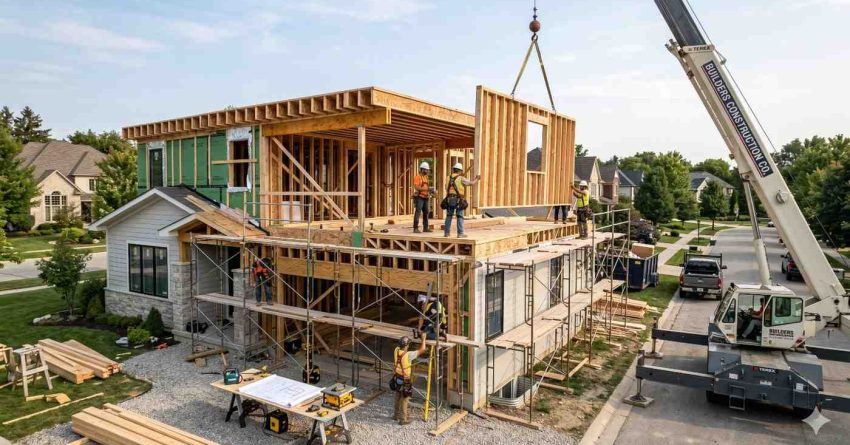
A second-storey addition is a major remodeling project that doubles your living space by building a new upper floor on top of an existing single-storey home. For families outgrowing their footprint but loving their neighborhood, schools, or lot, building up is often the most powerful way to add bedrooms, bathrooms, and long-term equity without moving.
Pop-tops typically cost more per square foot than ground-floor additions but trigger fewer setback and lot-coverage issues, making them viable on tight urban lots where building out is impossible.
This guide covers definitions, structural feasibility, design, stairs, systems, real cost ranges, the construction process, permits, alternatives, case studies, and how to hire the right contractor for a project this complex.
What Is a Second-Storey Addition?
A second-storey addition is the construction of a new upper level on a home that previously had only one. The scope ranges from small dormers and partial pop-ups over part of the existing footprint to a complete new floor that doubles the home’s square footage.
Full vs Partial Second Storey
A full second storey covers the entire footprint of the existing first floor. A partial second storey covers only a portion — usually above an existing one-storey wing — preserving lower ceilings or cathedral spaces in other parts of the home. Partial additions cost less but create more complex rooflines.
Pop-Top vs Pop-Up
“Pop-top” and “pop-up” are interchangeable industry terms for second-storey additions, though “pop-top” is more common in coastal and urban markets like Denver and California, while “pop-up” appears more in the Northeast. Both describe the same structural process: removing the existing roof and building a new conditioned floor above.
Anatomy of a Second-Storey Addition
Every second-storey addition involves five core systems that must coordinate: foundation reinforcement (when required), reinforced first-floor walls, new floor framing tied to the existing structure, the new upper-level shell, and a new roof. Layered on top are MEP systems, insulation, finishes, and the new staircase connecting the levels.
Second-storey additions span a spectrum from small dormer pop-ups to complete new upper floors, and a dedicated full second-storey addition guide walks through every definition, scope variation, and real-world example homeowners should understand before scoping their own project.
Can Your House Support a Second Storey?
Not every home is a candidate. Feasibility comes down to four interlocking questions about foundation capacity, wall strength, environmental loads, and engineering review.
Foundation Analysis
The existing foundation must be capable of carrying roughly double the vertical load — the weight of the new floor, walls, roof, finishes, occupants, and live loads like furniture and snow. Older foundations, shallow footings, and pier-and-beam systems often need underpinning or supplemental support before construction can begin. A geotechnical evaluation or foundation engineer’s report is usually the first hard expense.
First-Floor Wall Reinforcement
Existing walls must transfer the new upper-level loads down to the foundation. In most homes built before modern energy codes, this means opening walls to add or replace studs, add shear panels, or install new headers and beams. Homes with non-load-bearing partition walls or compromised framing can require near-complete first-floor stripping — a significant cost driver.
Snow, Wind, and Seismic Loads
Adding a second storey changes how wind and seismic forces affect the entire structure. In hurricane zones, high-wind WUI zones, and seismic regions like California and the Pacific Northwest, engineers must recalculate the entire lateral load path. Coastal and snowbelt projects often require upgraded hold-downs, sheathing nailing schedules, and roof tie-down details.
When You Need a Structural Engineer
For any second-storey project, a licensed structural engineer is non-negotiable — it is not a place to save money. The engineer’s stamped drawings become the foundation of your permit application, your contractor’s bid, and your insurance coverage during construction.
The structural feasibility question is the single biggest gate on whether a second-storey addition is even possible, and our second-storey feasibility assessment breaks down how engineers evaluate foundations, wall framing, and load paths to determine if your home can carry the new weight.
Designing Your Second-Storey Addition
Good design balances how the new level functions internally with how it looks from the curb and how it integrates with the existing first floor.
Floor Plan Options
Most second-storey additions add three to four bedrooms, two bathrooms, and often a laundry — relocating the master suite upstairs is the most common move. Other configurations include a master + nursery + bonus room, or multi-generational layouts with a second living area. Plumbing should stack vertically with first-floor wet walls whenever possible to keep costs manageable.
Staircase Location
The new staircase consumes roughly 70–100 square feet between both floors. Locating it well is critical: too close to the front door creates an awkward entry; tucked in the back of the home creates dead circulation. Most successful designs sit the stair in a transitional spot — adjacent to the kitchen, dining, or main hallway.
Roofline and Façade Symmetry
The number-one curb appeal failure on pop-tops is a façade that looks like a separate building stacked on top. Strong designs match siding, window proportions, trim details, roof pitch, and overhang depth between floors so the home reads as a unified two-storey structure.
The way a new upper level is laid out shapes daily livability for decades, and our second-storey floor plan options resource shows configurations for master suites, multi-bedroom layouts, and bonus rooms with annotated plans you can use as starting points.
Staircase Planning Fundamentals
Stair design touches code compliance, daily livability, structural framing, and finished aesthetics all at once. The International Residential Code (IRC) sets minimum requirements: a maximum 7¾-inch riser, minimum 10-inch tread, minimum 36-inch clear width, and 6 feet 8 inches of headroom — but comfortable stairs usually exceed these minimums.
The three layouts that dominate residential additions are straight runs (simplest, longest footprint), L-shaped stairs with a landing (good for tight spots), and switchback stairs (most compact in plan but require more vertical alignment). Open-riser modern stairs add light and visual openness; closed-riser traditional stairs offer storage potential underneath.
Stair selection drives floor plan flow more than almost any other design choice, and our guide to staircase types for second-storey additions covers switchback, straight, and L-shape options with code dimensions and footprint trade-offs.
HVAC, Plumbing, and Electrical for a Second Storey
The systems decisions made during framing determine comfort, energy bills, and maintenance headaches for the lifespan of the home.
HVAC is the biggest systems decision. Three approaches dominate: zoning the existing system with new dampers and a second thermostat (cheapest, often inadequate), extending ductwork from the existing furnace/AC (works only if the unit is sized properly), or installing a dedicated upstairs system or multi-zone mini-split (most reliable, most expensive). Heat naturally rises, so unbalanced systems make upstairs uncomfortably hot in summer.
Plumbing runs vertically through new chases. Stacking upstairs bathrooms directly above first-floor wet walls dramatically reduces complexity and cost. New vent stacks must penetrate the new roof to code, and adding a laundry upstairs requires careful drainage and leak detection planning.
Electrical typically requires a new subpanel on the upper level fed from the main service. Many older homes will need a main service upgrade to 200-amp during the project, especially if the new floor adds significant load (electric appliances, HVAC, EV charging).
Conditioning a new upper level rarely works by extending the existing system alone, and our breakdown of HVAC for second-storey additions explains when zoning your current system works versus when a separate upstairs unit or mini-split is the smarter call.
How Much Does a Second-Storey Addition Cost?
Cost varies enormously by region, finish level, and structural scope. As of 2025, realistic ranges are:
| Scope | Cost per sq ft | Total (typical 1,000 sq ft addition) |
| Partial pop-top, basic finishes | $200–$300 | $200,000–$300,000 |
| Full second storey, mid-range | $300–$500 | $300,000–$500,000 |
| High-end, complex structural | $500–$800+ | $500,000–$800,000+ |
According to Remodeling Magazine’s Cost vs Value Report, major additions in the upscale category recoup roughly 50–65% at resale in most US markets, with high-cost-of-living metros sometimes returning more.
Hidden costs that catch homeowners off guard include temporary housing (often $3,000–$8,000/month), increased homeowners insurance during construction, foundation underpinning, asbestos or lead remediation in older homes, and street-tree or utility-relocation fees in urban areas. Our placeholder spoke on true all-in second-storey costs documents these hidden expense categories in full detail.
National averages mask huge regional and scope-driven variation, so our detailed second-storey addition cost breakdown walks through per-square-foot ranges, hidden costs, and financing options so you can build a realistic budget before contacting contractors.
The Construction Process and Timeline
A typical second-storey addition runs 6–12 months from contract signing through final inspection, broken into predictable phases.
Pre-construction (4–10 weeks): Design, structural engineering, permit submission, plan review, contractor selection, material ordering for long-lead items.
Demolition (1–2 weeks): Roof removal, interior tear-out where first-floor walls need reinforcement, site protection setup.
Weatherproofing the open structure is the most stressful phase for live-in homeowners — temporary roof tarps, plastic sheeting, and weather windows govern schedule. Most contractors aim to remove the roof and dry-in the new structure inside three to four weeks.
Framing and dry-in (3–6 weeks): New floor system, walls, roof, and exterior sheathing brought to weather-tight condition.
Rough-in (3–5 weeks): MEP systems installed before insulation. Inspections at framing, electrical rough, plumbing rough, and HVAC rough.
Finish phase (8–14 weeks): Insulation, drywall, trim, paint, flooring, cabinets, fixtures, exterior siding, and the new stairs.
Punch list and final inspections (2–4 weeks): Final walkthrough, certificate of occupancy, and warranty documentation. We address live-in vs move-out logistics in a dedicated spoke covering the realistic decision matrix for families.
Knowing what happens week by week helps you plan housing, work schedules, and family logistics, and our second-storey addition timeline lays out a realistic phase-by-phase schedule from demo through final punch list.
Permits, Code, and Approvals
Second-storey additions trigger more code reviews than nearly any other residential remodel because they affect the entire structure.
You will typically need building, electrical, plumbing, mechanical, and possibly demolition permits — sometimes a separate structural permit. Plan review usually takes 6–12 weeks in most US jurisdictions, longer in heavily regulated coastal cities.
Height restrictions are the most common deal-breaker: many neighborhoods cap building height at 25–35 feet, which can prevent or limit second-storey work even when the foundation is capable. Heritage and historic district approvals add Certificate of Appropriateness review that can add months. HOA approval is required in covenanted communities. Some jurisdictions require neighbor notification for projects that change the existing roofline or block views. Pop-tops often trigger stormwater management code because the new roof area increases runoff.
Pop-tops trigger more code reviews than most ground-floor projects, and our complete reference on second-storey permit requirements covers plan review, height restrictions, neighbor notification, and stormwater code triggers in one place.
Second Storey vs Alternatives: Making the Right Choice
Before committing to a pop-top, weigh it against three alternatives.
Building out (ground-floor addition): Lower cost per square foot, faster, less structurally disruptive — but requires available lot, may hit setback or lot coverage limits, and reduces yard space.
Tear-down and rebuild: When the existing foundation, framing, or systems are so compromised that fixing them costs more than starting over, a full rebuild can deliver a better house for similar money.
Moving: Sometimes selling and buying a larger home in the same area produces better economics, especially when transaction costs are favorable.
Before committing to a pop-top, most homeowners weigh it against selling and buying larger, and our second-storey vs moving decision framework compares true all-in costs, disruption, and long-term equity outcomes side by side.
If a ground-floor expansion makes more sense for your lot and lifestyle, our complete guide to home additions covers every alternative addition type from bump-outs to wing additions in equal depth.
Case Studies and Common Mistakes
The most informative way to set expectations is to study real projects. Successful second-storey additions share three traits: thorough pre-construction structural analysis, contractors with documented pop-top experience, and homeowners who built realistic 20% contingencies into their budgets.
Common mistakes include underestimating the time to dry-in (leading to weather damage), choosing the lowest bid from a generalist contractor without structural experience, designing a façade that does not match the first floor, locating the staircase poorly, undersizing HVAC for the new upper level, and skipping a true contingency budget. Regional ROI varies significantly, which is why our planned second-storey ROI by metro area resource will benchmark resale outcomes in the country’s top 50 markets.
Real projects show what numbers and timelines cannot, and our ranch-to-two-story conversion case study documents a typical mid-century ranch transformation from feasibility through final reveal with budget, timeline, and lessons learned.
Working With the Right Contractor
A second-storey addition is not a job for a generalist remodeler. The structural complexity, weather exposure during dry-in, and coordination across structural, MEP, and finish trades demand a contractor who has completed multiple pop-tops and can show stamped engineering drawings, before-and-after photos, and verifiable references from past clients.
Verify state licensing, general liability and workers comp coverage at appropriate limits, builder’s risk insurance during construction, and a written contract with a fixed-price or carefully bounded cost-plus structure and a clear change-order process.
Second-storey work demands specialized structural expertise most general remodelers do not carry, so our guide to hiring a qualified addition contractor explains licensing checks, structural experience verification, and the right questions to ask before signing.
When you are ready to move from research to action, Mr. Local Services connects homeowners directly with vetted remodeling specialists who handle structural additions, permitting, and end-to-end project management across the United States.
Conclusion
Second-storey additions deliver more square footage, more bedrooms, and often more long-term equity than any other remodel — when feasibility, design, structure, systems, and permits all align.
The cluster pages linked throughout this guide go deeper into each dimension covered here, giving you the detailed answers needed to plan, budget, and execute confidently.
When you are ready to talk to qualified pros, we at Mr. Local Services match you with vetted second-storey addition specialists in your area — request a quote today.
Frequently Asked Questions
How long does a second-storey addition take from start to finish?
Most projects run 6 to 12 months total — about 2 months of pre-construction work, 4 to 9 months of active construction, and a few weeks of punch list. Complex structural scope or permit delays can extend timelines.
Can I live in my house during a second-storey addition?
Sometimes, but it is difficult. The roof-off phase typically requires 2 to 4 months of significant disruption. Many families move out for at least the demo and dry-in phases, then return for finish work.
Does a second-storey addition increase home value?
Generally yes, especially when the new layout adds bedrooms and bathrooms. National data shows recoup rates around 50–65% for upscale additions, with higher returns in supply-constrained markets where comparable larger homes are scarce.
Do I need a structural engineer for a second-storey addition?
Yes. Every second-storey project requires stamped engineering drawings for the permit application and for your contractor to build safely. Engineer fees typically run $2,000–$8,000 depending on project complexity.
What’s the difference between a pop-top and a pop-up?
The terms are interchangeable industry slang for the same project: removing the existing roof and building a new conditioned upper level. Regional preferences vary, but both refer to the identical construction process.
Will I need to upgrade my electrical service?
Often yes. Adding 1,000+ square feet of conditioned space, new HVAC, and modern appliances frequently requires upgrading from 100-amp to 200-amp service, plus a new upstairs subpanel for circuit distribution.
What permits are required for a second-storey addition?
Typically building, electrical, plumbing, and mechanical permits, sometimes a separate structural permit, and HOA or historic district approvals where applicable. Plan review usually takes 6 to 12 weeks before construction can begin.