Trex is generally cheaper than TimberTech, but TimberTech often delivers better performance, heat resistance, and a more authentic wood appearance. The right choice depends on budget, climate, and how long you plan to keep the deck. For homeowners, landlords, and property managers comparing composite decking, the smartest decision balances upfront cost against long-term durability, warranty strength, and curb appeal — three areas where these two brands differ in measurable ways.
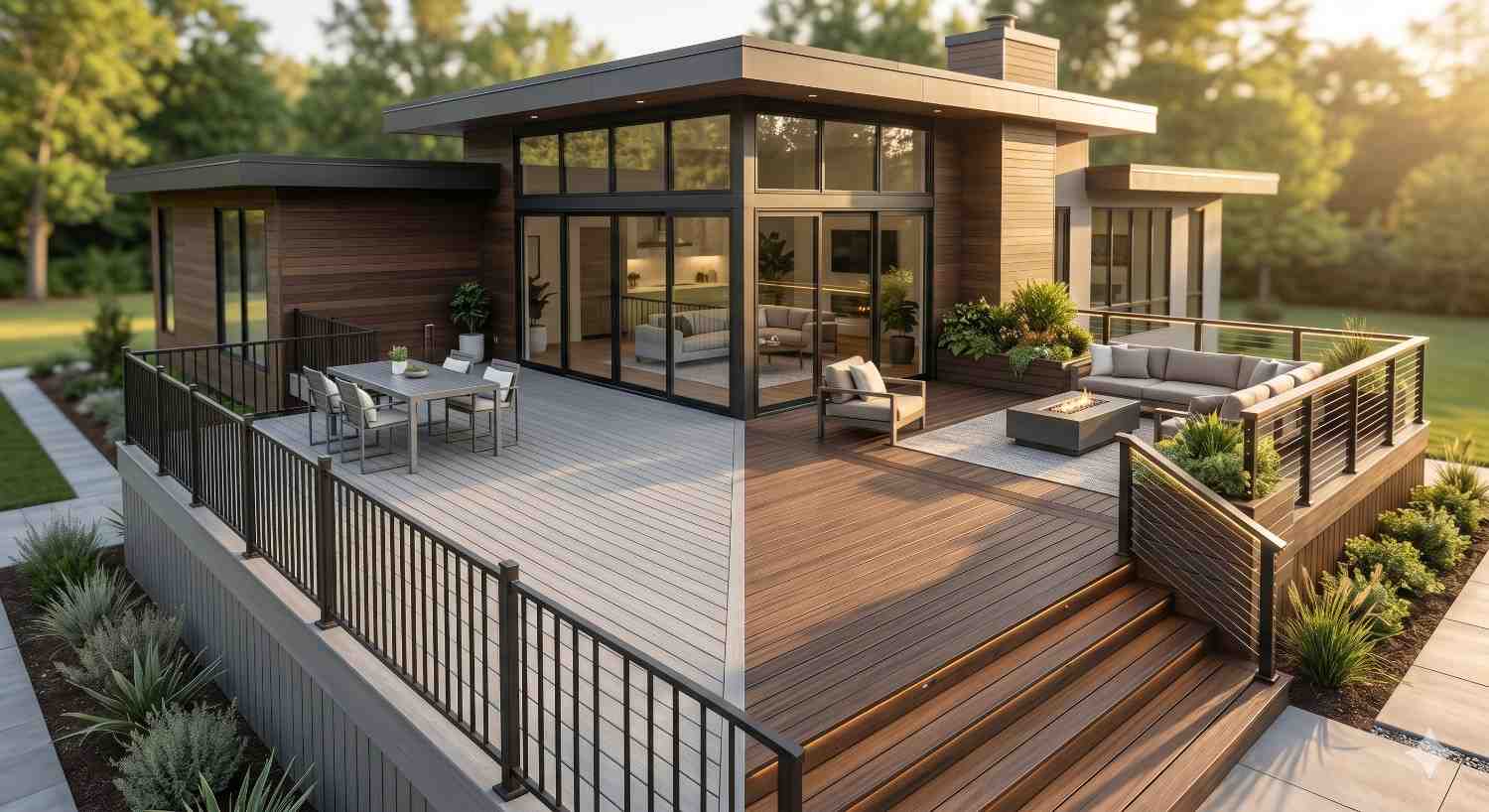
The Direct Answer: Trex Is Cheaper, TimberTech Is Often Better
Trex is the more affordable composite decking brand at every tier, with entry-level boards starting near $2.50 per linear foot versus TimberTech’s roughly $4.50 per linear foot baseline. TimberTech, owned by AZEK, typically wins on aesthetics, heat performance, and premium capping technology. Trex wins on price, availability, and value at the budget level.
Price Comparison Per Square Foot
Material-only costs reveal the clearest gap. Trex Enhance Basics runs about $2.50–$3.50 per linear foot, Trex Transcend climbs to $5–$6, and Trex Signature reaches $7+. TimberTech AZEK PVC boards start near $6 per linear foot and premium lines approach $9. For a standard 320-square-foot deck, choosing Trex over TimberTech can save $1,500 to $3,000 on materials alone, before labor.
Quality and Performance Differences
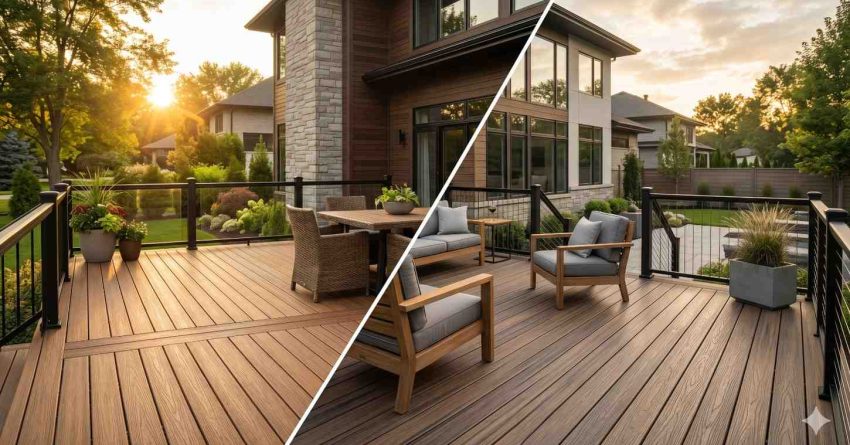
TimberTech’s PVC and capped polymer boards resist heat better than Trex’s wood-plastic composite cores. TimberTech AZEK lines stay noticeably cooler underfoot in direct sun and resist moisture absorption almost completely. Trex offers a strong 25-year fade and stain warranty, while TimberTech AZEK extends to a 50-year structural warranty. Both resist rot, splintering, and insects, but TimberTech’s higher-end visuals look closer to real hardwood.
Pricing the boards is one part of the decision. The full picture includes labor, framing, fasteners, and permits, which is why the total composite deck installation cost often shifts the comparison once a real quote arrives.
How Each Brand Performs in Real-World Conditions
Climate matters more than brochures suggest. In hot southern states, TimberTech’s PVC lines stay cooler and resist warping under sustained heat. In cold northern climates, both brands handle freeze-thaw cycles well, though TimberTech’s lower water absorption gives it a slight edge against ice damage. Coastal homeowners benefit from TimberTech’s mold and salt resistance, while inland properties on a budget get strong value from Trex Enhance or Transcend lines.
Heat Resistance, Fading, and Long-Term Durability
Trex boards can feel hot underfoot in peak summer, especially in darker shades. TimberTech AZEK boards stay measurably cooler thanks to their PVC composition. Both brands fade slowly under UV exposure, but TimberTech’s Advanced PVC technology holds color longer. Expect TimberTech decks to look newer at year 15 compared to Trex at the same age, particularly in high-sun regions.

Which One Is the Better Investment for Your Home?
Choose Trex when budget is the priority and the deck is a standard residential build under typical conditions. Choose TimberTech when long-term appearance, premium feel, and resale value justify the higher upfront cost. Property managers handling multiple units often pick Trex for cost control. Homeowners building a forever deck usually prefer TimberTech. Either way, working with qualified local deck builders protects the warranty and ensures the boards perform as designed.
Conclusion
Trex wins on price. TimberTech wins on premium performance, heat resistance, and aesthetics. The better brand depends on your budget, climate, and how long you plan to own the property.
Both brands outlast traditional wood by decades when installed correctly and supported by routine composite decking maintenance, making either a sound investment for residential and commercial properties.
Ready to compare quotes and build with confidence? Connect with Mr. Local Services today for trusted deck professionals near you.
Frequently Asked Questions
Is TimberTech really worth the extra cost over Trex?
For homeowners prioritizing premium looks, cooler surface temperatures, and a longer warranty, yes. Budget-focused projects rarely need TimberTech’s upgrades.
Does Trex get hotter than TimberTech in the sun?
Yes. Trex wood-plastic composite boards retain more heat than TimberTech PVC lines, especially in dark colors during peak summer hours.
Which brand has the better warranty?
TimberTech AZEK offers a 50-year limited warranty on premium lines. Trex offers 25 years on most products and 50 years on Signature.
Can I install TimberTech or Trex myself?
DIY installation is possible but voids portions of the warranty if framing or fastening specs are missed. Professional installation is strongly recommended.
Which brand lasts longer overall?
TimberTech PVC boards typically outlast Trex composite boards by 5 to 10 years in harsh climates, though both exceed 25 years under normal conditions.