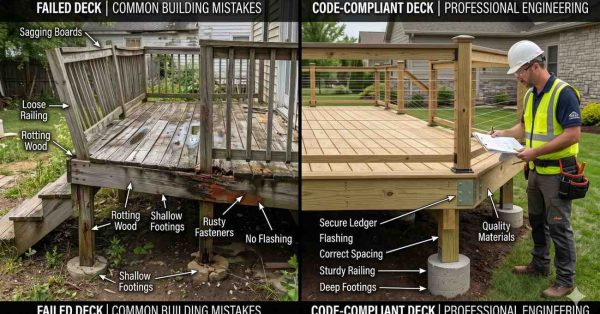
Roughly 90% of deck collapses are caused by ledger board failure, the connection point where the deck attaches to the house. When this single connection weakens through corrosion, rot, or improper fastening, the entire structure pulls away from the building. For homeowners, landlords, and property managers across the USA, understanding this failure point is the difference between a safe outdoor space and a serious liability. This guide breaks down the cause, the warning signs, and the steps that prevent it.
Ledger Board Failure: The Single Biggest Cause
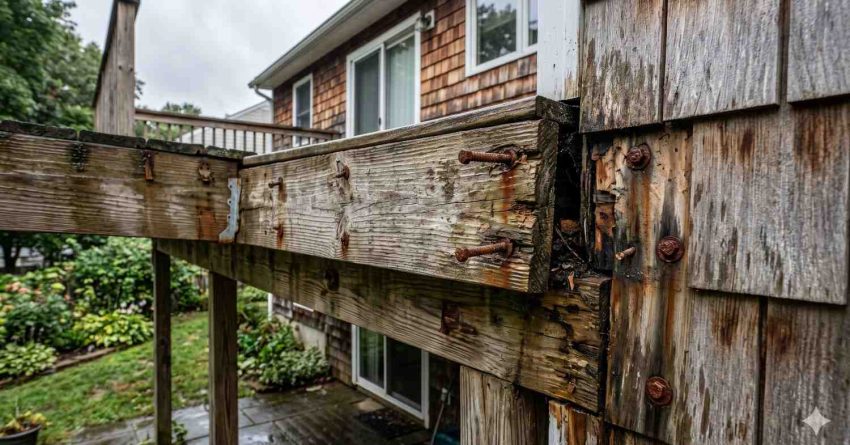
The ledger board is the horizontal beam bolted to the house that supports one full side of the deck. When it fails, the deck collapses inward toward the foundation, often without warning. Most ledger failures trace back to one issue: the deck was attached with nails instead of through-bolts or lag screws, or flashing was missing, allowing water to rot the connection from the inside.
Why Ledger Connections Fail
Three problems account for nearly every ledger failure. First, nails alone cannot hold a deck’s load and pull free over time. Second, missing or damaged flashing lets rainwater seep behind the ledger, rotting both the deck board and the home’s rim joist. Third, corrosion attacks fasteners exposed to moisture, especially in humid or coastal regions. Each weakness compounds the others, and the failure is rarely visible from above.
Warning Signs of Ledger Detachment
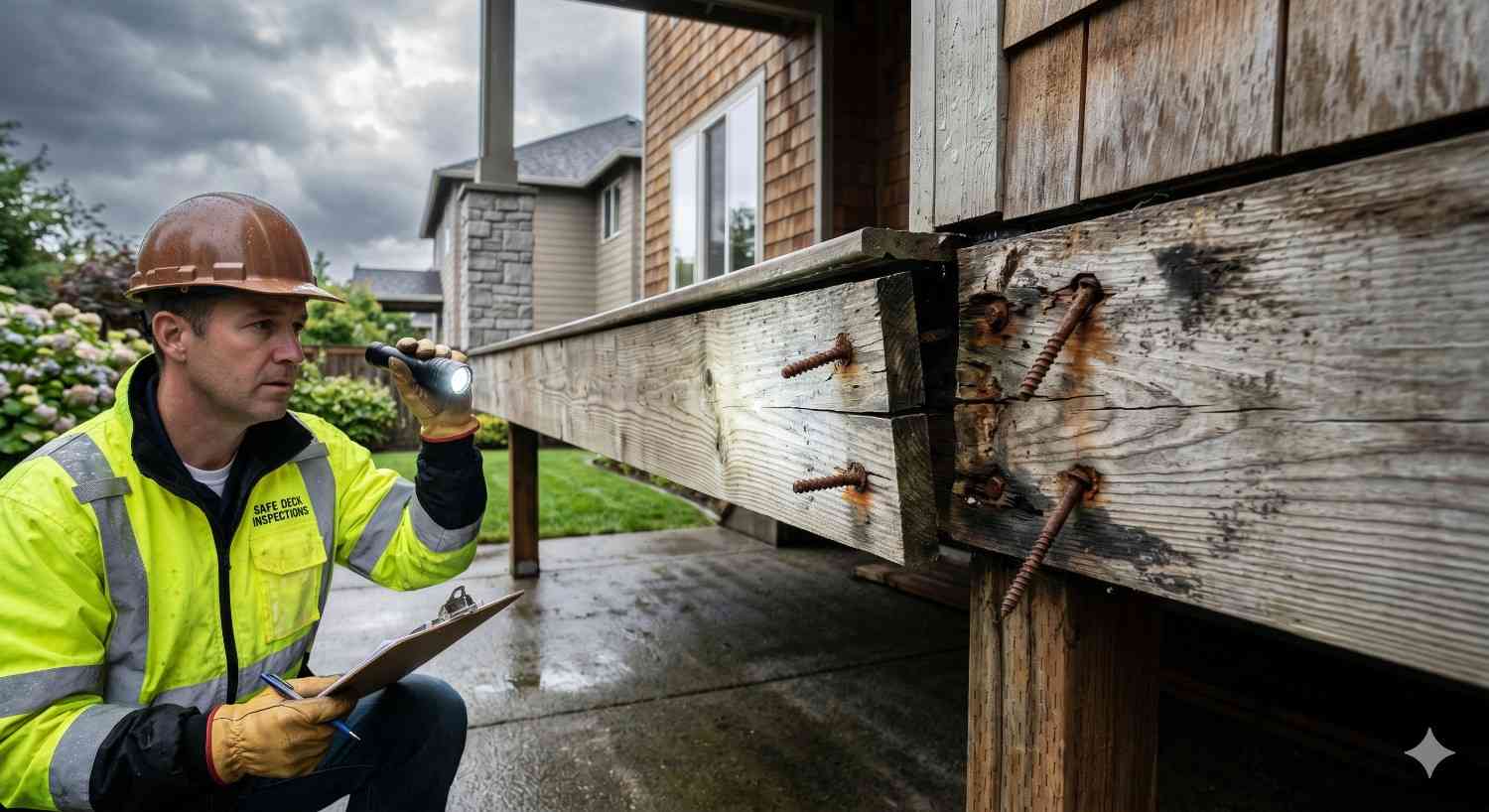
Watch for gaps between the deck and the house, rusty or weeping fasteners, soft or discolored wood near the attachment point, and any visible sagging on the house side of the deck. Cracked siding above the ledger, water stains on interior walls behind the deck, and a slight bounce when walking near the house all signal that the connection is compromised and needs immediate professional evaluation.
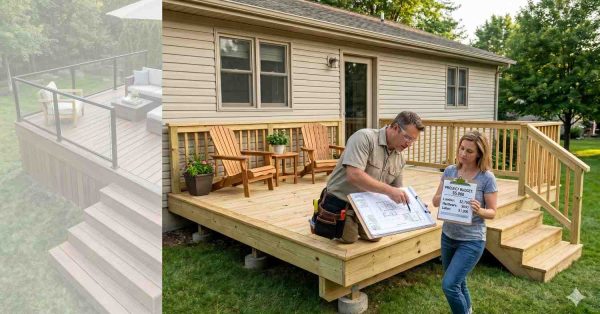
When inspection reveals any of these conditions, the safest next step is hiring a qualified deck repair specialist who can assess the full structure rather than treating symptoms.
Other Critical Factors Behind Deck Collapses
Beyond the ledger, the remaining failures cluster around aging materials, hidden decay, and decks built or loaded beyond their design limits.
Rot, Corrosion, and Aging Materials
Wood decks have a functional lifespan, and untreated lumber begins decaying within a decade. Unchecked moisture damage hollows out posts, joists, and railings from the inside while the surface still looks intact.
Galvanized fasteners corrode, especially when in contact with pressure-treated wood, and concrete footings can shift or crack as soil settles around them.
Overloading and Improper Construction
Decks are designed for a specific load capacity, typically 50 pounds per square foot. Crowded gatherings, hot tubs, and heavy planters can exceed this limit, particularly on older decks. DIY builds often miss code requirements: undersized joists, missing joist hangers, posts set without proper footings, and railings anchored only to deck boards rather than framing. Each shortcut reduces the margin between safe use and structural failure.
How to Prevent Deck Collapse Through Inspection
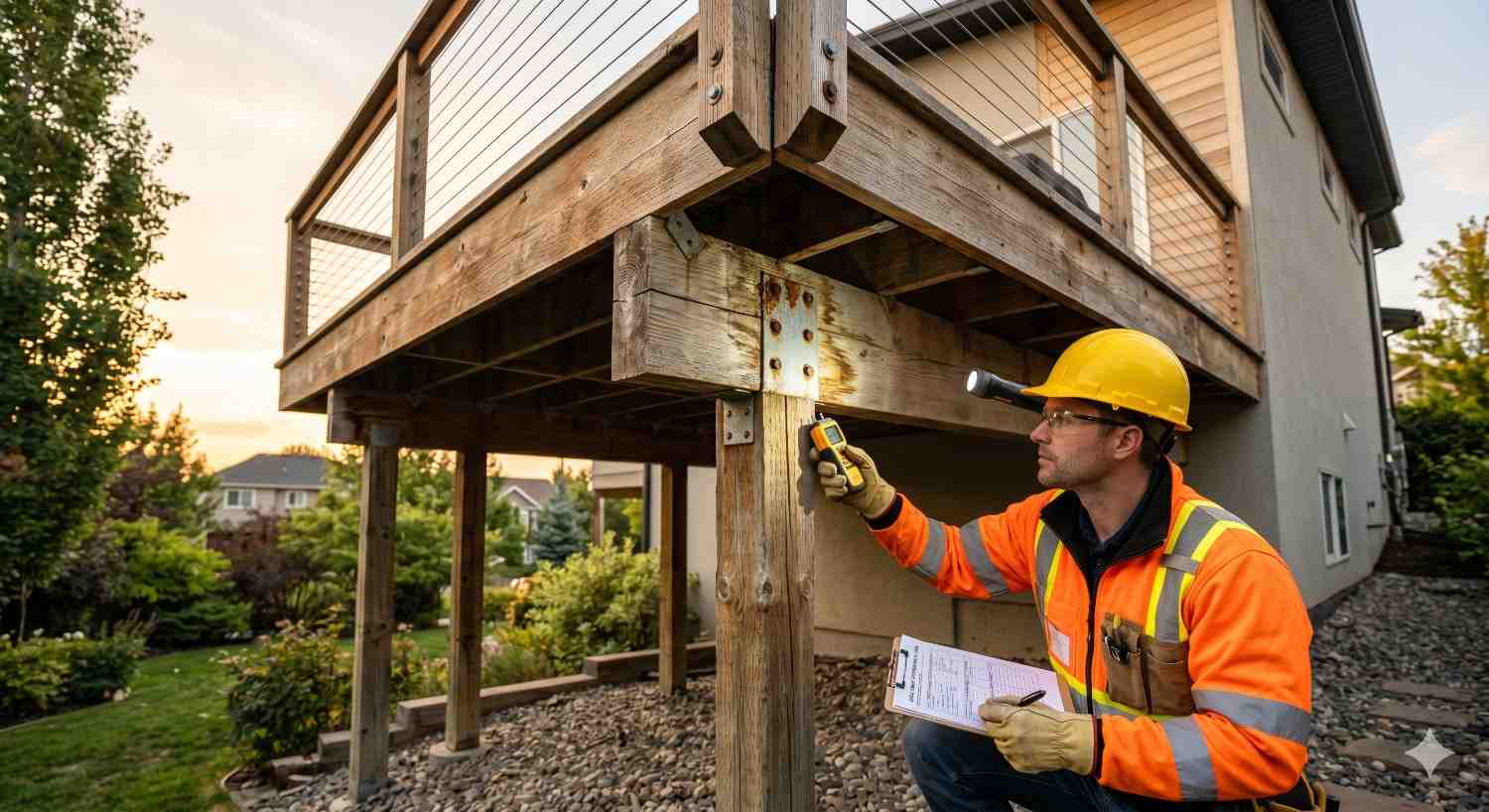
Annual inspection is the most effective prevention. Check the ledger board, fasteners, posts, joists, railings, and stair connections every spring. Look for soft spots, rust, gaps, and movement. Probe suspect wood with a screwdriver: if it sinks easily, the wood is rotted. Replace corroded hardware, reseal flashing, and reinforce undersized connections. For decks older than fifteen years, a professional structural assessment is strongly recommended before another season of use.
Conclusion
Ledger board failure causes the overwhelming majority of deck collapses, with rot, corrosion, and overloading completing the picture. Catching these issues early protects both property and people.
For homeowners and property managers, a yearly structural safety check keeps decks reliable and reduces liability across every season.
When your deck needs expert evaluation or repair, Mr. Local Services connects you with trusted, qualified professionals who deliver dependable results.
Frequently Asked Questions
How often should a deck be inspected for safety?
Inspect your deck annually, ideally in early spring. Decks older than fifteen years or showing visible wear should receive a professional structural assessment to confirm continued safe use.
Can a deck collapse without warning?
Yes. Most ledger failures progress invisibly behind siding and flashing, so collapses often happen suddenly, especially under crowd loads or after heavy rain accelerates hidden rot.
Are older decks more dangerous than new ones?
Generally yes. Decks built before modern code updates often used nails instead of bolts and lacked proper flashing, making them statistically more prone to ledger and structural failure.
What is the average lifespan of a wood deck?
A properly built and maintained pressure-treated deck lasts 15 to 20 years. Without sealing, inspections, and timely repairs, structural integrity can decline much sooner.
Should I repair or replace a failing deck?
If rot affects the ledger, posts, or multiple joists, replacement is usually safer and more cost-effective. Isolated damage can often be repaired by a qualified professional.