Building a deck without a permit in the USA can trigger stop-work orders, hefty fines, forced removal, insurance denials, and serious resale complications. Local building departments treat unpermitted decks as code violations, and the consequences often outlast the project itself. Homeowners, landlords, and property managers who skip the permit process risk losing money, time, and the structural value the deck was meant to add to the property.
Immediate Consequences of Building a Deck Without a Permit
When a deck is built without the required permit, code enforcement can issue a stop-work order, levy fines, and require the structure to be inspected, modified, or torn down. Penalties vary by city and county, but most jurisdictions treat unpermitted construction as a documented violation tied directly to the property record.
Stop-Work Orders and Code Enforcement Fines
Once a neighbor complaint, aerial survey, or routine inspection flags the deck, the local building department typically issues a stop-work order. Fines often start at a few hundred dollars and can climb into the thousands, with daily penalties accruing until the violation is resolved. Some cities double permit fees as a retroactive penalty. The longer the deck remains unpermitted, the higher the financial exposure becomes for the property owner.
Forced Removal or Rebuild of the Deck
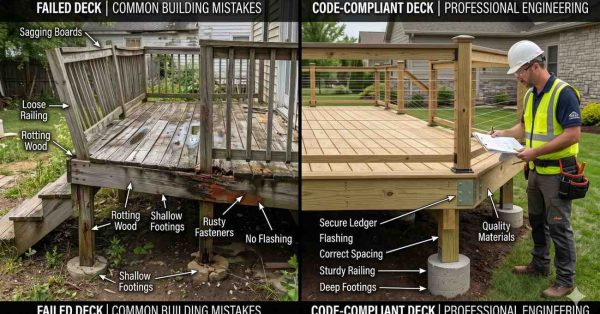
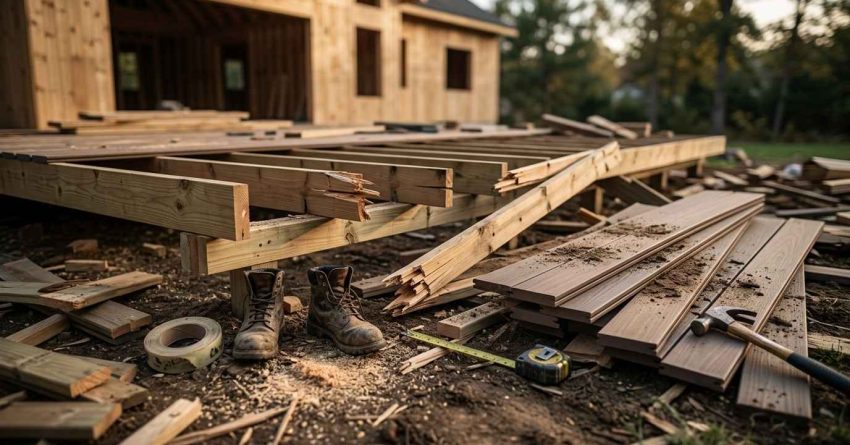
If the deck fails to meet structural, setback, or load-bearing codes, inspectors can order partial modifications or full demolition. Footings, ledger boards, railing heights, and stair dimensions are common failure points. Rebuilding to code after the fact frequently costs more than the original project because materials must be removed, disposed of, and replaced, often without insurance coverage for the loss.
Understanding the penalties is one part of the picture. How the permit process actually works determines whether a homeowner avoids these outcomes entirely or walks into them unaware.
Long-Term Risks for Homeowners and Property Sellers
The consequences of an unpermitted deck rarely end with fines. They follow the property through insurance claims, refinancing, and resale. Title searches, appraisals, and buyer inspections routinely uncover unpermitted work, and the discovery can derail transactions or reduce property value significantly.
Insurance Denials and Resale Complications
Most homeowner insurance policies exclude coverage for damage tied to unpermitted structures. If the deck collapses or causes injury, the insurer may deny the claim and leave the owner personally liable. During resale, buyers often demand the deck be permitted retroactively, removed, or priced into a lower offer. Mortgage lenders may refuse to finance properties with documented violations, narrowing the buyer pool.
How to Fix an Unpermitted Deck After the Fact
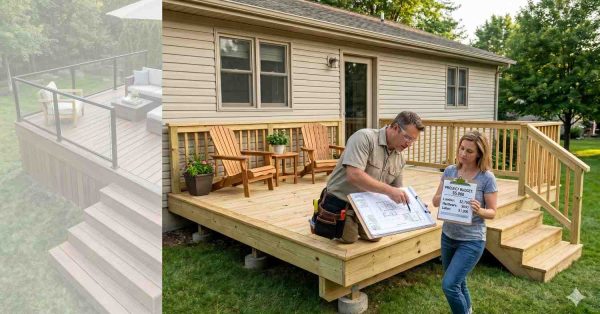
Retroactive permitting is possible in most jurisdictions, but the process is stricter than the original permit would have been. The owner submits as-built drawings, pays back-permit fees, and schedules a full inspection. If the deck meets code, it gets approved. If not, modifications are required before approval is granted.
For complex cases, working with licensed deck builders streamlines the inspection and remediation process, since contractors familiar with local codes can document the structure properly and address violations efficiently.
Conclusion
Skipping a deck permit exposes the property to fines, forced rebuilds, insurance gaps, and resale obstacles that almost always cost more than the permit itself.
For homeowners, landlords, and property managers, treating the permit as part of the build, not an obstacle, protects both the investment and the property’s long-term value.
Need help permitting, repairing, or rebuilding a deck the right way? Mr. Local Services connects you with trusted, licensed professionals ready to get the job done.
Frequently Asked Questions
Can a city force me to tear down an unpermitted deck?
Yes. If the deck fails to meet code or cannot be permitted retroactively, local authorities can require partial modification or complete removal at the owner’s expense.
Will my insurance cover an unpermitted deck?
Most policies exclude unpermitted structures. Claims for damage, injury, or collapse tied to the deck are often denied, leaving the property owner personally responsible.
How much are fines for building a deck without a permit?
Fines vary by jurisdiction but typically range from a few hundred to several thousand dollars, with daily penalties accruing until the violation is resolved.
Can I sell a house with an unpermitted deck?
You can, but buyers, lenders, and appraisers often require retroactive permitting, removal, or a price reduction before closing the transaction.
How do I get a permit for a deck already built?
Submit as-built drawings, pay back-permit fees, and schedule an inspection. If the deck meets code, it gets approved; otherwise, modifications are required first.