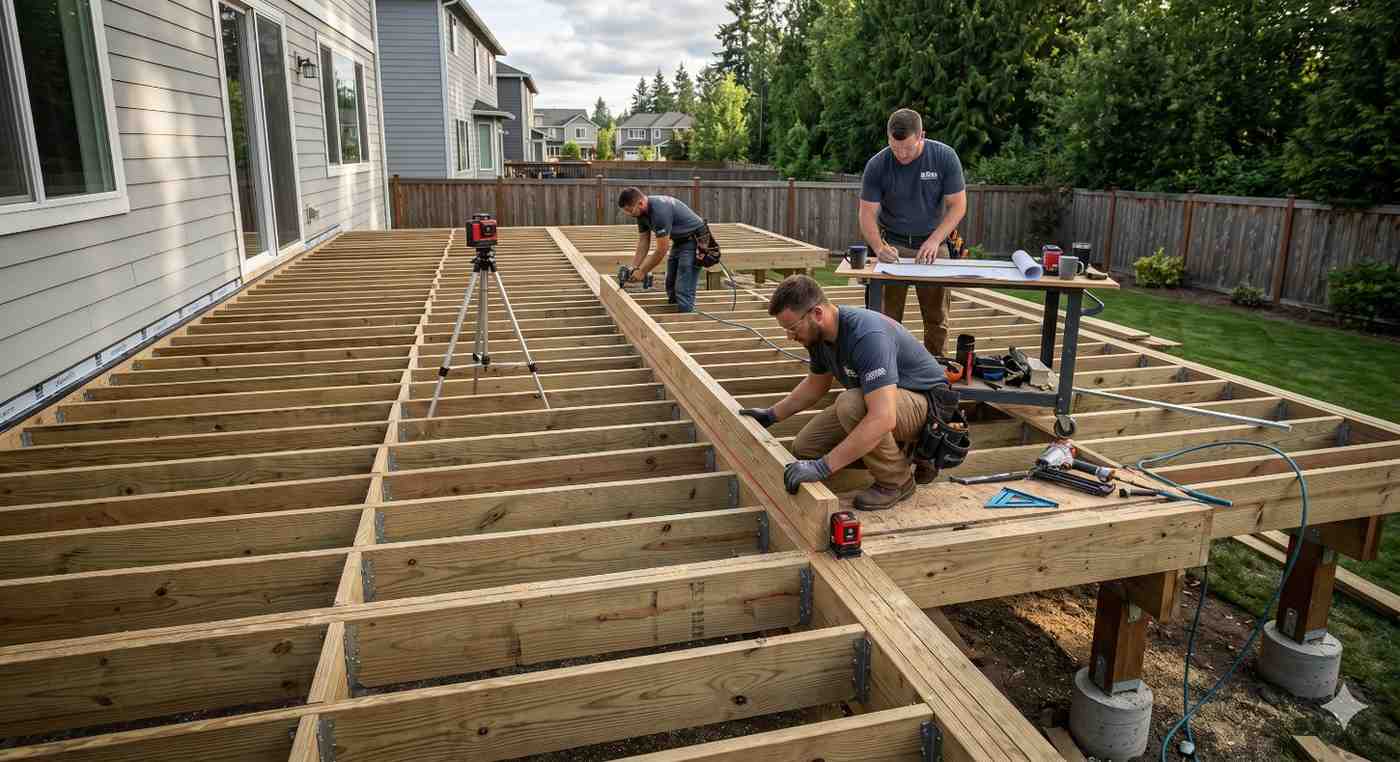
The hardest part of building a deck is the framing and structural layout. This stage decides whether the deck stands safely for decades or fails under load. Every cut, joist spacing, beam connection, and ledger attachment must follow precise structural logic and local building codes. Homeowners often underestimate this phase because the finished surface hides the engineering beneath. For property owners across the USA, getting framing right is the difference between a lasting investment and an expensive rebuild.
The Hardest Part — Framing and Structural Layout
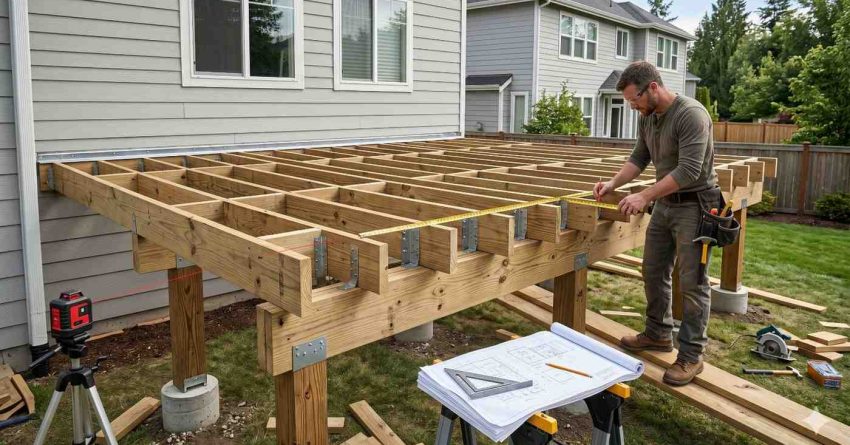
Framing is the hardest part of building a deck because it demands accurate load calculations, square layouts, level beams, and code-compliant connections. Mistakes at this stage compromise safety, void permits, and force costly tear-downs. Every later step depends on a framed structure that is plumb, level, and properly anchored to the home.
Why Framing Demands the Most Skill
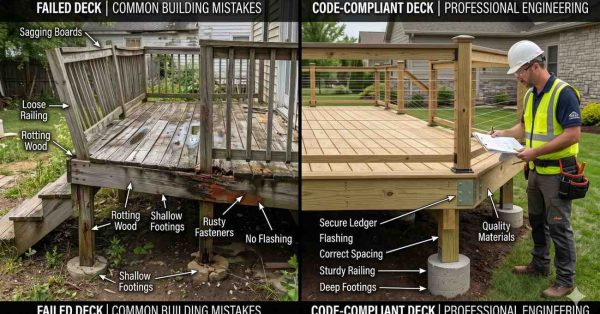
Framing requires reading plans, calculating joist spans, and selecting the right hardware for each connection point. The ledger board attachment to the house is the single most failure-prone area in residential decks. It must be flashed correctly to prevent water intrusion and bolted with structural lag screws into solid framing. Beam sizing, post placement, and joist hangers all require precision. One miscalculation shifts load paths and weakens the entire deck.
Load Calculations and Code Compliance
A deck must support live loads from people, furniture, snow, and movement. Building codes specify minimum joist sizes, spacing, and footing depths based on these loads. Code requirements vary by state, county, and even municipality across the USA. Inspectors check ledger flashing, guardrail strength, stair rise, and post connections. Skilled structural carpentry ensures every span meets code and every fastener carries its share of the load safely.
After the framing is solid, the rest of the build becomes manageable. This is where most homeowners benefit from hiring a qualified deck builder who handles the structural decisions and inspections before surface work begins.
Other Challenging Stages of Deck Construction
While framing is the toughest, several other stages create real difficulty for DIY builders and even experienced crews. Each one carries its own risks if rushed or done without the right tools, materials, and oversight.
Footings, Posts, and Ground Preparation
Footings anchor the deck to the ground and must reach below the frost line, which varies by region across the USA. Digging accurate holes, setting concrete piers, and aligning posts perfectly square is physically demanding work. Uneven footings throw off the entire frame above. Soil type, drainage, and slope all influence how footings perform over time. Many failed decks trace back to shortcuts taken during this early ground stage.
Permits, Inspections, and Local Codes
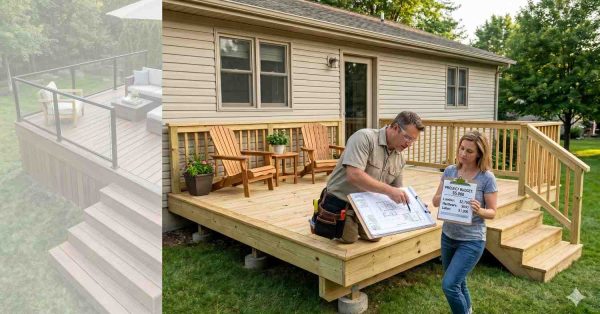
Most municipalities require a permit before any deck construction begins. Understanding local permit and code requirements takes time, paperwork, and coordination with inspectors. Plans must be submitted, footings inspected before pour, and framing approved before decking goes down. Missing an inspection step can trigger fines, forced removal, or insurance issues later. Compliance protects the homeowner, the property value, and any future buyer.
When to Hire a Professional Deck Builder
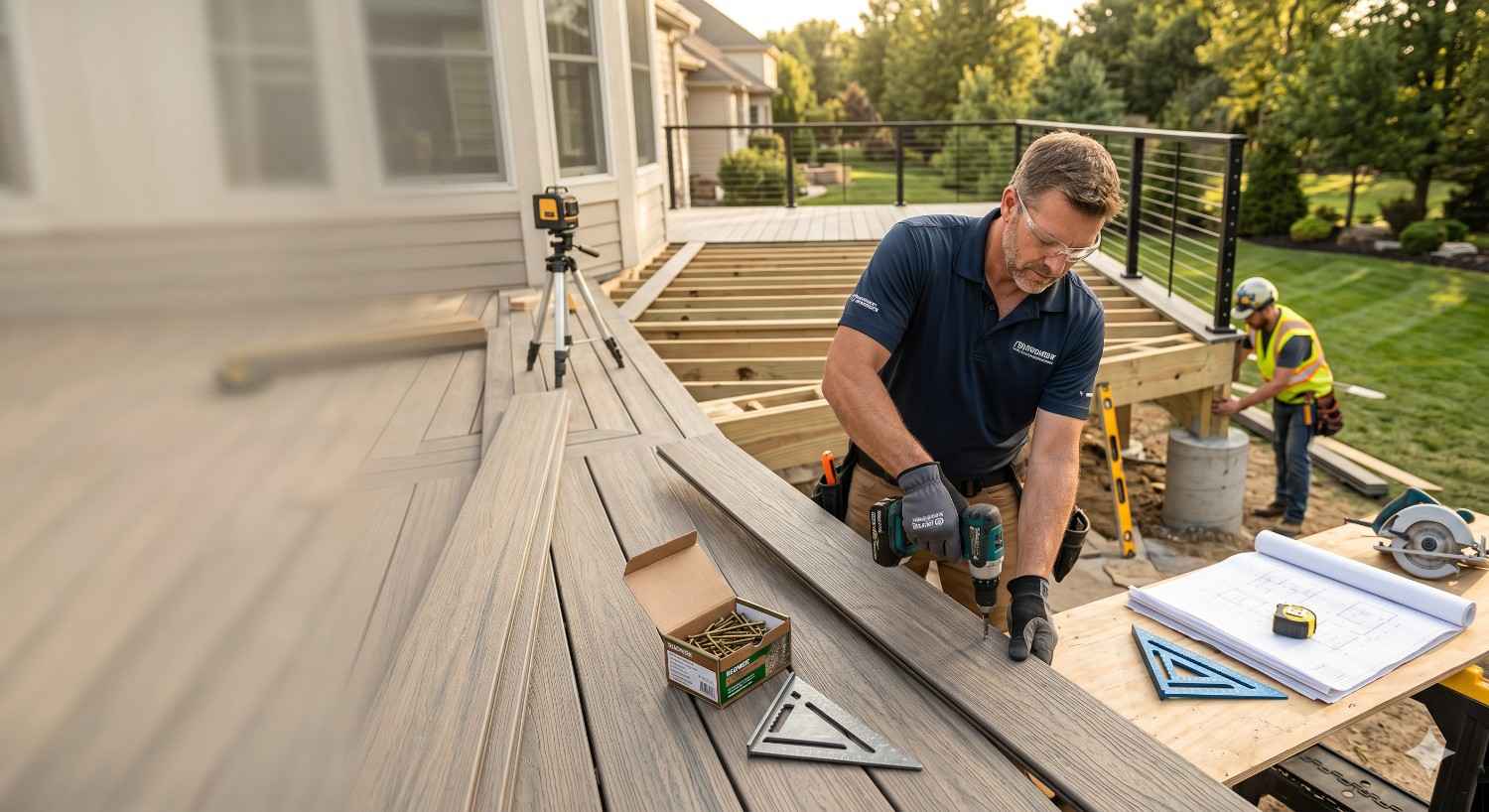
Hire a professional when the deck attaches to the home, sits more than a few feet off the ground, or requires permits and inspections. Pros bring experience with ledger flashing, beam sizing, code knowledge, and the heavy equipment needed for accurate footings. They also carry liability insurance, which protects the property owner if anything goes wrong. For most homeowners, landlords, and property managers, hiring out the framing phase delivers the safest, longest-lasting result.
Conclusion
The hardest part of building a deck is framing and structural layout, where load calculations, code compliance, and precision define the project’s safety and lifespan.
Homeowners, landlords, and property managers across the USA gain the most value by treating structural work as the foundation of every successful deck investment.
We at Mr. Local Services connect you with trusted deck professionals who handle framing, permits, and finishing — request your free quote today.
Frequently Asked Questions
How long does it take to build a deck?
Most residential decks take one to three weeks depending on size, design, weather, and permit timelines. Complex multi-level decks or custom features extend the schedule further.
Do I need a permit to build a deck?
Yes, most municipalities across the USA require a permit for any deck attached to a home or above 30 inches from the ground. Check local code before starting.
What is the most common deck mistake?
Improper ledger board attachment is the most common and dangerous mistake. Poor flashing or weak fasteners cause water damage and structural failure over time.
Can I build a deck without experience?
Small ground-level decks are possible for skilled DIYers, but raised or attached decks need professional framing knowledge to meet code and ensure long-term safety.
How much does a professional deck cost?
Professional deck builds typically range from $15 to $35 per square foot depending on materials, height, design complexity, and regional labor rates across the USA.