Wood decking is the original outdoor living surface: a natural, renewable material that has shaped American backyards for over a century. It spans every lumber type used on exterior deck structures, from pressure-treated pine to premium tropical hardwoods and modified wood products.
Choosing the wrong wood species, finish system, or maintenance approach for your specific climate can accelerate deterioration significantly and cost thousands in avoidable repair bills across a deck’s full lifespan.
This guide covers every major wood decking species, from pressure-treated lumber and cedar to tropical hardwoods and modified wood, including installation, finishing, maintenance, common problems, costs, and key replacement decisions.
What Is Wood Decking?
Wood decking refers to any lumber-based surface material installed horizontally on the structural frame of an outdoor deck. Unlike composite or PVC alternatives manufactured from blended engineered materials, wood decking is milled directly from timber. It retains the natural grain patterns, color variation, and tactile quality that many homeowners specifically seek and that manufactured products continue to approximate but not fully replicate.
The term encompasses a broad spectrum of materials. At the accessible end of the market, pressure-treated southern yellow pine is available at nearly every lumber yard in the country and delivers solid structural performance at a low cost. At the premium end, tropical hardwoods like ipe and cumaru offer extreme density and a lifespan that can exceed half a century. Modified wood products like Accoya and Kebony occupy a growing middle ground, combining natural wood aesthetics with engineered durability that rivals synthetic alternatives.
Softwood vs. Hardwood: The Core Distinction
The most fundamental classification in wood decking divides all species into two groups based on biological origin, not literal hardness:
Softwoods come from coniferous trees: pine, cedar, redwood, fir, and hemlock. They grow faster, are less dense, and are generally more affordable. They are easier to cut, fasten, and work with on-site, making them practical for both professional installers and experienced DIYers.
Hardwoods come from deciduous trees: ipe, cumaru, white oak, mahogany, tigerwood, garapa, and related tropical species. They are significantly denser, harder, and more resistant to wear and biological decay. Most hardwoods require pre-drilling and specialized corrosion-resistant fasteners.
Wood Decking in the Modern Market
The American wood decking market has evolved considerably over the past two decades. Composite and PVC products have taken significant market share, particularly in the mid-range residential segment. Natural wood remains dominant, however, in several key applications: pressure-treated lumber for budget-conscious builds and structural framing systems; cedar and redwood for Pacific Coast and premium residential applications; and tropical hardwoods for high-end builds where authentic aesthetics and extreme longevity justify the premium.
Whether you’re comparing species on price per square foot, weighing lifespan against maintenance burden, or decoding treatment grades, the core concepts of wood decking fundamentals — including species classifications, lifespan benchmarks by wood type, and a complete industry glossary — are covered in full in that dedicated cluster resource.
Pressure-Treated Lumber for Decking
Pressure-treated lumber is the most widely used wood decking material in the United States, accounting for the majority of residential deck builds by volume. It is ordinary softwood lumber, typically southern yellow pine or hem-fir, that has been infused with preservative chemicals under high pressure to resist rot, fungal decay, and insect damage. The result is an affordable, structurally reliable material that performs across virtually every climate when properly installed and maintained.
ACQ vs. MCA: Treatment Types Explained
Two primary treatment formulations dominate the current residential market:
ACQ (Alkaline Copper Quaternary) is the most widely available treatment, using copper combined with a quaternary ammonium compound to prevent decay and insect damage. It is safe for residential use, including ground-contact applications, and is appropriate for both surface decking boards and structural substructure components.
MCA (Micronized Copper Azole) uses micro-sized copper particles that penetrate wood fiber more uniformly than traditional dissolved-copper products. MCA-treated lumber tends to show less surface corrosion at fastener contact points and is often preferred by builders for finished decking surfaces where appearance is a priority.
Ground Contact vs. Above-Ground Ratings
The distinction between Above Ground (AG) and Ground Contact (GC) ratings is a structural safety requirement, not a marketing category:
Structural members in direct contact with soil or concrete, including posts, beam ends, and stair stringers that run close to grade, must carry a GC or UC4B rating. This higher treatment retention level provides the extra protection that prolonged moisture and soil contact demands. Surface decking boards installed above grade on a standard residential deck typically use an AG rating, which is sufficient for that exposure level.
Pressure-treated lumber also requires patience before finishing. New PT boards hold significant residual moisture from the treatment process. Applying stain or sealer before boards have dried sufficiently results in poor product penetration and early finish failure. Most manufacturers recommend confirming moisture content below 19 percent, which typically requires waiting a minimum of 60 to 90 days after installation.
From ACQ vs. MCA treatment comparisons and ground-contact grading requirements to staining timelines, substructure applications, and safety considerations for residential use, everything needed to evaluate PT lumber as a long-term investment is covered in our comprehensive pressure-treated decking guide.
Cedar Decking
Cedar is one of the most trusted natural wood decking species in North America, valued for its inherent resistance to moisture, insects, and decay without requiring chemical treatment. It is a softwood that combines workability with natural beauty: lightweight, easy to fasten, and dimensionally stable compared to many other softwoods. Its warm reddish-brown tone and pleasant natural scent make it a perennial residential favorite in most regions of the country.
Western Red Cedar vs. Eastern White Cedar
Two primary species define the cedar decking market:
Western Red Cedar (Thuja plicata) is the more widely recognized option, prized for naturally occurring thujaplicins: aromatic compounds that function as built-in biological preservatives. Higher-grade boards are relatively knot-free with uniform color, and the species is available nationally, though at a cost premium compared to pressure-treated lumber.
Eastern White Cedar (Thuja occidentalis) is slightly denser and demonstrates stronger resistance in certain high-moisture conditions, though it is less widely available outside the northeastern United States and tends to carry more knots and natural color variation. It is a strong regional choice in New England and the Great Lakes states.
Cedar’s Natural Properties and Finish Needs
Cedar’s primary vulnerability is its surface sensitivity to UV radiation. Without a protective finish, cedar will gray within a single season due to UV degradation and surface oxidation. This color shift is cosmetic, not structural: the wood’s integrity is not compromised by graying alone. However, allowing gray cedar to remain wet and unprotected over multiple seasons can introduce surface mildew, checking, and eventually deeper moisture damage.
The most effective protective finishes for cedar are penetrating oil-based semi-transparent stains, which preserve the visible grain while creating a water-resistant barrier. These products require reapplication every one to three years depending on sun exposure and climate, but each recoat is straightforward and does not require stripping the existing finish.
Cedar decking cost per square foot typically ranges between $3.50 and $7.00 depending on grade, region, and current lumber market conditions.
Cedar carries unique maintenance needs, cost benchmarks, and finish compatibility factors that vary significantly between Western Red and Eastern White species: our cedar decking complete guide walks through every consideration, from species comparison to annual maintenance schedules and the most effective protective finishes.
Redwood Decking
Redwood occupies a prestigious niche in the American wood decking market. Sourced almost exclusively from the Pacific Coast states, genuine redwood decking is prized for natural beauty, dimensional stability, and inherent resistance to decay and insects. Like cedar, redwood contains high concentrations of natural tannins and oils that act as preservatives, reducing the need for chemical treatment and giving the wood its distinctive rich color.
Grading Systems and Regional Availability
Two primary grades define what most buyers encounter:
Heartwood redwood (the dark, reddish-brown center of the log) carries the highest concentration of natural preservatives and is the most decay-resistant option available. All-heart grades command a significant price premium but are the appropriate choice for ground-level or high-moisture installations where biological decay resistance matters most.
Construction Common grades contain more sapwood, the lighter outer wood of the tree with substantially lower natural rot resistance. These grades are more affordable and suitable for elevated deck surfaces but should not be placed in direct contact with soil.
Redwood is one of the least regionally available decking species outside the West Coast. Homeowners in the Midwest, Southeast, and Northeast may face substantial freight premiums or find adequate grade selections are simply not stocked locally.
Managing Tannin Bleed
Redwood’s most notable maintenance challenge is tannin bleed. The natural tannins that give redwood its decay resistance will dissolve in water and can stain adjacent surfaces: concrete, stucco, house siding, and any permeable substrate below or beside the deck. New redwood decks should be sealed promptly, tannin-blocking primers applied where adjacent staining is a risk, and drainage details designed to direct runoff away from vulnerable materials.
Redwood’s premium pricing, limited regional availability, and distinctive tannin bleed behavior make it one of the most nuanced wood decking choices available: our complete guide to redwood decking options explains grading systems, tannin management protocols, and how to select the right protective finish for long-term performance.
Tropical Hardwood Decking
Tropical hardwood decking represents the premium tier of the natural wood market. Species harvested primarily from South American forests, including ipe (ironwood), cumaru (Brazilian teak), tigerwood (Brazilian koa), garapa, and massaranduba, are renowned for extraordinary density, hardness, and natural durability that can exceed 40 years of service with minimal maintenance.
Ipe, Cumaru, and Tigerwood at a Glance
What makes tropical hardwoods uniquely suited to outdoor decking is their combination of extreme density and naturally occurring preservative oils that resist rot, insects, and fungal decay without chemical treatment. Ipe registers at approximately 3,680 lbf on the Janka hardness scale, compared to 1,225 lbf for pressure-treated southern pine. According to industry benchmarks published by the American Hardwood Export Council, properly maintained ipe decking regularly achieves service lives of 40 to 75 years.
This density creates installation requirements that differ substantially from softwood work. Pre-drilling is mandatory for all fastening: skipping this step results in board splitting. Fasteners must be stainless steel (Type 316 in coastal environments, Type 304 inland) because tropical hardwood oils react with lower-grade hardware and cause corrosion staining. Substructure design must account for the additional weight of tropical boards compared to softwood decking.
For homes near the ocean, where salt air accelerates hardware corrosion and moisture exposure is constant, species and fastener selection become especially critical: our guide to wood decking in coastal climates explains the best species choices, stainless 316 fastener requirements, and maintenance protocols for salt-air environments.
Sustainability and FSC Certification
The sustainability of tropical hardwood sourcing is a legitimate concern that every buyer should investigate before purchase. Responsibly sourced tropical hardwoods carry FSC (Forest Stewardship Council) certification, which verifies legal harvest from managed forests with a verified chain of custody. The Forest Stewardship Council’s public database allows buyers to confirm certification status for specific suppliers. Buyers should always verify FSC status before purchasing, as illegally harvested timber remains a documented problem in some segments of the tropical hardwood supply chain.
Material costs for ipe typically run between $8.00 and $14.00 per square foot in current markets, placing it three to five times higher than pressure-treated lumber at the outset. Over a 25-year horizon, dramatically lower maintenance costs and the elimination of periodic refinishing projects significantly narrow that gap.
The full comparison of ipe, cumaru, tigerwood, garapa, and massaranduba — including installation requirements, oil finish schedules, FSC certification verification, and long-term cost of ownership analysis — is available in our detailed tropical hardwood decking guide, which also addresses sustainable sourcing in full.
Modified Wood Decking
Modified wood decking has emerged as a compelling category for homeowners who want the aesthetics and renewable credentials of natural wood combined with performance characteristics that approach synthetic alternatives. Two primary modification processes define this growing market segment.
Thermal Modification vs. Chemical Acetylation
Thermal modification involves heating wood to temperatures between 180 and 230 degrees Celsius in a controlled low-oxygen environment. This process breaks down the sugars and starches that fungi feed on, reduces the wood’s capacity to absorb moisture, and stabilizes the cellular structure against seasonal swelling and shrinking. Thermally modified products sold under names such as Arbor Wood, Cambia, and Thermowood deliver decay resistance without chemical preservatives and carry a warm, toasted aesthetic.
Chemical acetylation, the process behind Accoya decking, modifies wood at the molecular level by reacting the wood’s hydroxyl groups with acetic anhydride. This produces a dimensionally stable, rot-resistant product derived from fast-growing, FSC-certified plantation wood, typically radiata pine. Accoya carries a 50-year above-ground performance warranty — one of the strongest in the entire decking industry.
Kebony uses a bio-based furfuryl alcohol modification process on sustainably sourced softwoods, producing a dense, dark-toned material that behaves and weathers similarly to tropical hardwood without the harvest and supply chain concerns.
Modified Wood Cost and Performance Range
Modified wood decking typically costs between $6.00 and $10.00 per square foot for materials, occupying the price range between premium cedar and entry-level tropical hardwood. For buyers who want tropical hardwood-level performance without the weight, pre-drilling demands, or sourcing complexity, it represents a financially rational alternative.
If you’re evaluating Kebony, Accoya, or thermally modified alternatives to tropical hardwoods and composites, our modified wood decking guide breaks down each modification process, the performance gains you can expect, warranty structures, and how these products compare on cost and lifespan against conventional options.
Wood vs. Composite Decking: Choosing the Right Material
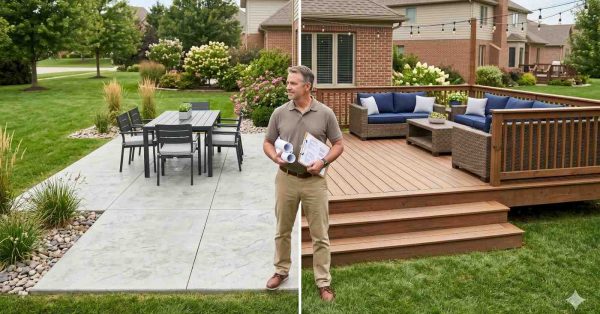
One of the most common decision points for homeowners planning a new deck is the choice between natural wood and composite decking. Both categories deliver genuine advantages, and the right choice depends on budget, maintenance tolerance, aesthetic priorities, and climate.
Upfront Cost vs. 10-Year Ownership Cost
Wood decking offers a lower upfront cost in most categories. Pressure-treated lumber is particularly accessible, with complete deck builds often achievable in the $12 to $20 per square foot installed range for straightforward designs. Cedar, redwood, and tropical hardwoods increase cost substantially but deliver aesthetics that many composite products still cannot fully replicate.
Composite decking carries a higher upfront cost: premium capped composite installations typically range from $25 to $45 per square foot installed. The key financial argument for composite is the near-elimination of ongoing maintenance costs. No staining, sealing, or periodic refinishing is required. According to industry data from the North American Deck and Railing Association (NADRA), this difference is substantial over a 10 to 20-year period, particularly in climates that demand aggressive wood maintenance schedules.
When Wood Wins, When Composite Wins
Wood wins when authentic grain aesthetics are non-negotiable, when budget is the primary constraint, or when a premium hardwood’s extreme longevity justifies the investment. Composite wins when low maintenance is the priority, when the installation site has high full-sun exposure that would demand frequent wood refinishing, and when the buyer’s timeline is long enough to recover the higher upfront cost through maintenance savings.
For homeowners who want to understand every dimension of the wood-versus-composite decision — from material performance data and brand comparisons to lifecycle cost modeling and climate-specific recommendations — our complete composite decking guide covers every material type, leading product lines, and performance benchmarks in full detail.
Installing a Wood Deck
Correct installation is the foundation of a wood deck’s long-term performance. Site preparation, substructure design, and species-appropriate installation technique all influence how the deck ages. Shortcuts in any of these areas are among the primary drivers of premature failure: boards that cup, split, or decay ahead of their expected lifespan almost always trace back to installation errors rather than material defects.
Acclimation, Fasteners, and Spacing
Acclimation is the first critical step before any board goes down. All wood decking should be allowed to adjust to the ambient moisture conditions of the job site before installation. Tropical hardwoods typically require 7 to 14 days of on-site acclimation; pressure-treated and cedar boards need a minimum of 3 to 5 days. Installing boards that have not acclimated results in unpredictable movement and gap changes after installation.
Fastener selection is the next major variable. Stainless steel fasteners (Type 316 in coastal environments, Type 304 elsewhere) are the industry standard for premium wood decking. Galvanized fasteners are acceptable with pressure-treated lumber but can cause tannin staining on cedar and redwood. Hidden fastener systems, which grip the board’s grooved edge and eliminate surface screw holes, deliver a cleaner finished appearance and reduce the risk of board splitting at the fastener point.
Gap spacing matters for both drainage and board movement management. Most softwood decking is installed with approximately 1/4-inch spacing to accommodate moisture-related swelling. Tropical hardwoods, which are denser and dimensionally stable, can be installed at 1/8 inch but still require a gap for drainage.
Species-Specific Installation Notes
End-sealing cut board ends with a penetrating oil or paraffin wax product is essential for hardwoods and strongly recommended for cedar and redwood. The end grain is the fastest pathway for moisture absorption and the most common entry point for splitting and early decay.
Pre-drilling is mandatory for all tropical hardwood installations and strongly recommended for dense modified wood products. Using the correct drill bit diameter for each species and fastener type prevents splitting and ensures consistent fastener depth and holding power.
Every phase of installing wood boards — from acclimation protocols and pre-drilling requirements to fastener selection, gap spacing guidelines, and end-sealing practices — is explained step by step for all major species in our comprehensive wood decking installation guide.
Staining, Sealing, and Finishing Wood Decks
No wood decking material performs at its full potential without a protective finish applied correctly and maintained on an appropriate schedule. The type of finish selected, the timing of first application, and the recoating frequency are as important to long-term performance as the species selection itself.
Finish Types by Application Method
Penetrating oils and semi-transparent stains are the preferred finish type for most natural wood decking. These products absorb into the wood fiber rather than forming a surface film, which means they do not peel, chip, or trap moisture beneath a failing coating layer. They preserve the visible grain and require reapplication every one to three years depending on sun exposure, foot traffic, and climate. Each recoat is straightforward and does not require stripping the existing finish.
Solid stains and deck paints form a surface film that completely obscures the wood grain. They typically last longer between recoats but will eventually peel and require full stripping before recoating. They are most appropriate for severely weathered decks where appearance needs to be reset, or for homeowners who prioritize color consistency over visible natural grain.
Species-Specific Finish Selection
Finish selection is not universal across wood species. Each material type has distinct requirements:
Pressure-treated lumber must not be finished until boards have dried sufficiently. Moisture content should be confirmed below 19 percent using a moisture meter, which typically means waiting at least 60 to 90 days after installation before applying any stain or oil.
Cedar and redwood respond best to penetrating oil-based products that lock in natural color and prevent UV-driven graying. Oil-based penetrating products generally achieve better initial fiber absorption in these species than water-based alternatives, though water-based formulations have improved considerably.
Ipe and tropical hardwoods require specialized finishing oils, typically tung oil-based products formulated specifically for dense tropical species. Standard deck stains sit on the surface rather than penetrating, leading to early peeling and a compromised finish.
Thermally modified wood accepts a light penetrating oil that complements the wood’s warm, darkened tone and helps prevent surface checking during the weathering process.
From product selection and application tools to recoating timelines and species-specific finishing protocols, our complete guide to deck staining and sealing covers the entire finishing workflow, including brand comparisons and first-season application guidance for new installations.
Wood Deck Maintenance
A wood deck is a living material that expands and contracts with seasonal moisture changes, weathers under UV radiation, and is susceptible to mold, mildew, algae, and biological decay. Treating maintenance as optional rather than essential is the fastest path to premature deterioration and expensive structural repairs.
Annual Maintenance Checklist Overview
The minimum annual maintenance program for any wood deck includes four core activities:
Spring cleaning is a thorough wash with a species-appropriate deck cleaner, using either a low-pressure rinse or a soft-bristle brush for light soiling. Pressure washing is effective when done at low PSI (600 to 1,200 PSI) with a wide fan tip to avoid raising the wood grain or creating surface furring.
Annual inspection is a systematic review of all structural connections: ledger bolts, joist hangers, beam-to-post connections, and post bases. Board-level inspection checks for soft spots, delamination, and end-grain splitting. Annual inspection catches structural issues before they become safety hazards or escalate into costly repairs.
Recoating should be applied when the previous finish coat has failed, which is typically indicated by water no longer beading on the surface. Recoating before complete finish failure is always less labor-intensive and more cost-effective than stripping back to bare wood and starting the finishing process over.
Seasonal preparation includes clearing debris from between boards in fall to prevent moisture retention and using a plastic shovel or soft-bristle broom to remove snow. Metal shovels or tools with sharp edges will damage the deck surface.
Maintenance Intensity by Species
Different wood species require different levels of maintenance effort. Ipe is often described as low-maintenance because it requires only periodic oil application rather than regular staining and sealing cycles. Cedar and redwood, without consistent finish maintenance, will gray and check relatively quickly under full-sun exposure. Pressure-treated decks are the most forgiving of deferred maintenance but still benefit from periodic staining and inspection to maximize lifespan.
A season-by-season breakdown of cleaning protocols, inspection criteria, and preventive treatments organized by wood species is available in our comprehensive annual wood deck maintenance guide, which includes a printable checklist and product recommendations for each material type.
Common Wood Deck Problems and How to Fix Them
Even well-built and properly maintained wood decks develop problems over time. Recognizing common failure modes early is what separates a straightforward board replacement from a structural rebuild.
Rot, Cupping, and Structural Failure
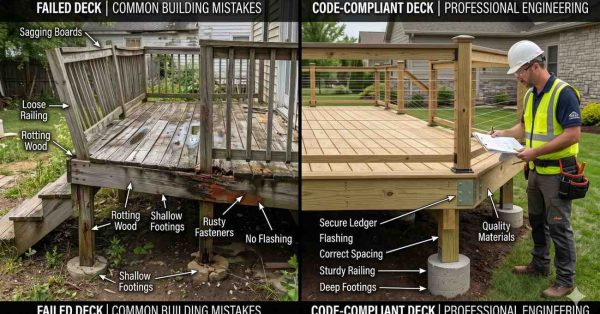
Wood rot is the most serious failure mode. Rot occurs when moisture penetrates wood fiber and creates conditions for fungal growth, breaking down the lignin and cellulose that give wood its structural strength. Early rot appears as soft, discolored wood fiber that yields easily to finger pressure. Advanced rot creates complete structural failure. Key inspection locations include post bases, ledger-to-house connections, beam ends, and areas beneath planters or furniture that trap standing moisture against the deck surface.
Cupping and warping develop when boards dry unevenly across their thickness, typically because one face is exposed to more moisture than the other. Proper board orientation during installation helps minimize cupping. Once cupping becomes severe, replacement is usually the only practical fix; planing or sanding removes structural material and rarely achieves a flat result.
Cracking and checking are normal in wood decking and do not by themselves indicate structural failure. Surface-level checks develop along the grain as wood dries and are primarily cosmetic. They become problematic only when deep enough to trap water consistently or create a splintering hazard underfoot. Regular penetrating oil application minimizes checking by slowing moisture loss from the wood surface.
Insects, Mold, and Surface Issues
Insect damage, particularly from subterranean termites and carpenter ants, can hollow structural members without obvious surface evidence. Annual probing of all structural connections with a screwdriver or awl is the most reliable early detection method: solid wood resists the tool; compromised wood yields.
Mold and mildew appear as dark or greenish surface growth and are typically cosmetic in their early stages. Persistent biological growth signals a drainage or moisture retention problem that requires correction to prevent progression to deeper wood fiber damage.
UV surface damage on cedar, redwood, and pressure-treated decks requires cleaning, light sanding, and fresh penetrating stain application. UV damage that has penetrated beyond the surface layer may require professional assessment to determine whether restoration or replacement is appropriate.
From the first signs of wood rot to the causes of cupping and insect damage — and what to do about each failure mode — our complete resource on wood deck problems and fixes covers identification, repair, and long-term prevention strategies for all common deterioration patterns.
Wood Decking Cost: What to Expect by Species
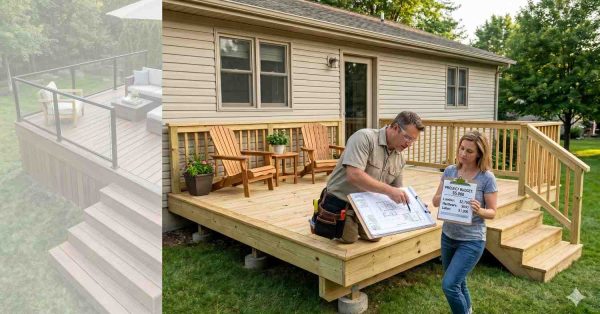
Wood decking cost varies dramatically across species, and the board price alone tells only part of the financial story. A complete budget needs to account for fasteners, substructure lumber, finish products, installation labor, and projected maintenance costs over the deck’s expected lifespan.
Material Cost Comparison Table
Approximate material cost per square foot for surface boards (2025 estimates):
| Species | Material Cost (per sq ft) | Expected Lifespan |
| Pressure-treated pine | $1.50 to $3.50 | 15 to 25 years |
| Cedar | $3.50 to $7.00 | 15 to 25 years |
| Redwood | $5.00 to $10.00 | 20 to 30 years |
| Thermally modified wood | $6.00 to $10.00 | 30 to 40 years |
| Ipe and cumaru | $8.00 to $14.00 | 40 to 75 years |
These figures represent surface board materials only. Total installed project costs including substructure framing, fasteners, permits, and labor add substantially to each category.
Total Installed Cost Considerations
For a precise project estimate based on your deck size, chosen species, and regional labor rates, our wood decking cost calculator generates a line-by-line breakdown that includes substructure, fasteners, finish products, and installation labor.
For a full-spectrum view of how wood decking costs compare across all available material categories — including composite, PVC, and aluminum options with lifecycle cost modeling — our guide to deck materials cost comparison provides the financial framework needed to make a sound investment decision for your specific project scope.
Permits and Code for Wood Decks
Most wood deck projects in the United States require a building permit. The threshold that triggers a permit requirement typically includes any deck that exceeds 200 square feet, is attached to the dwelling structure, is elevated more than 30 inches above grade, or meets a specific lot coverage threshold. Local jurisdictions vary considerably in their specific requirements, and confirming requirements with the local building department before breaking ground is always the correct first step.
IRC R507 and Wood-Specific Provisions
For wood decks, International Residential Code Section R507 establishes the structural baseline that most jurisdictions adopt with local amendments. Key provisions that directly affect wood deck design and material selection include:
Ledger attachment standards require that wood ledger boards be flashed with metal or membrane flashing to prevent moisture from penetrating the house wall assembly. Inadequate ledger flashing is one of the most frequently cited causes of structural failure in wood decks and is consistently identified in post-collapse engineering investigations as the primary failure point.
Span tables govern joist, beam, and post sizing based on wood species, grade, spacing, and imposed load. Southern yellow pine carries different allowable span values than hem-fir or Douglas fir, and substituting species without recalculating structural members against the correct species-specific span tables is a code violation with real structural consequences.
Fire Code Considerations in High-Risk Zones
In high-wildfire-risk zones, including most of California, parts of Oregon and Washington, and mountain communities across the West, local codes may restrict the use of untreated wood decking and require materials rated Class A or Class B for fire resistance. Wood decking treated with fire-retardant compounds can meet these requirements but adds material cost and creates additional finishing considerations regarding compatibility with standard deck stains.
IRC code sections, ledger attachment standards, setback rules, and the full inspection process for wood deck builds across the USA are covered in detail in our comprehensive resource on deck permit and code requirements, which includes a state-by-state guide to permit costs and processing timelines.
When to Repair, Restore, or Replace Your Wood Deck
Every wood deck eventually reaches a decision point: repair specific problems, invest in a full restoration, or build new. The right answer depends on the condition of the substructure, the age of the original build, the species chosen, and the financial relationship between repair cost and replacement value.
Repair is appropriate when damage is confined to individual boards, isolated fastener failures, or surface-level finish deterioration. If the ledger is sound, the posts and beams are structurally solid, and fewer than 20 to 25 percent of the decking boards show signs of deterioration, repair is almost always the more cost-effective path. When wood decking develops structural failures at the board, joist, or ledger level, our comprehensive resource on wood deck repair options explains which problems can be corrected cost-effectively and which patterns of deterioration signal that full replacement is the smarter financial decision.
Restoration includes comprehensive cleaning, stripping, sanding, and refinishing and can extend a structurally sound deck’s service life by five to ten additional years. It is particularly effective on cedar, redwood, and tropical hardwood decks where the structural frame is intact but the surface finish has failed completely or the wood has grayed and checked significantly.
Replacement becomes the appropriate choice when structural members — joists, beams, posts, or the ledger — show active rot or mechanical failure; when the deck is more than 20 to 25 years old and was originally built with lower-grade pressure-treated lumber; or when cumulative repair costs approach or exceed 50 percent of a new deck’s total cost. Replacement projects trigger permit requirements in virtually every jurisdiction, which creates a direct opportunity to bring any non-compliant structural elements up to current code standards and upgrade the decking species to better match long-term goals.
Conclusion
Wood decking spans a remarkable range of species, price points, and performance profiles, from pressure-treated pine to ipe, cedar, and modified wood products.
Each species covered in this guide links to dedicated resources on installation, finishing, maintenance, and problem-solving, designed to take you from orientation to execution.
When you’re ready to build, repair, or upgrade your wood deck, Mr. Local Services connects you with skilled deck professionals who know wood.
Frequently Asked Questions
What is the longest-lasting wood for a deck?
Ipe (ironwood) typically lasts 40 to 75 years with minimal maintenance, making it the longest-lasting natural wood decking option. Modified woods like Accoya carry 50-year above-ground warranties.
How often does a wood deck need to be stained or sealed?
Most wood decks need staining or sealing every 1 to 3 years depending on species and climate. When water stops beading on the surface, it is time to recoat.
Is pressure-treated lumber safe for residential decks?
Yes. Modern ACQ and MCA treatments replaced arsenic-based CCA in 2004 and are EPA-approved for residential use, including areas that children and pets contact regularly.
What is the difference between softwood and hardwood decking?
Softwoods like cedar and pine are less dense, easier to install, and more affordable. Hardwoods like ipe are significantly denser, more durable, and require pre-drilling and specialized fasteners.
Can you refinish a weathered wood deck, or does it need to be replaced?
Most weathered wood decks can be successfully refinished if structural members remain sound. Replacement is only necessary when joists, beams, posts, or the ledger board show rot or mechanical failure.
Why is ipe so expensive compared to other wood decking options?
Ipe’s price reflects its extreme density, natural rot and insect resistance without chemical treatment, and the cost of importing dense tropical hardwood from South America. Over a 25-year period, ipe’s total cost of ownership is often competitive with lower-cost alternatives.
Do wood decks require more maintenance than composite decks?
Yes, wood decks require annual staining, sealing, and structural inspection, while composite decking needs only periodic cleaning. This maintenance difference is a primary factor in material selection decisions for most homeowners.