A $2,000 monthly mortgage payment typically supports a home loan between $250,000 and $400,000, depending on your interest rate, loan term, down payment, and credit profile. The exact number shifts significantly based on current market rates and how your lender structures the loan.
Understanding what drives that range helps you set a realistic budget before you start shopping for a home or refinancing an existing one. Whether you are a first-time buyer, a landlord expanding a portfolio, or a property manager advising clients, knowing how monthly payments connect to loan size gives you a practical starting point for every financial conversation.

How Much Home Can a $2,000 Monthly Payment Buy?
A $2,000 monthly mortgage payment on a 30-year fixed loan at a 7% interest rate corresponds to a loan amount of approximately $300,000. At a lower rate of 6%, that same payment stretches to roughly $333,000. At 8%, it compresses to around $272,000. Your actual loan amount depends on the rate you qualify for and the term you choose.
The Key Variables That Determine Your Loan Amount
Four factors directly control how much a $2,000 payment will buy:
Interest rate is the most powerful variable. A single percentage point difference can shift your borrowing capacity by $30,000 to $50,000 on a standard 30-year loan. Rates are influenced by your credit score, debt-to-income ratio, and current Federal Reserve policy.
Loan term determines how long you spread the debt. A 30-year term produces lower monthly payments on a larger loan. A 15-year term requires higher payments but builds equity faster and carries a lower interest rate.
Down payment reduces the principal you borrow. A larger down payment means a smaller loan, which means a $2,000 payment covers more of the purchase price rather than just the interest load.
Credit score affects the rate your lender offers. Borrowers with scores above 740 typically access the best available rates, which directly increases how much loan a $2,000 payment can support.
Sample Loan Amounts at $2,000 a Month
The table below shows approximate loan amounts for a $2,000 principal-and-interest payment across common rate and term combinations:
| Interest Rate | 30-Year Loan | 15-Year Loan |
| 6.0% | ~$333,000 | ~$190,000 |
| 6.5% | ~$316,000 | ~$183,000 |
| 7.0% | ~$300,000 | ~$177,000 |
| 7.5% | ~$285,000 | ~$171,000 |
| 8.0% | ~$272,000 | ~$165,000 |
These figures reflect principal and interest only. They do not include property taxes, homeowner’s insurance, or private mortgage insurance.
How interest rates shape what you can borrow goes deeper than the payment calculation alone — it connects rate movement to purchasing power in ways that matter when you are comparing loan offers side by side.
How Interest Rates and Loan Terms Shift the Equation
Interest rates and loan terms work together to define the true cost of a mortgage. A lower rate on a 30-year loan produces a larger loan amount for the same payment. A shorter term at a lower rate builds equity faster but reduces the loan size your $2,000 payment can carry.
Lenders price rates based on risk. Borrowers with strong credit histories, stable income, and low debt loads receive better rates. Those factors compound over a 30-year term into tens of thousands of dollars in total interest paid.
Fixed vs. Adjustable Rate Impact on Monthly Payments
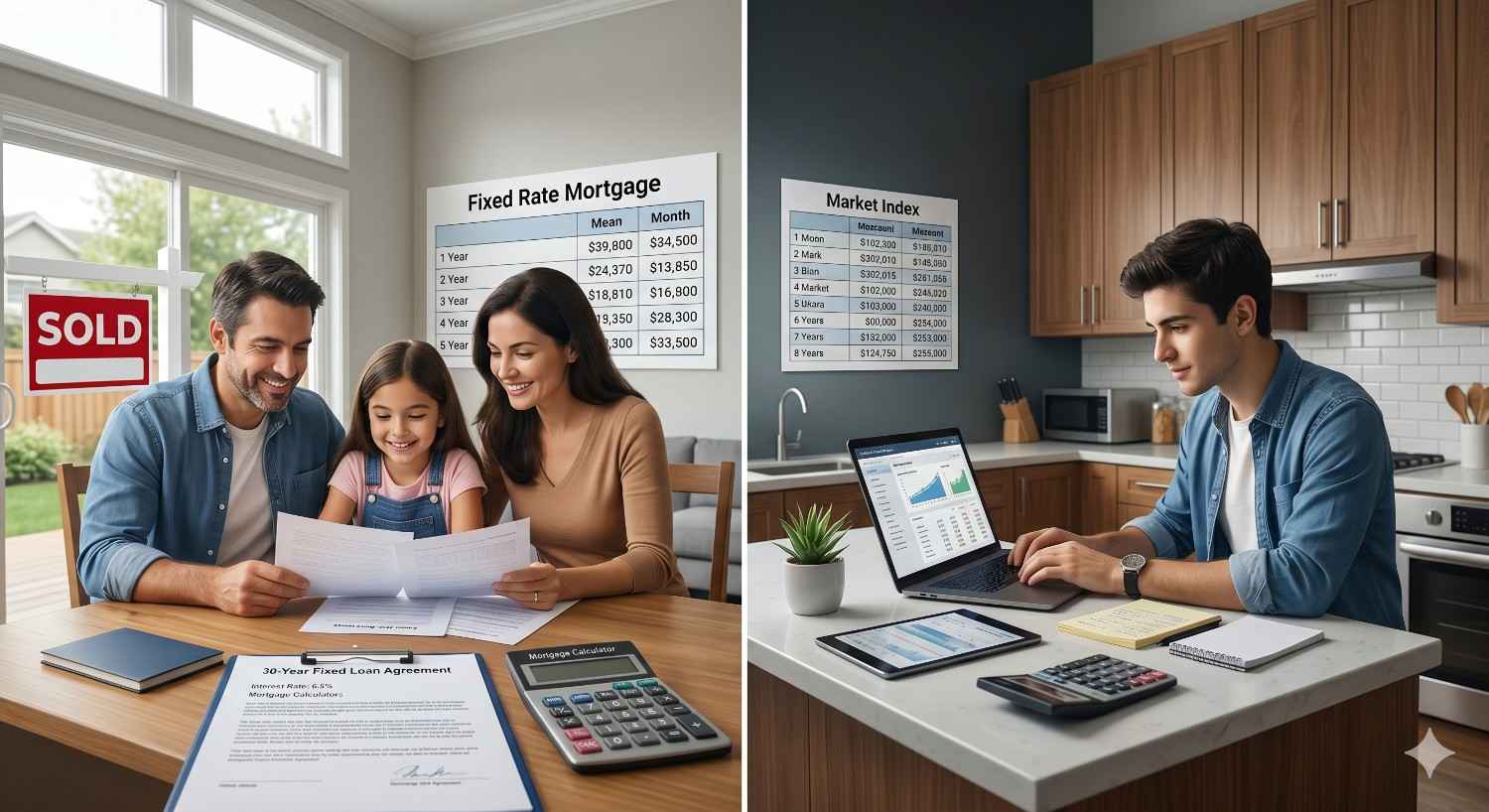
A fixed-rate mortgage locks your interest rate for the life of the loan. Your $2,000 payment stays consistent from month one to month 360. This predictability makes budgeting straightforward for homeowners and property managers alike.
An adjustable-rate mortgage (ARM) starts with a lower introductory rate, which means your $2,000 payment initially supports a larger loan. After the fixed period ends, typically five or seven years, the rate adjusts to market conditions. Payments can rise or fall. ARMs carry more risk but can be strategic for buyers who plan to sell or refinance before the adjustment period begins.
What Other Costs Affect Your $2,000 Budget?
Most homebuyers treat $2,000 as their total housing budget, but lenders calculate mortgage payments differently. What your monthly payment actually covers often includes more than principal and interest.
Property taxes vary by location and are typically collected monthly through an escrow account. Homeowner’s insurance is required by lenders and added to the same escrow. Private mortgage insurance applies when your down payment falls below 20% of the purchase price and adds 0.5% to 1.5% of the loan amount annually to your payment.
When these costs are included, a $2,000 all-in payment may support a loan of only $220,000 to $260,000 in high-tax areas. In lower-tax regions, the principal-and-interest portion of your payment stays closer to the full $2,000, preserving more borrowing capacity.
Homeowner’s association fees, if applicable, are separate from the mortgage payment but reduce the monthly budget available for housing costs. Factor these in before committing to a purchase price.
Conclusion
A $2,000 monthly mortgage payment supports a loan between $250,000 and $400,000, with interest rate and loan term as the primary drivers of that range.
For homeowners, landlords, and property managers, planning your path to homeownership means accounting for taxes, insurance, and rate conditions alongside the base payment figure.
At Mr. Local Services, we help property owners make confident decisions about their homes — connect with us to find trusted professionals who keep your investment protected and performing.
Frequently Asked Questions
What credit score do I need for a $2,000 monthly mortgage?
Most lenders require a minimum score of 620 for conventional loans. Scores above 740 unlock the best rates, which directly increases the loan amount your $2,000 payment can support.
How much income do I need to afford a $2,000 mortgage payment?
Lenders typically apply a 28% front-end ratio, meaning your mortgage payment should not exceed 28% of gross monthly income. A $2,000 payment requires approximately $7,150 per month in gross income.
Can I get a $2,000 monthly mortgage with a low down payment?
Yes. FHA loans allow down payments as low as 3.5%, and conventional loans permit 3% down. Lower down payments reduce the loan amount and add private mortgage insurance to your monthly cost.
Does a $2,000 mortgage payment include taxes and insurance?
Not always. Lenders often quote principal and interest separately. When taxes, insurance, and PMI are included, the actual loan amount your $2,000 covers is lower than the principal-only calculation suggests.
How does a 15-year vs. 30-year term affect a $2,000 monthly payment?
A 15-year term at 7% supports a loan of approximately $177,000 at $2,000 per month. A 30-year term at the same rate supports roughly $300,000. The shorter term builds equity faster but limits borrowing capacity.