You shouldn’t keep water next to your bed because an open glass collects dust, bacteria, and airborne particles overnight, and a single accidental spill can damage electronics, flooring, bedding, and nearby furniture. What seems like a harmless habit creates avoidable health concerns and costly property repairs. Homeowners, landlords, and property managers see the consequences often: stained carpet, warped wood, ruined nightstands, and hidden moisture problems. Understanding the real risks helps you protect both your wellbeing and the long-term value of your property.
The Real Reasons to Avoid Bedside Water
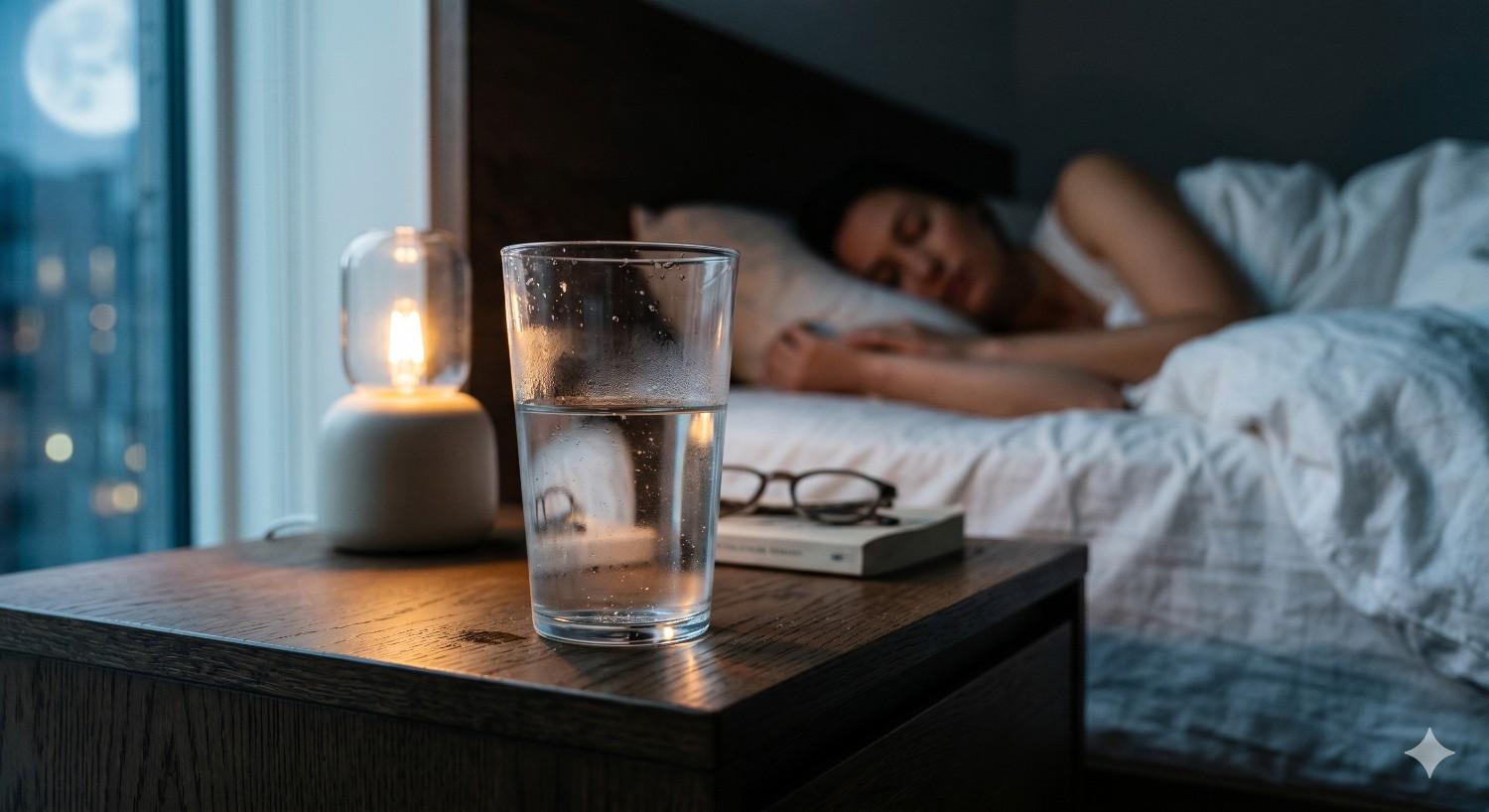
Keeping an open glass of water next to your bed exposes it to airborne dust, skin cells, pet dander, and bacteria that settle into the liquid overnight. The same glass also sits inches from electronics, lamps, books, and bedding, where a single nighttime bump can cause spills that damage finishes, soak mattresses, and short out devices. The risk is small per night but cumulative.
Dust, Bacteria, and Airborne Contamination
Water left uncovered for several hours pulls in microscopic particles from the surrounding air. Bedrooms hold higher concentrations of dust mites, fibers, and shed skin cells than most other rooms. Pets compound this. Bacteria from the rim of the glass, especially after sipping, multiply in standing water at room temperature. Drinking that water in the morning is not dangerous for most healthy adults, but it is far from clean, and sensitive individuals may notice throat irritation or mild stomach issues.
Spill Risk to Electronics, Flooring, and Bedding
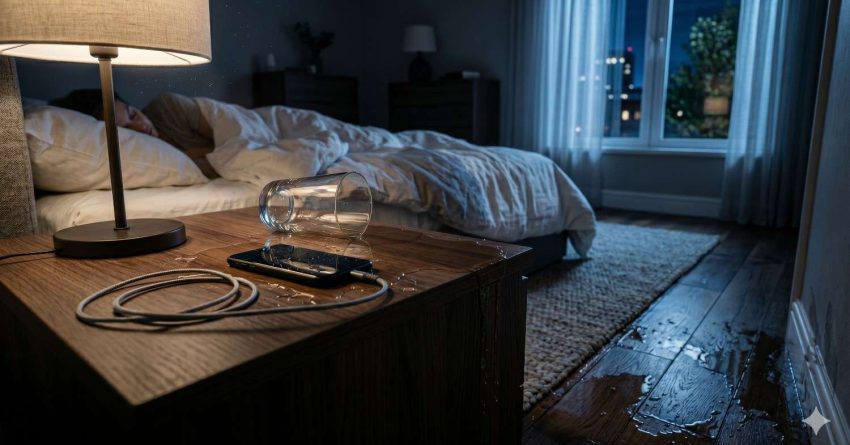
Phones, charging cables, alarm clocks, lamps, and laptops typically share nightstand space with a water glass. One knocked-over cup can fry a phone, soak a mattress, or seep into hardwood seams. Water that reaches a power strip becomes a fire hazard. Spills on upholstered headboards or fabric nightstands leave stains and odors that often require professional cleaning to fully remove.
The contamination and electronics risk explain the daily concern. The bigger issue for property owners is what happens when spills go unnoticed, which is where professional water damage restoration becomes part of the conversation.
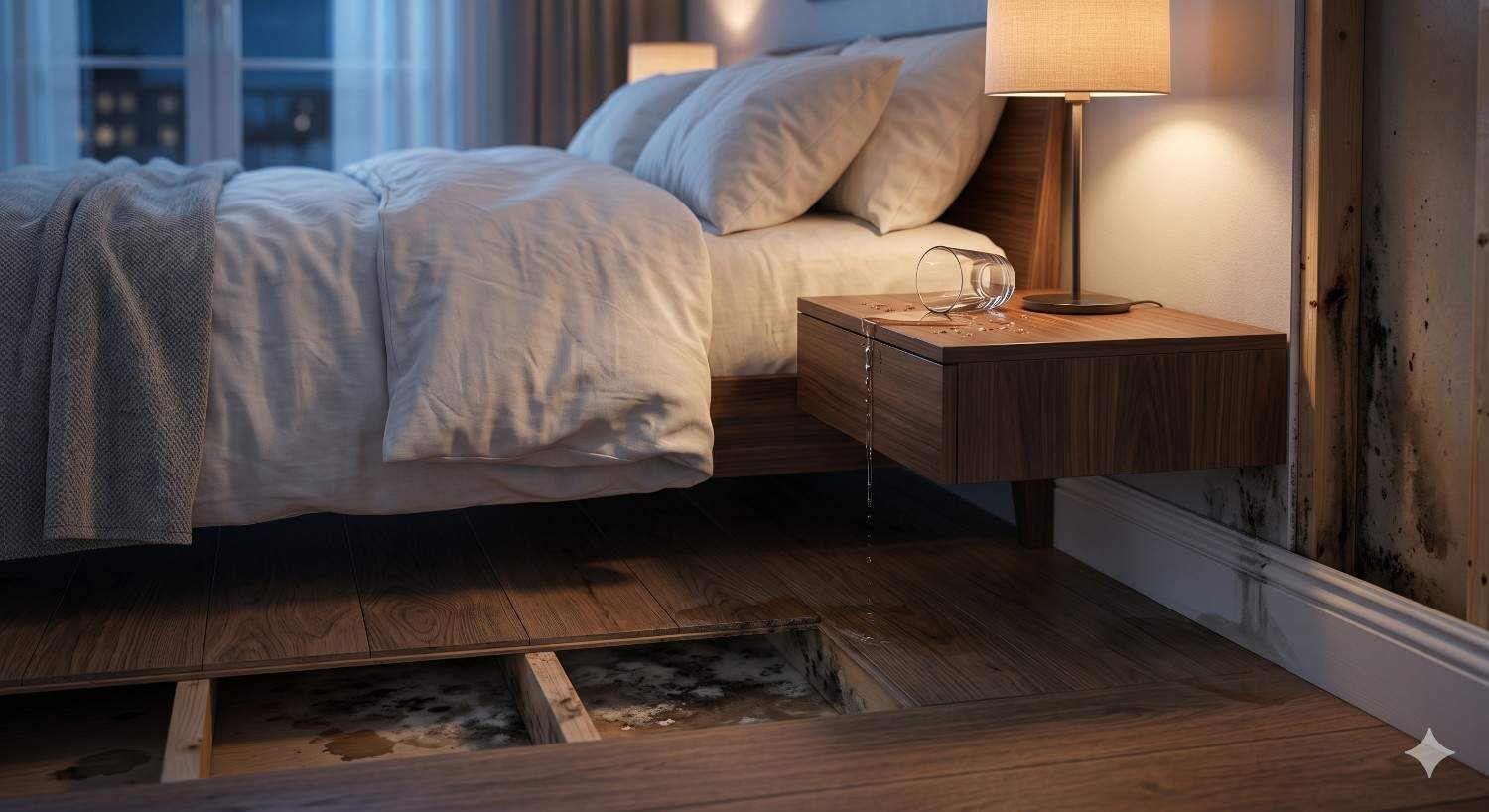
How Bedside Water Spills Cause Hidden Property Damage
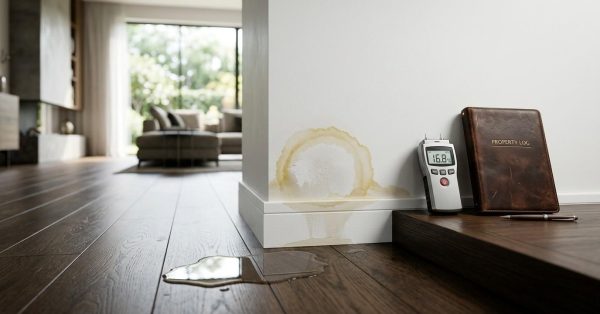
A spilled glass holds only eight to twelve ounces, but that volume is enough to penetrate carpet padding, seep between hardwood planks, and soak into drywall along baseboards. The damage rarely shows up immediately. Moisture trapped under flooring or behind furniture creates the ideal environment for mold, which can develop within 24 to 48 hours. Repeated minor spills, the kind no one bothers to report, slowly degrade subfloors, swell wood, and leave permanent dark stains on light carpet.
Warped Floors, Stained Carpets, and Mold Growth
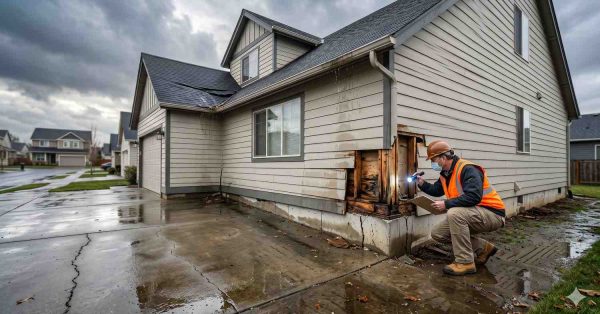
Hardwood absorbs water along the grain and cups or buckles as it dries unevenly. Laminate swells at the seams and cannot be repaired, only replaced. Carpet fibers wick liquid into the padding below, where it stays damp for days. When mold appears, surface cleaning is not enough. Property managers and homeowners often need certified mold remediation specialists to safely remove affected materials and treat the underlying area.
For severe water damage to floors, qualified flooring repair professionals can refinish, replace boards, or restore stained carpet before the issue spreads further.
Safer Bedroom Hydration Habits and Property Protection
You can keep water nearby without the risks. Use an insulated bottle with a sealed lid to block contamination and prevent spills if it tips. Place it on a coaster or tray, away from electronics and outlets. Keep cords elevated and route them behind furniture rather than across the nightstand surface. For rental properties and shared homes, simple rules like sealed containers and surface trays prevent the small accidents that turn into expensive repairs. Bedside hydration is a habit worth keeping. The container and placement are what need to change.
Conclusion
Open water beside your bed invites contamination and creates a quiet but real risk of spills that damage flooring, electronics, and bedding. Small habit changes protect your health and your property at the same time.
For homeowners, landlords, and property managers, addressing water-related damage quickly preserves long-term value and prevents larger structural and mold problems down the road.
When spills, stains, or hidden moisture issues arise, Mr. Local Services connects you with trusted local pros for fast, reliable repair and restoration. Get help today.
Frequently Asked Questions
Is it bad to drink water that sat next to your bed overnight?
It is not usually harmful for healthy adults, but the water collects dust, bacteria, and skin cells, making fresh water a cleaner choice each morning.
Can a small water spill really damage hardwood floors?
Yes. Even eight ounces can seep between planks, causing cupping, swelling, or dark staining within hours if not cleaned and dried thoroughly right away.
How quickly can mold grow from a bedside water spill?
Mold can begin developing within 24 to 48 hours in trapped moisture under carpet padding, baseboards, or hardwood seams when spills are not properly dried.
What should I use instead of an open glass by my bed?
Use an insulated bottle with a leak-proof sealed lid, placed on a coaster or tray, kept away from electronics, cords, and power outlets.
Who do I call if a bedside spill damages my floor or electronics?
Contact a trusted local water damage restoration provider through Mr. Local Services for quick assessment, drying, repair, and any needed flooring or mold remediation.