Alkali metals like sodium, potassium, cesium, and rubidium react violently with water, along with reactive compounds such as calcium carbide, sodium hydride, and certain organometallic chemicals. These substances release hydrogen gas, intense heat, and sometimes flames or explosions on contact with water. Knowing what reacts dangerously with water helps homeowners, landlords, and property managers protect their properties from chemical hazards, accidental fires, and costly water-related damage during storage, cleaning, or renovation work.
Substances That React Violently With Water
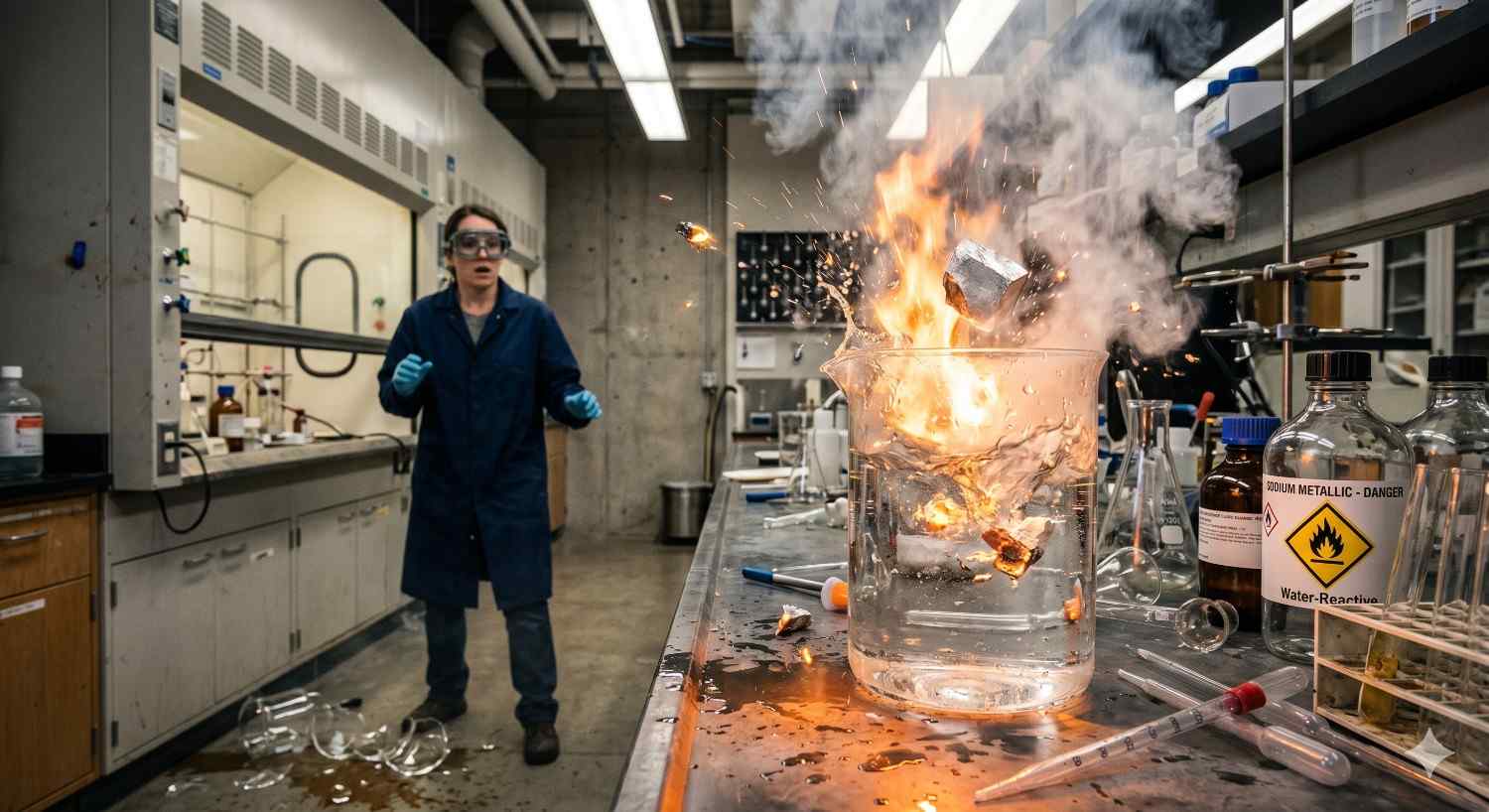
The most dangerous water-reactive substances are alkali metals (sodium, potassium, lithium, rubidium, cesium), alkaline earth metals like calcium, and compounds such as calcium carbide, sodium hydride, sodium peroxide, and phosphorus pentoxide. These materials release flammable hydrogen gas and extreme heat the moment they touch water, often igniting instantly or causing explosions.
These reactions follow a predictable pattern. Water molecules donate hydrogen and oxygen, and reactive metals or compounds strip those atoms apart with tremendous energy. The result is hydrogen gas, a corrosive byproduct like sodium hydroxide, and a sharp release of heat. In many cases, that heat alone ignites the hydrogen, producing flames, popping sounds, or full explosions.
Alkali Metals (Sodium, Potassium, Cesium)
Alkali metals sit in Group 1 of the periodic table and grow more reactive as you move down the column. Lithium fizzes gently. Sodium reacts fast enough to melt and skid across water. Potassium ignites instantly with a lilac flame. Cesium and rubidium can shatter glass containers on contact. Each reaction creates hydrogen gas and a strong alkaline solution. These metals are stored under mineral oil or kerosene in labs because even moisture in the air can trigger small reactions.
Reactive Compounds (Calcium Carbide, Sodium Hydride)
Calcium carbide reacts with water to produce acetylene gas, a flammable substance once used in old mining lamps. Sodium hydride releases hydrogen and sodium hydroxide, often catching fire on its own. Phosphorus pentoxide hisses and generates phosphoric acid. Sulfuric acid, while not explosive, releases enough heat when mixed with water to boil and splatter dangerously. These compounds appear in industrial supplies, lab kits, and some specialty cleaning agents found in commercial properties.
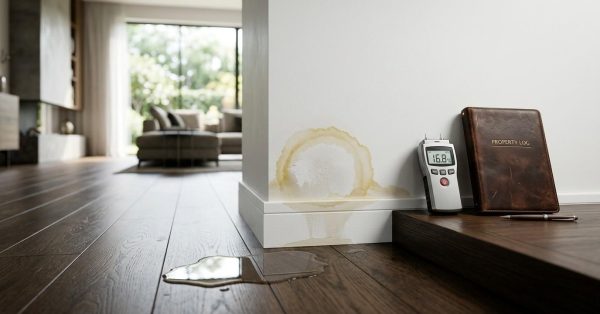
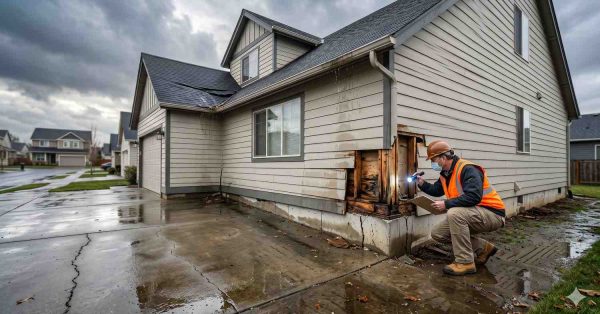
While these chemical hazards rarely appear in everyday homes, the property damage they cause when mishandled looks very similar to unexpected water damage situations that require professional cleanup and restoration.
Why These Reactions Matter for Homes and Properties
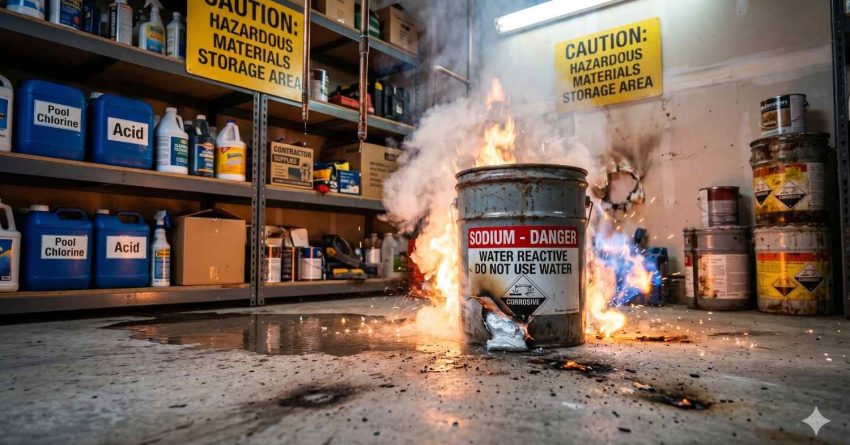
Most homeowners will never store pure sodium or calcium carbide. Still, water-reactive materials show up in unexpected places: pool chemical kits, drain cleaners, swimming pool shock products, certain pesticides, and industrial cleaning supplies used by contractors. Improper storage near plumbing leaks, basement flooding, or roof leaks can trigger small but damaging reactions that release toxic fumes, burn surfaces, or start fires.
Landlords and property managers face higher exposure because commercial spaces often store cleaning chemicals in bulk. A single leak in a storage closet can create a chain reaction that damages flooring, drywall, and air quality across multiple units.
Common Household and Job-Site Risks
Garage storage of pool shock, old chemistry sets, contractor supplies, and forgotten industrial cleaners pose the highest risk. Routine home safety inspections catch these hazards early, especially before basement remodels, plumbing work, or appliance installations that disturb stored materials.
How to Handle and Store Water-Reactive Materials Safely
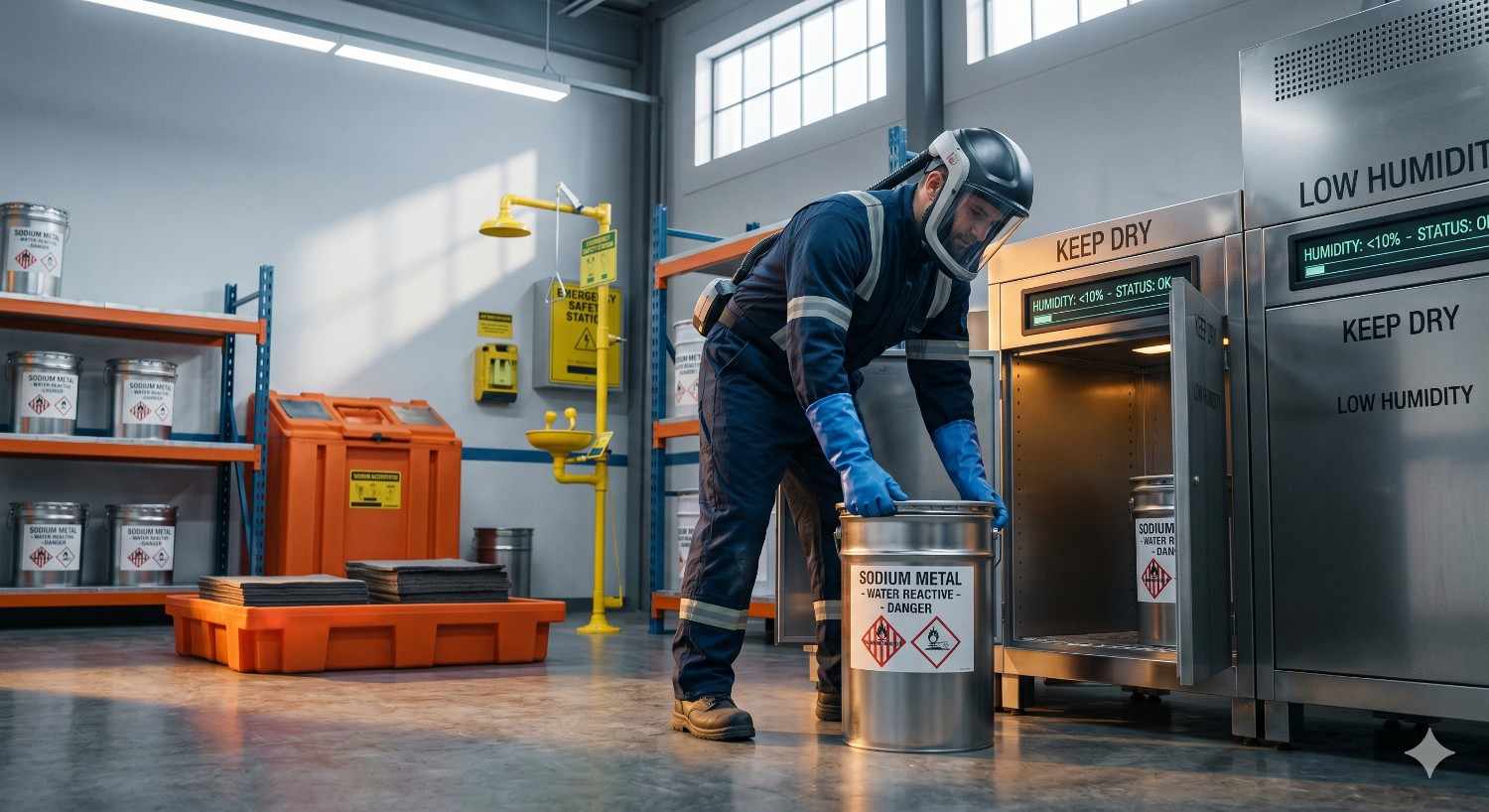
Store water-reactive chemicals in sealed, labeled containers placed in dry, ventilated areas far from plumbing, water heaters, and laundry rooms. Keep them off the floor to protect against flooding. Never pour unknown chemicals down drains or mix cleaning agents without checking labels.
If a spill happens, do not use water. Smother small reactions with dry sand, sodium chloride, or a Class D fire extinguisher. Evacuate the area, ventilate the space, and call a licensed hazardous materials professional. For property damage that follows, a qualified restoration team should assess affected surfaces, electrical systems, and indoor air quality before reuse.
Conclusion
Alkali metals, calcium carbide, sodium hydride, and similar reactive compounds release hydrogen, heat, and flames on contact with water, creating real safety hazards.
Recognizing where these materials hide in homes and commercial properties helps owners prevent fires, chemical burns, and lasting structural damage to their investments.
At Mr. Local Services, we connect you with trusted professionals for safety inspections, water damage cleanup, and property protection. Contact us today.
Frequently Asked Questions
What metal explodes when it touches water?
Cesium and rubidium explode on contact with water. Potassium ignites immediately, and sodium burns rapidly while skidding across the surface with intense heat and flame.
Does calcium carbide react violently with water?
Yes. Calcium carbide reacts with water to release flammable acetylene gas and heat, which can ignite instantly or cause explosions in enclosed spaces.
What household chemicals react with water?
Drain cleaners containing sodium hydroxide, pool shock products, and concentrated sulfuric acid release significant heat with water, sometimes splashing or boiling violently inside pipes or containers.
Is sodium dangerous around water in homes?
Pure sodium metal is dangerous but rare in homes. Sodium compounds in cleaners can react mildly. Always store chemicals dry and away from plumbing leaks.
How do I clean up a water-reactive chemical spill?
Never use water. Smother the spill with dry sand or a Class D extinguisher, evacuate the area, ventilate the space, and call hazardous materials professionals immediately.