
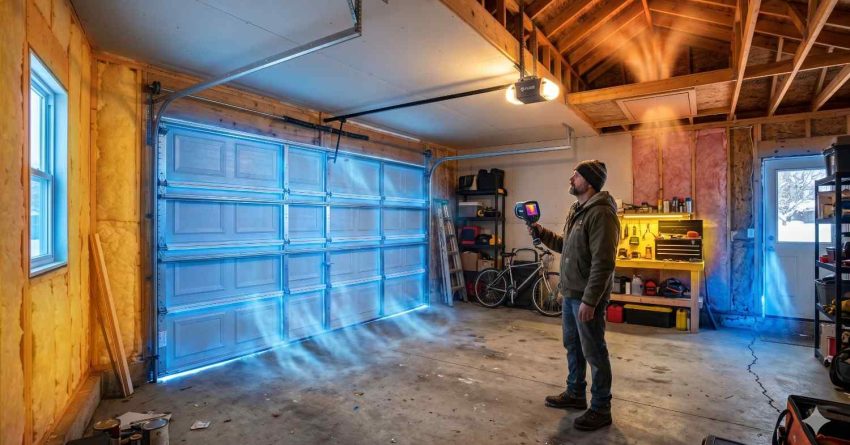
Garages lose the most heat through the garage door, uninsulated walls and ceiling, and small air gaps around frames and seals. These weak points let warm air escape and cold air seep in, making the space hard to heat and driving up energy bills in attached homes. Identifying each leak zone is the first step to fixing it. Below, we break down exactly where the heat goes and what every homeowner should check first.
The Biggest Heat Loss Zones in a Garage
Most garages lose heat through four main zones: the garage door, the ceiling, the exterior walls, and the wall shared with the house. The garage door alone accounts for the largest share, followed by uninsulated framing and thin overhead space. Together, these surfaces create the bulk of total heat loss.

The Garage Door (The #1 Culprit)
The garage door is the single largest heat loss point in nearly every home. Standard doors are thin, hollow, or built with minimal insulation, and they cover a wide surface area. Cold air pushes through panels, around the frame, and under the bottom seal. Even a well-built door without proper insulation can leak significant warmth. Homeowners in colder regions often see frost forming on the inside surface, a clear sign that heat is escaping straight through the panels.
Walls, Ceiling, and Attached House Wall
Garage walls and ceilings are often left uninsulated, especially in older builds. The ceiling is critical because heat rises, and an unfinished attic above pulls warm air upward fast. The wall shared with the house also matters. If it lacks insulation, your living space loses heat into the garage, then out through the door.
Knowing where the heat escapes is one thing. Stopping it starts with proper garage door insulation and a closer look at every smaller leak point most homeowners overlook.
Hidden Heat Loss Points Most Homeowners Miss
Beyond the obvious zones, several smaller spots quietly leak heat year-round. Air gaps form around door frames, side entry doors, and where the garage meets the foundation. Windows, even small ones, lose heat fast if they are single-pane or poorly sealed. Concrete floors absorb cold from the ground and radiate it upward, lowering the entire room temperature.
Electrical outlets, pipe penetrations, and ceiling light fixtures also create small but steady drafts. Each gap alone seems minor, but combined, they can rival the heat loss of the door itself. Sealing air gaps around the garage closes these silent leaks and improves comfort almost immediately.
How to Reduce Garage Heat Loss Effectively
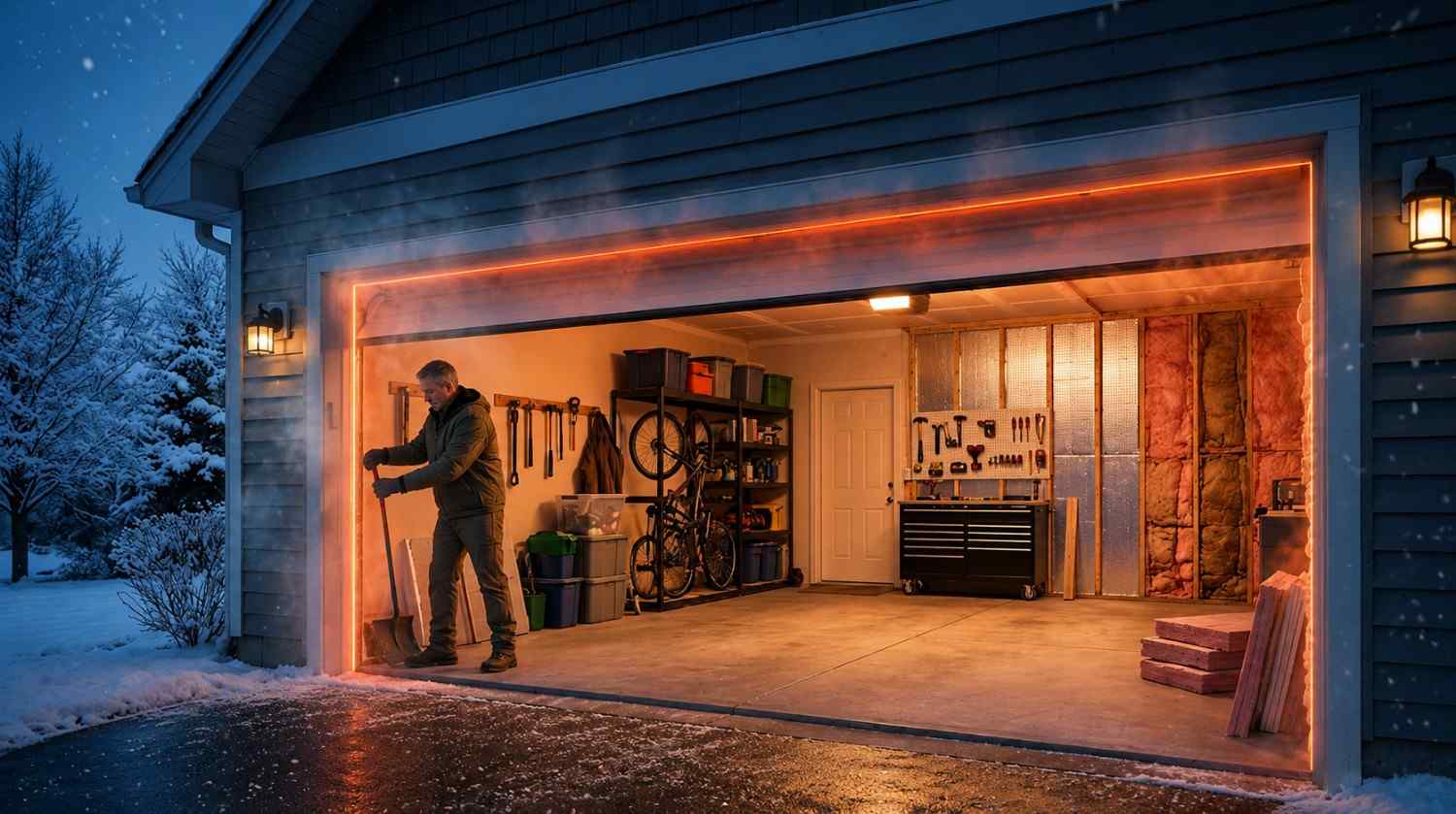
Start with the largest surfaces first. Add an insulation kit or replace the door with an insulated model. Then move to the walls and ceiling, where fiberglass batts or rigid foam panels deliver strong results. Replace worn weatherstripping, seal the bottom of the door, and caulk around windows and frames.
For long-term comfort, upgrading garage insulation across walls, ceiling, and the attached house wall delivers the biggest return. Skilled professionals can identify weak points fast and install the right materials for your climate zone.
Conclusion
Garages lose the most heat through the door, ceiling, walls, and small air gaps that add up fast across the structure.
Addressing each zone improves comfort, lowers energy costs, and protects attached living spaces from cold transfer year-round for property owners and managers.
We help you seal, insulate, and upgrade every weak point. Call Mr. Local Services today to book trusted garage insulation experts near you.
Frequently Asked Questions
What part of a garage loses the most heat?
The garage door loses the most heat. Its large surface, thin panels, and weak seals make it the top source of heat loss in nearly every home.
Does an uninsulated garage ceiling cause heat loss?
Yes. Heat rises, so an uninsulated ceiling lets warm air escape quickly into the attic, cooling the entire garage and increasing energy waste during winter months.
Can sealing air gaps really make a difference?
Absolutely. Sealing gaps around doors, outlets, and windows can reduce heat loss significantly and often delivers noticeable comfort improvements within the same day.
Should I insulate the wall between my garage and house?
Yes. Insulating that shared wall keeps heat inside your living space, lowers heating bills, and prevents cold transfer from the garage into your home.
Is replacing a garage door worth it for heat retention?
Yes. An insulated garage door reduces heat loss dramatically, improves temperature stability, and pays back over time through lower energy bills and better year-round comfort.