

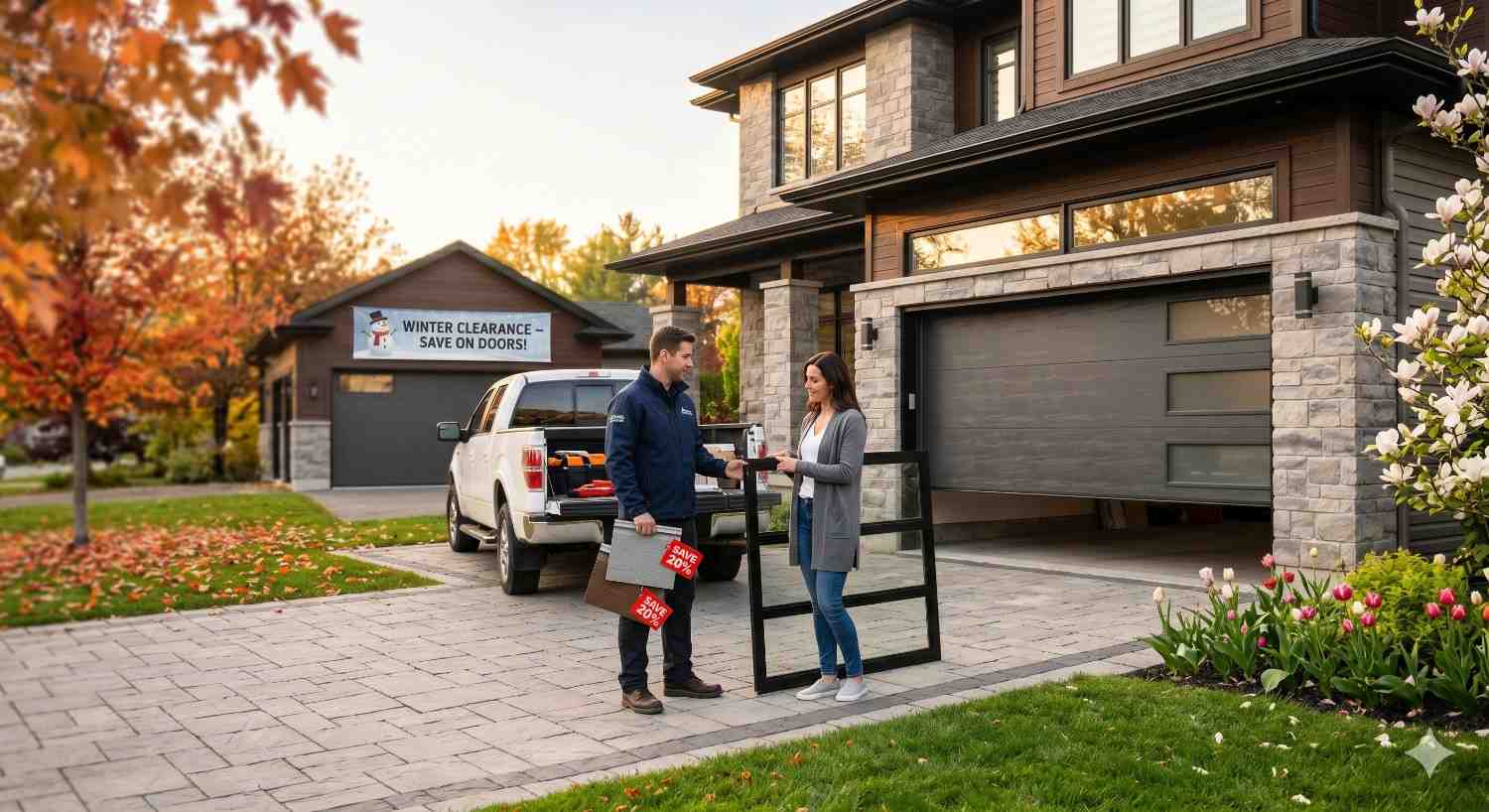
Garage doors typically go on sale during late fall, winter holidays, and early spring promotional events, with the deepest discounts appearing between November and February. Manufacturers and local dealers across the USA clear inventory during slow installation months, and big-box retailers run sales around Black Friday, Cyber Monday, Presidents’ Day, and Memorial Day. Homeowners and property managers can save 10% to 30% by timing replacement projects with these predictable seasonal price cycles.
Best Times of Year to Buy a Garage Door on Sale
The best time to buy a garage door on sale is between November and February, when installation demand drops and dealers offer steep discounts to fill their schedules. Major holiday events including Black Friday, Cyber Monday, Presidents’ Day, and Memorial Day bring additional promotional pricing on doors, openers, and full installation packages.
Pricing patterns repeat each year because the garage door industry is tied to seasonal construction cycles. Winter months bring fewer projects, so manufacturers, distributors, and local installers compete harder for every customer. Spring and summer carry premium pricing because demand peaks. Knowing this rhythm helps homeowners, landlords, and property managers plan replacements around savings instead of urgency.
Holiday Sales Events That Discount Garage Doors
Holiday sales drive the largest single-day discounts on garage doors. Black Friday and Cyber Monday deliver bundle deals on insulated steel doors, smart openers, and accessories. Presidents’ Day weekend in February often features rebates from major brands like Clopay, Amarr, and Wayne Dalton. Memorial Day kicks off the spring buying season with installation discounts. Fourth of July and Labor Day round out the calendar with mid-tier savings, especially on overstocked models and discontinued color options at local dealers.
Off-Season Months With the Deepest Price Drops
January and February consistently produce the lowest garage door prices of the year. Cold weather slows new installations, so contractors offer reduced labor rates to keep crews working. Manufacturers also release new product lines in early spring, pushing dealers to discount prior-year inventory. October and early November are strong alternatives, when distributors clear warehouse stock before year-end accounting. Buying during these windows often unlocks free upgrades like wind-load reinforcement, insulation packages, or smart openers at no added cost.
Timing the purchase is only half the equation. Knowing when repair makes more sense than replacement shapes whether waiting for a sale is the smarter financial move.
How to Spot a Real Garage Door Deal
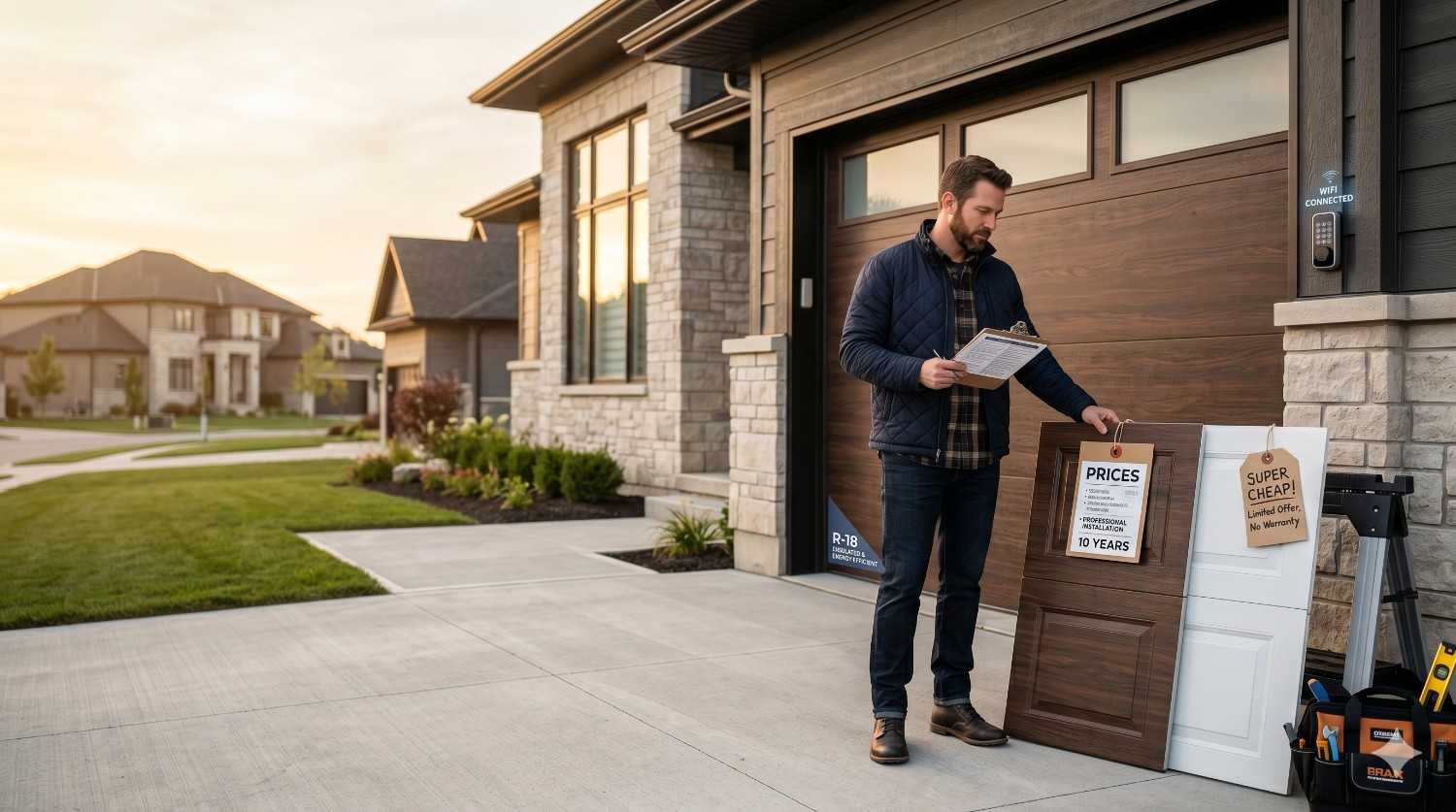
Not every advertised sale delivers real savings. A genuine discount reflects the total installed cost, not just the door panel. Compare quotes that include hardware, tracks, springs, opener, removal of the old door, haulaway, and labor. Watch for vague language like “up to 40% off,” which often applies only to a base model with no installation included.
Verify the warranty terms, panel thickness, R-value for insulation, and brand authenticity. Lower-priced doors sometimes use thinner steel or non-galvanized hardware that wears out faster. A true deal pairs a quality product with a licensed local installer who stands behind the work.
Comparing Quotes, Brands, and Installation Costs
Request at least three written quotes before committing. Reviewing average garage door installation costs helps confirm whether a sale price is genuinely below market. Standard single-car door installations in the USA range from $750 to $1,800, while double-car insulated doors run $1,500 to $4,000 installed. Anything significantly cheaper deserves scrutiny on materials, springs, and labor guarantees.
When Replacement Beats Waiting for a Sale
Waiting for a sale only works when the existing door is safe and functional. Broken springs, bent tracks, snapped cables, or a door that will not close create immediate safety risks and security gaps. In those cases, prompt replacement protects the property, vehicles, and people inside. A failing opener or a door damaged by impact is not worth delaying. Emergency repairs cost more than planned replacements, even at full price, so urgency should always override seasonal timing.
Conclusion
Garage doors go on sale most reliably from late fall through early spring, with holiday weekends offering the deepest seasonal price drops.
Planning a replacement around these windows helps homeowners, landlords, and property managers protect property value while controlling project budgets year-round.
We make the process simple. Connect with Mr. Local Services today to compare trusted installers, verified pricing, and quality garage door solutions near you.
Frequently Asked Questions
What month are garage doors cheapest?
January and February are typically the cheapest months, when installation demand drops and dealers discount inventory and labor to keep crews working through the slow season.
Do garage doors go on sale on Black Friday?
Yes. Black Friday and Cyber Monday bring some of the largest yearly discounts on insulated doors, smart openers, and bundled installation packages from major retailers and local dealers.
How much can you save during a garage door sale?
Homeowners typically save 10% to 30% during seasonal sales, with extra savings on installation labor, free opener upgrades, or insulation packages bundled into promotional pricing.
Is it cheaper to buy a garage door in winter?
Yes. Winter installation demand is low, so dealers offer discounted labor and clear inventory faster, making it the most cost-effective season for full replacement projects.
Should I wait for a sale if my garage door is broken?
No. Safety issues like broken springs, bent tracks, or doors that will not close need immediate repair or replacement to protect the property, vehicles, and occupants inside.