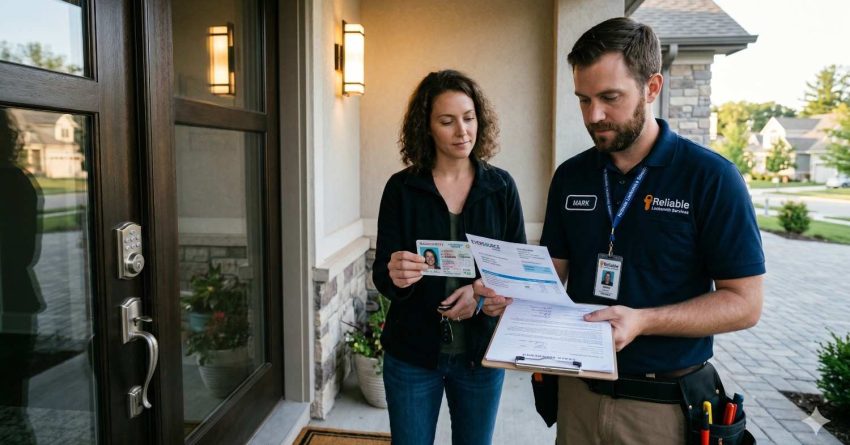
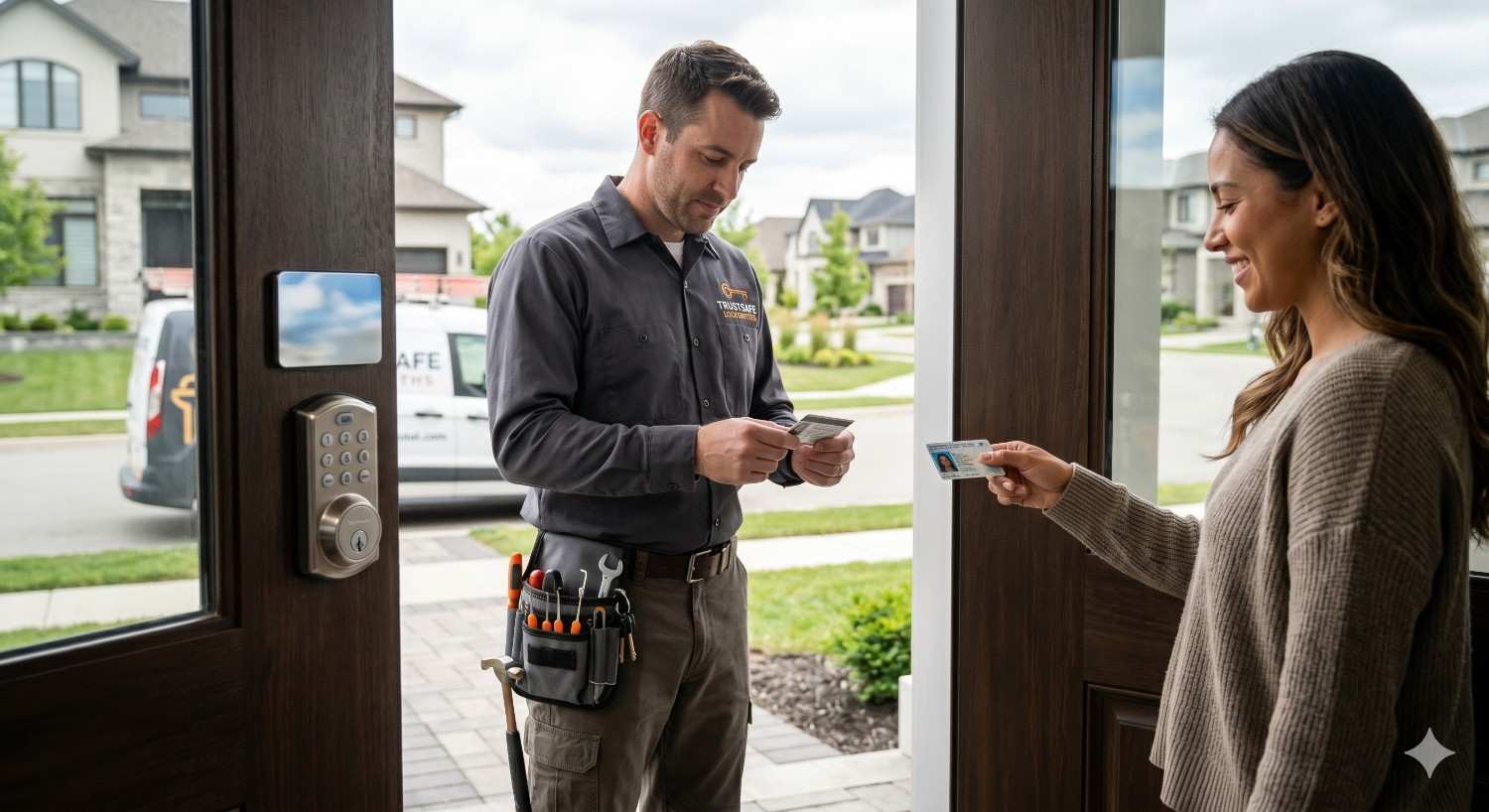
Most professional locksmiths in the USA require a valid government-issued photo ID and some form of proof that you legally own or occupy the property. This verification protects homeowners, landlords, and tenants from unauthorized entry while allowing the locksmith to perform the service legally. Knowing what documents to prepare in advance speeds up the process, reduces stress during lockouts, and ensures the technician can complete the job without delays or repeat visits.
What Proof Locksmiths Require Before Service
A licensed locksmith in the USA typically requires a government-issued photo ID such as a driver’s license or passport, plus proof of property ownership or authorization to access the property. Acceptable documents include a recent utility bill, lease agreement, mortgage statement, or vehicle registration matching the locked vehicle.
This combination confirms two things: who you are and your legal right to be at the property or in possession of the vehicle. Without both, most reputable locksmiths will refuse service, regardless of the urgency.
Government-Issued Photo ID
A current driver’s license is the most common form of identification accepted. A state-issued ID card, passport, or military ID also works. The name on the ID must match the name on your proof of ownership or authorization. Expired documents are usually rejected. For tenants, the ID should match the name listed on the lease. Property managers handling lockouts on behalf of tenants generally need to present their own business credentials alongside written authorization.
Proof of Ownership or Authorization
Proof of property ownership comes in several accepted formats. A recent utility bill in your name, a signed lease agreement, a mortgage statement, or a property deed all qualify. For vehicle lockouts, your registration or title is required. Renters who do not yet have utility bills can provide a lease with the landlord’s contact information for verification. Landlords requesting service on a tenant-occupied unit often need written tenant consent or a documented emergency.
Understanding what proof you need is one half of the equation. The other half is making sure you are choosing a licensed locksmith whose own credentials meet professional standards.
Why Locksmiths Verify Your Identity
Verification protects everyone involved. It prevents locksmiths from unknowingly assisting in break-ins, stalking situations, or disputes over property access. Many states require licensed locksmiths to document customer identification as part of their professional compliance, and failing to verify can result in license suspension or legal liability.
For homeowners and property managers, this process is reassuring. A locksmith who skips identity checks is a serious red flag and often signals an unlicensed or scam operator. Reputable providers follow verification protocols even during emergency lockout situations, where the temptation to skip steps is highest.
Common Scenarios That Require Extra Proof
Rental properties, recently purchased homes, and shared ownership situations often require additional documentation. If you just moved in and have no utility bills yet, bring your closing documents or signed lease. For vehicles registered under a business or family member’s name, expect to provide a notarized authorization letter or have the registered owner present.
What to Do If You Lack Standard Proof
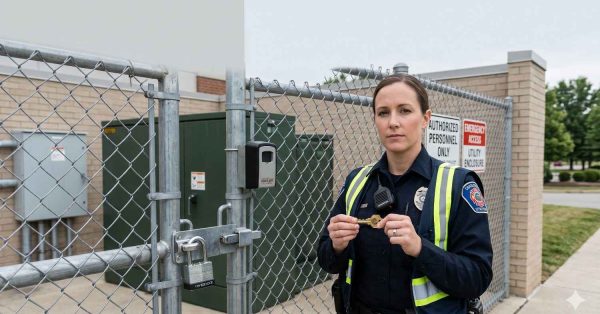
If you cannot produce standard documents, you still have options. Contact your landlord, property manager, or the registered vehicle owner and ask them to verify your identity directly with the locksmith by phone. Some locksmiths accept neighbor verification combined with a police report or non-emergency police presence at the scene.
For vehicle lockouts without registration, calling local law enforcement to confirm the vehicle is not stolen often satisfies the locksmith’s requirement. Always ask the locksmith in advance what they will accept so you can prepare before the technician arrives.
Conclusion
Proper identification and proof of ownership are non-negotiable for legitimate locksmith service across the USA, protecting both customers and providers from fraud and legal risk.
Preparing your documents in advance, understanding typical locksmith service costs, and knowing your options when proof is missing makes every lockout faster and far less stressful.
When you need a verified, licensed locksmith you can trust, Mr. Local Services connects you with vetted professionals ready to help quickly and transparently.
Frequently Asked Questions
Can a locksmith unlock my house without ID?
No reputable locksmith will unlock a home without verifying your identity. Skipping ID checks exposes both parties to legal risk and is a common scam warning sign.
What if my ID address does not match the property?
Bring supporting documents such as a lease, utility bill, or mortgage statement showing your name and the property address. A landlord call can also confirm authorization.
Do locksmiths need proof for car lockouts?
Yes. Most locksmiths require a photo ID plus the vehicle registration or title. If unavailable, police verification that the vehicle is not stolen usually works.
Can a landlord call a locksmith for a tenant’s unit?
Landlords typically need documented cause, written tenant consent, or an emergency situation. Laws vary by state, so locksmiths often request written authorization first.
What proof do I need after buying a new home?
Closing documents, the property deed, or a recorded purchase agreement work when utility bills have not yet arrived in your name. Bring photo ID matching those documents.