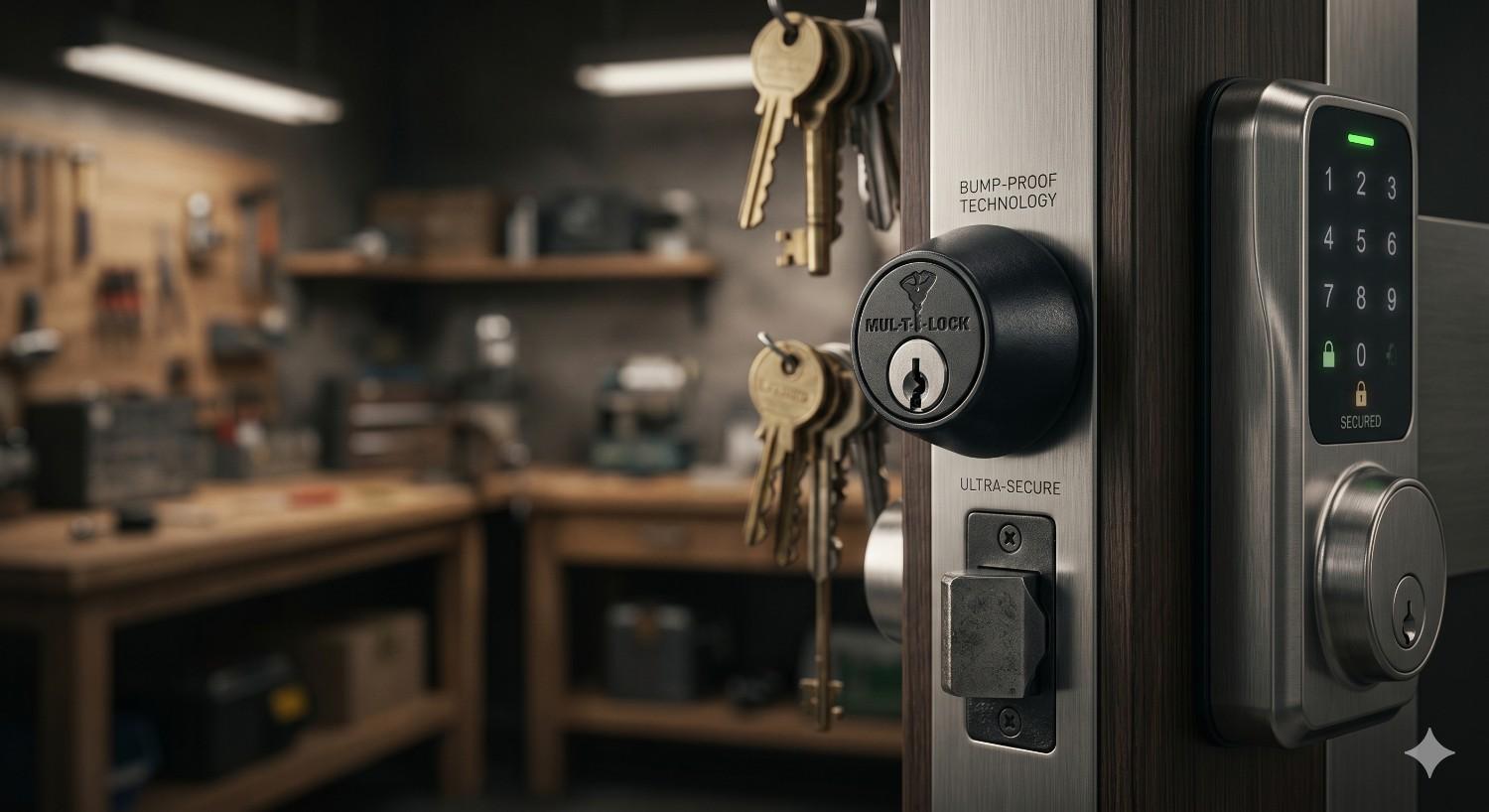
Smart locks, electronic deadbolts, disc detainer locks, and high-security pin tumbler brands like Medeco, Mul-T-Lock, ASSA Abloy, and Schlage Primus cannot be bumped. These locks use specialized internal mechanisms, sidebars, rotating discs, or keyless technology that defeat the standard bump key technique. For homeowners and property managers in the USA, choosing one of these designs is the most reliable way to eliminate lock bumping as a security risk.
Locks That Cannot Be Bumped
Bump-proof locks fall into two main groups: electronic locks without traditional key pins and mechanical high-security locks with anti-bump engineering. Smart locks, keypad deadbolts, and disc detainer locks have no standard pin-tumbler stack to manipulate. High-security brands such as Medeco, Mul-T-Lock, and ASSA Abloy add sidebars, rotating pins, and tight tolerances that block bump-key force.
Smart Locks and Electronic Deadbolts
Smart locks and electronic deadbolts cannot be bumped because they have no mechanical keyway for a bump key to enter. Brands like August, Yale Assure, Schlage Encode, and Kwikset Halo rely on PIN codes, fingerprints, or smartphone signals to operate. Without pin tumblers to strike, the bumping technique simply has nothing to act on. They also offer remote access logs, giving landlords and property managers added control across multiple residential or commercial units.
High-Security Pin Tumbler Locks
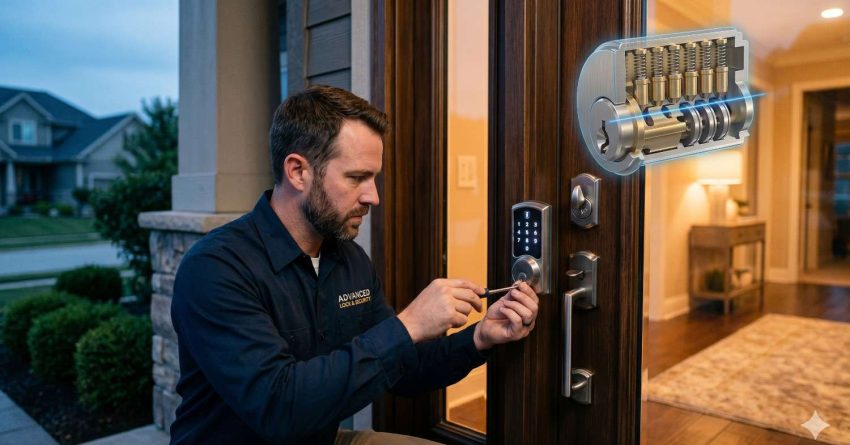
Mechanical high-security locks defeat bumping through reinforced internal designs. Medeco uses rotating pins that must lift and twist simultaneously. Mul-T-Lock uses a pin-within-a-pin telescoping system. ASSA Abloy and Schlage Primus integrate sidebars that require precise key cuts. These locks are also UL-listed and ANSI Grade 1 rated, making them suitable for high-value homes, rental properties, and commercial entrances where standard deadbolts fall short.
Knowing which locks resist bumping is the first step. The next is making sure they are installed correctly, which is where professional locksmith installation services shape the long-term security outcome.
Why These Locks Resist Bumping
Lock bumping works by transferring energy through key pins to align them at the shear line. Bump-proof locks interrupt that energy path. Disc detainer locks, common in Abloy Protec models, replace pins with rotating discs that cannot be jolted into alignment. Magnetic locks use embedded magnets that respond only to a matching key. Sidebar locks add a secondary locking surface that ignores vertical pin movement entirely. Each design changes the physics of the lock, so a bump key produces no useful motion. This is why professional security ratings, such as ANSI Grade 1 and UL 437, are reliable indicators when shopping for bump-proof hardware.
Choosing the Right Bump-Proof Lock for Your Property
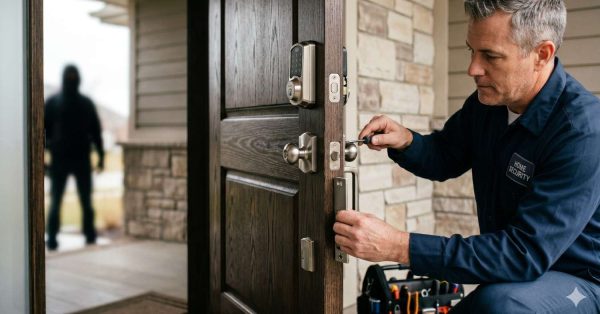
The right choice depends on property type, budget, and access needs. Single-family homeowners often prefer smart deadbolts for convenience and keyless entry. Landlords and property managers benefit from electronic locks with remote code management, allowing tenant turnover without rekeying. High-value properties and commercial buildings are best served by Medeco, Mul-T-Lock, or ASSA Abloy mechanical locks. For homeowners exploring keyless options, smart lock installation for homeowners offers the simplest upgrade path with minimal disruption to existing doors.
Conclusion
Bump-proof locks include smart locks, electronic deadbolts, disc detainer designs, and high-security brands like Medeco, Mul-T-Lock, and ASSA Abloy, each engineered to defeat traditional bumping methods.
For homeowners, landlords, and property managers, upgrading to a bump-proof lock is a proven step toward stronger property security and long-term peace of mind.
Ready to secure your property? Contact Mr. Local Services today to connect with trusted locksmiths who install reliable, bump-proof locks across the USA.
Frequently Asked Questions
Are all smart locks bump-proof?
Yes, smart locks without a mechanical keyway are bump-proof. Models with backup key cylinders may still be vulnerable unless paired with a high-security cylinder.
Is a Schlage deadbolt bump-proof?
Standard Schlage deadbolts can be bumped, but Schlage Primus and Schlage Encode smart deadbolts include anti-bump features that resist the technique reliably.
What is the most bump-resistant lock brand?
Medeco, Mul-T-Lock, ASSA Abloy, and Abloy Protec are widely recognized as the most bump-resistant brands due to their sidebar and disc detainer engineering.
Can a locksmith make my current lock bump-proof?
Yes, a licensed locksmith can replace standard cylinders with high-security bump-resistant cylinders or install anti-bump pins to upgrade your existing hardware.
Do bump-proof locks cost more than regular locks?
Yes, bump-proof locks typically cost more, ranging from $80 to $300, but they offer significantly higher security and durability for residential or commercial use.