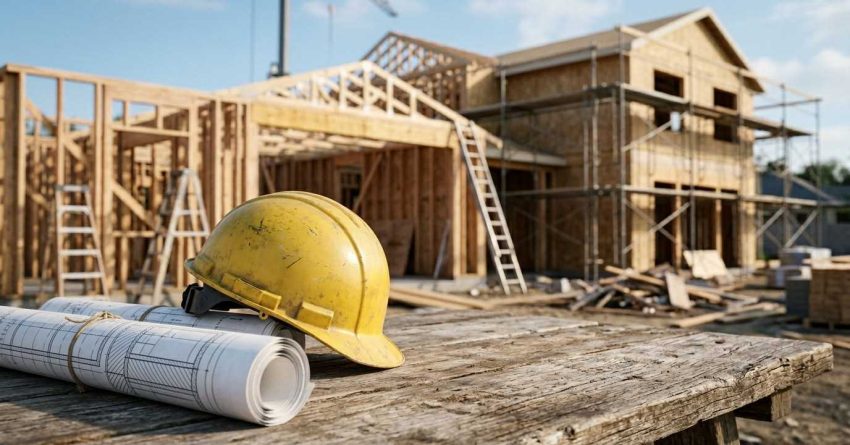
A construction loan is a short-term financing product that funds the cost of building a new home or completing a major renovation — releasing money in stages as construction progresses, rather than as a single lump sum.
Construction financing works differently from a standard mortgage, and understanding those differences before you apply can save you thousands of dollars and weeks of delays. This guide explains what construction loans are, how the approval and draw process works, what types are available in the USA, and how to decide whether one is right for your project.
What Is a Construction Loan?
A construction loan is a short-term loan — typically 12 to 18 months — designed specifically to cover the cost of building a new structure or completing a significant renovation. Unlike a traditional mortgage, which releases the full loan amount at closing, a construction loan releases funds incrementally through a process called a draw schedule, tied directly to verified construction milestones.
Because the property does not yet exist as collateral in the traditional sense, lenders treat construction loans as higher-risk products. This means stricter qualification requirements, higher interest rates than standard mortgages, and more active lender oversight throughout the build.
How a Construction Loan Differs from a Traditional Mortgage
A traditional mortgage is secured against an existing property. A construction loan is secured against the future value of a property that has not yet been built. This distinction drives nearly every difference between the two products — from how funds are disbursed to how interest is calculated.
With a mortgage, you receive the full loan amount at closing and begin repaying principal and interest immediately. With a construction loan, you draw funds as needed, pay interest only on the amount drawn, and typically convert the loan to a permanent mortgage once construction is complete.
Who Qualifies for a Construction Loan?
Lenders apply stricter standards to construction loans than to conventional mortgages. Most lenders in the USA require a minimum credit score of 680, though many prefer 720 or higher. Down payment requirements typically range from 20% to 25% of the total project cost. Lenders also require a detailed construction plan, a licensed general contractor, and a realistic project timeline before approving any funds.
How Does a Construction Loan Work? (Step-by-Step)
The construction loan process follows a structured sequence from application through project completion. Here is how it works in practice.
First, you apply with a lender and submit your project plans, contractor credentials, cost estimates, and financial documentation. The lender orders an appraisal based on the projected value of the completed property. Once approved, you close on the loan and construction begins.
Understanding how construction loans work is the first step — if you are also weighing renovation financing options for an existing property, that guide covers every funding path available to homeowners and landlords.
The Draw Schedule Explained
A draw schedule is the agreed-upon plan that determines when and how much money is released to the builder at each stage of construction. Common draw milestones include foundation completion, framing, rough plumbing and electrical, insulation and drywall, and final completion.
Before each draw is released, the lender typically sends an inspector to verify that the milestone has been reached. This protects both the lender and the borrower by ensuring funds are used for their intended purpose and that construction is progressing as planned.
Interest Payments During Construction
During the construction phase, you pay interest only on the funds that have been drawn — not on the full loan amount. This means your monthly payments start low and increase as more funds are released. Once construction is complete and the loan converts to a permanent mortgage, you begin making full principal and interest payments.
Types of Construction Loans Available in the USA
Three primary construction loan types are available to homeowners and property managers in the USA, each suited to different project types and financial situations.
Construction-to-Permanent Loan
A construction-to-permanent loan — sometimes called a one-time-close loan — combines the construction loan and the permanent mortgage into a single product. You close once, pay closing costs once, and the loan automatically converts to a standard mortgage when construction is complete. This is the most common choice for homeowners building a primary residence.
Construction-Only Loan
A construction-only loan covers only the build phase. When construction is complete, you must either pay off the loan in full or apply for a separate mortgage to repay it. This option involves two closings and two sets of closing costs, but it gives borrowers flexibility to shop for the best mortgage rate once the home is complete.
Owner-Builder Construction Loan
An owner-builder construction loan is designed for homeowners who plan to act as their own general contractor. For homeowners planning to manage their own build, the owner-builder loan process involves additional lender scrutiny and documentation requirements covered in full detail on that
Construction Loan Requirements and Approval Process
Lenders evaluate construction loan applications more rigorously than standard mortgage applications because the risk profile is higher. Meeting requirements before you apply significantly improves approval odds and speeds up the process.
Credit Score and Down Payment Requirements
Most USA lenders require a minimum credit score between 680 and 720 for construction loan approval. Down payments typically range from 20% to 25% of the total projected cost, which includes land, materials, labor, permits, and contingency reserves. Some government-backed programs, such as FHA construction loans, allow lower down payments for qualifying borrowers.
Documentation and Project Plans Required
Lenders require a comprehensive documentation package before approving a construction loan. This includes architectural drawings and blueprints, a detailed cost breakdown from a licensed contractor, a signed construction contract, proof of land ownership or purchase agreement, and a realistic construction timeline.
Lenders require detailed project documentation before approving funds — our project planning checklist walks through every document, timeline, and contractor credential you need to prepare before applying.
Construction Loan Rates and Costs
Construction loans carry higher interest rates than conventional mortgages because they represent greater lender risk. Rates are typically variable during the construction phase, tied to the prime rate or another benchmark index.
How Interest Rates Are Calculated on Construction Loans
Interest on a construction loan accrues only on the outstanding drawn balance, not the full approved loan amount. If your loan is approved for $400,000 but only $150,000 has been drawn, you pay interest on $150,000. This structure keeps early-phase payments manageable, though total interest costs increase as the draw balance grows.
Additional costs to budget for include origination fees, appraisal fees, inspection fees for each draw milestone, and closing costs — which may be charged once (construction-to-permanent) or twice (construction-only).
Pros and Cons of a Construction Loan
Advantages:
- Funds are released in stages, reducing the risk of overpayment to contractors
- Interest-only payments during construction keep costs manageable early on
- Construction-to-permanent loans simplify the process with a single closing
- Lender oversight through draw inspections adds a layer of project accountability
Disadvantages:
- Stricter qualification requirements than conventional mortgages
- Higher interest rates during the construction phase
- Variable rate exposure if the build takes longer than planned
- Significant documentation burden before and during the loan term
When Does a Construction Loan Make Sense?
A construction loan is the right tool when you are building a new home from the ground up, completing a major structural renovation, or purchasing land and financing a build simultaneously. It is not the right product for smaller home improvement projects, which are better served by home equity lines of credit, personal loans, or renovation-specific financing.
For a broader look at how construction loans fit within the full landscape of property financing, the home financing guide covers mortgages, renovation loans, equity products, and construction financing in one comprehensive resource.
Construction Loans vs. Home Equity Loans for Renovation
Homeowners renovating an existing property often face a choice between a construction loan and a home equity loan. The right answer depends on the scope of the project and the current equity in the property.
A home equity loan draws against the existing value of your home and is better suited to moderate renovations where the property already has substantial equity. A construction loan is better suited to large-scale projects — particularly new builds or additions that significantly change the structure — where the projected completed value drives the financing.
If your project involves an existing structure rather than new construction, the home equity loan guide compares every major financing option available to homeowners looking to fund renovations without a construction loan.
How to Choose the Right Lender for a Construction Loan
Not all lenders offer construction loans, and those that do vary significantly in their requirements, draw processes, and rate structures. When evaluating lenders, compare the interest rate structure, draw schedule flexibility, inspection requirements, and whether they offer a construction-to-permanent conversion option.
Local banks and credit unions often have more flexible underwriting for construction loans than large national lenders. Mortgage brokers who specialize in construction financing can help you compare multiple options efficiently.
Choosing the right lender is only one part of a successful build — understanding your full range of remodeling service options helps you scope the project accurately before approaching any lender.
Conclusion
Construction loans provide a structured, milestone-based way to finance a new build or major renovation — releasing funds as work progresses and keeping lender oversight active throughout the project. Understanding the draw schedule, qualification requirements, and loan types available puts you in a stronger position before you apply.
The right construction loan depends on your project scope, credit profile, and long-term financing goals. Comparing lenders, preparing documentation early, and understanding total costs — including rates, fees, and inspection requirements — reduces delays and surprises during the build.
At Mr. Local Services, our network of skilled construction and remodeling professionals can help you scope your project accurately, connect with the right contractors, and move forward with confidence — contact us today to get started
Frequently Asked Questions
What is the typical term length for a construction loan?
Most construction loans in the USA have a term of 12 to 18 months, covering the active build phase. Once construction is complete, the loan either converts to a permanent mortgage or is paid off through a separate refinance.
Can I use a construction loan to renovate an existing home?
Yes. Some lenders offer renovation construction loans — sometimes called rehab loans — for significant structural renovations to existing properties. These work similarly to new construction loans, with funds released in stages tied to verified renovation milestones.
What happens if construction goes over budget?
If costs exceed the approved loan amount, you are responsible for covering the difference out of pocket. Most lenders recommend building a contingency reserve of 10% to 15% of the total project cost into your budget before applying.
Do construction loans require a licensed contractor?
Most lenders require a licensed, insured general contractor for standard construction loans. Owner-builder loans are available but require additional documentation and lender approval, as the borrower assumes the contractor role.
What credit score do I need for a construction loan?
Most USA lenders require a minimum credit score of 680 for construction loan approval, with many preferring 720 or higher. A stronger credit profile typically results in better rate terms and a smoother approval process.
How much can I borrow with a construction loan?
Loan amounts are based on the projected appraised value of the completed property, not the current land value. Lenders typically finance up to 80% of the completed value, meaning your down payment and equity contribution cover the remaining 20%.
Is a construction loan harder to get than a mortgage?
Yes. Construction loans have stricter qualification requirements than conventional mortgages, including higher credit score thresholds, larger down payments, and more extensive documentation. The higher risk profile of financing an unbuilt property drives these additional requirements.