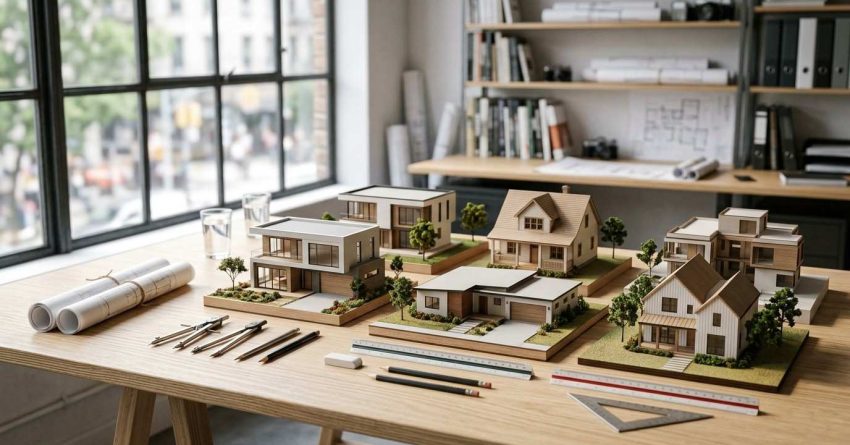
Building a home from the ground up — or financing a major renovation — requires a loan designed specifically for construction, and there are more options than most homeowners realize. Home construction loans differ from standard mortgages in structure, approval requirements, and repayment terms, and choosing the wrong type can cost thousands in unnecessary fees or delay your project entirely. This guide compares every major construction loan type available to homeowners, landlords, and property managers in the USA, explaining what each covers, who qualifies, and when each option makes the most sense.
Understanding your financing options before you meet with a lender puts you in a stronger negotiating position and helps you avoid the most common application mistakes.
This guide covers construction-to-permanent loans, construction-only loans, owner-builder financing, renovation loans, government-backed programs, and hard money options — all in one place.
What Is a Home Construction Loan?
A home construction loan is a short-term financing product that provides funds in stages — called draws — as construction milestones are completed, rather than delivering a lump sum upfront the way a traditional mortgage does. Lenders release money at each verified phase of the build, which reduces their risk and ensures funds are used for actual construction progress.
Construction loans typically carry variable interest rates, require a larger down payment than conventional mortgages (often 20% or more), and have terms ranging from 6 to 18 months. Because the home does not yet exist as collateral, lenders apply stricter underwriting standards, including higher credit score thresholds and detailed project documentation.
Understanding how construction loans fit into the broader landscape of home financing options — our complete guide to home financing options covers every loan category, eligibility path, and cost comparison homeowners need before breaking ground.
How Construction Loans Differ from Mortgages
A standard mortgage funds the purchase of an existing property. A construction loan funds the creation of a property that does not yet exist. This distinction drives every structural difference: draw schedules instead of lump sums, inspections at each phase, interest-only payments during the build period, and a conversion or payoff event at project completion.
Who Qualifies for a Construction Loan?
Most lenders require a credit score of at least 680, a debt-to-income ratio below 45%, a down payment of 20% or more, a signed contract with a licensed general contractor, and a detailed construction timeline with cost estimates. Some government-backed programs lower these thresholds for eligible borrowers.
Construction-to-Permanent Loans
A construction-to-permanent loan — also called a one-time close or single-close loan — combines the construction financing and the long-term mortgage into a single loan product. The borrower closes once, locks in the permanent mortgage rate at the start, and the loan automatically converts from construction to mortgage when the build is complete.
This structure eliminates the need for a second closing, which saves on closing costs and removes the risk of being unable to qualify for a mortgage after construction ends. It is the most popular construction loan type for primary residence builds because it simplifies the process and provides rate certainty from day one.
How the One-Time Close Process Works
At closing, the lender funds the construction phase. During the build, the borrower makes interest-only payments on the drawn amount. Once the certificate of occupancy is issued, the loan converts automatically to a standard amortizing mortgage with the pre-agreed rate and term. No second appraisal, no second application, no second set of closing costs.
Before committing to a construction-to-permanent loan, most lenders require a signed contract with a licensed builder — our guide to hiring a general contractor walks through every vetting step, contract clause, and red flag to watch for.
Construction-Only Loans
A construction-only loan covers the build period exclusively. When construction is complete, the borrower must either pay off the loan in full or apply for a separate permanent mortgage — a process called a two-time close. This adds a second round of closing costs and requires the borrower to qualify for a mortgage at whatever rates exist when construction ends.
Construction-only loans typically offer more flexibility in lender selection and can be useful when a borrower expects their financial profile to improve significantly by the time the permanent mortgage is needed.
When a Stand-Alone Construction Loan Makes Sense
This loan type works best for borrowers who plan to sell the property immediately after completion, investors who will refinance into a commercial product, or buyers who want to shop for the best permanent mortgage rate independently after the build is finished. It carries more risk than a one-time close but offers more flexibility in the back half of the financing process.
Owner-Builder Construction Loans
An owner-builder construction loan is designed for borrowers who intend to act as their own general contractor rather than hiring a licensed builder. Because lenders view this arrangement as significantly higher risk — most homeowners lack the project management experience and contractor relationships that licensed builders bring — these loans are harder to qualify for and offered by fewer lenders.
Requirements and Risks for Owner-Builders
Lenders who offer owner-builder loans typically require documented construction experience, a detailed project plan, proof of subcontractor relationships, and in some cases a licensed contractor co-signing the loan. Down payment requirements are often higher, and interest rates reflect the elevated risk. Borrowers who underestimate the complexity of managing a build often face cost overruns, timeline delays, and draw disputes that can jeopardize the entire project.
Renovation Construction Loans
Renovation construction loans fund improvements to existing structures rather than new builds. They are government-backed products designed to help homeowners purchase and renovate a property — or renovate a home they already own — using a single loan rather than combining a purchase mortgage with a separate home equity product.
Pairing the right loan with the right renovation team makes all the difference in project outcomes — explore our home remodeling services to see the full scope of renovation work we support across residential and commercial properties.
FHA 203(k) Loan — Standard and Limited
The FHA 203(k) loan is a Federal Housing Administration product that allows borrowers to finance both the purchase (or refinance) of a home and the cost of renovation in a single mortgage. The Standard 203(k) covers structural repairs, major system replacements, and projects exceeding $35,000. The Limited 203(k) — formerly called the Streamlined version — covers non-structural improvements up to $35,000. Both require a minimum credit score of 580 and a down payment as low as 3.5% for eligible borrowers.
Fannie Mae HomeStyle Renovation Loan
The HomeStyle Renovation loan is a conventional product backed by Fannie Mae that allows borrowers to finance renovation costs up to 75% of the home’s as-completed appraised value. Unlike the FHA 203(k), it can be used for luxury upgrades and is available for investment properties and second homes. Credit score requirements are higher — typically 620 or above — and the loan requires a licensed contractor for all work.
USDA and VA Construction Loans
Two government-backed programs extend construction financing to specific eligible populations: the USDA Single-Close Construction Loan for rural and suburban homebuyers, and the VA One-Time Close Construction Loan for active-duty military, veterans, and eligible surviving spouses.
USDA Single-Close Construction Loan
The USDA construction loan is part of the Single Family Housing Guaranteed Loan Program and is available in USDA-designated eligible areas — primarily rural and some suburban communities. It offers 100% financing with no down payment required for eligible borrowers, and it converts to a permanent USDA mortgage at project completion. Income limits apply based on household size and location.
USDA construction loans are restricted to eligible rural and suburban areas, which means the long-term maintenance needs of those properties differ from urban homes — our resource on rural property upkeep covers the service categories most relevant to USDA-financed builds.
VA One-Time Close Construction Loan
The VA construction loan allows eligible veterans and active-duty service members to build a primary residence with no down payment and no private mortgage insurance. Like the USDA product, it uses a single-close structure that converts to a permanent VA mortgage at completion. The VA does not lend directly — borrowers work with VA-approved lenders who follow VA guidelines. A VA appraisal of the construction plans is required before approval.
Hard Money Construction Loans
Hard money construction loans are short-term, asset-based loans provided by private lenders rather than banks or government-backed institutions. Approval is based primarily on the value of the property and the projected after-repair or after-construction value, not the borrower’s credit profile. This makes them accessible to borrowers who cannot qualify for conventional or government-backed products.
The tradeoff is cost: hard money loans carry significantly higher interest rates — often between 10% and 15% — shorter terms, and higher origination fees than any other construction loan type.
When Investors Use Hard Money Financing
Real estate investors use hard money construction loans when speed matters more than cost, when the project does not meet conventional lending criteria, or when the borrower plans to sell or refinance quickly after completion. Fix-and-flip investors, developers working on non-owner-occupied properties, and borrowers with credit challenges are the most common hard money borrowers. These loans are rarely appropriate for primary residence construction.
How to Choose the Right Construction Loan Type
Selecting the right construction loan depends on five factors: the type of project (new build vs. renovation), the borrower’s eligibility for government-backed programs, the intended use of the property (primary residence, investment, or vacation home), the borrower’s credit and financial profile, and the timeline for project completion and permanent financing.
Choosing the right loan type is only one piece of the planning process — our construction planning guide covers budgeting, contractor selection, permitting timelines, and every decision point between loan approval and move-in day.
Key Factors to Compare Before You Apply
| Factor | What to Evaluate |
| Project type | New construction, renovation, or purchase-plus-rehab |
| Eligibility | VA, USDA, FHA, or conventional qualification |
| Down payment | Available cash vs. program minimums |
| Credit score | Minimum thresholds by loan type |
| Property use | Primary, investment, or second home |
| Timeline | Build duration vs. loan term |
| Rate risk | Fixed at close vs. variable during construction |
| Closing costs | One-time close vs. two-time close cost comparison |
For homeowners who want a broader view of all available financing paths before diving into rate comparisons, our home financing overview covers every loan type from conventional mortgages to government-backed programs in one place.
Construction Loan Rates and Costs in 2025
Construction loan interest rates are typically higher than conventional mortgage rates because lenders carry more risk during the build period. As of 2025, construction loan rates generally run 1% to 2% above the prevailing 30-year fixed mortgage rate, though the exact spread depends on the lender, the borrower’s credit profile, and the loan type.
Beyond the interest rate, borrowers should budget for origination fees (typically 1% to 2% of the loan amount), draw inspection fees charged at each construction phase, appraisal costs for both the land and the as-completed value, and a contingency reserve — most lenders require 10% to 15% of the total project budget held in reserve for cost overruns.
Construction loan costs extend well beyond interest rates — our resource on renovation cost planning breaks down draw schedules, inspection fees, contingency buffers, and every line item that affects total project cost.
Common Mistakes Homeowners Make with Construction Loans
The most costly mistakes in construction financing happen before the loan closes, not during the build. Underestimating the total project budget is the most common error — most first-time builders fail to account for soft costs like permits, architectural drawings, engineering reports, and utility connections, which can add 10% to 20% to the hard construction cost.
Other frequent mistakes include choosing a lender without construction loan experience, failing to lock in a permanent mortgage rate before rates rise, selecting a contractor based on price alone rather than licensing and track record, and not building a contingency reserve into the initial budget.
Avoiding costly loan mistakes starts before the first permit is pulled — our home improvement planning resource helps homeowners map out scope, timeline, and budget before approaching any lender.
Conclusion
Home construction loans come in more forms than most borrowers expect, and each type serves a distinct project profile, borrower eligibility, and financing timeline. Matching the right loan structure to your specific build — whether a new primary residence, a renovation, or an investment property — is the single most important financial decision in the construction process.
Government-backed programs like FHA 203(k), USDA, and VA loans open construction financing to borrowers who might not qualify for conventional products, while hard money options serve investors who need speed over cost efficiency.
At Mr. Local Services, we connect homeowners and property managers with skilled professionals who understand what lenders look for — from licensed contractors to renovation specialists — so your project meets every requirement from approval to completion.
Frequently Asked Questions
What credit score do I need for a home construction loan?
Most conventional construction loans require a minimum credit score of 680, though some lenders accept 640. FHA 203(k) loans allow scores as low as 580 with a 3.5% down payment. VA and USDA construction loans have flexible credit requirements set by individual lenders.
Can I use a construction loan to build on land I already own?
Yes. If you own the land outright, its equity can often be applied toward the down payment requirement on a construction loan. Lenders will appraise the land value and factor it into the total loan-to-value calculation for the project.
How long does a construction loan last?
Most construction loans have terms of 6 to 18 months, covering the active build period. Construction-to-permanent loans convert automatically to a standard mortgage at completion. Construction-only loans must be paid off or refinanced into a permanent mortgage when the term ends.
What happens if my construction project goes over budget?
Cost overruns are the borrower’s responsibility. Most lenders require a contingency reserve of 10% to 15% of the total project budget held in the loan account for this reason. If costs exceed the reserve, the borrower must cover the difference out of pocket — the lender will not increase the loan amount after closing.
Is a construction loan harder to get than a regular mortgage?
Yes. Construction loans carry stricter underwriting requirements than conventional mortgages because the collateral — the finished home — does not yet exist. Lenders require higher credit scores, larger down payments, detailed project documentation, and a licensed contractor agreement before approving most construction loan applications.