An ADU, or accessory dwelling unit, is a secondary residential unit built on the same lot as a primary single-family home. It functions as a fully independent living space with its own entrance, kitchen, bathroom, and sleeping area. Homeowners, landlords, and property managers across the USA are increasingly adding ADUs to expand living capacity, generate rental income, or house family members on the same property.
What an ADU Is and How It Works
An accessory dwelling unit is a self-contained residential space located on the same parcel of land as a primary home. It operates independently from the main structure, with dedicated utilities, a private entrance, and complete living amenities. Local zoning laws govern whether an ADU can be built, how large it can be, and how it can be used on a given property.
The Core Components of an ADU
Every ADU includes four essential elements: a private entrance separate from the main home, a full kitchen or kitchenette, a bathroom, and a dedicated sleeping area. These components are what legally and functionally distinguish an ADU from a simple room addition or bonus space. The unit must be livable on its own without requiring access to the primary residence for daily functions.
How ADUs Differ from the Primary Residence
The primary residence and the ADU share the same lot but operate as distinct living spaces. The ADU is subordinate in size — most jurisdictions cap it at a percentage of the main home’s square footage or set an absolute maximum, often between 500 and 1,200 square feet. Ownership remains with the primary property owner, but the ADU can be rented independently, used for multigenerational living, or reserved for guests.
Building or converting a space into an ADU involves structural, electrical, and plumbing work that requires licensed professionals and proper permits.
Types of ADUs Homeowners Build
ADUs are not one-size-fits-all. The right type depends on the existing property layout, local zoning rules, and the homeowner’s goals. Three primary categories cover most ADU projects in the USA.
Attached, Detached, and Conversion ADUs Explained
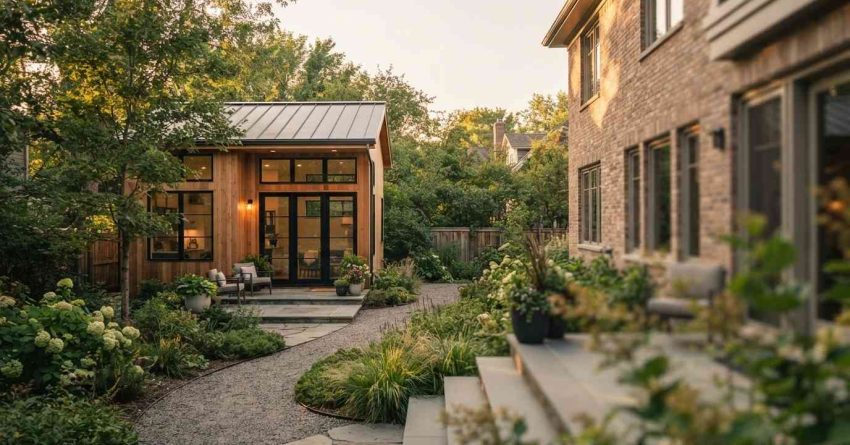
A detached ADU is a fully separate structure built on the same lot — a standalone cottage or backyard unit with no shared walls. An attached ADU shares at least one wall with the primary home but has its own entrance and interior separation. A conversion ADU repurposes existing space, with converting an existing garage or basement being the most common approach because the structural shell is already in place, which reduces construction time and cost. Junior ADUs, sometimes called JADUs, are a smaller subset — typically under 500 square feet and carved from interior space within the main home.
Why ADUs Matter for Homeowners and Property Managers
ADUs serve multiple practical purposes that directly affect property value and utility. For homeowners, they create a rental income stream that can offset mortgage costs. For property managers and landlords, they increase the rentable footprint of a residential lot without requiring a separate land purchase. For families, they provide private space for aging parents, adult children, or live-in caregivers while maintaining household proximity.
According to research from the Urban Land Institute, properties with permitted ADUs in high-demand markets have shown measurable increases in overall assessed value. The long-term return depends on construction quality, local rental demand, and how well the unit is maintained over time.
Conclusion
An ADU is a fully independent secondary living unit on a residential lot, defined by its private entrance, kitchen, bathroom, and sleeping space. Understanding what qualifies as an ADU helps property owners make informed decisions about construction, zoning compliance, and long-term use.
For homeowners and property managers, adding an ADU is one of the most impactful ways to increase property value and functionality — but it requires careful planning, skilled construction, and ongoing maintenance and upkeep to protect that investment over time.
At Mr. Local Services, we connect you with trusted professionals who handle every stage of ADU work, from initial build to long-term care.
Frequently Asked Questions
Is an ADU the same as a guest house?
Not exactly. A guest house may lack a full kitchen or independent utilities. An ADU is legally defined as a complete, self-sufficient dwelling unit that meets local residential habitability standards.
Do ADUs require a separate address?
In most jurisdictions, yes. A permitted ADU typically receives its own address or unit designation, which is required for mail delivery, emergency services, and rental agreements.
Can a garage be converted into an ADU?
Yes. Garage conversions are one of the most common ADU types. The existing structure reduces construction costs, but the space must meet residential building codes for insulation, ventilation, plumbing, and electrical systems.
Does an ADU increase property value?
Generally, yes. A permitted, well-built ADU adds livable square footage and rental income potential, both of which contribute to higher assessed and market value in most USA real estate markets.
What permits are required to build an ADU?
Requirements vary by city and county, but most ADU projects require a building permit, zoning approval, and separate inspections for structural, electrical, and plumbing work before the unit can be legally occupied.